— Blog · November 3, 2026 · 4 min read
Study Planning 101: Where to Start Before the First Wall Comes Down
A practical starting guide for planning a study, from setting priorities and timelines to knowing when to bring in a professional.
Start with how the study needs to work
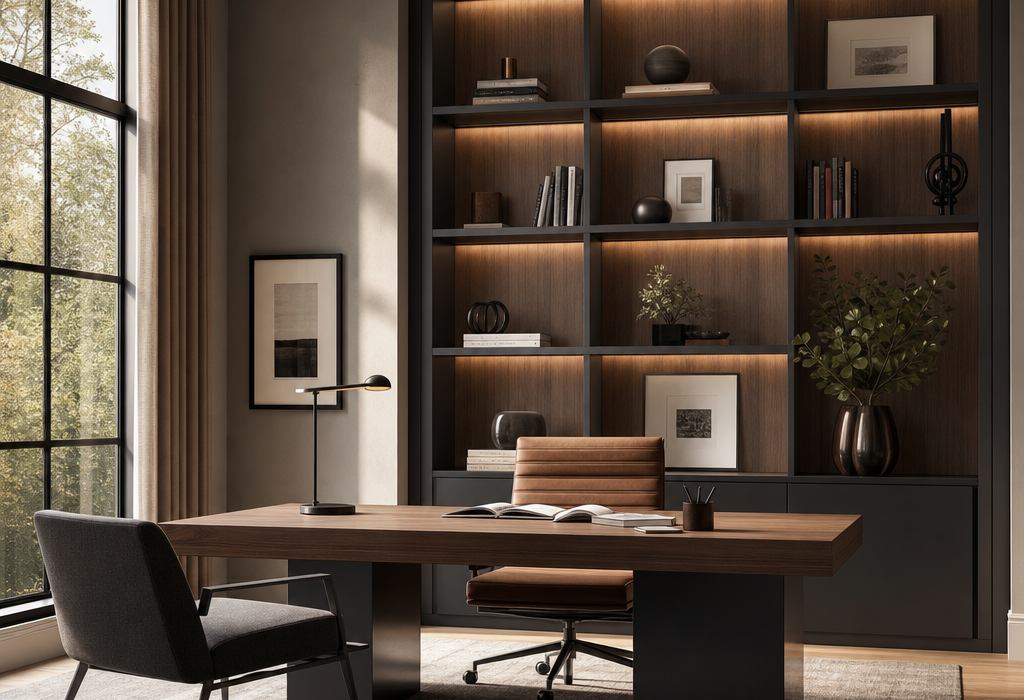
Before you choose finishes or furniture, define the real job of the study. Will it be a quiet work-from-home room, a reading retreat, a homework zone, a small library, or a flexible guest room with a desk? In a modern study, the plan should begin with habits: how many people will use it, what hours it needs to function, how much storage is required, and whether calls, focused reading, or computer work will happen there. Measure the room early, including wall lengths, window placement, door swings, ceiling height, and any awkward corners, then note where you need power, light, and a clear path through the space.
Set priorities before choosing finishes
List what matters most and rank it. For one household, the top priority may be a large built-in desk and file storage; for another, it may be natural light, a comfortable lounge chair, and closed shelving. Decide what must be included and what can wait. Lock in the essentials first: the type of desk, how much closed storage you need, whether you want open shelves, and how much floor area must stay open so the room does not feel crowded. If the room must serve multiple roles, define the primary use first so the design does not become a compromise that works for nothing.
Build a realistic planning timeline
Start with concept and measurements, then move to layout, then materials and ordering. A simple refresh with paint, lighting, and furniture can come together quickly, while a room with custom millwork, electrical changes, or new flooring takes longer because each decision affects the next. In a typical study project, the early phase is about layout and scale: desk depth, bookcase height, chair clearance, and where task lighting will land. The middle phase is about selecting materials, such as wood veneer, painted MDF, laminate, solid wood, wool rugs, or performance upholstery. The final phase is ordering, scheduling installation, and leaving time for delays on made-to-order pieces, especially built-ins and specialty lighting.
Know when to bring in a professional
Bring in a designer, architect, or interior architect as soon as the project affects walls, wiring, built-ins, or circulation. If you are moving outlets, adding dedicated lighting, changing window treatments to control glare, or planning custom millwork, professional help can prevent expensive mistakes. A pro is also useful if the study must fit a precise function, such as two workstations, a wall of books, or hidden printer and supply storage. Even for a modest modern study, professional guidance can help translate your wishlist into a room that looks clean, feels calm, and actually supports daily use.
Lock the key decisions before work begins
Do not start demolition or ordering until the big calls are made. Confirm the room layout, desk size, storage mix, lighting plan, outlet locations, paint color, flooring direction, and any custom millwork dimensions. Decide whether the study will have one large rug or bare floors, what hardware finish will be used, and where cords, printers, and charging needs will live. If you are choosing a modern look, keep the palette simple and consistent so the room feels intentional: flat-front cabinetry, integrated shelving, black or brushed-nickel accents, and uncluttered sight lines. Once those decisions are fixed, the rest of the project becomes much easier to coordinate.
Plan the room around comfort, not just appearance
A successful study should feel good to use for long stretches of time. Leave enough space for a standard desk chair to pull out comfortably, and avoid crowding the room with furniture that blocks movement. Think about window glare on a screen, the placement of a desk lamp, and whether you need layered lighting for morning work and evening reading. Use durable, easy-to-clean finishes where hands, books, and bags will land most often. When the room is planned around daily habits first, the design stays useful long after the initial excitement wears off.
Find the best professionals for your study project
Free and no obligation / Takes less than 5 minutes
Are you an architect or designer? Sign up for free! »