— Blog · July 14, 2026 · 3 min read
5 Smart Ways to Make Your sunroom Feel Brighter, Cooler, and More Usable
Practical sunroom ideas for creating a comfortable, bright, and easy-to-use space that works through changing seasons.
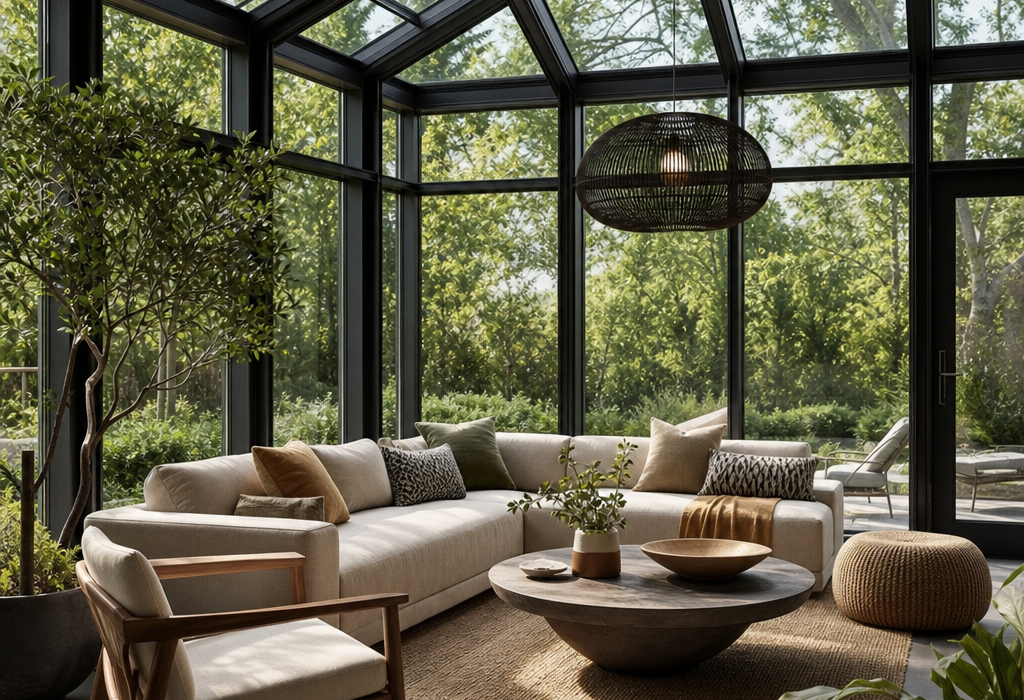
A well-designed sunroom should feel open and light without becoming too hot, too bright, or difficult to furnish. These practical tips focus on comfort, durability, and a clean modern look that works in everyday use.
1. Choose glazing that controls heat and glare
Start with the windows. Low-E glass is one of the best choices for a sunroom because it helps reduce heat gain while still bringing in natural light. If your space gets full afternoon sun, consider insulated double-pane units and, where possible, operable windows for cross-ventilation. In a modern sunroom, slim frames in black, bronze, or white can keep the view crisp without making the room feel heavy.
2. Plan the floor for sunlight and durability
Sunrooms need flooring that can handle temperature swings and bright exposure. Porcelain tile, luxury vinyl plank, and sealed concrete are all practical options in the U.S. because they resist fading and clean up easily. If you want warmth underfoot, layer in a flatweave rug that can tolerate strong light and everyday traffic. Keep the finish subtle so the room stays visually calm and modern.
3. Use shades and curtains as part of the design
Light control matters just as much as the glass itself. Solar shades are a smart choice because they soften glare while preserving the view, and they roll up neatly when not needed. For a more finished look, pair them with simple linen or cotton drapery panels mounted close to the ceiling. This adds softness without cluttering the space, which is especially important in a modern sunroom.
4. Furnish it like a room you use every day
It helps to treat the sunroom as a real living space, not just an extra perch by the windows. Choose a compact sofa, two lounge chairs, or a small bistro table depending on how you plan to use the room. Keep upholstery in performance fabrics that handle UV exposure and occasional humidity. A modern approach works best when the layout leaves easy paths around each piece and avoids overfilling the perimeter.
5. Add comfort layers that still feel clean and simple
The right accessories make the space usable year-round. A ceiling fan with a low-profile design can improve air movement without dominating the room, and portable heating or cooling may help during shoulder seasons. Use one or two plants in sturdy containers, a few textured pillows, and a restrained palette of whites, sand tones, gray, or muted green. That balance keeps the sunroom bright, comfortable, and distinctly modern.
When you focus on light control, durable materials, and a restrained furniture plan, a sunroom becomes one of the most flexible spaces in the home. The result is a room that feels fresh, practical, and easy to enjoy throughout the year.
Find the best professionals for your sunroom project
Free and no obligation / Takes less than 5 minutes
Are you an architect or designer? Sign up for free! »