— Blog · July 14, 2026 · 4 min read
Basement Trends Shaping 2026: The Smart, Warm, and Livable Look Homeowners Want
A current-trends guide to basement design, from moisture-smart materials and cozy neutrals to flexible layouts and low-profile technology—plus what’s fading out and easy updates that don’t require a full remodel.
Moisture-smart materials are leading the way
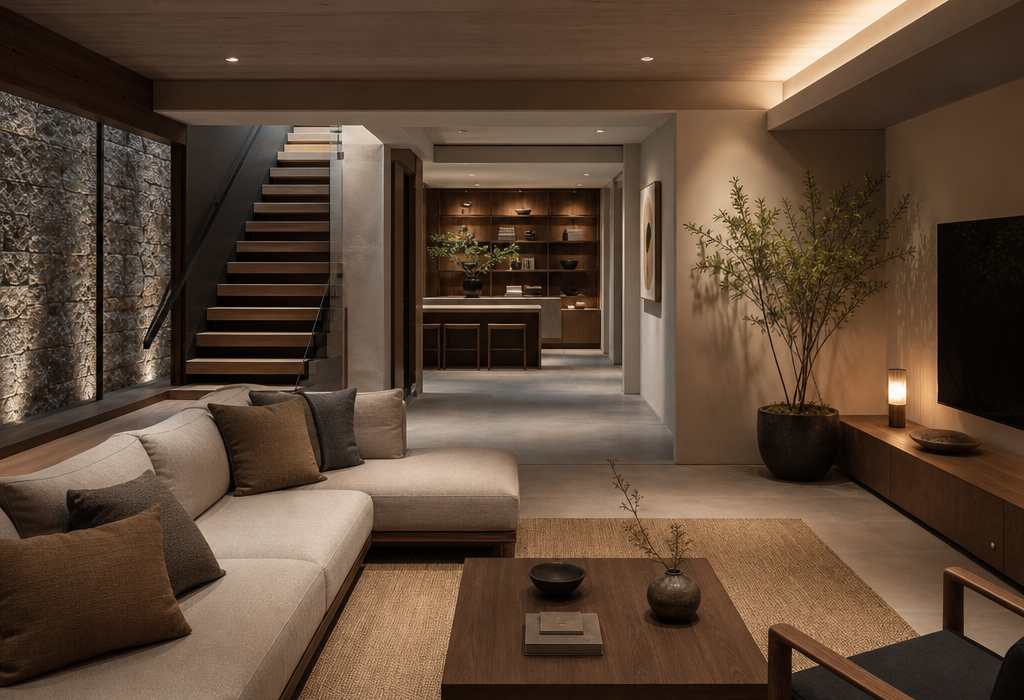
Today’s best basement finishes start with durability, not decoration. In damp-prone below-grade spaces, homeowners are choosing closed-cell foam insulation, moisture-resistant drywall products, luxury vinyl plank, large-format porcelain tile, and epoxy-coated concrete because they handle humidity better than traditional carpet and basic laminate. Japandi styling fits naturally here: light wood tones, smooth matte surfaces, and restrained detailing make the space feel calm without adding visual clutter. If you want a smaller update, swap in a low-pile area rug with a waterproof pad, use furniture legs to keep pieces off the slab, and choose paint labeled for masonry or basement use on foundation walls.
Warm neutrals are replacing cool gray caves
The gray-on-gray basement look is fading out fast. The current palette leans warmer and softer: oatmeal, sand, mushroom, warm white, taupe, clay, muted olive, and black accents used sparingly. These colors help a basement feel less like an afterthought and more like a real living level. In a Japandi approach, pair pale walls with natural oak, ash, or walnut, then add texture through linen-look upholstery, woven baskets, and simple ribbed ceramics. If repainting everything is not in the budget, start with one dominant wall color, replace cool-toned bulbs with warm white LEDs around 2700K to 3000K, and bring in a large neutral rug to instantly soften the room.
Flexible layouts are winning over one-purpose rooms
Basements are moving toward multi-use planning instead of rigid “media room only” or “guest suite only” setups. The strongest layouts use zoning: one corner for a sectional and TV, a second for a desk or homework table, and a third for storage or exercise equipment. Built-ins are still popular, but they are getting slimmer and simpler, often 12 to 18 inches deep instead of bulky wall systems that swallow square footage. Sliding doors, open shelving, and low partitions help keep the room adaptable. For a no-demo refresh, define zones with a sofa table, a narrow console, or a storage bench, and leave at least 30 to 36 inches of clear walking space wherever possible.
Low-profile technology is becoming the standard
Basement tech is getting smarter and less visible. Homeowners want dehumidifiers tied to a drain line, Wi-Fi leak sensors near sump pumps and water heaters, zoned mini-split systems, and recessed or low-glare lighting that does not overpower the room. In entertainment areas, the trend is toward wall-mounted TVs, in-wall cable management, and small soundproofing upgrades such as acoustic panels or insulated ceiling cavities rather than oversized speaker setups. What is fading out is the cluttered look of exposed cords, bulky A/V cabinets, and bright cool-toned recessed lights scattered everywhere. You can adopt the trend gradually by adding a smart thermostat, replacing a few lamps with dimmable fixtures, and using cord covers and battery-powered leak detectors before investing in bigger systems.
What is fading out, and the easiest ways to update without a renovation
Heavy faux finishes, dark mirrored surfaces, shag carpet, and overly themed rec rooms are losing appeal because they make basements feel smaller and more dated. Today’s look is cleaner, lighter, and more textural, with a preference for honest materials and practical comfort. If you want the trend without a full remodel, focus on the biggest visual wins: change the lighting temperature, repaint walls in a warmer neutral, replace worn carpet with a large washable rug over sealed concrete, and use matching storage bins to hide visual noise. Even small moves like switching to streamlined cabinet pulls, adding a 2-inch to 3-inch trim detail, or choosing one cohesive finish for baskets and shelving can make a basement feel current, calm, and intentionally designed.
Find the best professionals for your basement project
Free and no obligation / Takes less than 5 minutes
Are you an architect or designer? Sign up for free! »