— Blog · July 7, 2026 · 5 min read
rest room trends shaping calmer, smarter spaces in 2026
A practical look at the newest rest room trends, from quieter materials and softer colors to smarter fixtures, easier layouts, and low-lift updates you can make without a full renovation.
Materials are moving toward quiet texture and easy upkeep
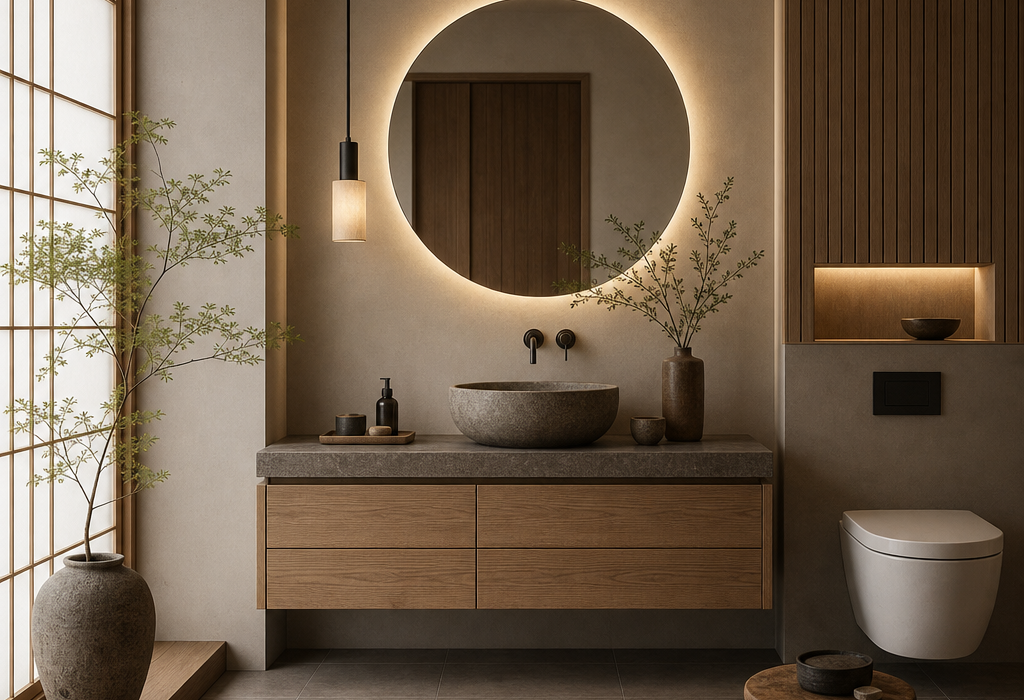
The biggest material shift in the rest room is away from shiny, high-contrast finishes and toward surfaces that feel calm, warm, and durable. Matte porcelain tile, large-format stone-look slabs, microcement-style walls, and solid-surface vanities are leading the way because they reduce visual clutter and are simpler to clean than heavily grouted patterns. In a Japandi-inspired space, light oak, walnut, and ash are showing up as accents on vanities, shelves, and mirror frames to soften all the hard surfaces without making the room feel busy.
What is fading out is the overly glossy, matchy-matchy look: high-polish travertine everywhere, busy mosaic feature walls, and dark wood paired with black fixtures in every corner. If you want the trend without a full renovation, swap in a wood-tone vanity tray, a stone or solid-surface soap dispenser, and a textured hand towel set. Even changing a dated shower curtain to a linen-look panel can shift the whole room toward the current feel.
Color palettes are getting lighter, warmer, and more natural
Cool gray-on-gray rest rooms are giving way to warmer neutrals and muted nature tones. Think soft white, sand, mushroom, oatmeal, pale clay, sage, and dusty blue-green. These colors work especially well in a Japandi approach because they make the room feel restful instead of sterile, while still looking fresh in both natural and artificial light. In smaller rest rooms, an all-over light palette can make walls, trim, and ceilings read as one calm envelope.
Bold contrast is not gone, but it is more controlled. Instead of stark black-and-white schemes, current projects use one grounded accent, such as bronze hardware, a walnut vanity, or a deep green painted niche. To test the trend without repainting the whole room, start with removable art, a new bath mat, or a single accent wall behind the vanity in a muted clay or sage tone. The goal is warmth, not visual noise.
Layouts favor cleaner sightlines and better function
Current rest room layouts are about making a small space feel more open and intuitive. Floating vanities, wall-mounted faucets, recessed medicine cabinets, and built-in shelving are popular because they free up floor area and simplify cleaning. If the room allows it, a larger mirror that runs nearly the width of the vanity can visually expand the space and improve task lighting at the same time. In compact rest rooms, a 24- to 30-inch vanity often feels better than forcing in an oversized cabinet that blocks movement.
What is fading is the cramped, overfurnished layout: bulky vanities, shallow but crowded storage towers, and awkward accessories that sit on every available surface. A better low-cost update is to clear the counter, mount a slim shelf above the toilet or beside the mirror, and replace a cluttered vanity top with one organized tray for daily essentials. If you are planning around a bath, a frameless glass panel and a curbless or low-threshold shower entry can make the room feel much more contemporary without demanding a showy design statement.
Technology is becoming quieter and more useful
The newest technology in the rest room is less about gimmicks and more about comfort and hygiene. Popular upgrades include touchless or single-lever faucets, bidet toilet seats, LED mirrors with adjustable color temperature, anti-fog mirror film, and dimmable layered lighting. Heated floors and towel warmers are especially appealing in colder parts of the United States because they add daily comfort without changing the visual style of the room. When done well, the technology should disappear into the architecture, not dominate it.
Outdated tech trends include overly bright blue LEDs, complicated control panels, and gadget-heavy fixtures that feel more like a showroom than a home. You can update a room without rewiring everything by adding a plug-in LED mirror, a motion-sensor night light, or a bidet attachment that installs onto an existing toilet. Even replacing a harsh overhead bulb with a warmer, dimmable bulb can make the whole rest room feel more intentional and current.
The easiest way to adopt the trend is to edit, not rebuild
If you want the current look without a full renovation, focus on a few strategic changes: choose one calming color family, add natural texture, and reduce visual clutter. A new mirror, a matte faucet finish, soft-close hardware, and a better light fixture can often do more than a full room of mismatched updates. In a Japandi-leaning rest room, the best result comes from restraint: fewer materials, better proportions, and a sense that every item has a clear purpose.
For most homeowners, the smartest sequence is simple. Start with lighting, then accessories, then hardware, then larger pieces if needed. That approach lets you test whether you prefer warm oak, pale stone, brushed nickel, or soft brass before committing to built-ins or tile. The current trend is less about chasing a dramatic theme and more about creating a rest room that feels calm, clean, and easy to live with every day.
Find the best professionals for your rest room project
Free and no obligation / Takes less than 5 minutes
Are you an architect or designer? Sign up for free! »