— Blog · August 11, 2026 · 3 min read
7 smart ways to make your atrium brighter, calmer, and easier to live with
Practical design tips for shaping an atrium that feels open, balanced, and easy to maintain.
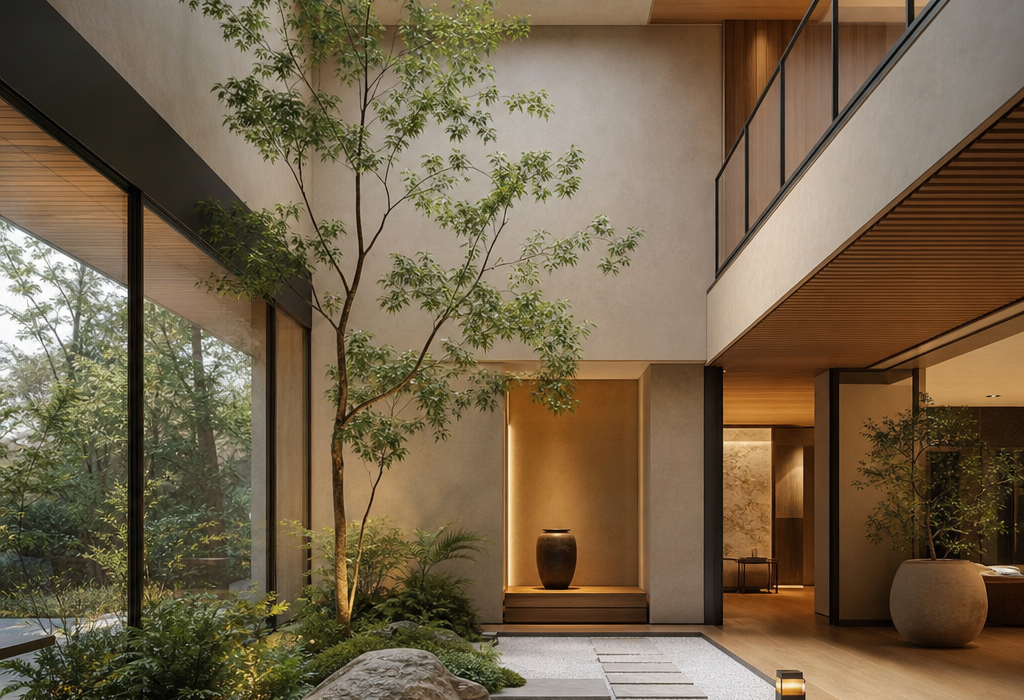
An atrium can become the quiet center of a home when it balances daylight, privacy, and easy upkeep. A Japandi approach works especially well here, blending clean lines with warm natural materials and a sense of calm.
1. Prioritize daylight without creating glare
Use the atrium’s height to bring light deep into the home, but soften it with frosted glass, sheer solar shades, or a pergola-style overhead element if the opening is exposed. In sunny parts of the U.S., especially the Southwest and South, consider low-e glazing to reduce heat gain while keeping the space bright.
2. Choose a simple material palette
Stick to a few finishes that work well together: light oak or ash, matte plaster, smooth concrete, and blackened metal details. Limiting the palette keeps the atrium visually calm and makes it easier to connect with nearby rooms without feeling busy.
3. Add plants that match the light conditions
Pick greenery based on how much direct sun the atrium gets. For bright spaces, try olive trees, fiddle leaf figs, or birds of paradise in large containers; for softer light, use snake plants, ZZ plants, or ferns. Place pots on saucers or trays and leave enough clearance for watering and airflow.
4. Plan flooring for moisture and foot traffic
An atrium often sees changing humidity, tracked-in dirt, and frequent use, so choose a floor that can handle it. Porcelain tile, sealed stone, or polished concrete are practical options, while area rugs should be flatweave and easy to shake out. If the atrium connects to outdoor access, a flush transition helps the space feel seamless.
5. Keep the furniture low and understated
Select a bench, pair of lounge chairs, or a narrow settee with low profiles so the vertical volume stays the star. In a Japandi-inspired atrium, furniture should feel intentional rather than crowded, with natural textiles like linen or wool in muted beige, gray, or moss tones.
6. Control acoustics so the space feels peaceful
Hard surfaces can make an atrium echo, especially if it opens to multiple rooms. Balance glass, stone, and metal with soft elements such as upholstered cushions, wool rugs, wood slat accents, or even fabric panels near adjacent openings. The goal is to keep the room quiet enough to feel restorative.
7. Light it for evening use, not just daytime views
Layer lighting with discreet fixtures: recessed downlights for general illumination, wall washers for texture, and a few warm accent lights near plants or seating. Use dimmers and warm-white bulbs so the atrium shifts easily from daytime brightness to a softer nighttime glow.
When an atrium is designed with restraint, it becomes more than a void in the middle of a plan—it becomes a restful, light-filled room that connects the home with nature in a very livable way.
Find the best professionals for your atrium project
Free and no obligation / Takes less than 5 minutes
Are you an architect or designer? Sign up for free! »