— Blog · October 16, 2026 · 5 min read
Lonoke County, Arkansas: A Practical Place for Thoughtful Building and Design
Discover why Lonoke County stands out in central Arkansas for homeowners, developers, and anyone planning a building project, from its small-town character to its practical construction market.
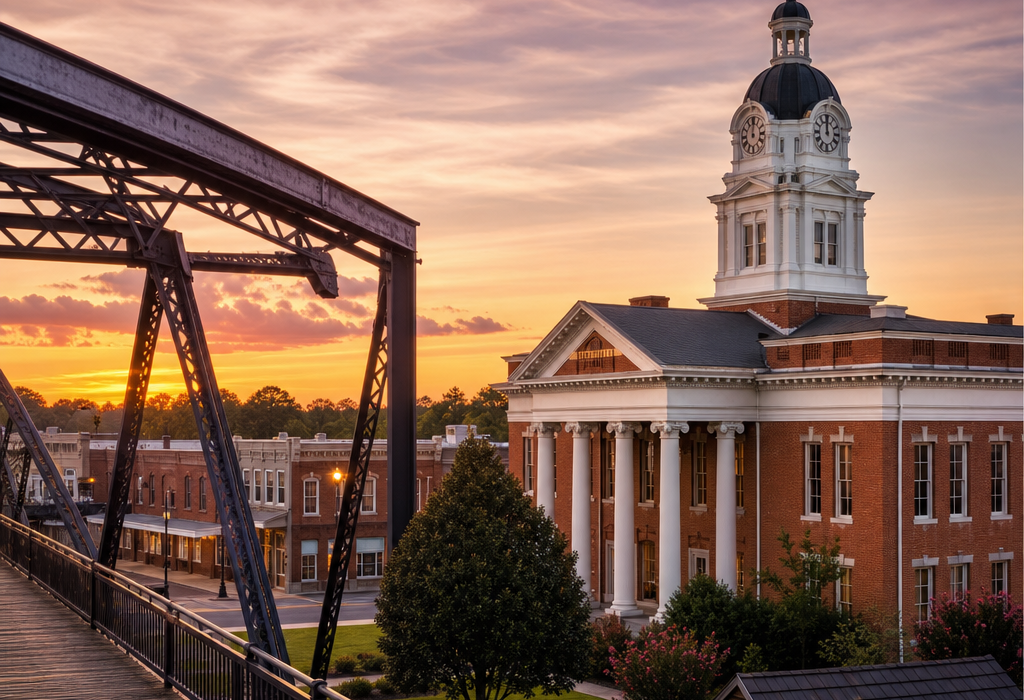
Welcome to Lonoke County
Lonoke County, Arkansas, is home to an estimated population of about 74,000 people and sits in the fast-changing corridor east of Little Rock. For people planning a home, renovation, or commercial project, that combination of small-town scale and regional access is part of the appeal: you get room to build, a strong network of local trades, and the convenience of being close to the Little Rock metro without paying big-city premiums. The county’s communities range from historic downtowns and older neighborhoods to newer subdivisions and light-industrial areas, which makes it a useful place to think about design in practical, flexible terms. For project planning, it is also a market where local specialists matter, including electricians and welders, especially on custom homes, additions, barns, shops, and mixed-use work.
Historically, Lonoke County grew with the railroad, agriculture, and the road network that connected central Arkansas communities. That legacy still shapes the built environment today: many of the most interesting properties are not monumental landmarks, but places where older Arkansas building traditions meet practical modern updates. If you are looking for a place where architecture is driven by livability, value, and a clear sense of place, Lonoke County is worth a close look.
Architectural Highlights
Lonoke County’s architectural character is defined less by skyline buildings and more by the everyday fabric of Arkansas towns: modest Victorian-era houses, early 20th-century brick storefronts, postwar ranch homes, farm structures, and newer suburban construction. In places like Lonoke, Cabot, and Carlisle, you can still find downtown blocks that reflect the county’s railroad-era growth, when commercial buildings were typically built close together with brick facades, large display windows, and straightforward ornament. These older main streets give the county a sense of continuity and offer good examples of how durable, economical architecture can remain relevant for generations.
Another important layer is the mix of vernacular residential architecture and modern family housing. Many neighborhoods feature practical floor plans, porches that respond to the Arkansas climate, and garages, workshops, and accessory buildings that support daily life. On the newer side, the county has seen steady growth in subdivisions and custom homes that emphasize open layouts, energy efficiency, and flexible indoor-outdoor living. That combination of historic character and current development makes Lonoke County especially interesting for people who want a project that feels grounded but not outdated.
A notable architectural fact is that several of the county’s town centers were shaped by railroad and highway access rather than by a single planned urban core. That pattern created compact downtowns surrounded by expanding residential areas, a structure that still influences renovation opportunities, infill lots, and adaptive reuse projects today. For owners and builders, that means there is often room to work creatively within an established neighborhood context instead of starting from scratch.
Construction Costs & Trends
For many residential and small commercial projects in Lonoke County, a reasonable planning estimate for construction costs is roughly $1,500 to $2,800 per square meter, depending on finishes, structure type, site conditions, and whether the work is new build, renovation, or specialty construction. In U.S. planning terms, that broad range reflects the difference between basic, efficient construction and more customized work with higher-end materials or complex labor. Costs can rise quickly for projects that require significant electrical upgrades, custom metal fabrication, specialty detailing, or challenging site preparation, which is why coordination with local trades such as electricians and welders can be important early in the process.
One of the biggest urban trends in Lonoke County is steady growth tied to the greater Little Rock region. Cabot has been one of the most visible examples, with continued residential expansion, new commercial services, and infrastructure improvements that support commuter-friendly living. Across the county, that growth is encouraging more infill, more subdivision development, and more practical investment in schools, roads, and neighborhood amenities. For project owners, this often means a market that is active enough to support quality work, but still grounded in manageable site sizes and a local-scale building culture.
Why Lonoke County is Perfect for Your Project
Lonoke County is especially attractive for people planning a home, addition, renovation, shop, or small business because it offers a balance that is increasingly hard to find: enough demand to support good construction, but not so much density that every project becomes complicated and expensive. The county’s infrastructure, proximity to Little Rock, and mix of established towns and growing suburbs create opportunities for projects that are both practical and expressive. Whether you are modernizing an older house, designing a new family home, or building a workspace on a larger lot, the county provides a flexible setting where function and character can coexist.
It is also a strong place for architecture-minded projects because the local context rewards thoughtful choices. Older downtown buildings can inspire preservation-sensitive renovations, while newer neighborhoods make it possible to pursue clean, efficient, contemporary design. The climate and landscape encourage useful details such as covered entries, deep porches, durable exterior materials, and site planning that respects heat, sun, and seasonal storms. In other words, Lonoke County is not just a place to build; it is a place where good design can actually improve everyday life. For many property owners, that combination of affordability, growth, and authentic Arkansas character is exactly what makes the county such a compelling place to start.
Find the best professionals for your project in Lonoke County
Free and no obligation / Takes less than 5 minutes
Are you an architect or designer? Sign up for free! »