— Ideas & inspiration
Laundry room
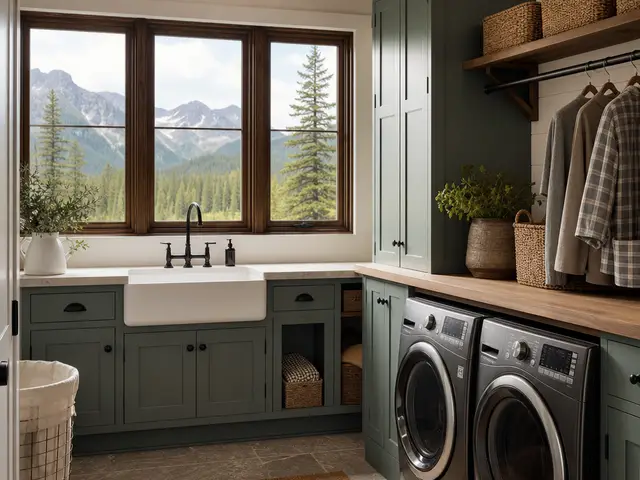
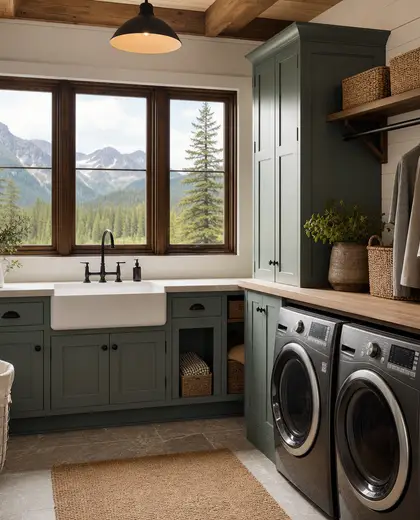
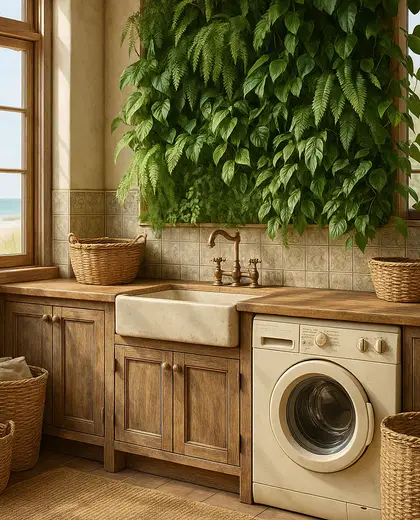
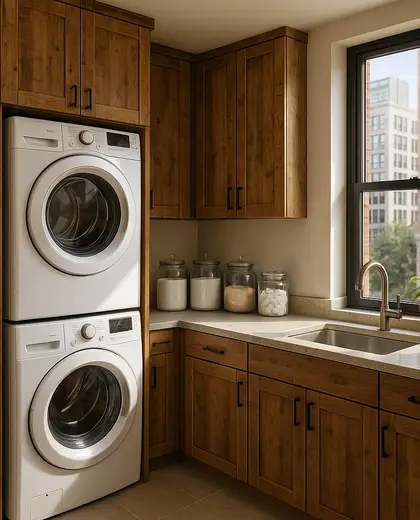
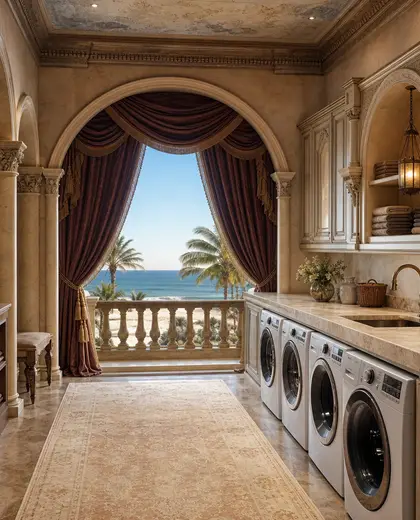
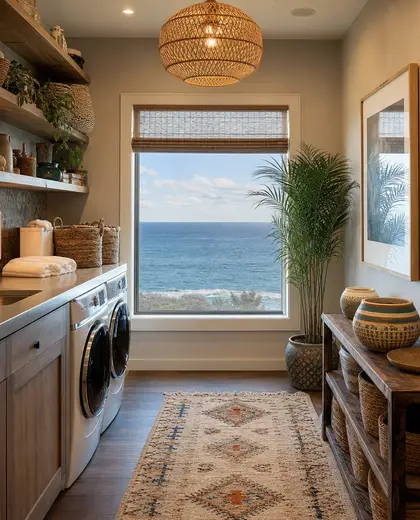
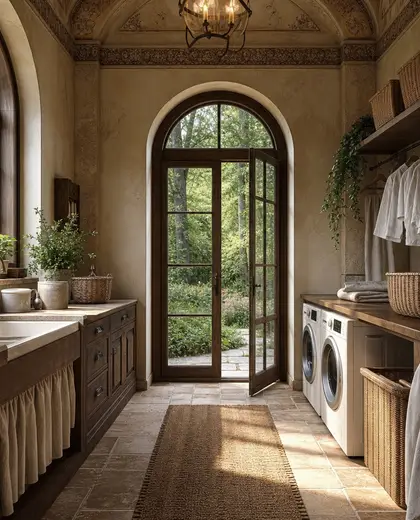
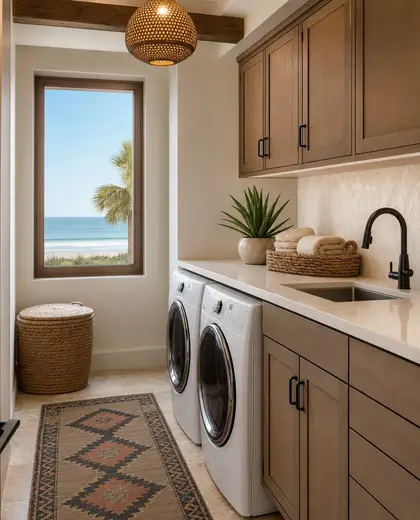
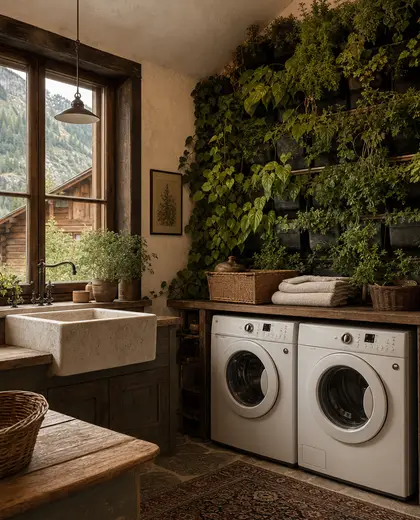
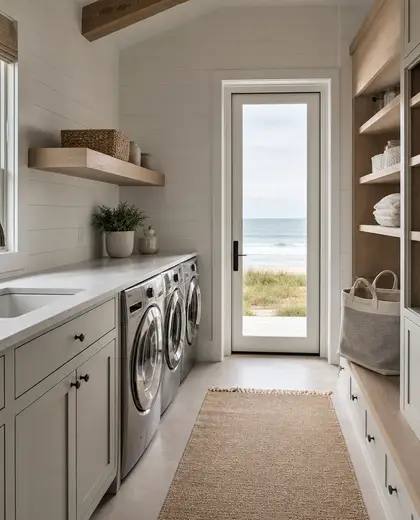
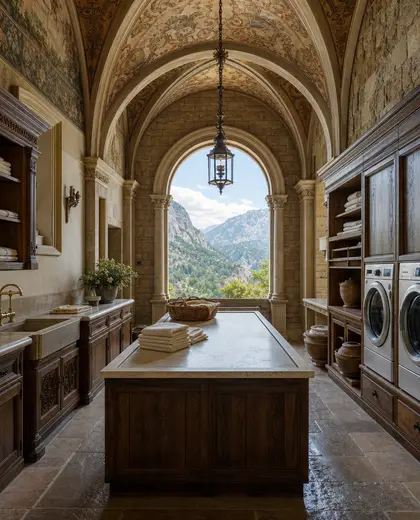
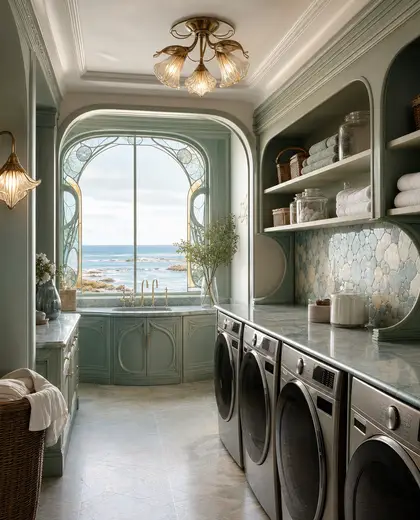
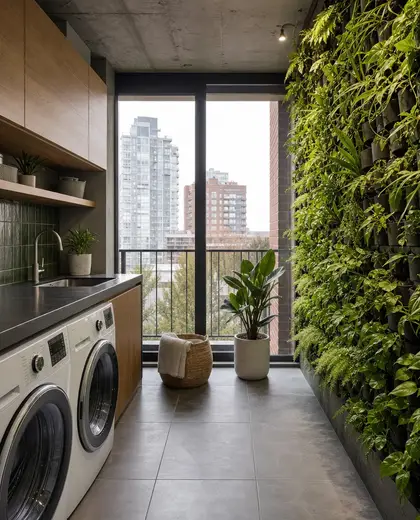
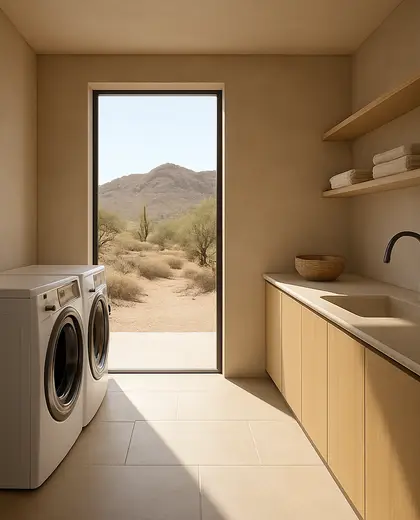
A laundry room is defined by durable, moisture-resistant finishes, practical storage, and a clear work surface for sorting, folding, and cleaning. Common materials include painted cabinetry, laminate or stone countertops, ceramic tile, and easy-clean flooring such as porcelain tile or vinyl. The palette is usually light and calm, with whites, soft grays, wood tones, and occasional darker hardware for contrast.
- laundry room
— References
References to explore

What makes a laundry room different from a utility room?
A laundry room is organized specifically around washing, drying, folding, and storing clothes, while a utility room may combine laundry with cleaning equipment, mechanical systems, or general household storage.




Which materials work best in a laundry room?
Choose surfaces that handle moisture and frequent use: tile or vinyl flooring, wipeable wall paint, and cabinets and counters that are easy to clean and resist humidity.

How much storage should a laundry room have?
Enough to keep detergents, baskets, ironing tools, and cleaning supplies out of the way. Closed cabinets help reduce visual clutter, while open shelves or hanging rods add quick access for everyday tasks.






— The style
What defines it
Cabinetry in painted wood or MDF, countertops in laminate, quartz, or stone, and flooring in porcelain tile, vinyl, or sealed concrete.
Typically neutral and bright: white, warm gray, beige, pale blue, and natural wood, with black, brass, or stainless accents.
Often paired with mudrooms, utility areas, or kitchens, and frequently includes a sink, hanging rail, shelving, and closed storage.
— Professionals
Who has already built it


- Karavaan Homefurniture sellers · High Point · 4 projectsView profile →
— Questions
Frequently asked questions
What makes a laundry room different from a utility room?
A laundry room is organized specifically around washing, drying, folding, and storing clothes, while a utility room may combine laundry with cleaning equipment, mechanical systems, or general household storage.
Which materials work best in a laundry room?
Choose surfaces that handle moisture and frequent use: tile or vinyl flooring, wipeable wall paint, and cabinets and counters that are easy to clean and resist humidity.
How much storage should a laundry room have?
Enough to keep detergents, baskets, ironing tools, and cleaning supplies out of the way. Closed cabinets help reduce visual clutter, while open shelves or hanging rods add quick access for everyday tasks.