— Ideas & inspiration
Bathroom composition
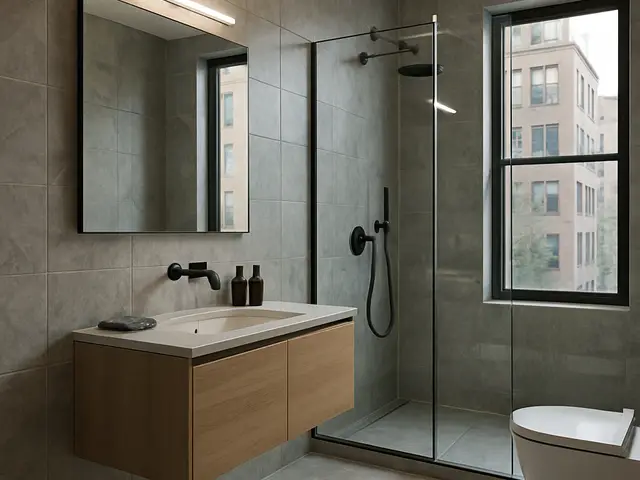
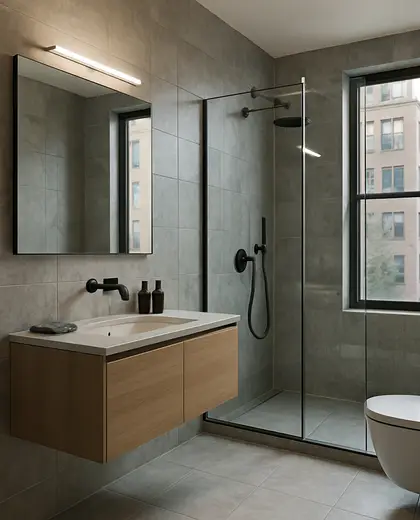
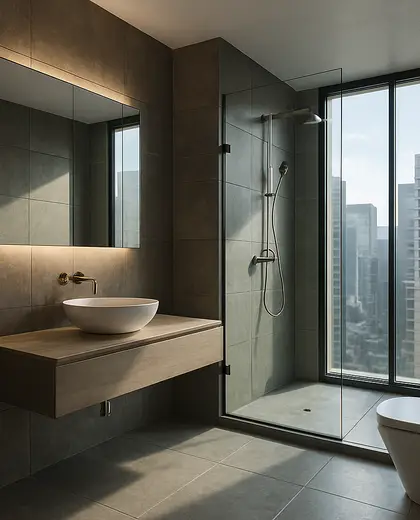
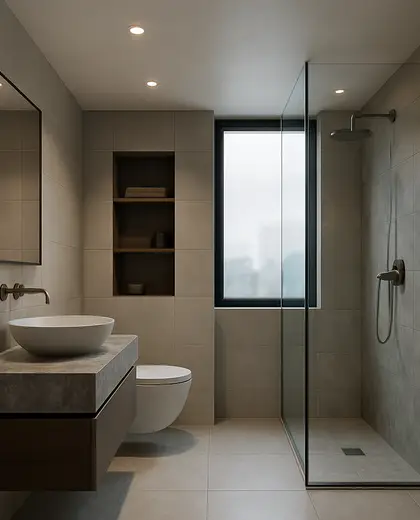
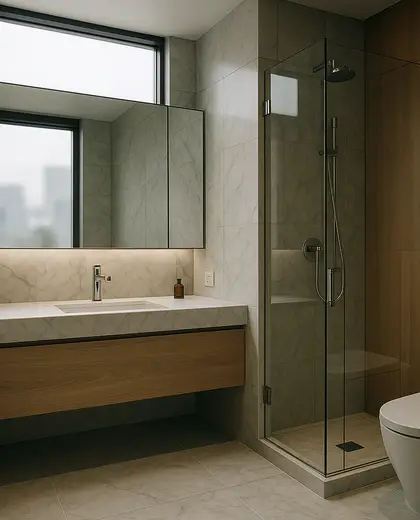
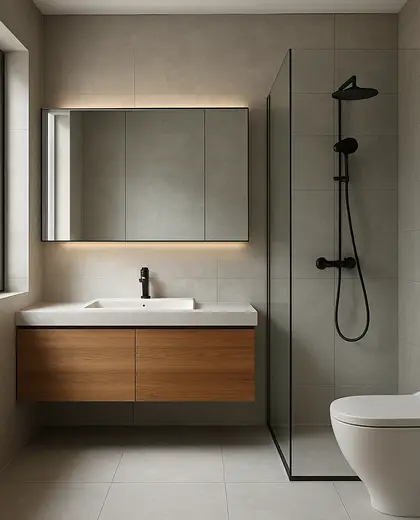
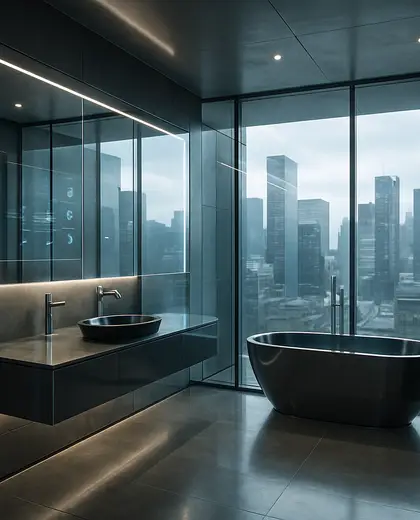
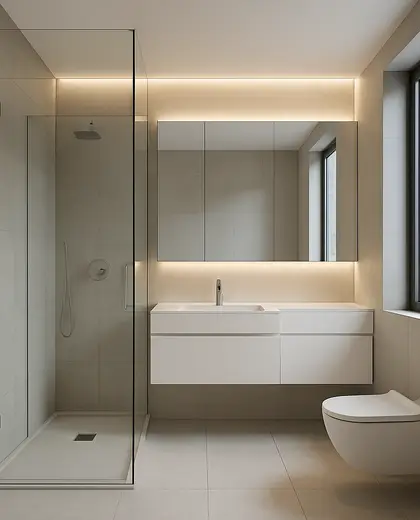
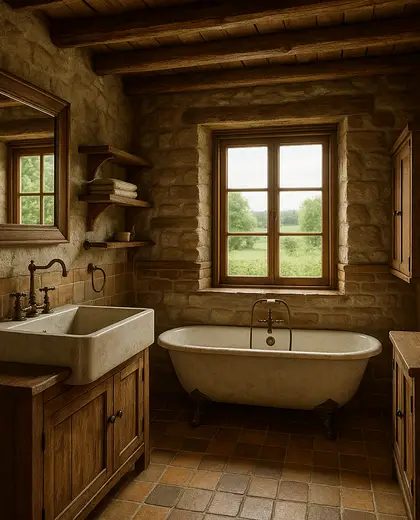
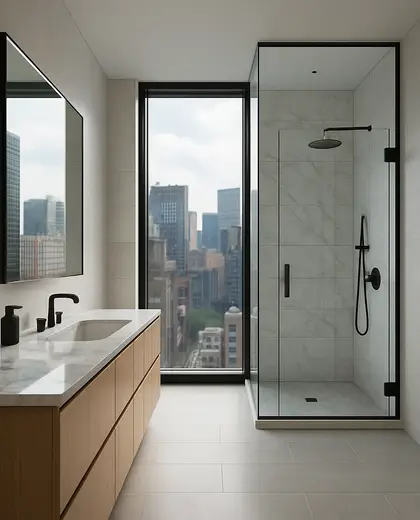
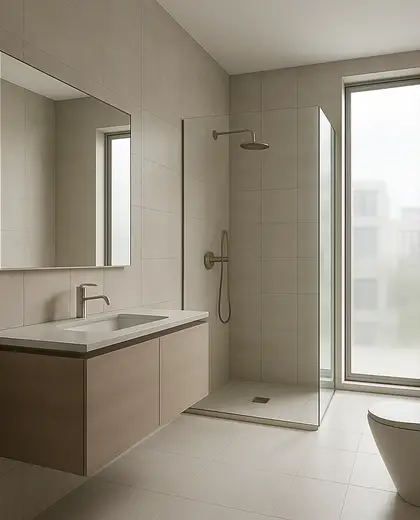
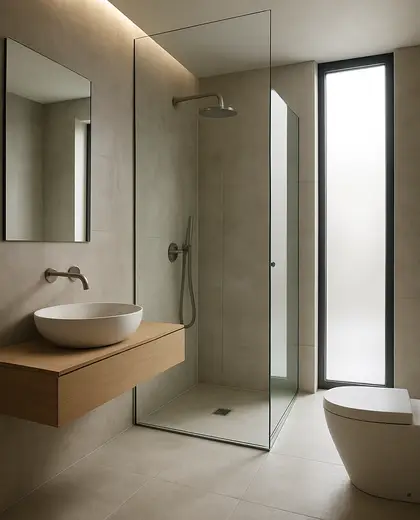
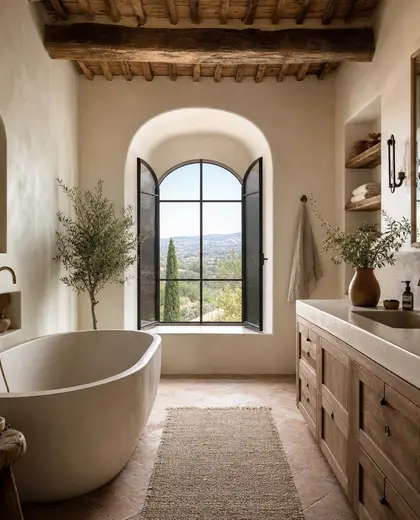
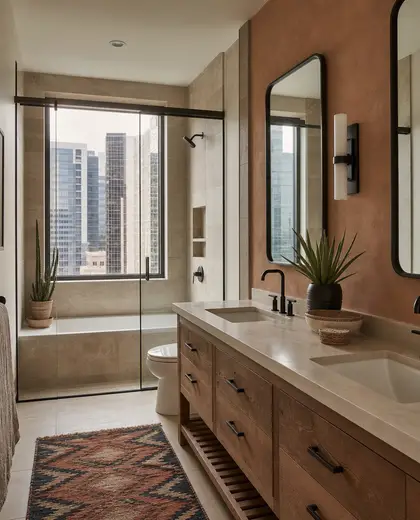
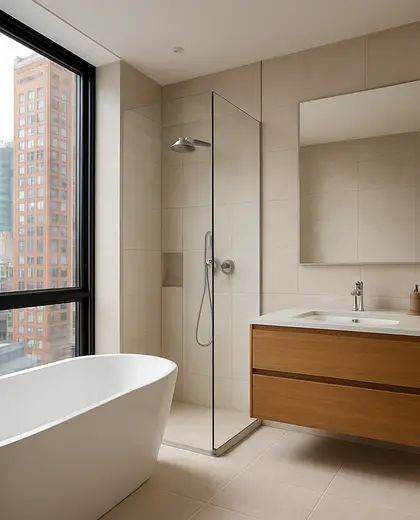
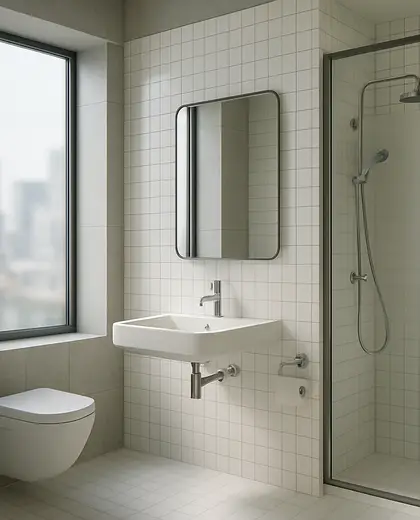
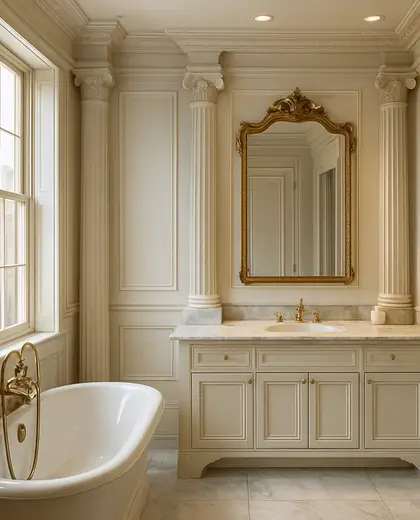
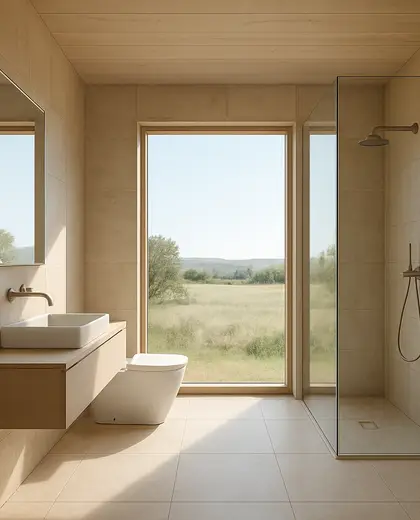
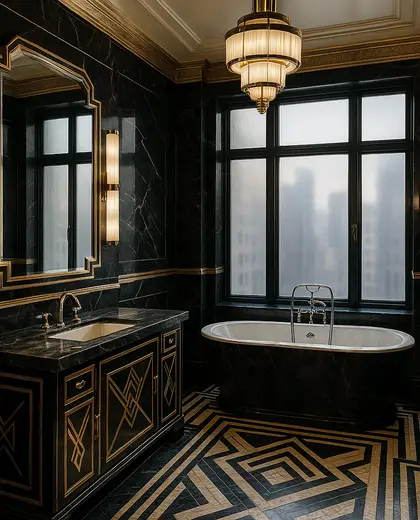
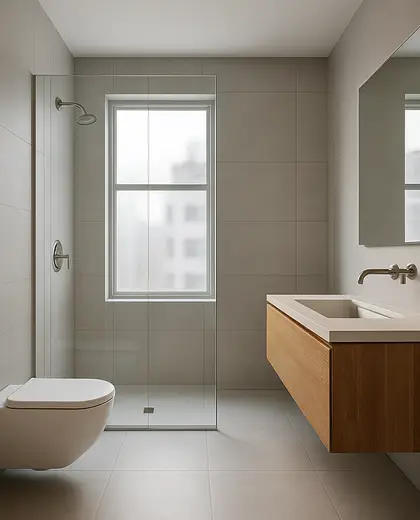
A bathroom composition is defined by moisture-ready surfaces, compact plumbing fixtures, and a clear separation between wet and dry zones. Common materials include ceramic or stone tile, sealed stone, glass, metal, and water-resistant wood or laminate. The palette usually stays calm and light, with white, beige, gray, muted green, or dark matte accents, and it often combines with mirror surfaces, built-in storage, and simple lighting.
- bathroom
— References
References to explore
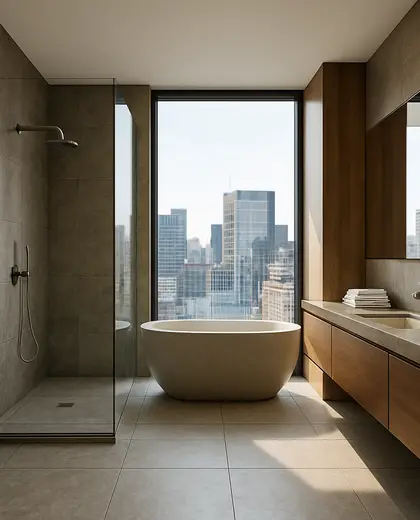
What makes a bathroom composition different from other rooms?
It is organized around plumbing, ventilation, and moisture resistance, so surfaces and finishes are chosen to tolerate water and easy cleaning.

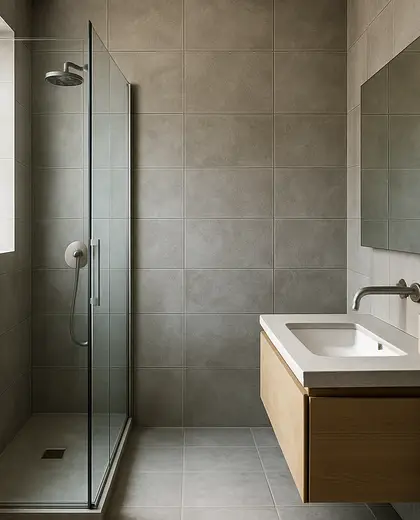
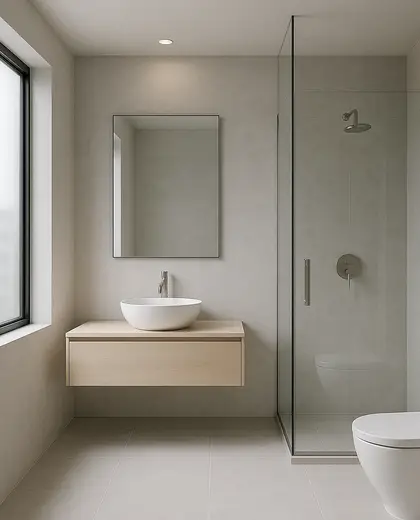
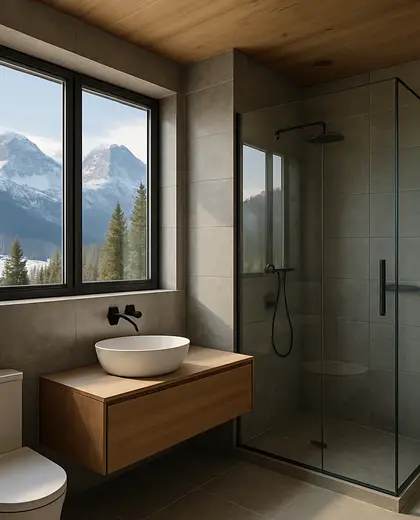
Which materials are best for a bathroom?
Non-porous or well-sealed materials are usually best, such as porcelain tile, glazed ceramic, stone with proper sealing, glass, and moisture-resistant cabinetry.

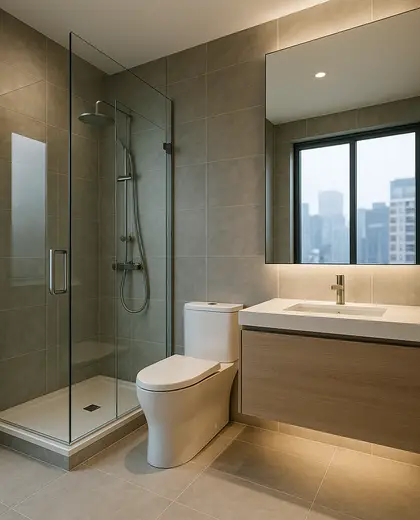
Can a bathroom composition still feel warm, not clinical?
Yes. Warmth usually comes from wood tones, softer lighting, textured tile, and a limited palette rather than bright, glossy finishes everywhere.

— The style
What defines it
Ceramic tile, natural stone, porcelain, tempered glass, stainless steel, and sealed wood or laminate are typical because they handle humidity and frequent cleaning.
Most bathrooms use neutral or mineral tones, often softened with warm wood, off-white grout, or matte black fixtures for contrast.
It works well with built-in vanities, mirrors, wall niches, underfloor heating, concealed storage, and restrained lighting.
— Professionals
Who has already built it






- Karavaan Homefurniture sellers · High Point · 4 projectsView profile →
— Questions
Frequently asked questions
What makes a bathroom composition different from other rooms?
It is organized around plumbing, ventilation, and moisture resistance, so surfaces and finishes are chosen to tolerate water and easy cleaning.
Which materials are best for a bathroom?
Non-porous or well-sealed materials are usually best, such as porcelain tile, glazed ceramic, stone with proper sealing, glass, and moisture-resistant cabinetry.
Can a bathroom composition still feel warm, not clinical?
Yes. Warmth usually comes from wood tones, softer lighting, textured tile, and a limited palette rather than bright, glossy finishes everywhere.