— Blog · August 28, 2026 · 4 min read
New York City Architecture Guide: Why the City Still Sets the Pace
A look at New York City’s architecture, construction costs, and urban energy—and why it remains one of the most compelling places in the United States to plan a building, renovation, or design project.
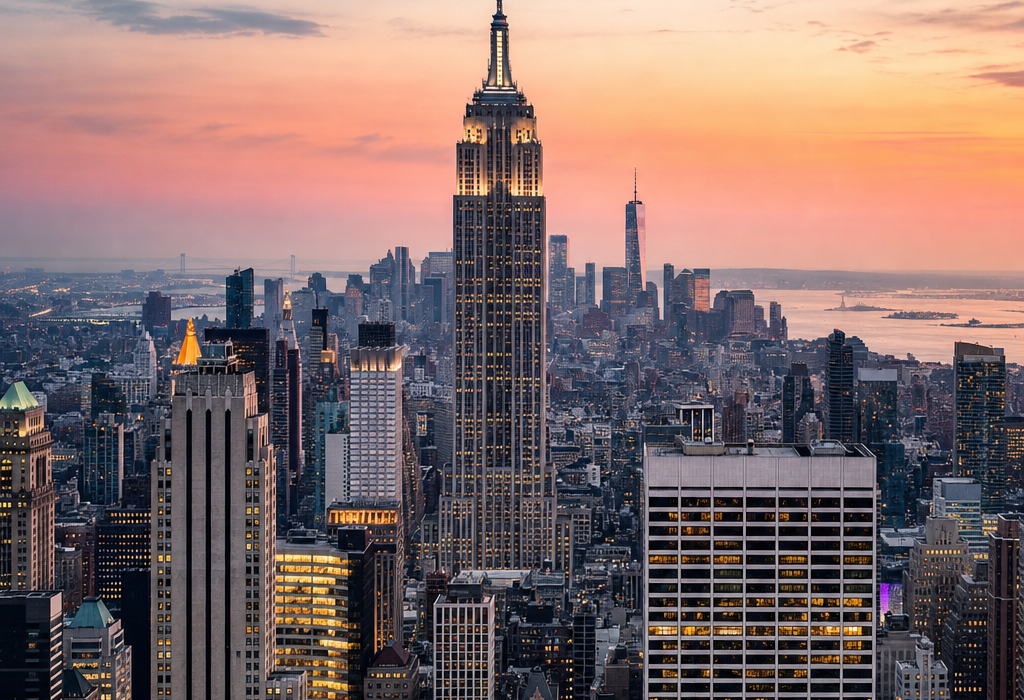
Welcome to New York City
New York City, with a latest estimated population of about 8.3 million people, is one of the most influential urban environments in the United States and the world. It is a place where historic brownstones, prewar apartment buildings, loft conversions, and supertall towers all share the same streetscape, making it an extraordinary setting for anyone planning a home, commercial space, or redevelopment project. For project owners, that density creates both challenges and opportunities: tight sites, complex regulations, and high expectations, but also access to some of the country’s most experienced architects, builders, and decorators. Historically, New York’s growth was shaped by the 1811 Commissioners’ Plan, which established the Manhattan grid and helped define the city’s rapid vertical and economic expansion. Today, the same urban intensity that made New York famous continues to attract people who want ambitious design, strong resale value, and a distinctly urban lifestyle.
Architectural Highlights
New York City’s architecture tells the story of America itself: immigrant-built neighborhoods, industrial warehouses, ornate Gilded Age landmarks, and some of the tallest and most advanced buildings ever constructed. Classic highlights include the Empire State Building, the Chrysler Building, Grand Central Terminal, the Brooklyn Bridge, and the early high-rise towers that helped establish the skyline as a global icon. At street level, the city is equally compelling for its row houses, cast-iron buildings, and prewar apartments, especially in neighborhoods such as Brooklyn Heights, the Upper West Side, and Greenwich Village. On the modern side, Hudson Yards, One World Trade Center, 432 Park Avenue, and the new wave of glass-and-steel towers show how New York continues to push engineering and design forward. For homeowners and developers, the mix of historic preservation and cutting-edge construction means that design decisions here often need to balance character, code compliance, and long-term value. That is exactly why projects in New York often benefit from collaboration with experienced architects, builders, and decorators who understand both local context and high-end expectations.
Construction Costs & Trends
Construction in New York City is among the most expensive in the country, with an average cost that can often range from about $4,000 to $8,000 per square meter for residential work, and higher for complex or luxury projects. In U.S. terms, that translates to roughly $370 to $740 per square foot, depending on scope, location, finishes, structural conditions, and permitting demands. Costs rise quickly because of labor, logistics, union requirements on many projects, limited site access, and the need to coordinate closely with city agencies and neighboring buildings. A major recent trend is the continued conversion and adaptive reuse of older office stock, especially in Manhattan, as owners and developers respond to changing demand in the post-pandemic market. At the same time, there is strong interest in transit-oriented development, energy-efficient upgrades, and luxury renovations that preserve historic fabric while adding modern comfort. For people planning a project, this means New York rewards careful budgeting and expert coordination—but also offers strong long-term upside in one of the most resilient real-estate markets in the United States.
Why New York City is Perfect for Your Project
New York City is a uniquely attractive place to build, renovate, or redesign because it combines prestige, market depth, and constant architectural innovation. The city’s layered building stock gives project owners more possibilities than almost anywhere else in the country: restoring a classic townhouse, reimagining a loft, upgrading a condominium, or creating a ground-up contemporary space. Its transportation network, dense neighborhood fabric, and constant demand for quality housing and commercial space support projects that are well designed and carefully executed. Just as important, New York has a culture that appreciates good design, so thoughtful details can meaningfully shape value and livability. Whether the goal is a refined residential interior, a modern retail environment, or a full redevelopment, the city offers access to highly skilled architects, dependable builders, and creative decorators who understand how to work within New York’s demanding but rewarding landscape. For many project owners, that combination of ambition, visibility, and design culture is exactly what makes New York City such an exciting place to invest in space.
Find the best professionals for your project in New York City
Free and no obligation / Takes less than 5 minutes
Are you an architect or designer? Sign up for free! »