— Blog · July 31, 2026 · 5 min read
Houston: A City of Scale, Style, and Opportunity for Your Next Project
A feature look at Houston’s architecture, growth, and project-ready market—from landmark modernism and historic neighborhoods to construction costs and current urban trends.
Welcome to Houston
Houston is one of the largest and most dynamic cities in the United States, with a latest estimated population of about 2.3 million people in the city proper and more than 7 million across the metropolitan area. For anyone planning a home, commercial space, or mixed-use development, that scale matters: Houston combines a huge client base, a broad range of neighborhoods, and a building culture shaped by growth, reinvention, and Texas-size ambition. It is also one of the most architecturally interesting cities in the country because it has no traditional zoning code, which has helped create a flexible urban environment where towers, bungalows, adaptive reuse projects, and master-planned districts can all coexist. That flexibility makes Houston especially appealing for people looking to work with architects who understand both design and local development realities, as well as experienced builders who can navigate the city’s fast-moving construction market.
Houston’s identity is tied to resilience, scale, and diversity. It is a major center for energy, medicine, aerospace, logistics, and international trade, and that mix supports a wide range of building types—from office campuses and medical facilities to custom residences and hospitality projects. The result is a city where architecture is not just about aesthetics; it is also about performance, flood resilience, comfort in a hot-humid climate, and long-term value.
Architectural Highlights
Houston’s architectural story blends early civic landmarks with bold modern icons and neighborhood character. Among the city’s most recognized historic buildings is the Old Red Museum-era county courthouse, a striking example of Romanesque Revival civic architecture from the late 19th century, along with preserved structures in districts such as Freedmen’s Town, the Heights, and other early neighborhoods that reflect Houston’s development as a railroad and port city. These older areas give the city a human-scale counterpoint to its skyline and offer inspiration for renovation and preservation-minded projects.
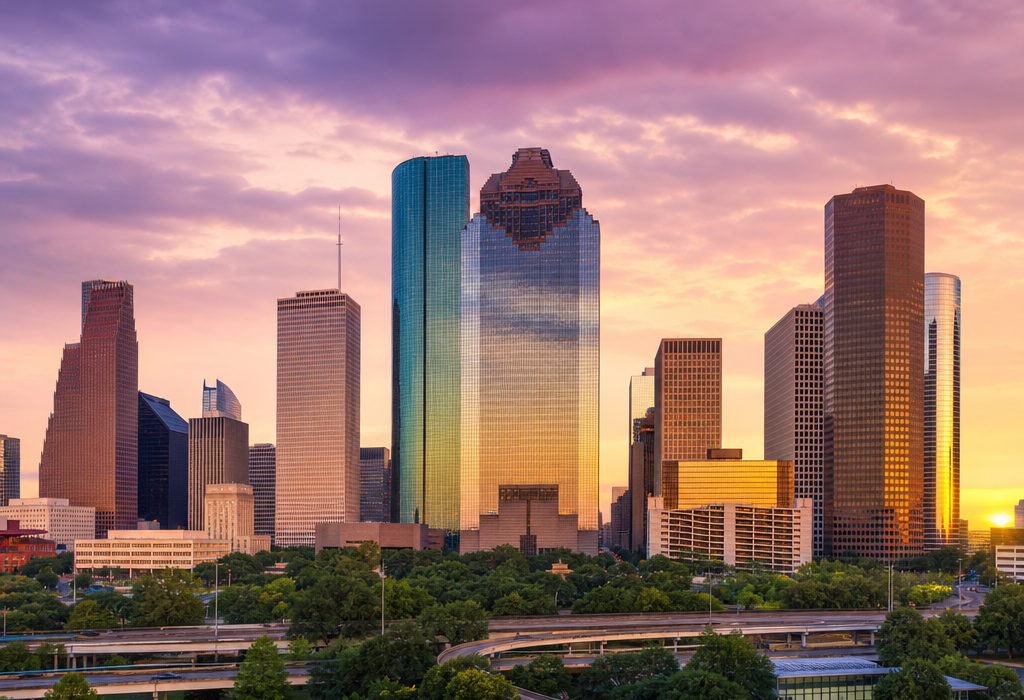
On the modern side, Houston is famous for its skyline, especially the cluster of towers downtown and in Uptown. Landmark buildings include the JPMorgan Chase Tower, one of the tallest five-sided skyscrapers in the world; Pennzoil Place, celebrated for its innovative twin-trapezoid form and widely regarded as a turning point in late modernist corporate design; and the Williams Tower, a signature postmodern skyscraper in the Galleria area. Cultural architecture also stands out, from the Museum of Fine Arts, Houston and the Menil Collection to the bold forms of the Menil Campus, which helped redefine museum design in the city. Houston’s architectural character is also shaped by its residential variety: mid-century ranch homes, contemporary infill, courtyard houses, and high-end custom residences all appear within relatively short distances of one another.
A relevant historical fact is that Houston’s lack of traditional zoning, established through the city’s development history rather than a single zoning ordinance, profoundly influenced how the city grew. That approach encouraged a more flexible, market-driven urban form than in many other large U.S. cities, helping Houston become a place where architects and developers could experiment with mixed uses, unusual site constraints, and varied building typologies. For project owners, that means there is often room for creative solutions—provided the design team understands code, drainage, parking, and neighborhood context.
Construction Costs & Trends
For budgeting purposes, an approximate average construction cost in Houston can range from about $1,800 to $3,500 per square meter for typical residential and light commercial work, depending on scope, finishes, structural complexity, site conditions, and flood-resilience requirements. Higher-end custom projects, specialized interiors, or complex commercial buildings can exceed that range. Houston’s relative affordability compared with coastal gateway cities is one reason many owners see it as a practical place to build or renovate, but local conditions still matter: expansive soils, stormwater management, and hot-weather performance can materially affect cost and detailing.
One of the biggest current urban trends in Houston is the continued growth of infill development and mixed-use revitalization in neighborhoods such as the East End, Midtown, EaDo, and the inner-loop districts. At the same time, the city is investing more attention in flood mitigation and resilient infrastructure after major storms have underscored the importance of drainage and site planning. This has encouraged more thoughtful building envelopes, better grading strategies, and stronger coordination between design and construction teams. As new transit-oriented and walkable projects gain momentum, Houston is gradually broadening its identity from a car-oriented metropolis to a more connected, amenity-rich urban region.
Why Houston is Perfect for Your Project
Houston is attractive for building, renovating, or designing because it offers a rare combination of opportunity, scale, and flexibility. The city’s economy continues to generate demand for new housing, offices, medical spaces, restaurants, and hospitality projects, while its cultural diversity supports a wide spectrum of design preferences—from minimal contemporary homes to expressive, site-specific architecture. For project owners, that means there is room to tailor a vision without being locked into a one-size-fits-all urban template.
It is also a city where good planning pays off. Climate-responsive design, durable materials, shading, and moisture management are especially important in Houston, and the best projects tend to balance aesthetics with long-term performance. Whether the goal is a custom residence, a renovation, or a commercial build-out, working with local architects and reliable builders can help translate a concept into something that feels both beautiful and practical. For people who want a city with big-market energy, architectural variety, and room for smart, future-focused design, Houston stands out as one of the most compelling places in the United States to start a project.
Find the best professionals for your project in Houston
Free and no obligation / Takes less than 5 minutes
Are you an architect or designer? Sign up for free! »