— Ideas & inspiration
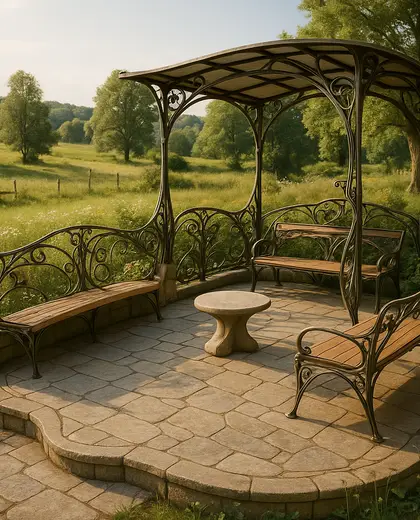
Art Nouveau softened by rural quiet
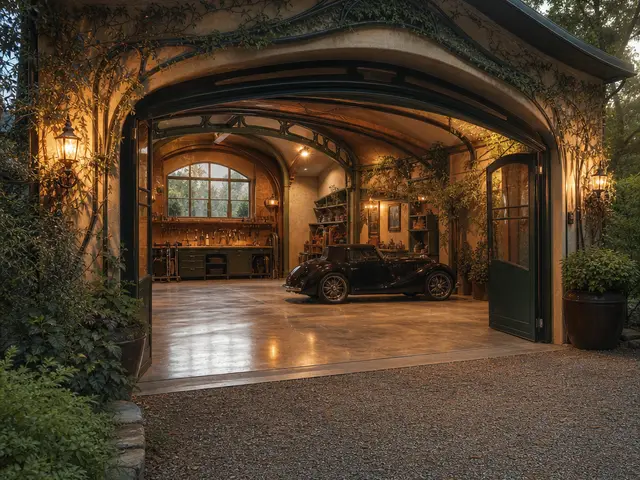
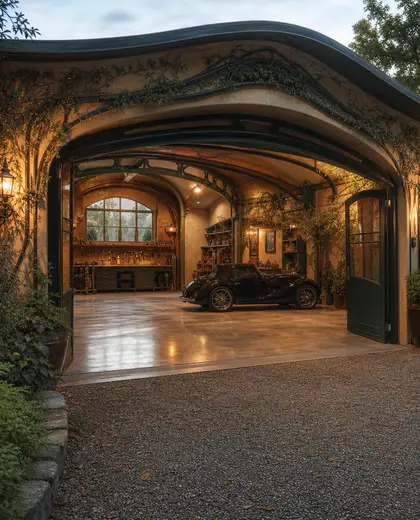
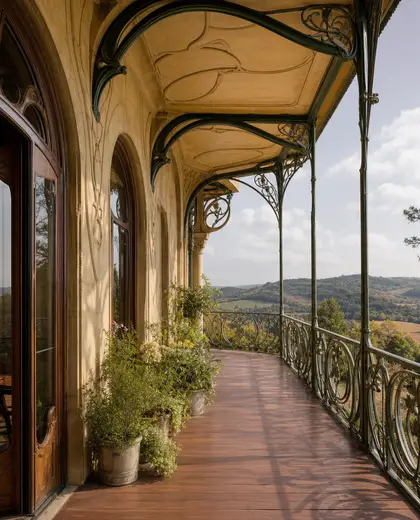
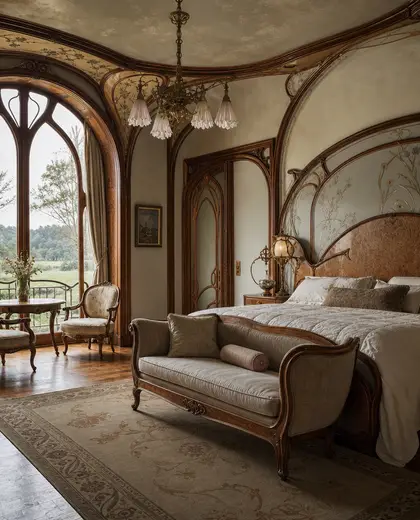
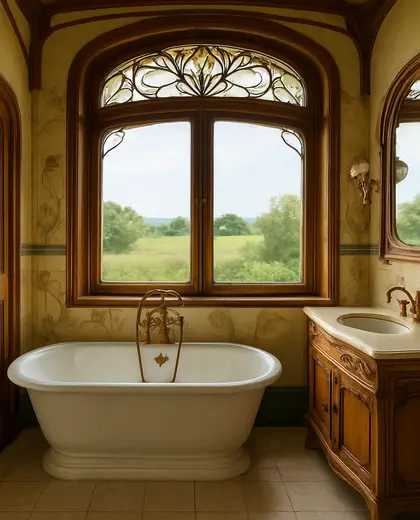
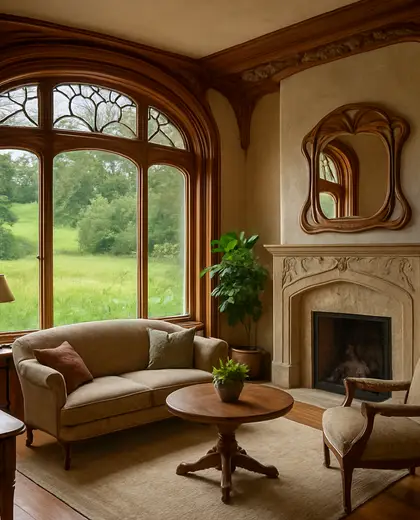
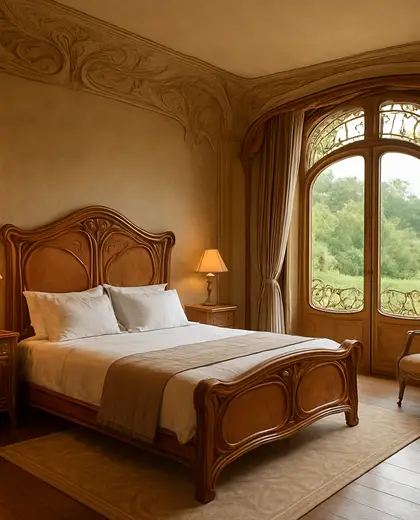
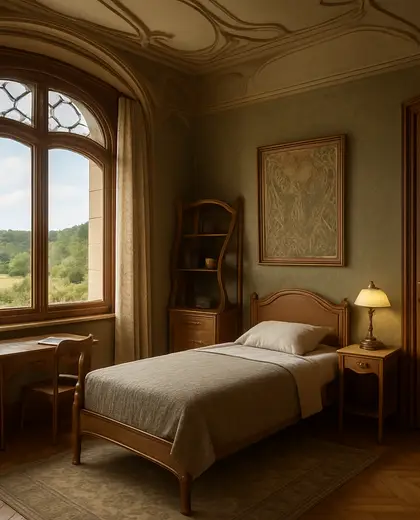
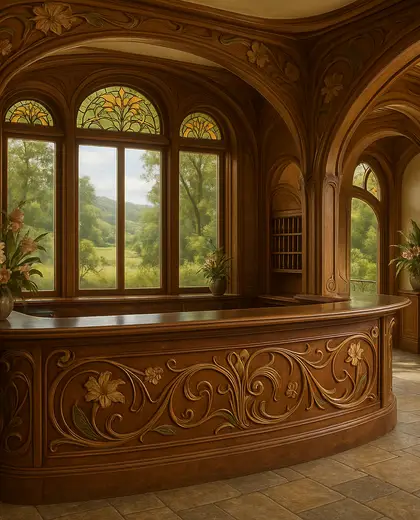
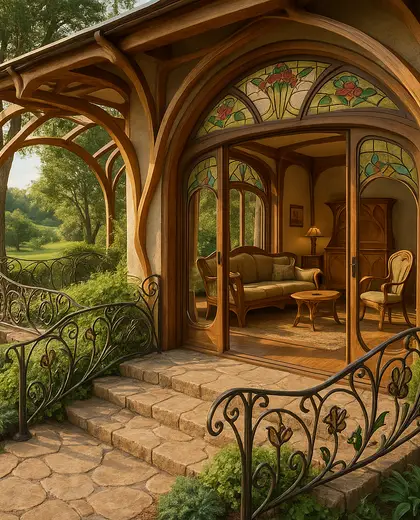
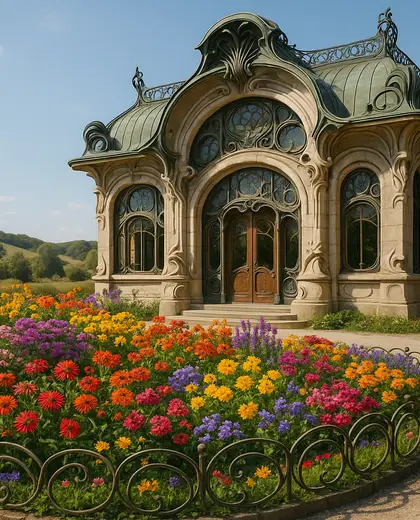
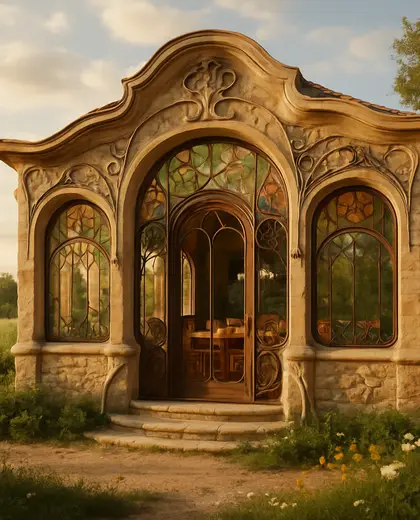
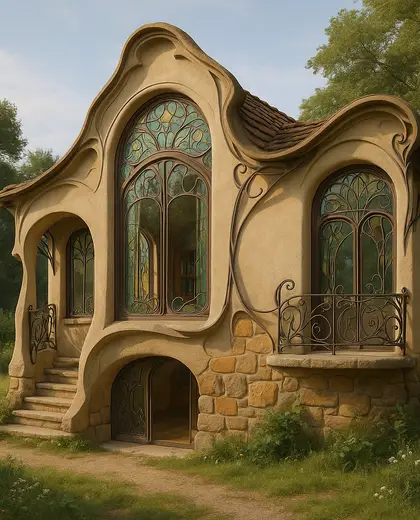
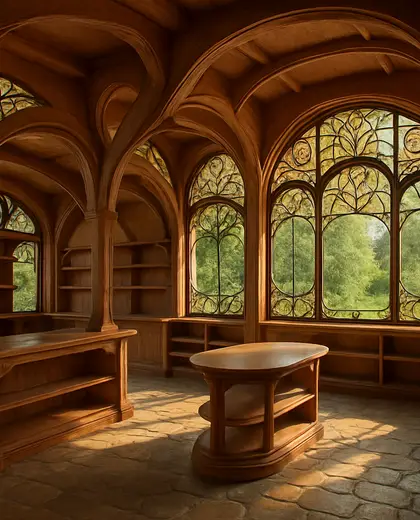
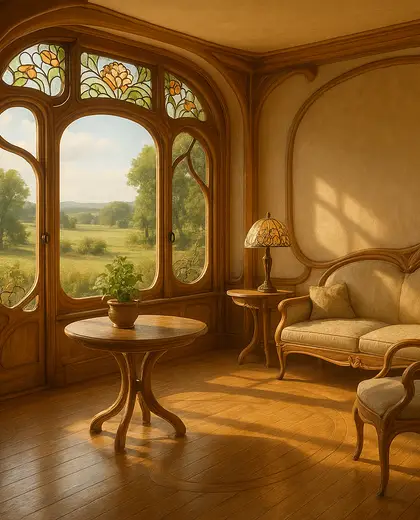
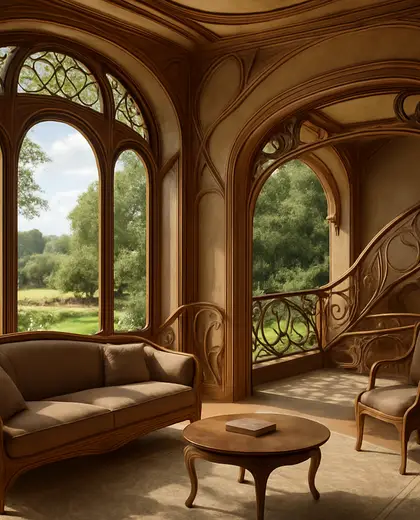
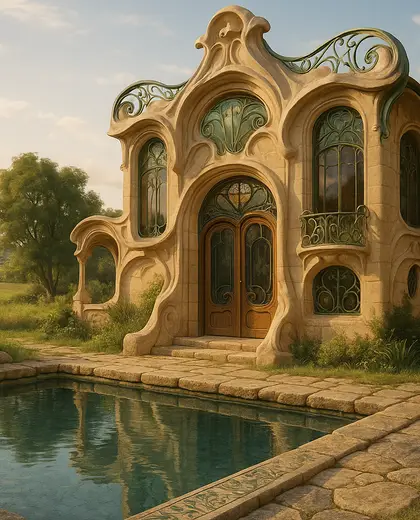
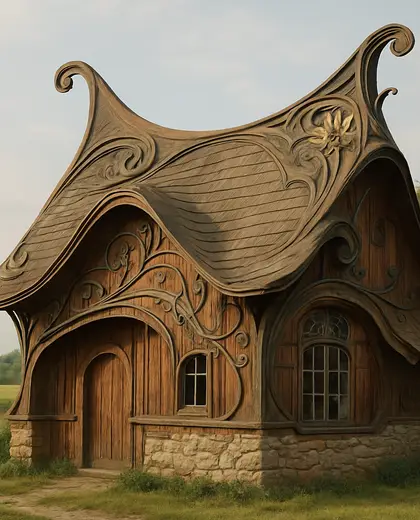
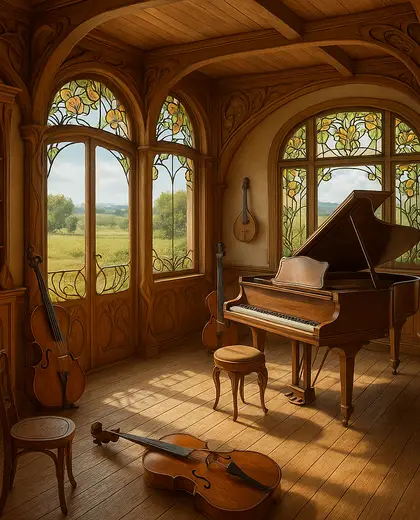
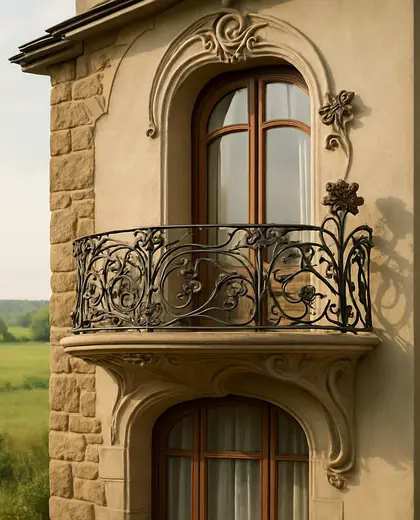
This composition pairs Art Nouveau’s curved lines and botanical detail with rural architecture’s simple forms and natural textures. Expect timber, stone, plaster, wrought iron, and glazed tile in muted greens, creams, ochres, and weathered browns. The result feels handcrafted and grounded, with ornament used sparingly on doors, rails, windows, and fixtures.
- art nouveau
- rural
— References
References to explore
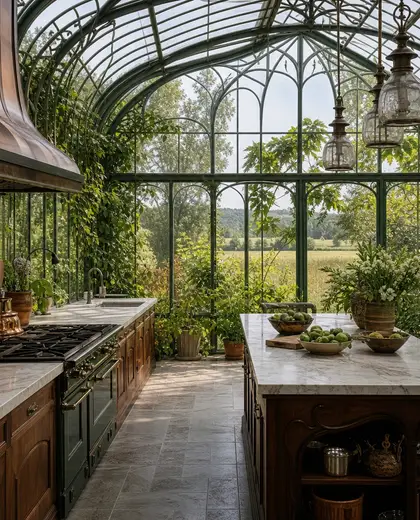
How do I keep Art Nouveau from feeling too ornate in a rural home?
Limit the decorative moments to a few key details such as a stair rail, a front door, a mirror frame, or a window pattern. Keep walls, ceilings, and built-ins simple so the space still reads as rural and calm.
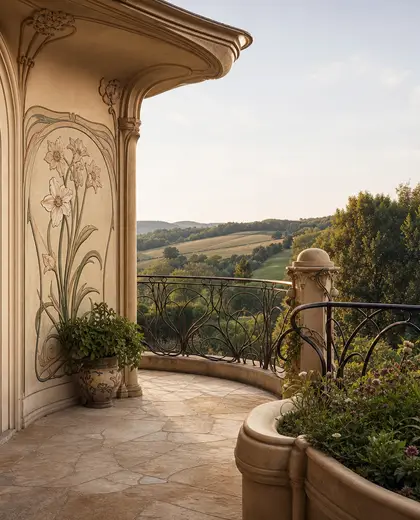
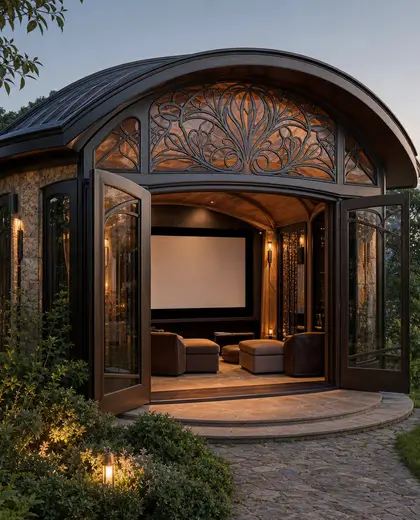
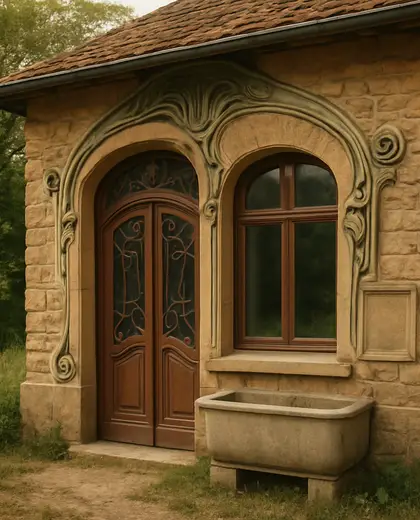
What materials work best for this style in a house?
Natural materials with visible texture work best: timber floors, plaster walls, stone hearths, and iron hardware. Glazed tile or stained glass can be added in small doses for an Art Nouveau accent.
Does this style suit a modern home or only an older farmhouse?
It can work in either, but it usually looks most convincing when the base architecture stays simple and rural in spirit. In a modern home, use curved lines, botanical motifs, and earthy finishes rather than heavy ornament everywhere.
— The style
What defines it
Timber, stone, lime plaster, wrought iron, ceramic tile, and sometimes stained glass.
Soft greens, cream, warm beige, moss, ochre, terracotta, and aged brown.
Rural farmhouse and cottage influences, especially plain volumes, pitched roofs, and natural finishes.
— Professionals
Who has already built it
- fathoms designarchitects · Wheaton · 6 projectsView profile →
- Karavaan Homefurniture sellers · High Point · 4 projectsView profile →
- jacob galleslandscape designers · 6 projectsView profile →
- pfuner designinterior designers · 11 projectsView profile →
— Questions
Frequently asked questions
How do I keep Art Nouveau from feeling too ornate in a rural home?
Limit the decorative moments to a few key details such as a stair rail, a front door, a mirror frame, or a window pattern. Keep walls, ceilings, and built-ins simple so the space still reads as rural and calm.
What materials work best for this style in a house?
Natural materials with visible texture work best: timber floors, plaster walls, stone hearths, and iron hardware. Glazed tile or stained glass can be added in small doses for an Art Nouveau accent.
Does this style suit a modern home or only an older farmhouse?
It can work in either, but it usually looks most convincing when the base architecture stays simple and rural in spirit. In a modern home, use curved lines, botanical motifs, and earthy finishes rather than heavy ornament everywhere.