— Ideas & inspiration
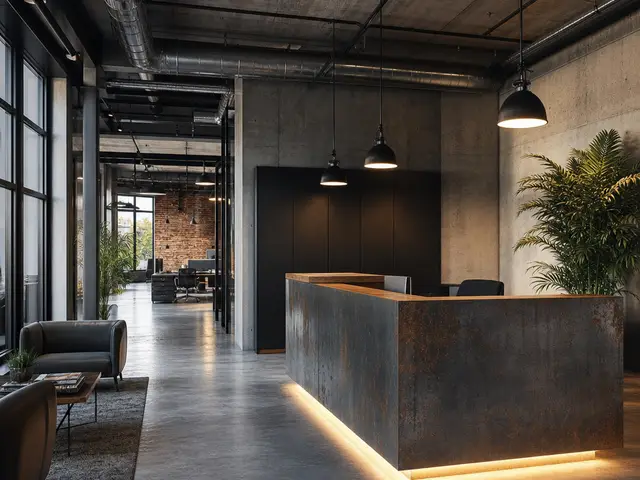
Urban Office Space with a City-Ready Edge
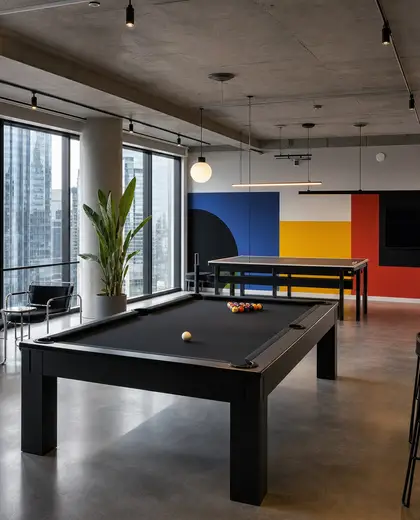
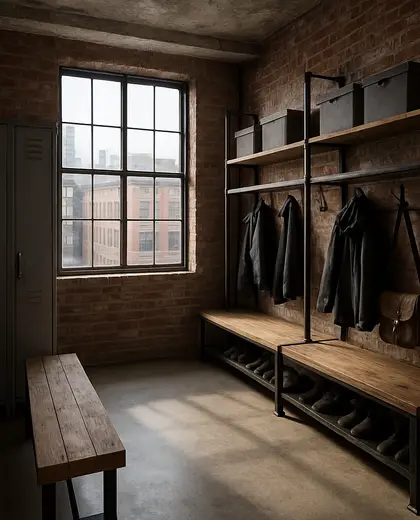
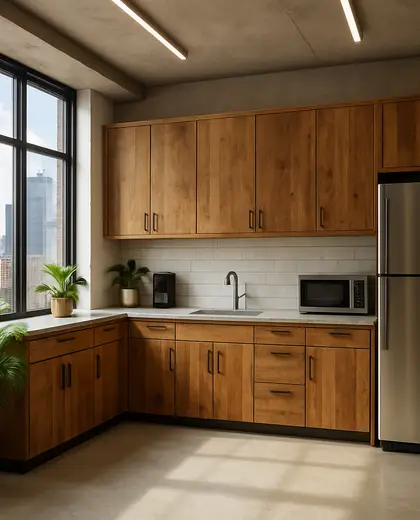
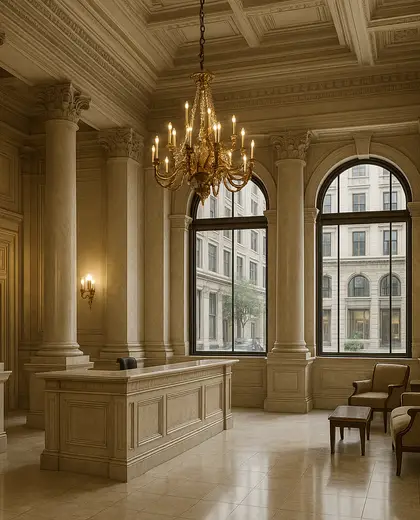
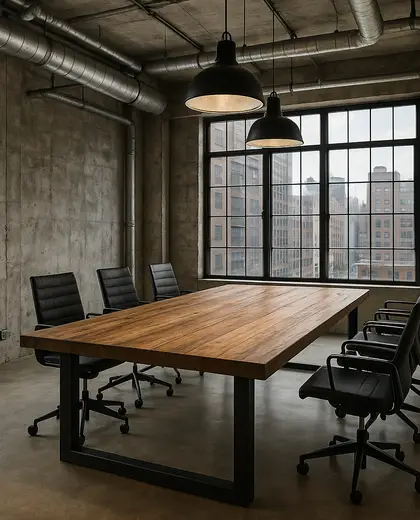
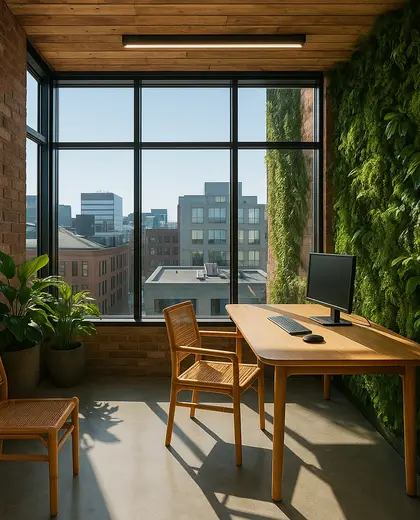
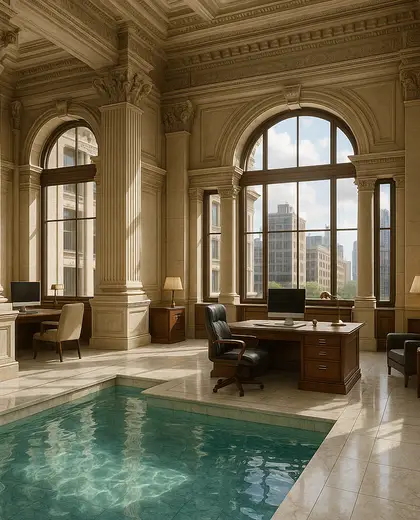
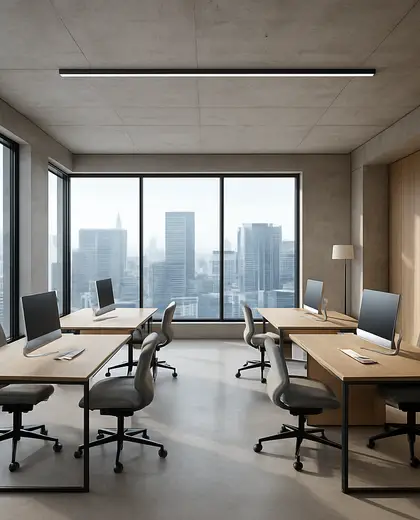
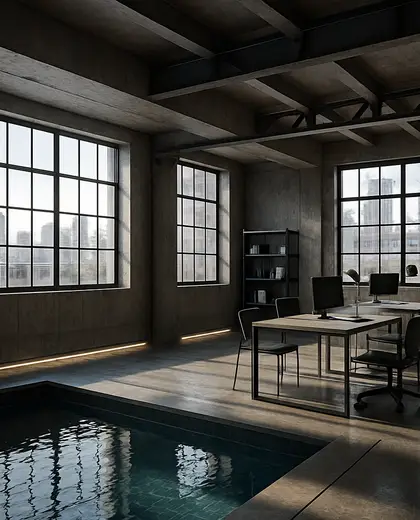
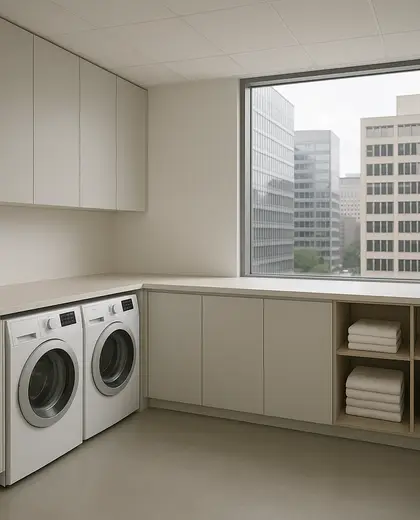
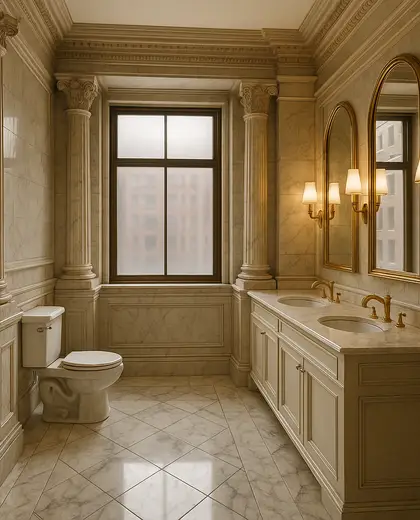
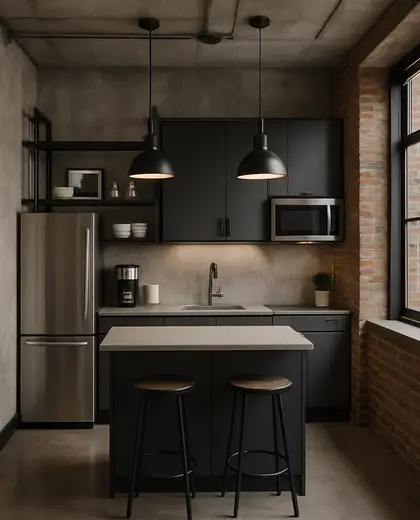
This composition is defined by clean planning, durable finishes, and a restrained, professional feel. It often uses glass, steel, concrete, and natural wood, with large openings, built-in storage, and flexible work zones. The palette usually stays neutral, with gray, black, white, and warm wood tones shaping a crisp urban character.
- office space
- urban
— References
References to explore
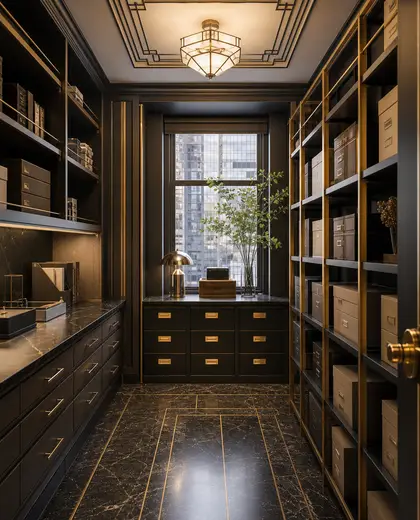
Is this style only for large offices?
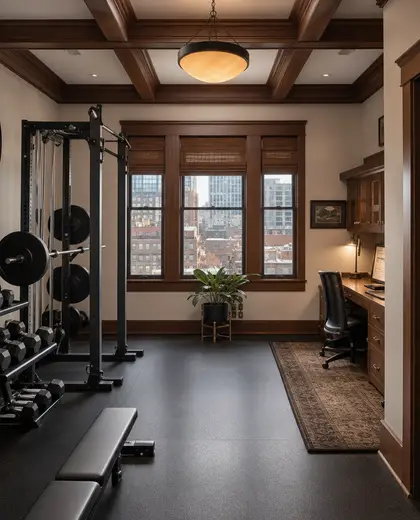
No. It can work in small home offices, compact studios, or larger commercial spaces as long as the layout stays clear and functional.
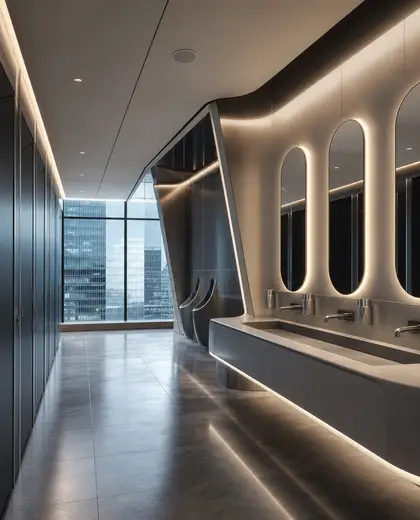
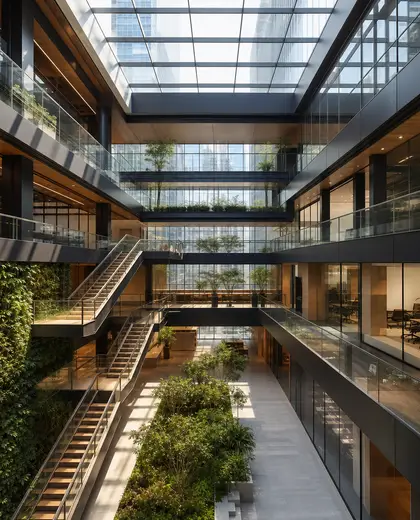
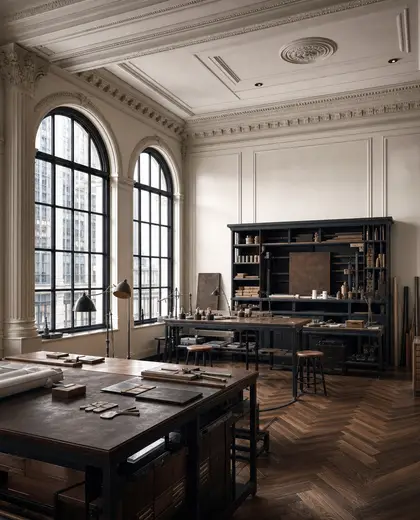
Does an urban office space have to look industrial?
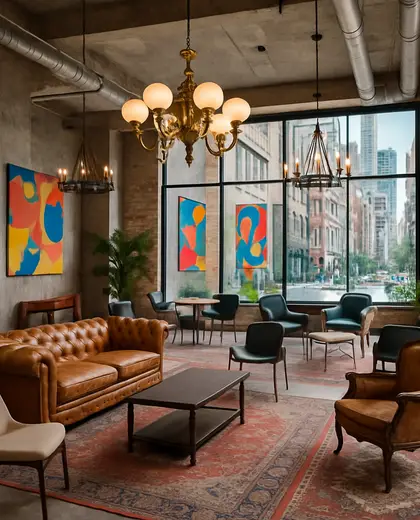
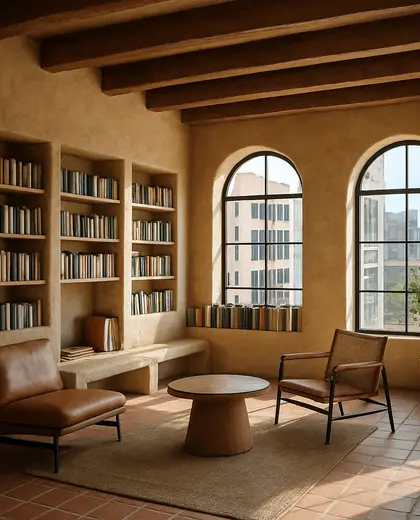
Not necessarily. It often borrows industrial materials, but the final look can be softer, more refined, or more minimal depending on the finishes.
What makes it feel different from a standard office?
The difference usually comes from visible structure, cleaner material contrasts, and a stronger connection to the surrounding city through windows, views, or a more architectural layout.
— The style
What defines it
Glass, metal, concrete, and wood are the core materials, often paired with matte painted surfaces and acoustic panels.
Neutral and grounded: white, charcoal, gray, black, and warm wood accents, sometimes softened with muted greens or beige.
Open-plan work areas, meeting rooms, exposed structural elements, industrial details, and strong natural light.
— Professionals
Who has already built it
- fathoms designarchitects · Wheaton · 6 projectsView profile →
- Karavaan Homefurniture sellers · High Point · 4 projectsView profile →
- jacob galleslandscape designers · 6 projectsView profile →
- pfuner designinterior designers · 11 projectsView profile →
— Explore
Keep exploring
— Questions
Frequently asked questions
Is this style only for large offices?
No. It can work in small home offices, compact studios, or larger commercial spaces as long as the layout stays clear and functional.
Does an urban office space have to look industrial?
Not necessarily. It often borrows industrial materials, but the final look can be softer, more refined, or more minimal depending on the finishes.
What makes it feel different from a standard office?
The difference usually comes from visible structure, cleaner material contrasts, and a stronger connection to the surrounding city through windows, views, or a more architectural layout.