— Blog · September 22, 2026 · 3 min read
7 Smart Ways to Make a Master Bedroom Feel Calm, Spacious, and Complete
Practical, design-forward tips for creating a master bedroom that feels restful, organized, and beautifully balanced.
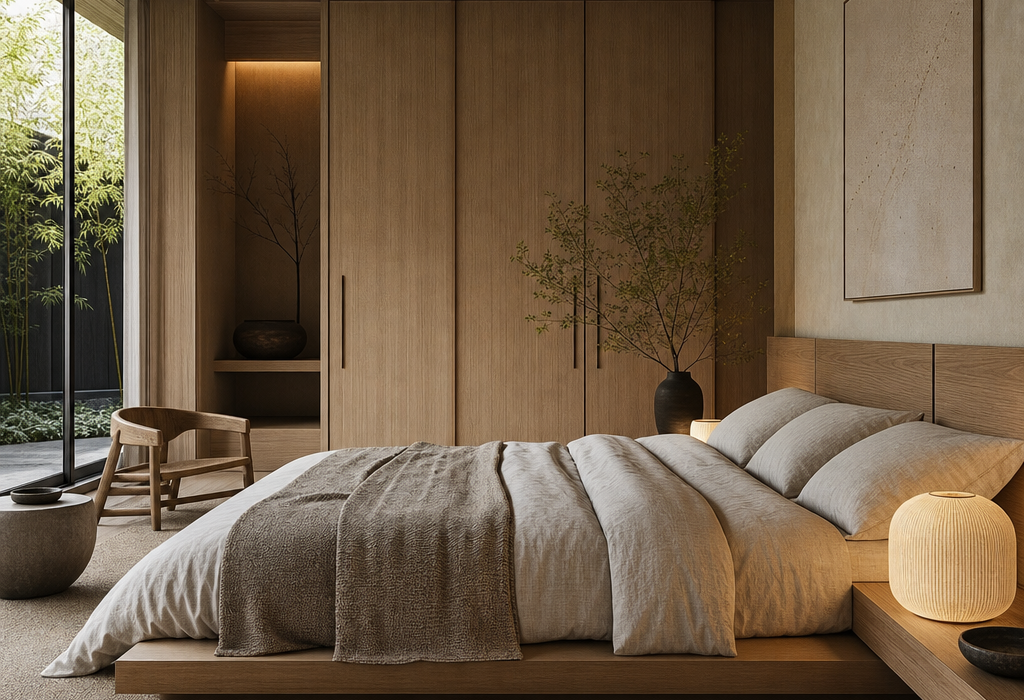
A well-planned master bedroom should do more than hold a bed; it should support sleep, storage, and everyday calm. A Japandi approach is especially effective here because it combines clean lines, natural materials, and a soft, uncluttered mood.
1. Start with a layout that protects circulation
Leave at least 30 inches of clear walking space on the main paths around the bed, and aim for more if the room allows. Center the bed on the strongest wall when possible, then place nightstands so the room feels balanced without crowding closets, windows, or doors.
2. Choose a bed and headboard with quiet presence
In a master bedroom, the bed should anchor the room without overwhelming it. A low-profile frame in oak, walnut, or upholstered linen works well in a Japandi setting, especially when paired with a simple headboard about the width of the mattress or slightly wider for visual stability.
3. Keep the palette soft and grounded
Use warm whites, sand, taupe, muted gray, or soft clay to create a restful backdrop. If you want contrast, add it sparingly through black metal lamp bases, dark wood trim, or a single textured accent pillow rather than busy patterns that compete with sleep.
4. Layer lighting for morning, evening, and reading
Plan at least three kinds of light: ambient light from a ceiling fixture or flush mount, task lighting from bedside lamps or wall-mounted swing arms, and a softer option like dimmable sconces or indirect LED strips. Warm bulbs around 2700K usually feel best in a bedroom because they reduce glare and keep the room relaxed.
5. Build storage into the design early
Clutter is one of the fastest ways to ruin a master bedroom’s calm. Choose nightstands with drawers, a dresser with deep storage, or a built-in closet system with matching bins and shelves so daily items stay hidden. If the room is small, a storage bench at the foot of the bed can handle extra blankets without adding visual weight.
6. Add texture instead of visual noise
A Japandi bedroom feels rich through materials, not decoration. Mix a woven wool rug, crisp cotton or linen bedding, a boucle throw, and wood grain with a matte finish to create depth. Keep patterns minimal so the room stays peaceful even with several layered surfaces.
7. Finish with a few meaningful, well-placed details
One framed artwork, a ceramic vase, or a small plant is usually enough. The goal is to keep the master bedroom personal but not crowded, so every object feels intentional and easy to maintain.
When the layout, lighting, storage, and materials work together, a master bedroom becomes more than a sleeping space—it becomes the quietest, most restorative room in the home.
Find the best professionals for your master bedroom project
Free and no obligation / Takes less than 5 minutes
Are you an architect or designer? Sign up for free! »