— Blog · August 4, 2026 · 3 min read
7 smart ways to make your walk in closet feel bigger and work harder
Practical walk in closet tips for creating a cleaner layout, better storage, and an easier daily routine.
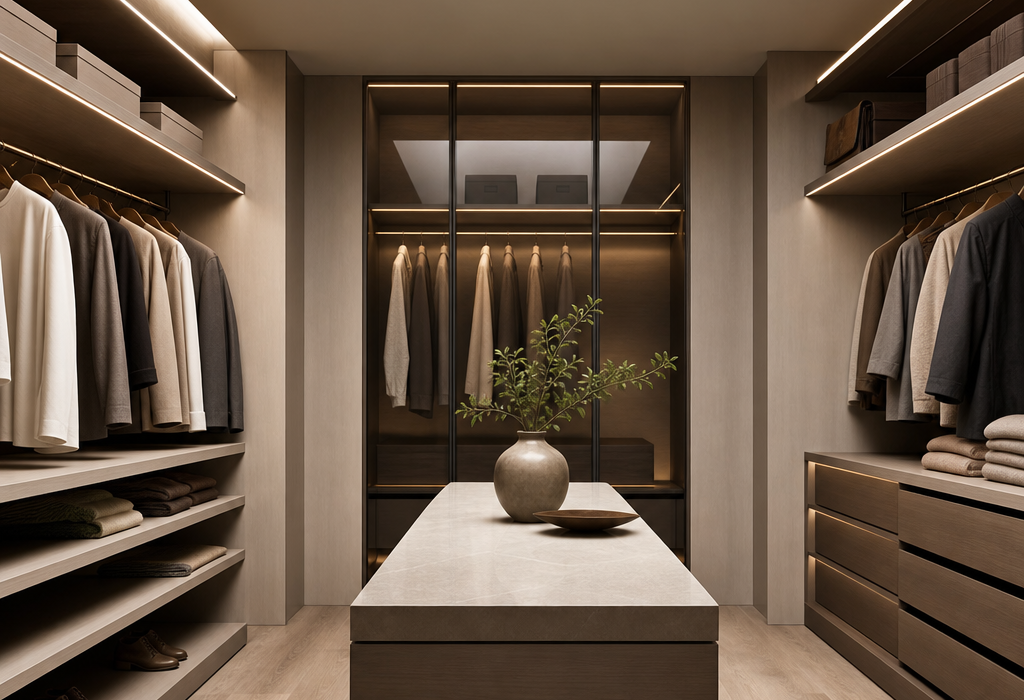
A well-planned walk in closet should make getting dressed feel easy, not overwhelming. The best results usually come from a calm, minimalist approach that keeps what you need visible, reachable, and neatly organized.
1. Start with a clear zone plan
Before adding baskets or shelving, divide the space into zones for hanging, folded items, shoes, accessories, and everyday use. Keep the most-used items between shoulder and eye level, and reserve higher shelves for seasonal storage. If you can, leave at least one open section for full-length hanging so dresses, coats, and longer pieces do not get crushed.
2. Use built-ins that fit the room, not the other way around
Custom or modular built-ins help a walk in closet feel polished without wasting space. Standard closet rods are typically placed around 40 to 42 inches high for shirts and 65 to 68 inches for long-hang items. Deep shelves around 12 inches work well for folded clothes, while drawers can hide smaller items that would otherwise clutter open surfaces.
3. Choose a simple, consistent material palette
A minimalist walk in closet looks best when finishes stay quiet and cohesive. Painted MDF, melamine, white oak veneer, or matte laminate can all create a clean feel. Stick to one main cabinet color, one hardware finish, and one or two accent materials so the room feels intentional rather than busy.
4. Make lighting part of the storage plan
Good lighting can completely change how a closet functions. Use bright overhead lighting for the whole room, then add LED strip lights under shelves or inside open cubbies so you can see colors and details clearly. A neutral white light often works best in a dressing area because it shows clothing tones more accurately than warm, dim bulbs.
5. Build in a landing spot for daily routines
Even a small bench, stool, or narrow shelf can make the space more usable. A seat helps with shoes, while a slim tray gives you a place for a watch, keys, or jewelry you wear often. If floor space is tight, choose a wall-mounted shelf or pull-out surface so the room still feels open.
6. Use storage accessories to prevent visual clutter
Drawers with dividers, uniform hangers, clear bins, and labeled boxes all help keep the closet looking calm. Matching hangers instantly makes hanging clothes feel more organized, and clear or softly tinted bins let you find items without opening everything. For a minimalist look, avoid too many mixed containers and keep labels small and consistent.
7. Leave breathing room for long-term order
A closet that is packed too tightly becomes hard to maintain. Leave some open shelf space, avoid overfilling rods, and give each category a little extra room so the organization system can actually work. A walk in closet feels more luxurious when it has a little negative space, not when every inch is crammed full.
The most functional walk in closet is usually the simplest one: well-zoned, well-lit, and edited down to what truly earns a place. With a minimalist approach, the room becomes easier to use every day and easier to keep tidy over time.
Find the best professionals for your walk in closet project
Free and no obligation / Takes less than 5 minutes
Are you an architect or designer? Sign up for free! »