— Ideas & inspiration
Art Deco in the forest
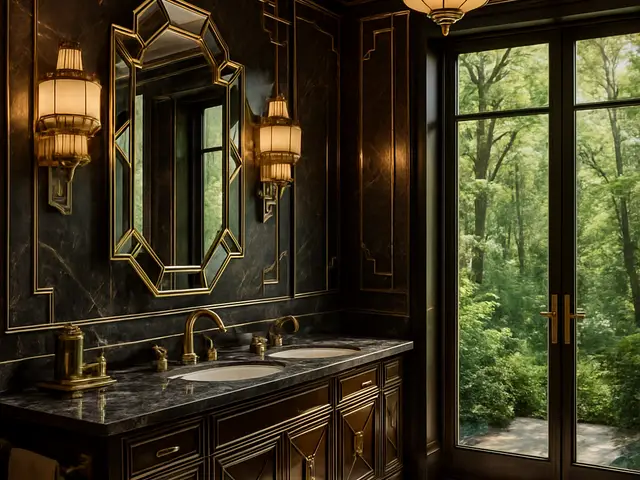
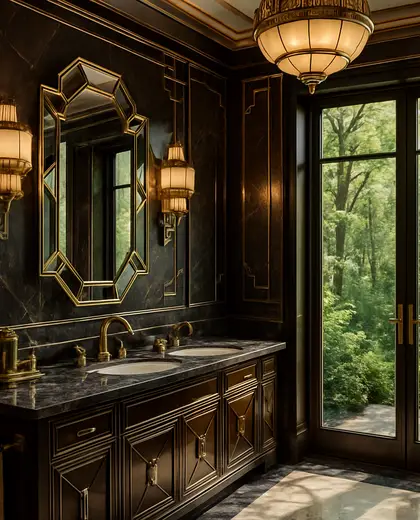
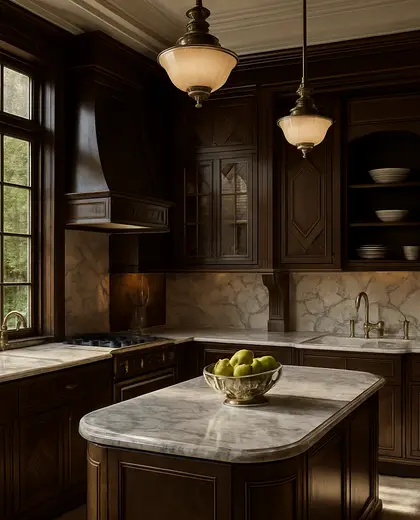
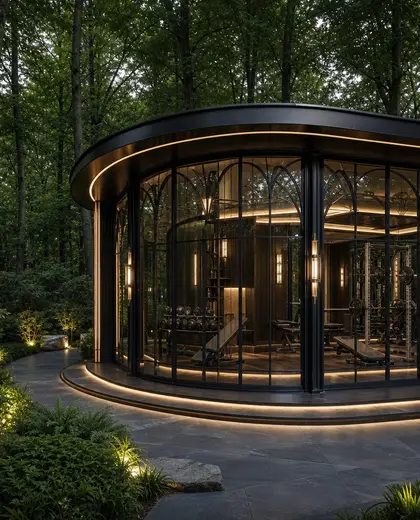
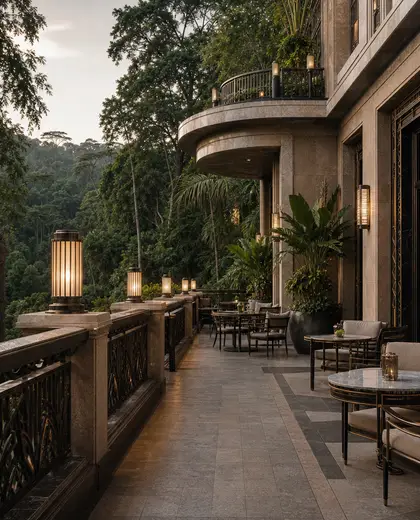
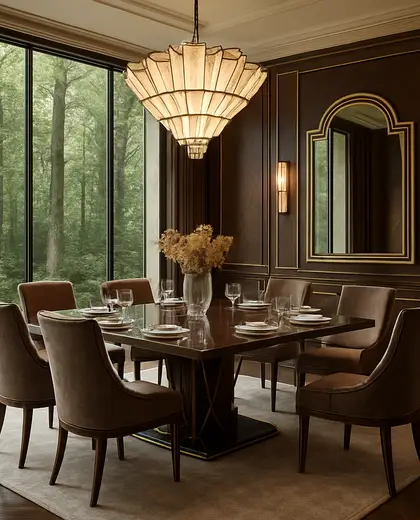
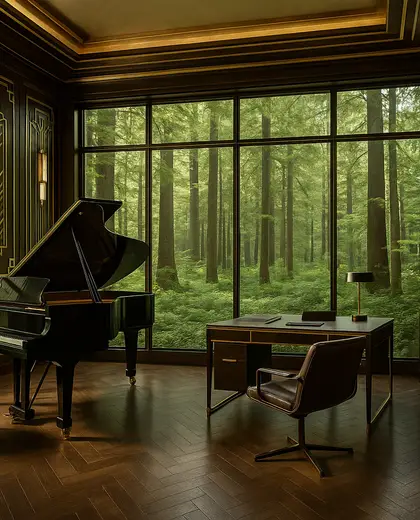
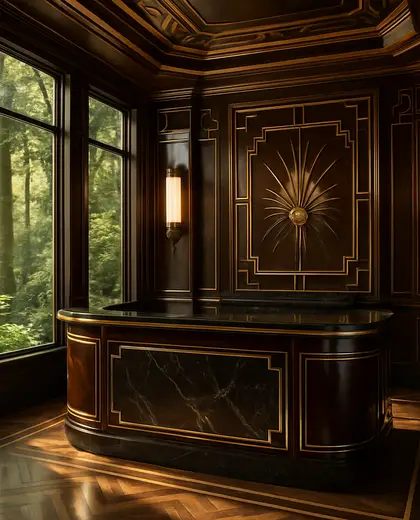
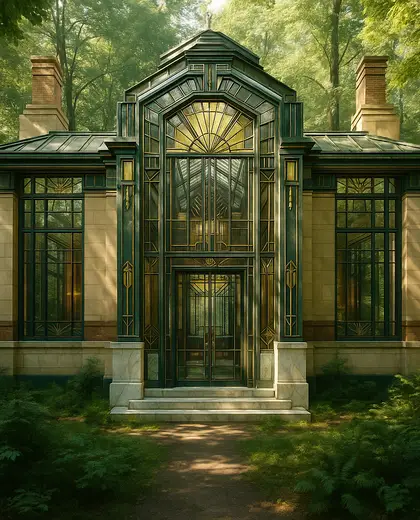
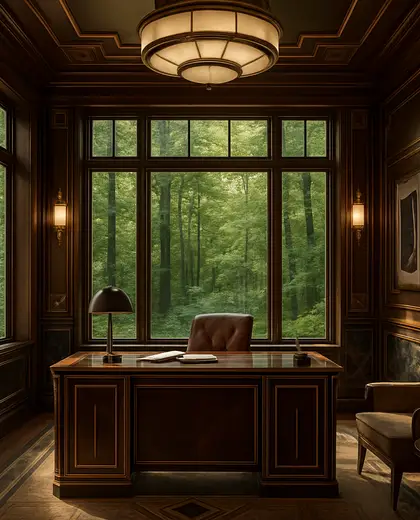
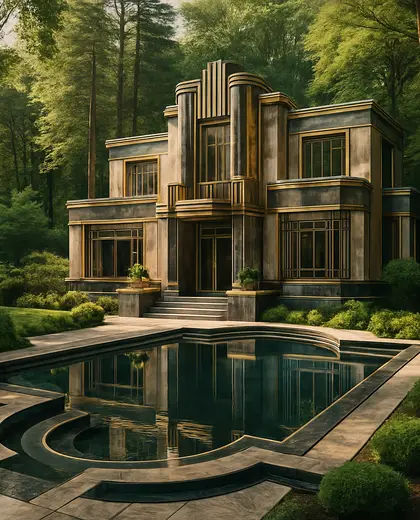
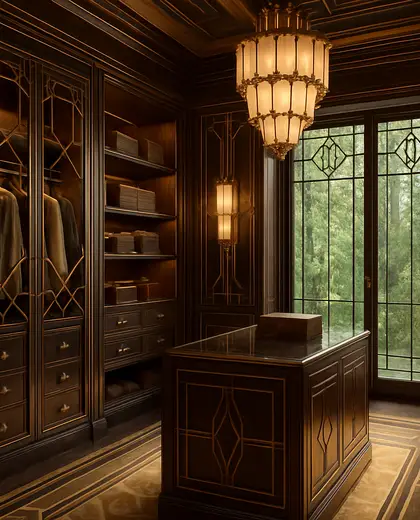
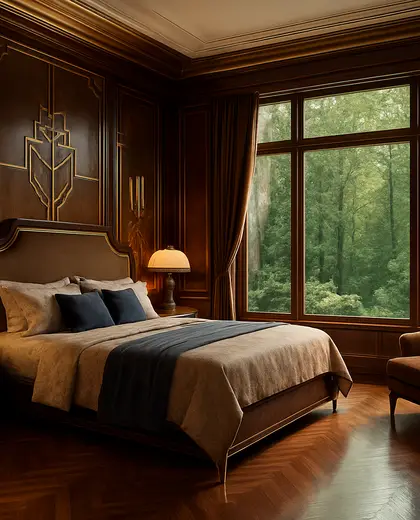
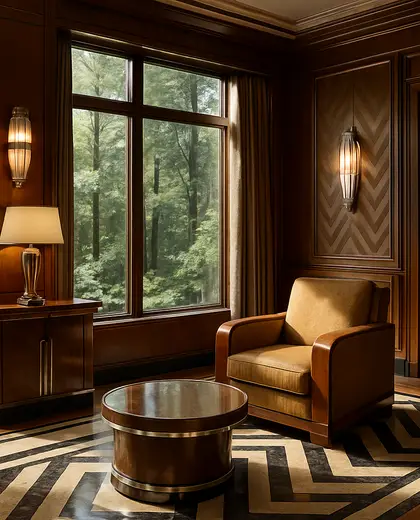
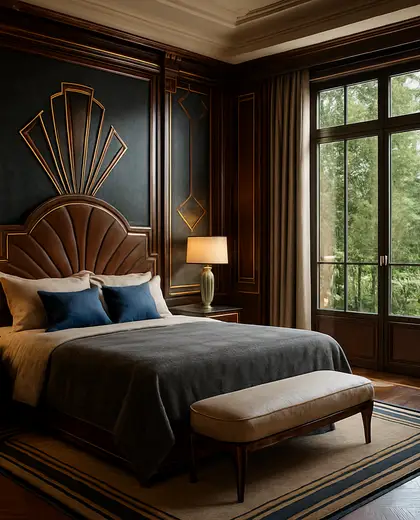
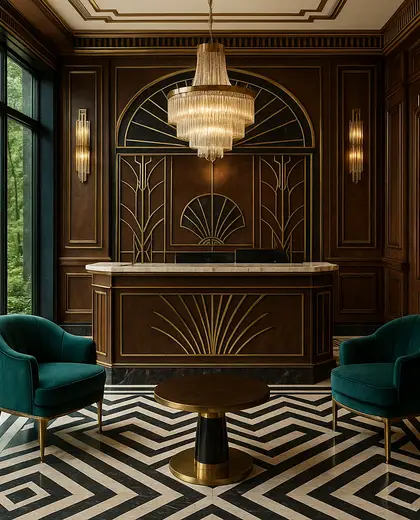
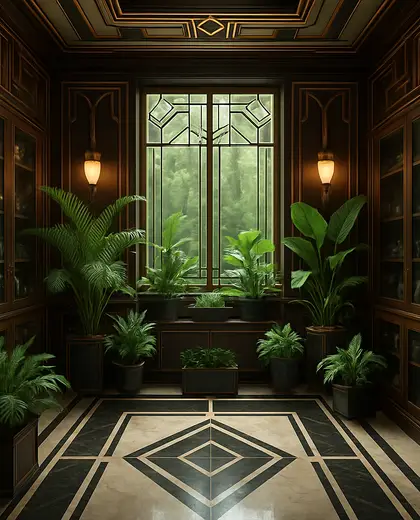
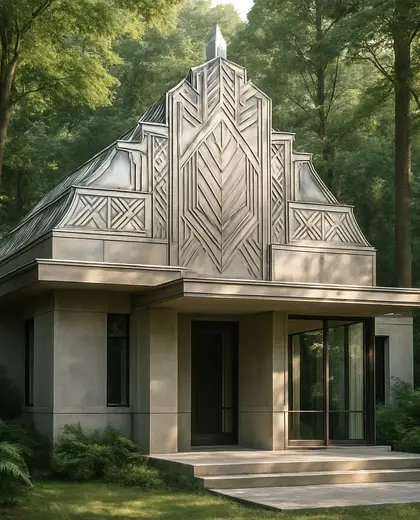
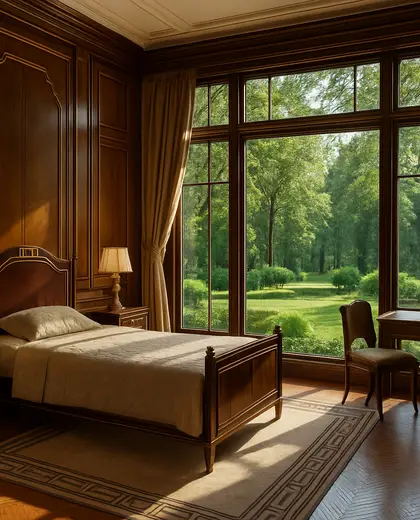
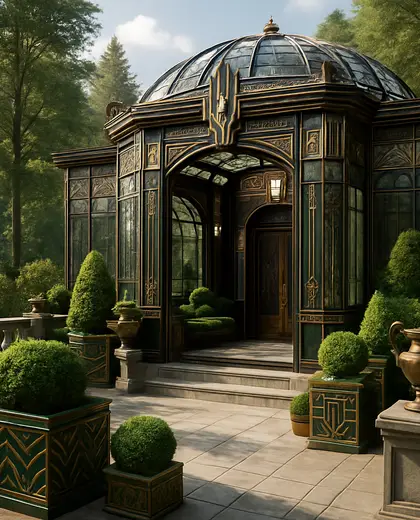
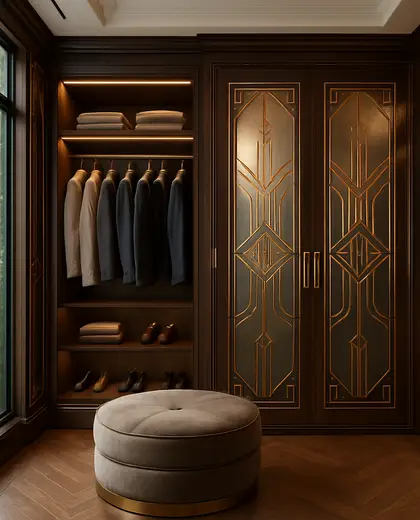
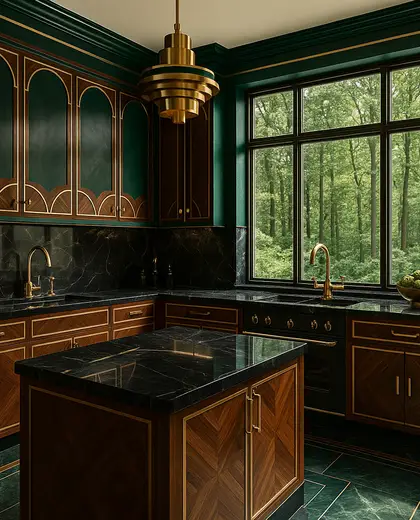
This composition pairs Art Deco geometry with a forest setting through strong symmetry, stepped forms, and polished details. It often uses dark wood, stone, brass, glass, and rich textiles, balanced by deep green, amber, black, and warm neutral tones. The result feels tailored and dramatic, with nature acting as a soft backdrop to the clean lines and ornament.
- art deco
- forest
— References
References to explore
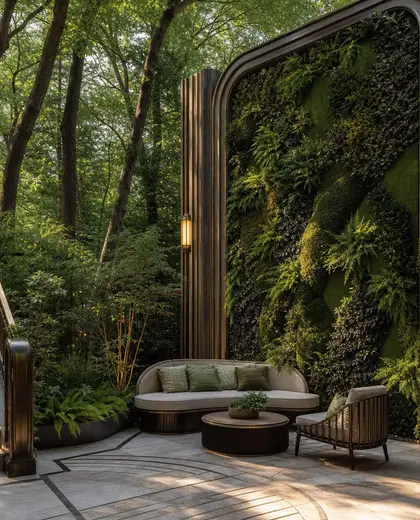
How do I make Art Deco work in a forest setting without it feeling too heavy?
Use the Deco language in a restrained way: keep the forms clean, repeat symmetry, and limit decorative finishes to a few focal points. Let natural light, greenery, and lighter wall tones soften the darker materials.
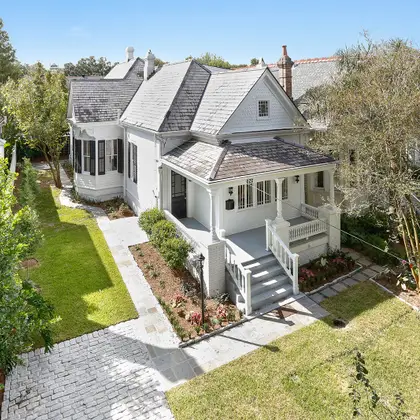
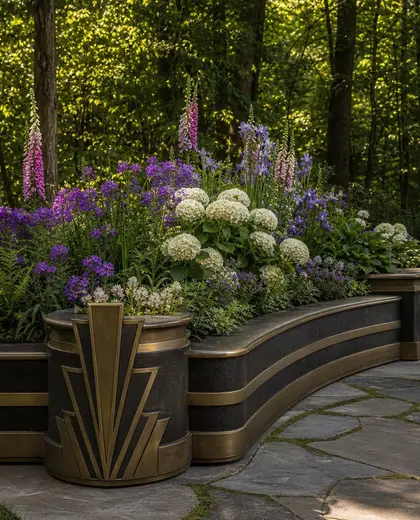
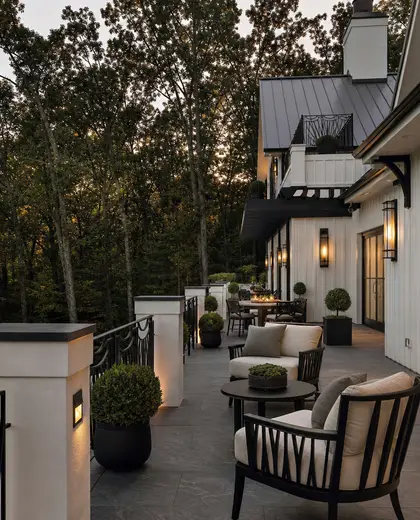
Which materials suit this style best in a wooded home?
Wood, stone, brass, and textured textiles work especially well because they feel grounded and tactile. Glass and polished metal can be used sparingly to add contrast and refinement.
What colors should I choose for this composition?
Deep greens and earthy browns connect the interior to the forest, while black and brass bring the Art Deco character. Cream, ivory, or warm beige help keep the space from becoming too dark.
— The style
What defines it
Dark wood, marble or stone, brass, glass, lacquered finishes, and plush fabrics.
Deep green, black, forest brown, brass gold, cream, and amber accents.
Art Deco motifs such as symmetry, sunbursts, fluting, and stepped profiles, set against wooded or nature-focused surroundings.
— Professionals
Who has already built it
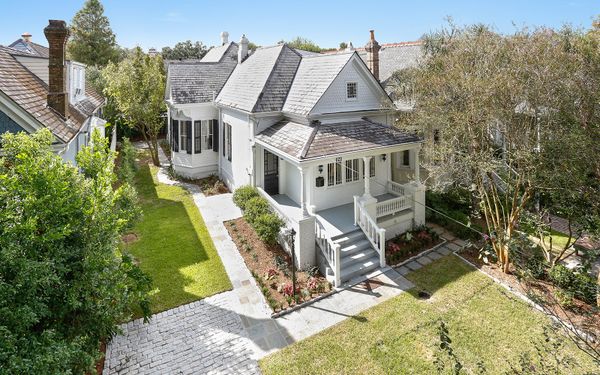

- Karavaan Homefurniture sellers · High Point · 4 projectsView profile →
— Questions
Frequently asked questions
How do I make Art Deco work in a forest setting without it feeling too heavy?
Use the Deco language in a restrained way: keep the forms clean, repeat symmetry, and limit decorative finishes to a few focal points. Let natural light, greenery, and lighter wall tones soften the darker materials.
Which materials suit this style best in a wooded home?
Wood, stone, brass, and textured textiles work especially well because they feel grounded and tactile. Glass and polished metal can be used sparingly to add contrast and refinement.
What colors should I choose for this composition?
Deep greens and earthy browns connect the interior to the forest, while black and brass bring the Art Deco character. Cream, ivory, or warm beige help keep the space from becoming too dark.