— Ideas & inspiration
Art Deco
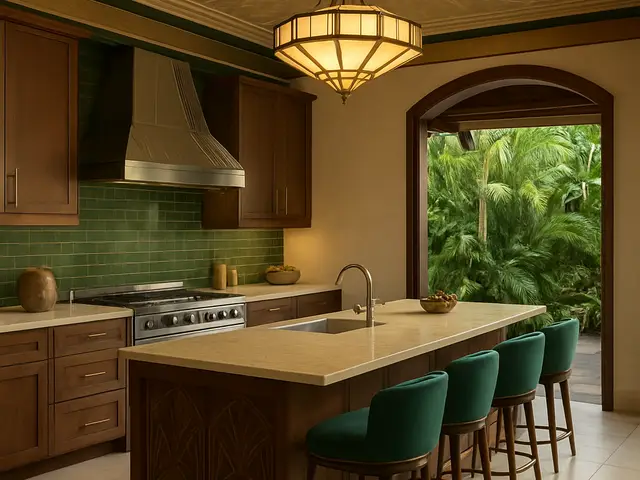
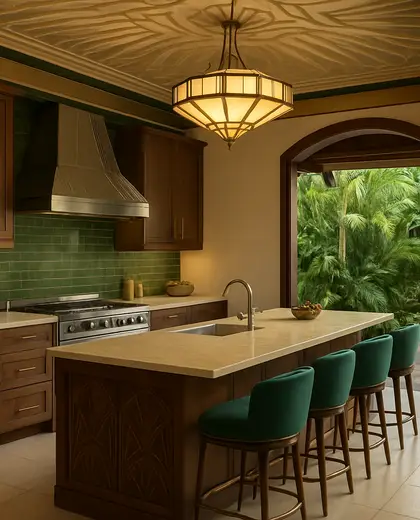
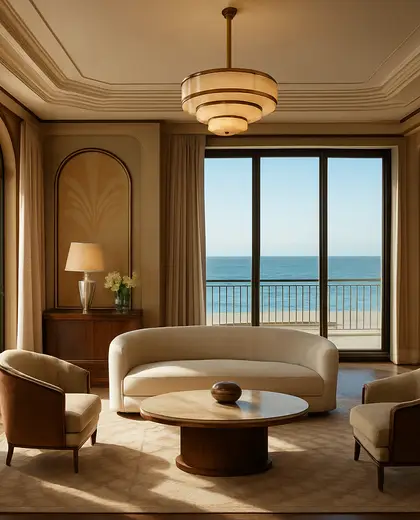
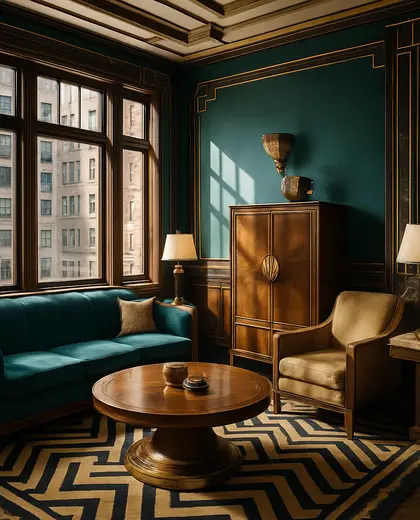
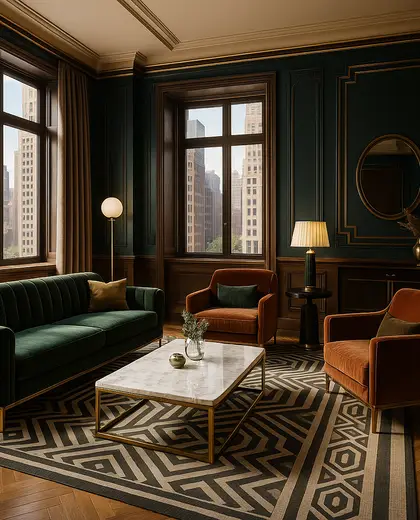
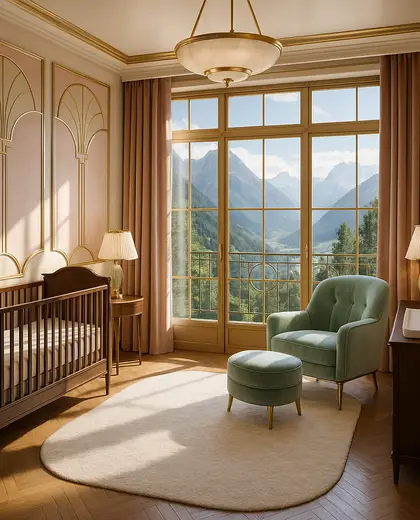
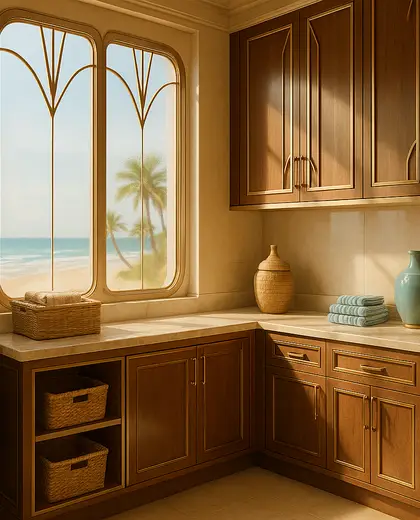
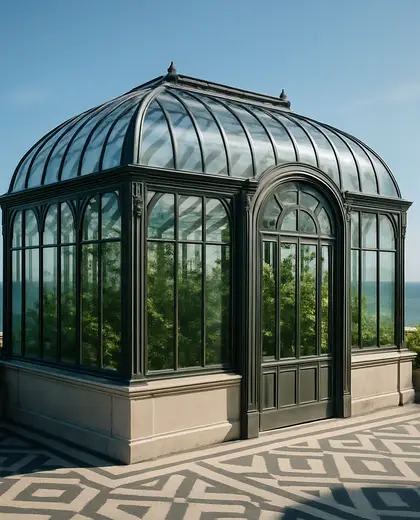
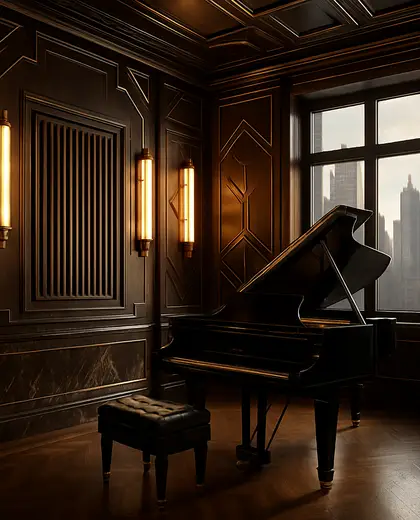
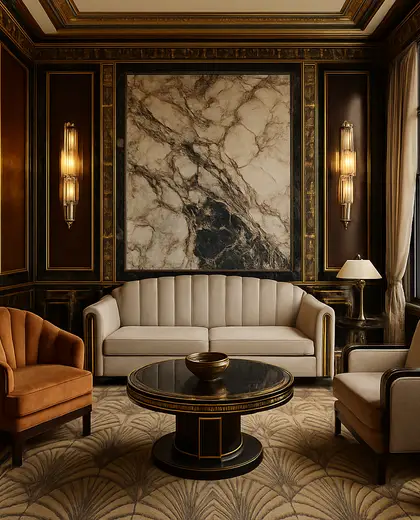
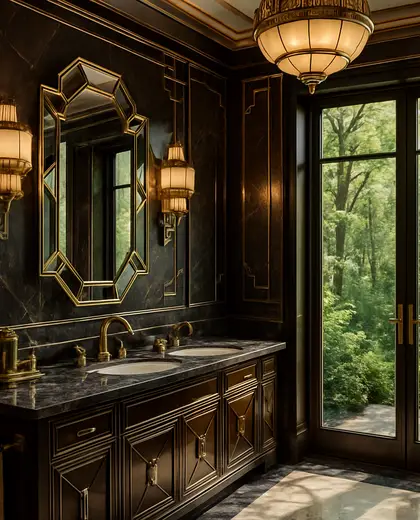
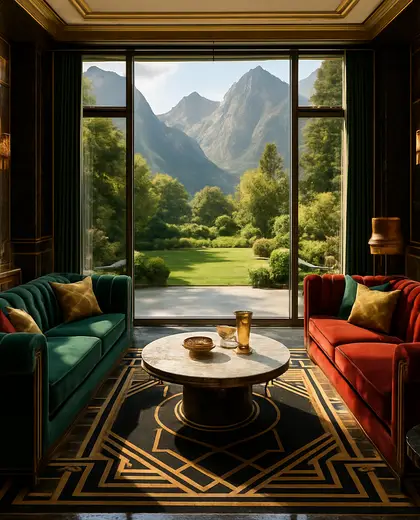
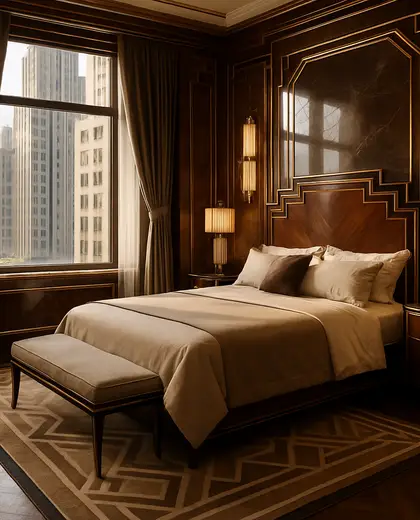
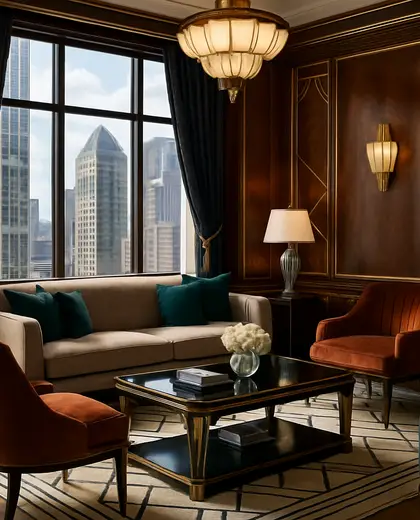
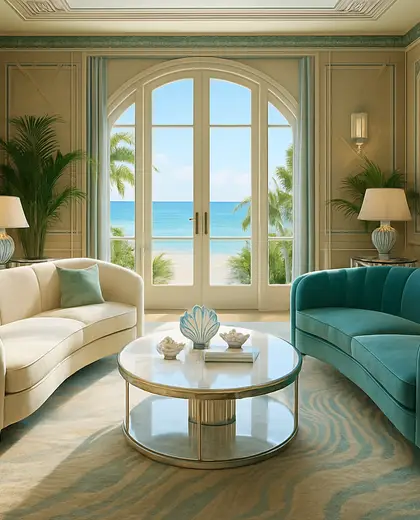
Art Deco is defined by bold geometry, symmetry, and a polished mix of luxurious materials such as brass, lacquer, marble, glass, and dark woods. The palette often centers on black, ivory, emerald, navy, gold, and deep jewel tones, with high-contrast finishes and reflective surfaces. Key details include stepped forms, sunburst motifs, chevrons, arches, fluting, and streamlined decorative patterns.
- art deco
— References
References to explore
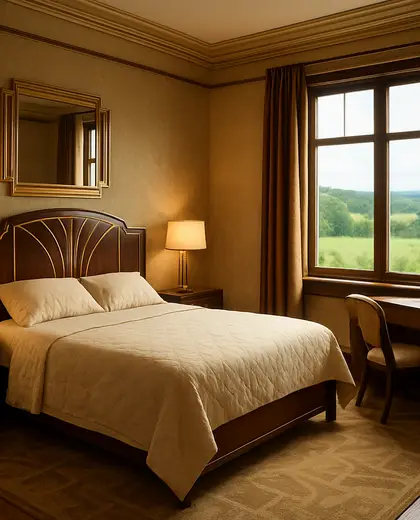
How do I make a room read as Art Deco without overdoing it?
Use a few strong Deco cues: symmetry, one or two statement metals, geometric detailing, and a small number of bold surfaces. Keep the rest of the room controlled so the pattern and shine feel intentional.


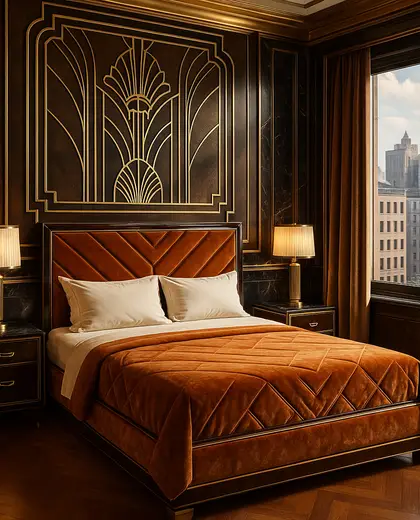
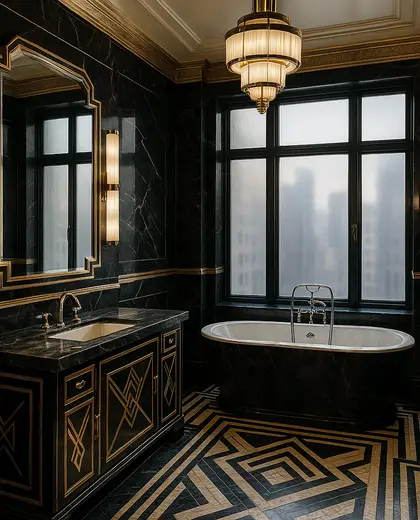
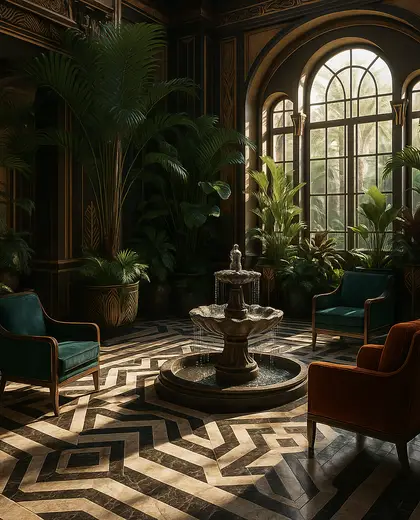
Is Art Deco suitable for a small home?
Yes, if the details are scaled carefully. Mirror, vertical lines, slim brass accents, and darker tones can work in small spaces, but too many heavy materials can make the room feel crowded.

What finishes are most typical for an Art Deco interior?
Glossy lacquer, polished metal, marble, mirrored surfaces, and plush upholstery are all common. Matte finishes can be used, but the style usually relies on some level of sheen and contrast.



— The style
What defines it
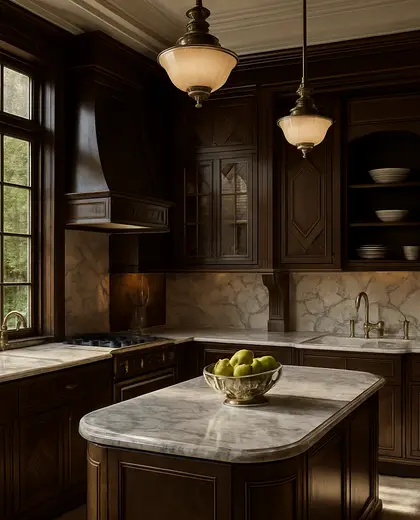
Marble, brass, chrome, lacquered wood, mirrored glass, velvet, and rich stone finishes.
High-contrast neutrals with jewel tones: black, ivory, emerald, navy, burgundy, and gold accents.
Works well with contemporary lighting, vintage furniture, curved forms, and clean-lined millwork.
— Professionals
Who has already built it


- Karavaan Homefurniture sellers · High Point · 4 projectsView profile →
— Questions
Frequently asked questions
How do I make a room read as Art Deco without overdoing it?
Use a few strong Deco cues: symmetry, one or two statement metals, geometric detailing, and a small number of bold surfaces. Keep the rest of the room controlled so the pattern and shine feel intentional.
Is Art Deco suitable for a small home?
Yes, if the details are scaled carefully. Mirror, vertical lines, slim brass accents, and darker tones can work in small spaces, but too many heavy materials can make the room feel crowded.
What finishes are most typical for an Art Deco interior?
Glossy lacquer, polished metal, marble, mirrored surfaces, and plush upholstery are all common. Matte finishes can be used, but the style usually relies on some level of sheen and contrast.