— Ideas & inspiration
A house shaped by the savanna
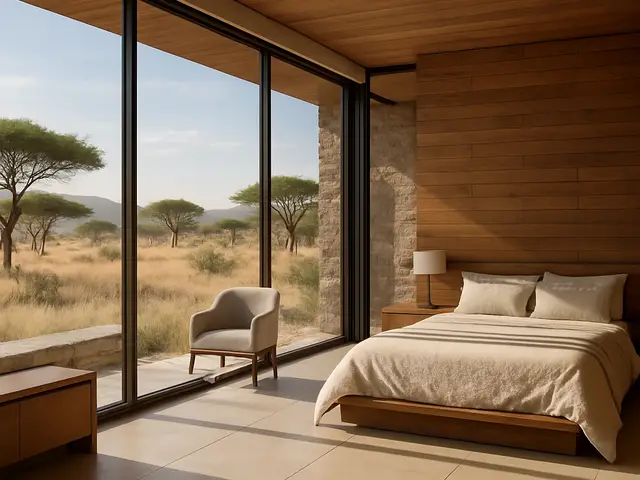
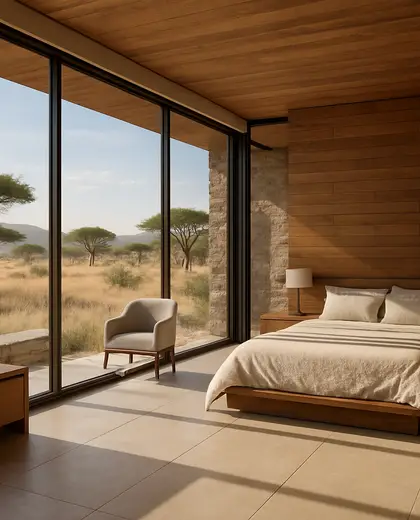
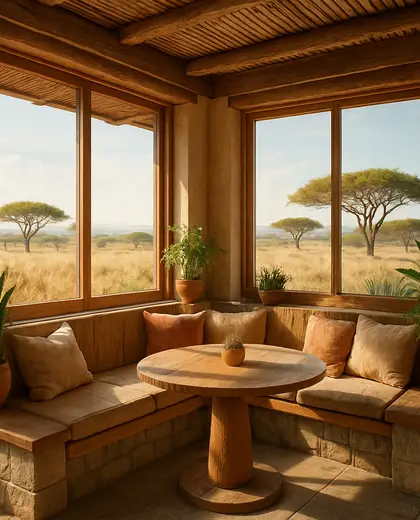
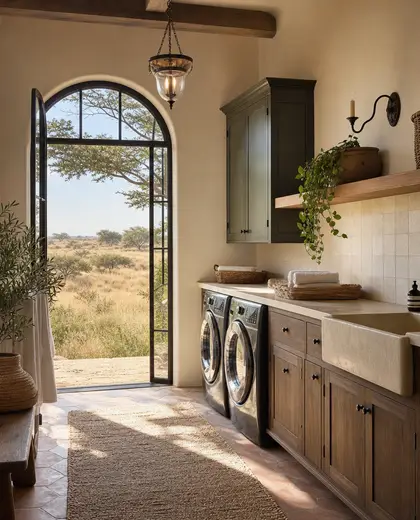
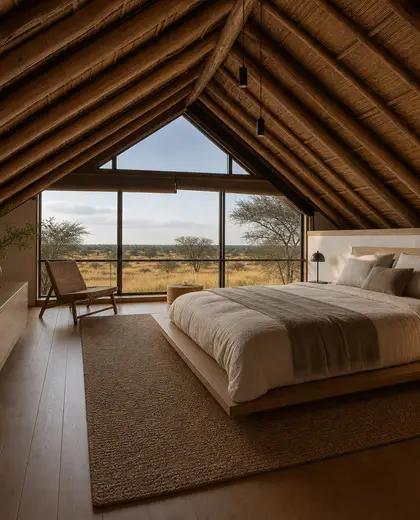
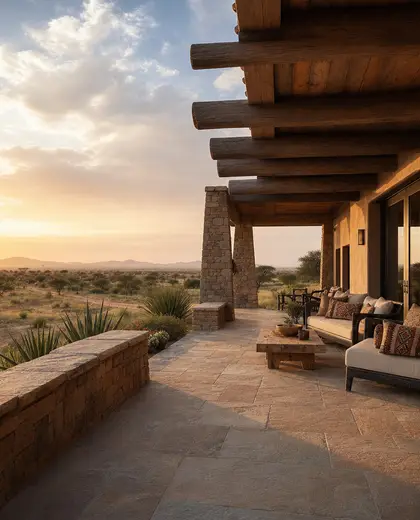
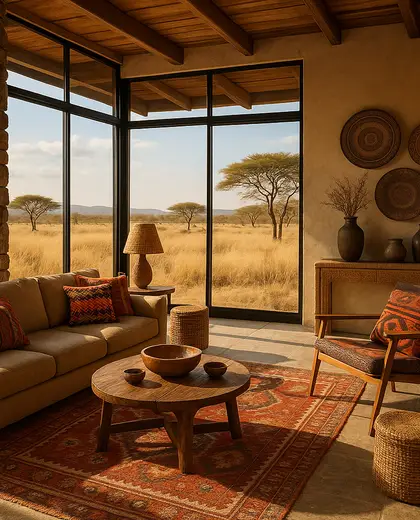
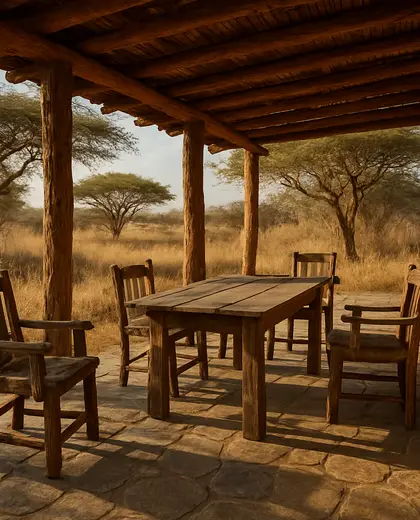
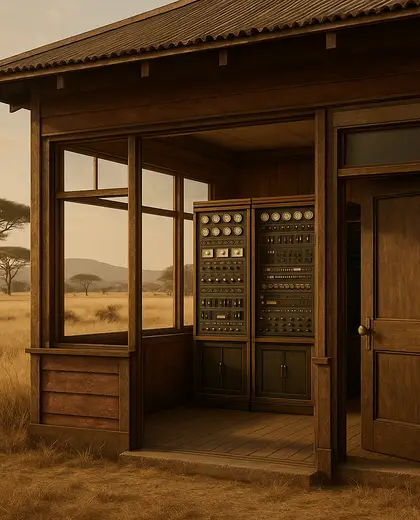
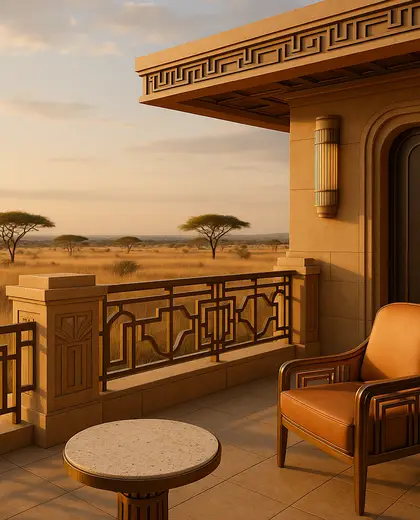
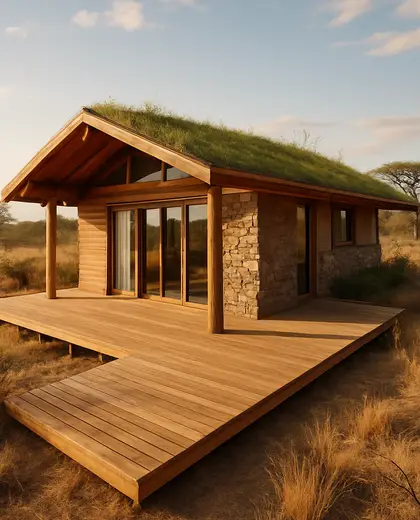
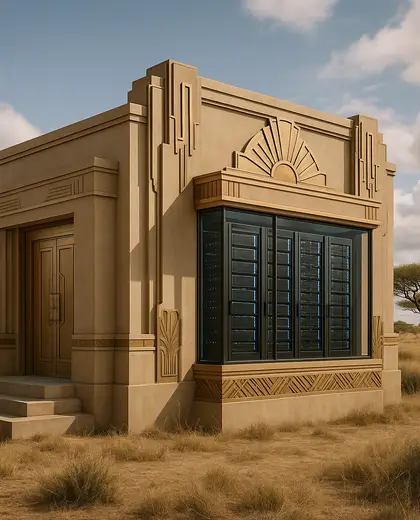
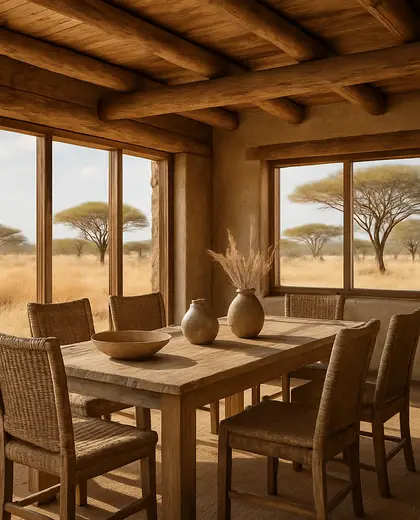
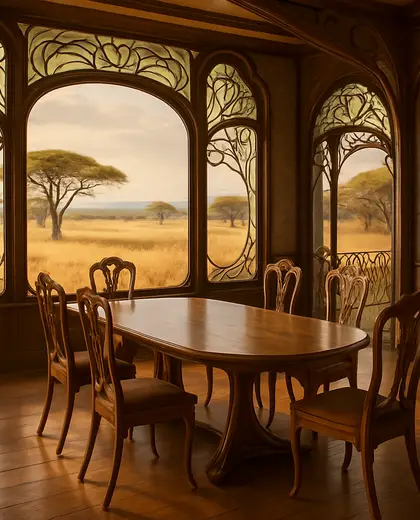
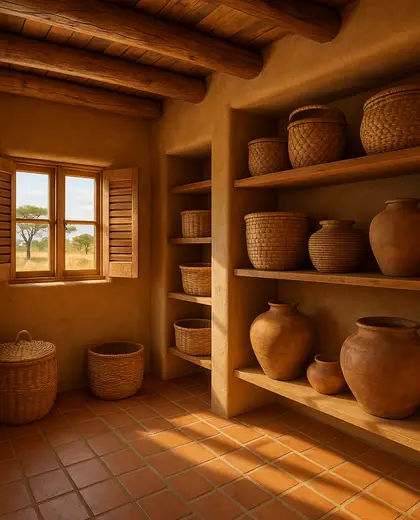
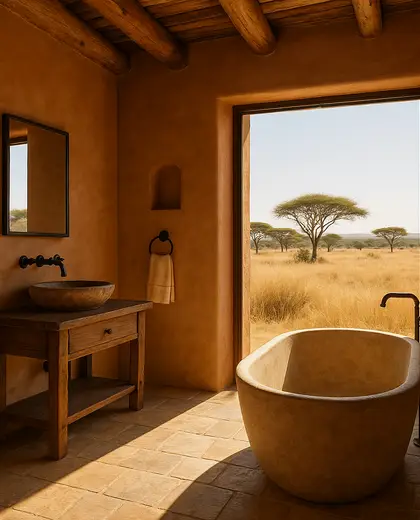
This composition pairs a simple, grounded house form with the open, sunlit character of the savanna. It typically uses earthy materials such as stone, timber, plaster, and weathered metal, with wide overhangs, shaded terraces, and broad openings to connect indoors and outdoors. The palette leans warm and natural: sand, ochre, clay, olive, and deep brown.
- house
- savanna
— References
References to explore
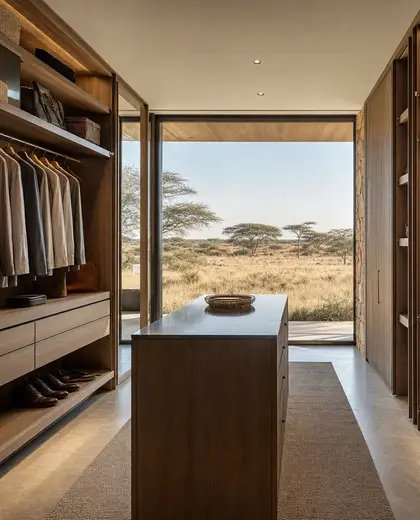
What makes a house feel like a savanna-inspired composition?
It usually comes from low, simple volumes, generous shade, and materials that feel natural and weathered rather than polished. The setting and planting are just as important as the building itself.
Can this look work in a cooler or urban climate?
Yes, if the design keeps the same material warmth and spatial openness while adjusting insulation, glazing, and shading to suit the climate. The savanna influence can be expressive without copying the environment literally.
What kind of interior suits this style?
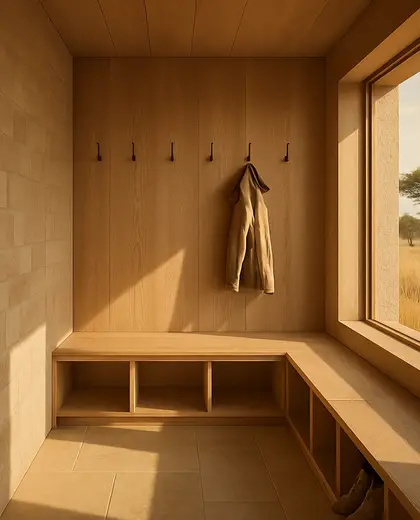
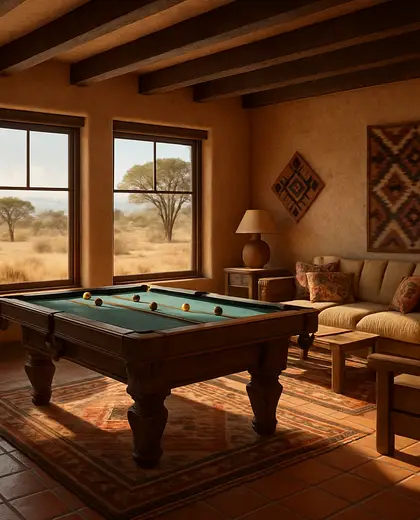
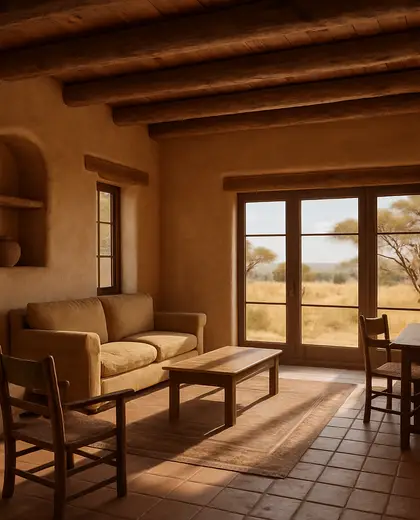
Interiors often feel calm and tactile, with restrained finishes, natural textures, and light that enters in broad washes. Furniture and detailing should stay simple so the architecture and landscape remain the focus.
— The style
What defines it
Stone, timber, lime plaster, concrete, and matte metal finishes work well for a durable, low-reflective envelope.
Dusty neutrals, sun-baked earth tones, muted greens, and soft charcoal echo grassland light and dry soil.
A compact house plan, shaded verandas, open courtyards, and landscape that feels sparse, resilient, and horizon-focused.
— Professionals
Who has already built it
- john allegrettiarchitects · 6 projectsView profile →
- pfuner designinterior designers · 11 projectsView profile →
- Karavaan Homefurniture sellers · High Point · 4 projectsView profile →
- jacob galleslandscape designers · 6 projectsView profile →
— Explore
Keep exploring
— Questions
Frequently asked questions
What makes a house feel like a savanna-inspired composition?
It usually comes from low, simple volumes, generous shade, and materials that feel natural and weathered rather than polished. The setting and planting are just as important as the building itself.
Can this look work in a cooler or urban climate?
Yes, if the design keeps the same material warmth and spatial openness while adjusting insulation, glazing, and shading to suit the climate. The savanna influence can be expressive without copying the environment literally.
What kind of interior suits this style?
Interiors often feel calm and tactile, with restrained finishes, natural textures, and light that enters in broad washes. Furniture and detailing should stay simple so the architecture and landscape remain the focus.