— Ideas & inspiration
Bauhaus forms in the desert light
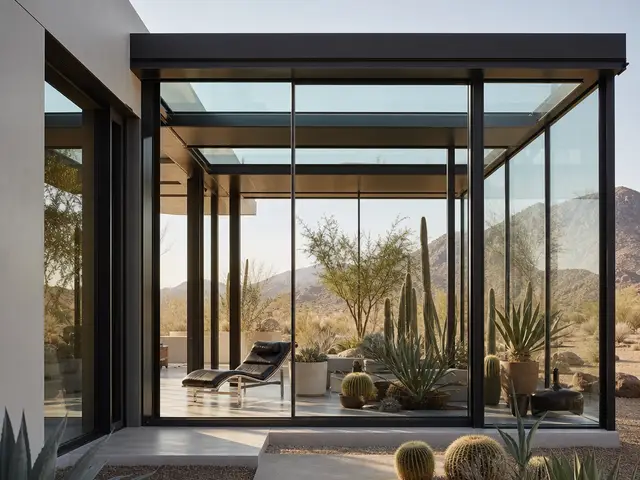
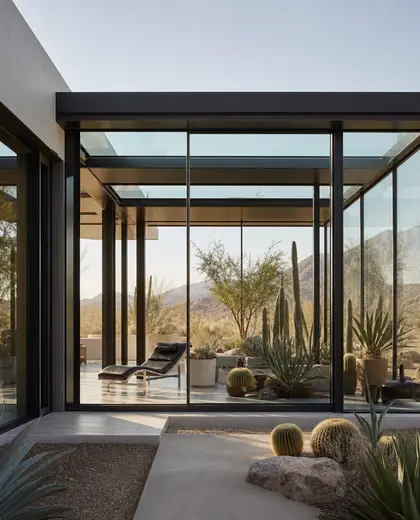
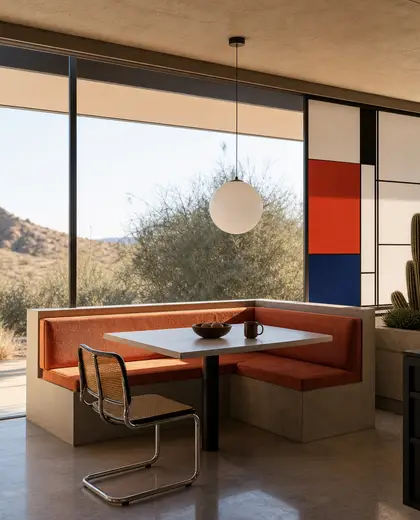
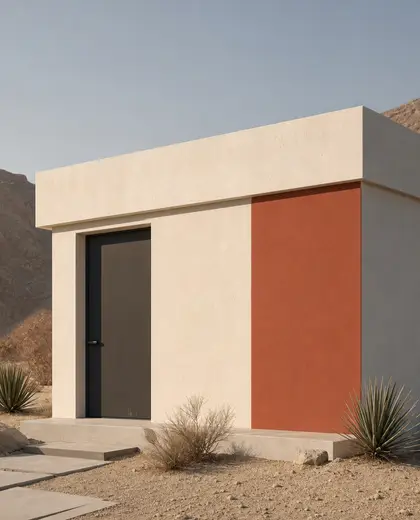
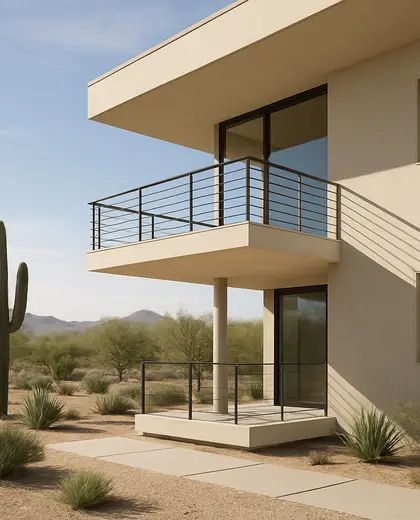
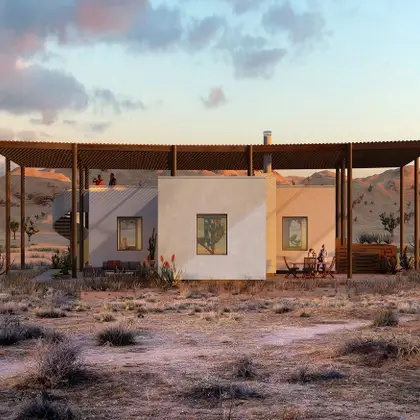
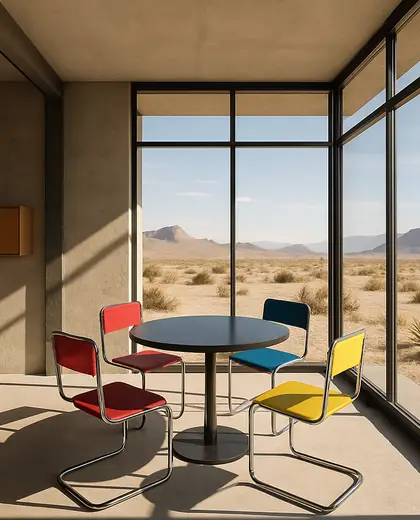
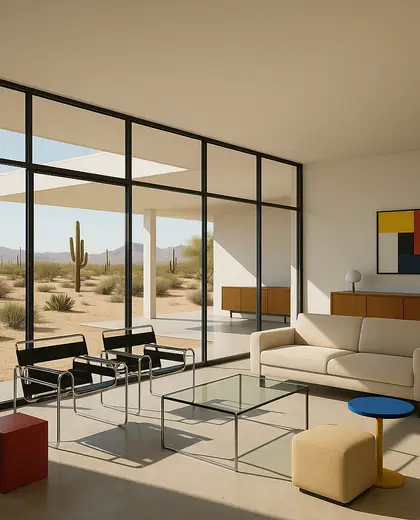
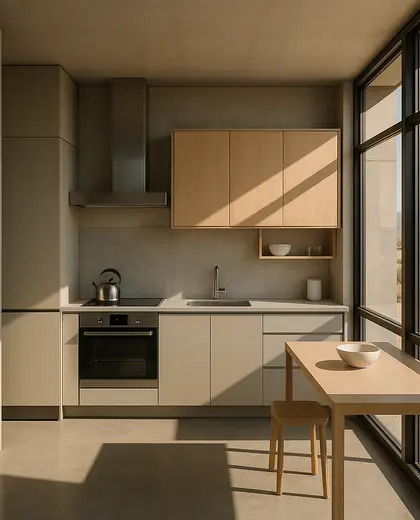
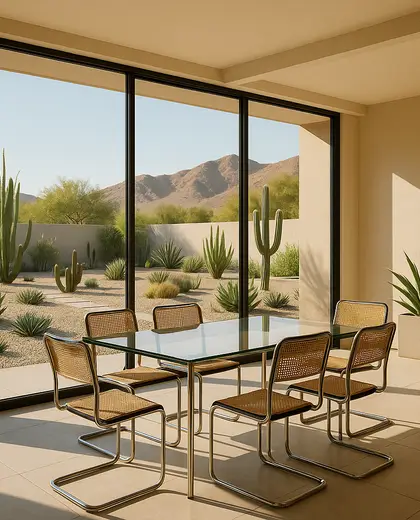
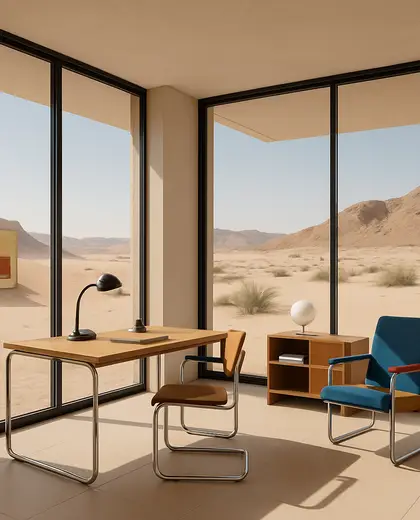
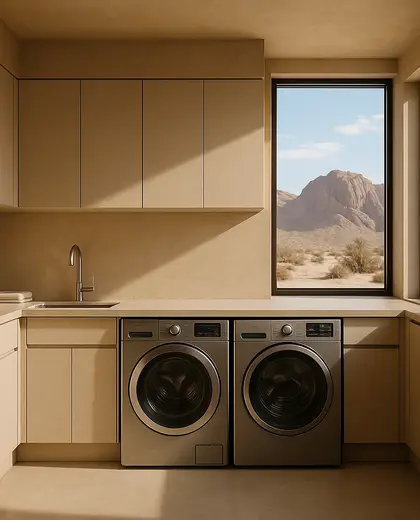
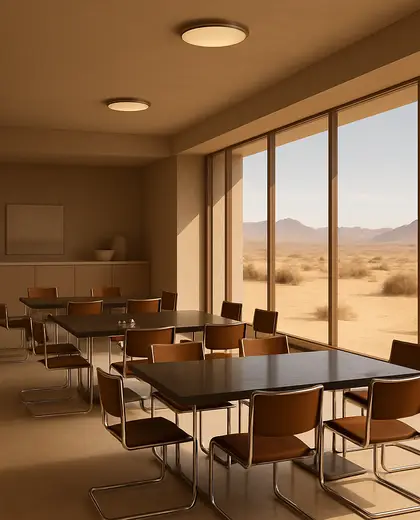
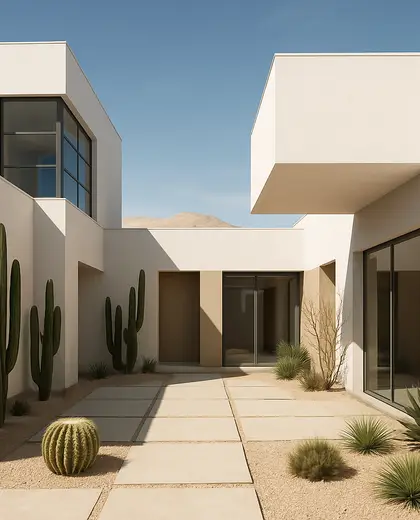
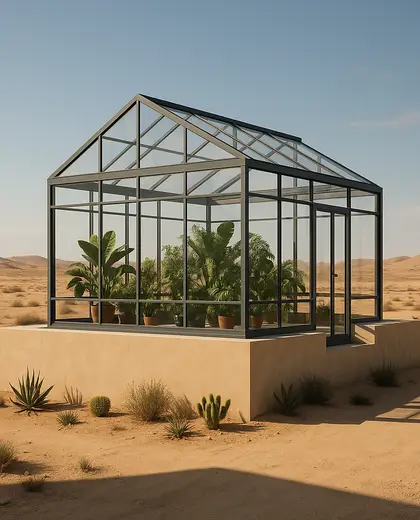
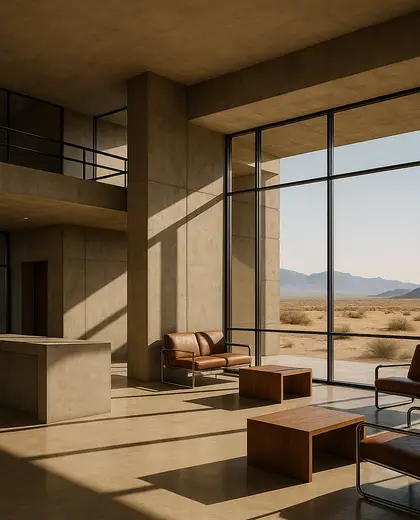
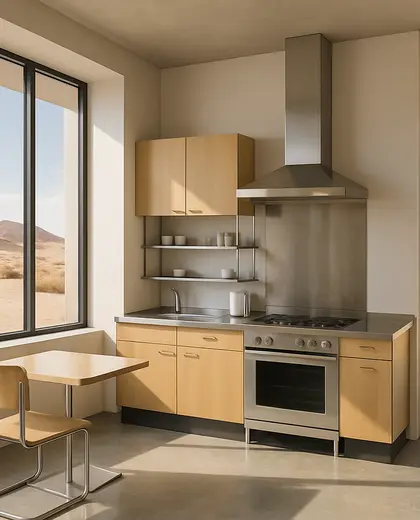
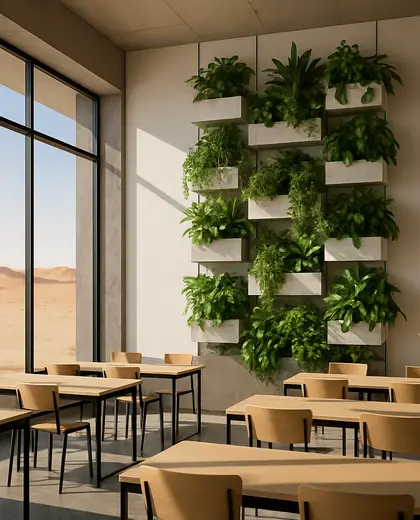
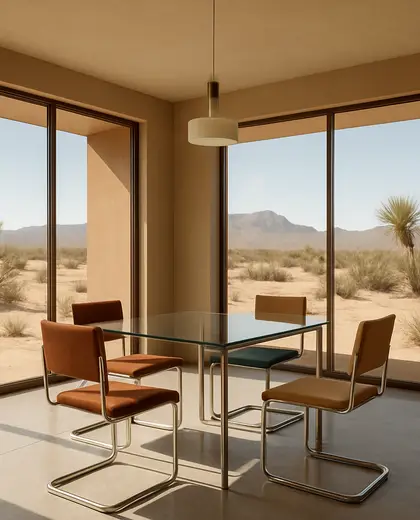
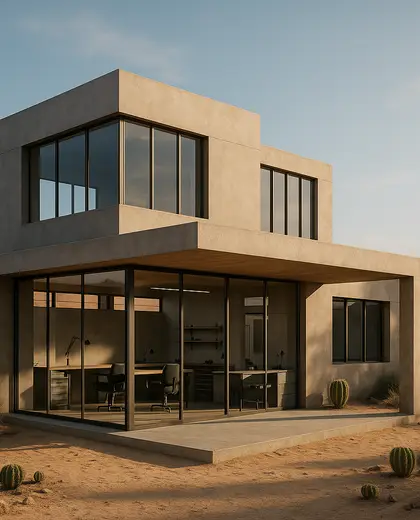
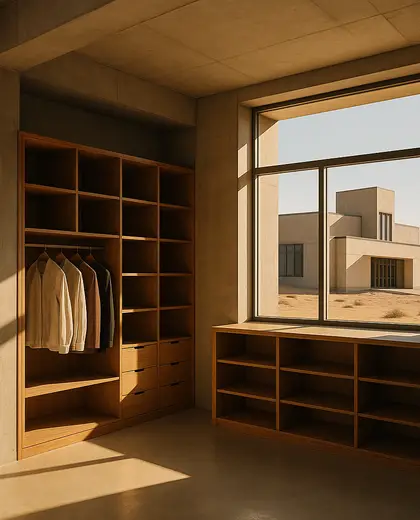
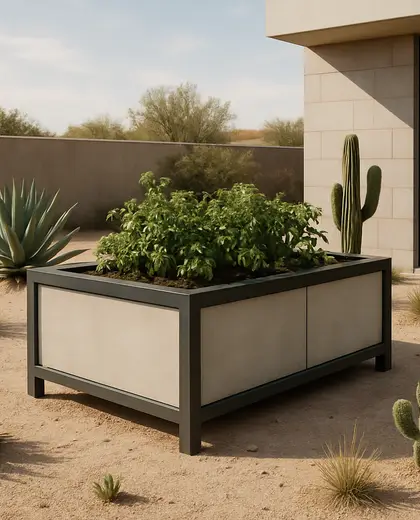
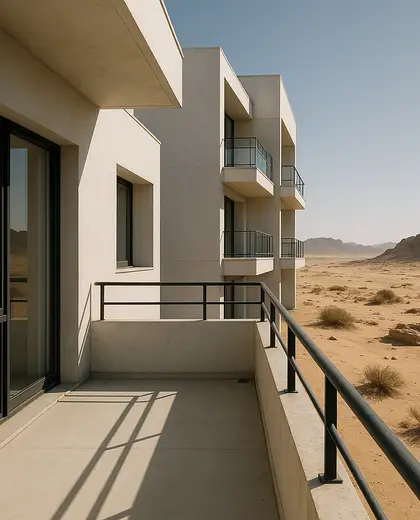
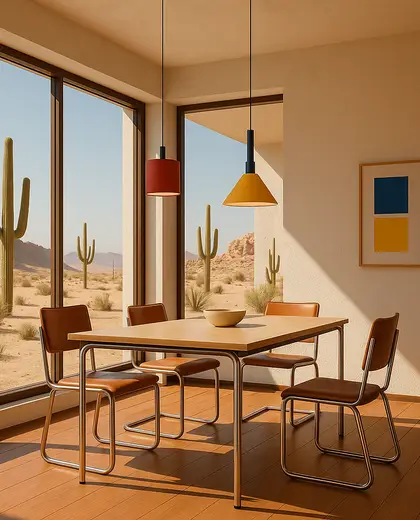
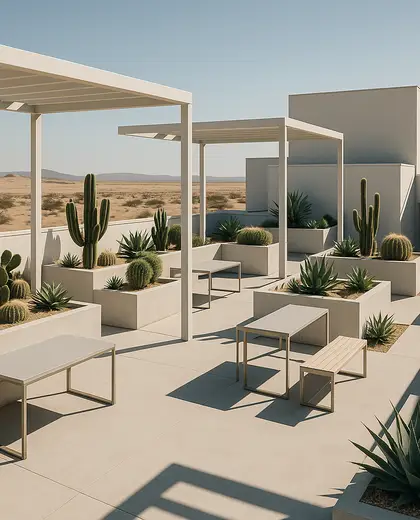
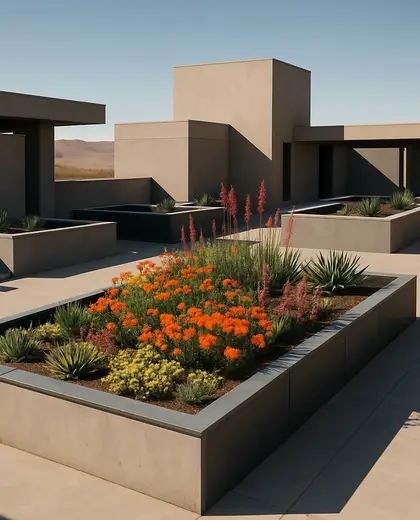
This composition pairs Bauhaus geometry with desert conditions: flat roofs, clean lines, and restrained volumes set against heat, sun, and open ground. Materials are typically stucco, concrete, stone, timber, and metal, with deep overhangs, shaded courtyards, and large openings tuned to the climate. The result is spare and functional, with crisp edges and a warm, weathered feel.
- bauhaus
- desert
— References
References to explore
Will this style work in a very hot climate?
Yes, if it uses passive cooling strategies such as shaded outdoor areas, recessed glazing, thermal mass, and controlled openings.
Does Bauhaus desert design feel cold or stark inside?
It can if finished too severely, but warm timber, textured plaster, woven fabrics, and softer lighting help balance the geometry.
What exterior details define the look most clearly?
Flat roofs, rectangular volumes, minimal ornament, deep shadow lines, and a palette drawn from stone and sun-baked earth are the clearest markers.
— The style
What defines it
Stucco, concrete, steel, glass, stone, and warm timber are common, often used in smooth, planar surfaces.
Sand, ochre, clay, off-white, charcoal, and muted black create a dry, sun-washed look.
Bauhaus minimalism combines with desert architecture, especially climate-responsive shading and low, horizontal massing.
— Professionals
Who has already built it
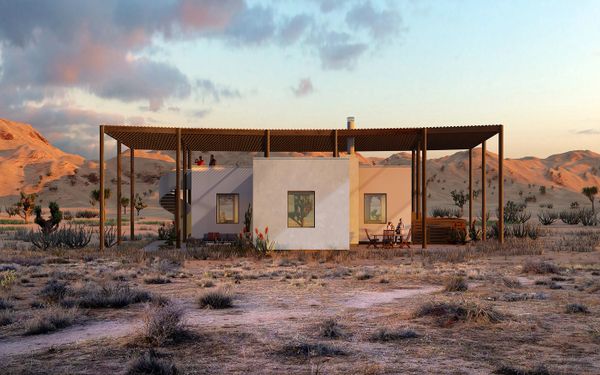


- Karavaan Homefurniture sellers · High Point · 4 projectsView profile →
— Explore
Keep exploring
— Questions
Frequently asked questions
Will this style work in a very hot climate?
Yes, if it uses passive cooling strategies such as shaded outdoor areas, recessed glazing, thermal mass, and controlled openings.
Does Bauhaus desert design feel cold or stark inside?
It can if finished too severely, but warm timber, textured plaster, woven fabrics, and softer lighting help balance the geometry.
What exterior details define the look most clearly?
Flat roofs, rectangular volumes, minimal ornament, deep shadow lines, and a palette drawn from stone and sun-baked earth are the clearest markers.