— Ideas & inspiration
Modern lines in a desert frame
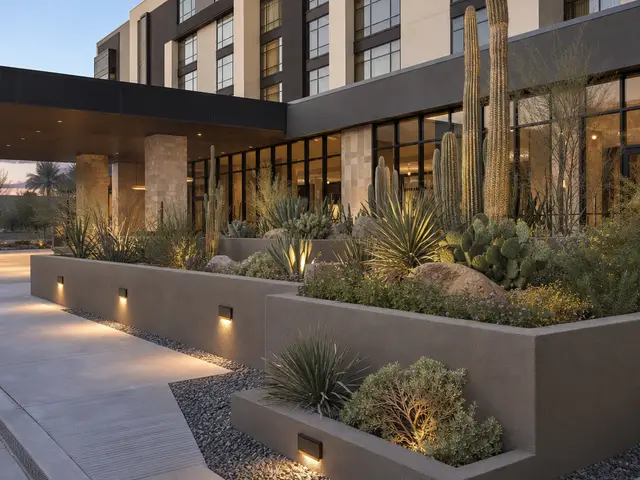
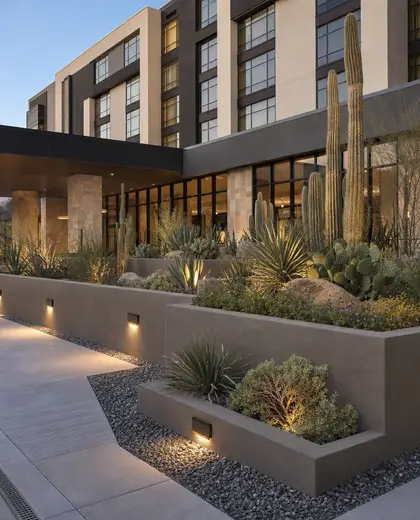
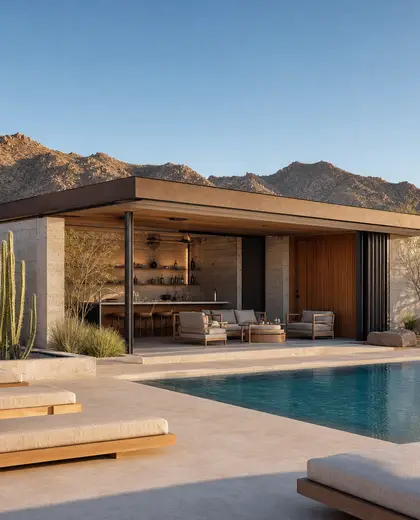
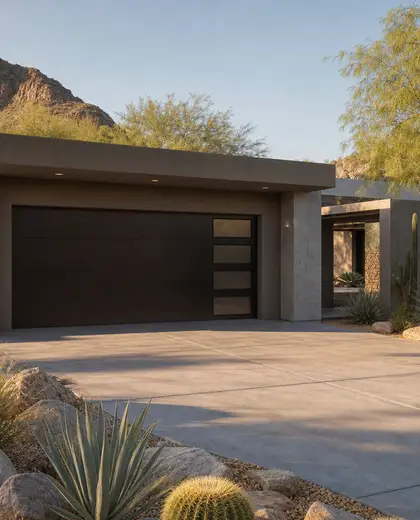
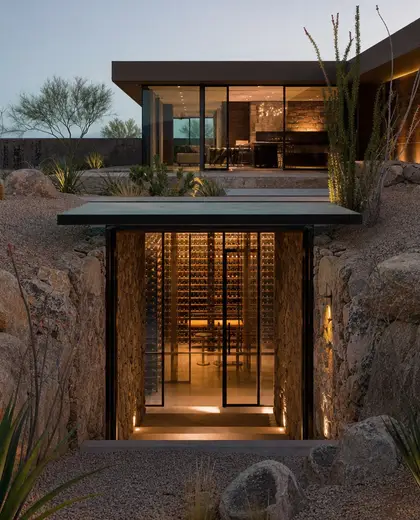
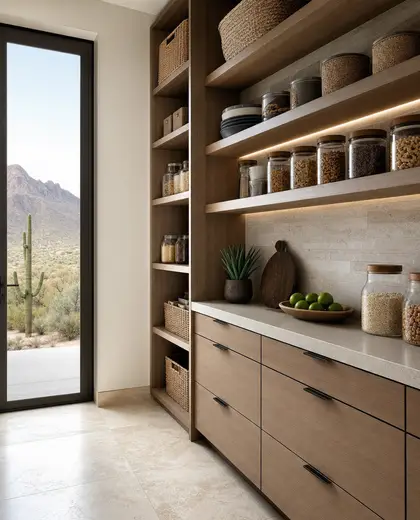
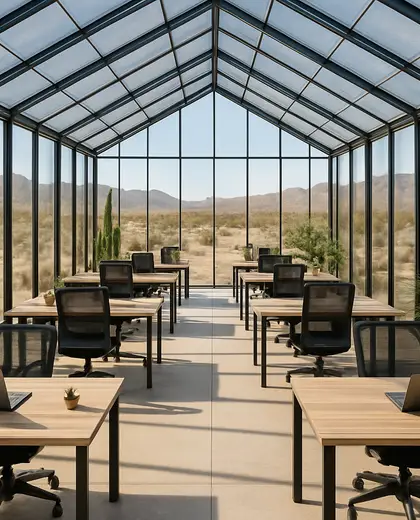
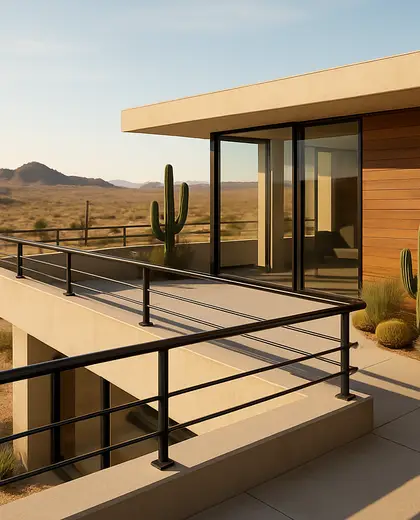
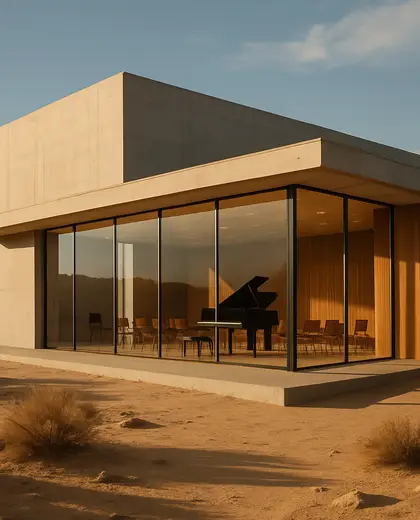
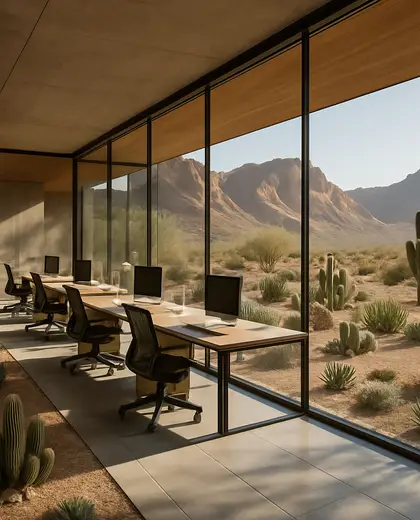
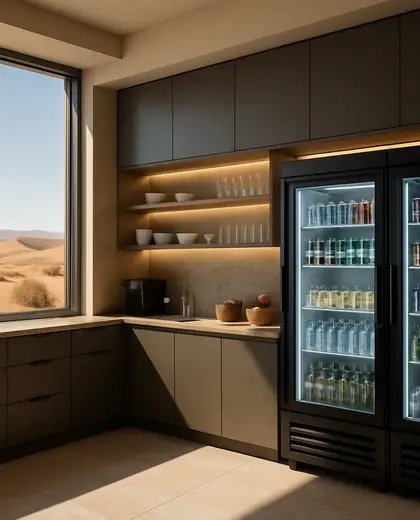
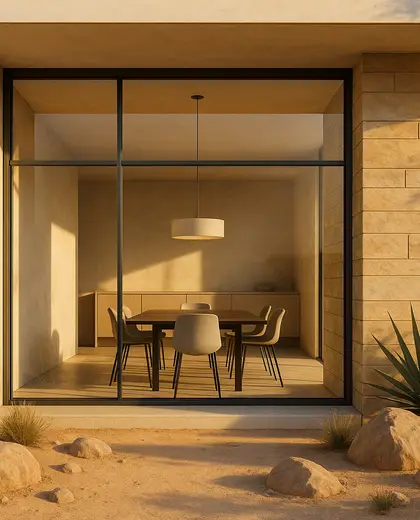
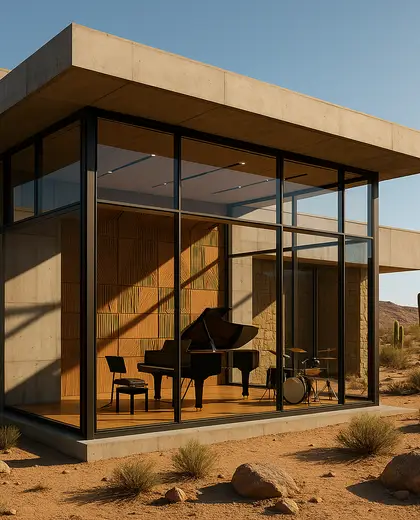
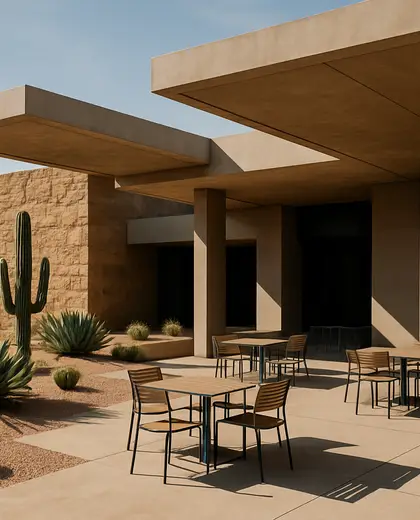
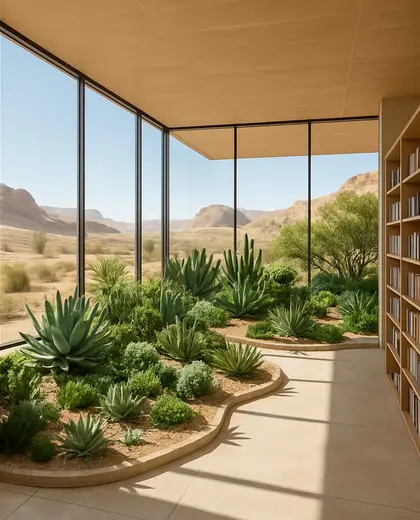
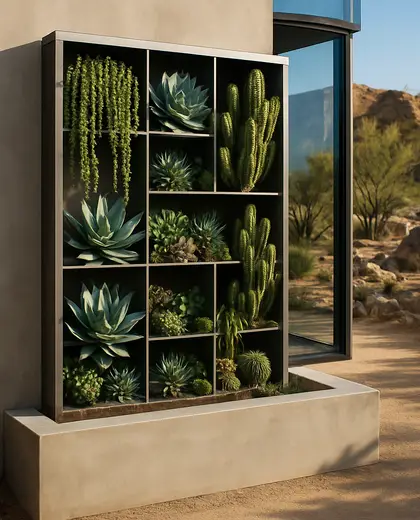
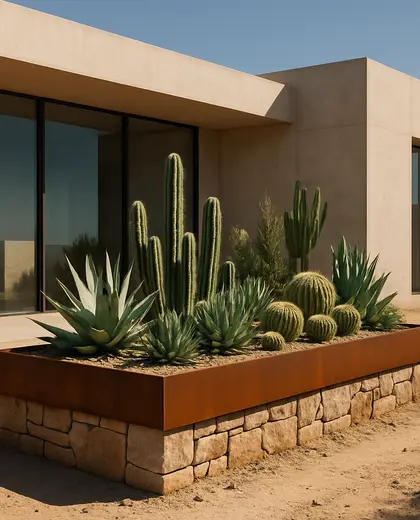
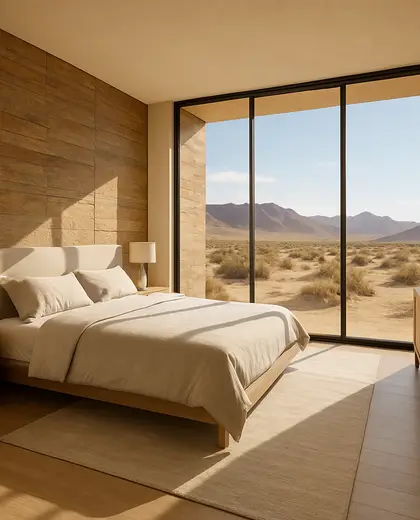
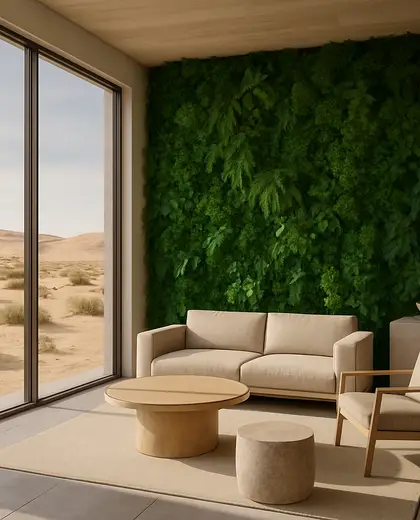
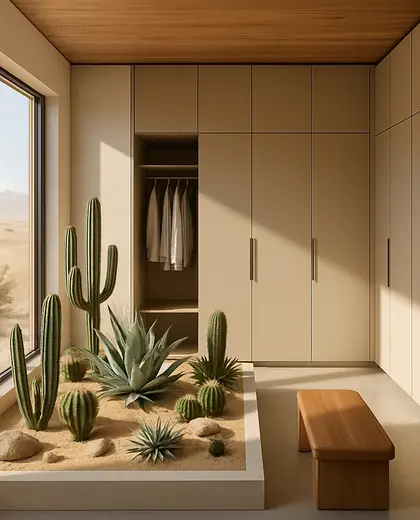
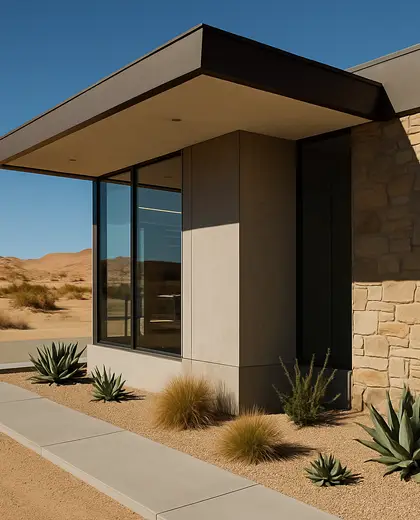
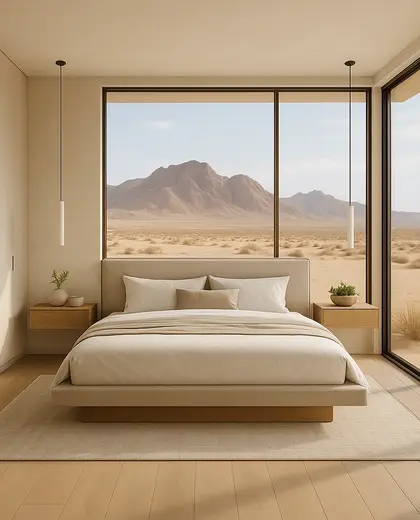
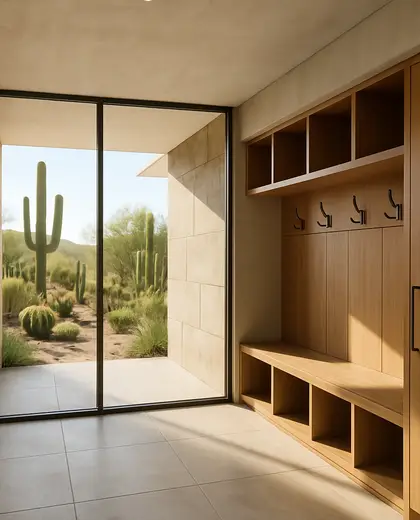
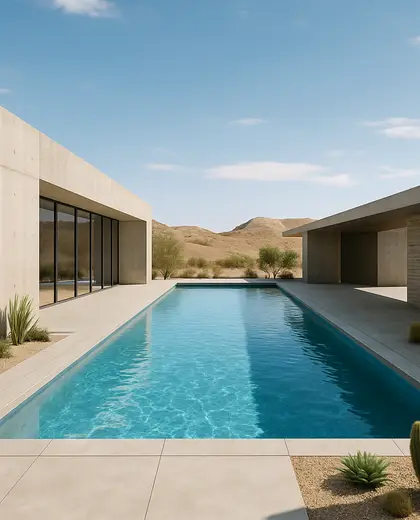
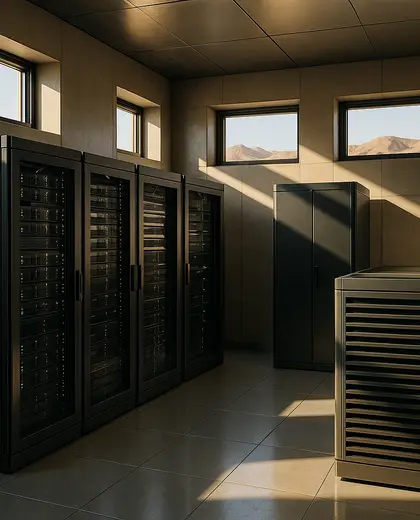
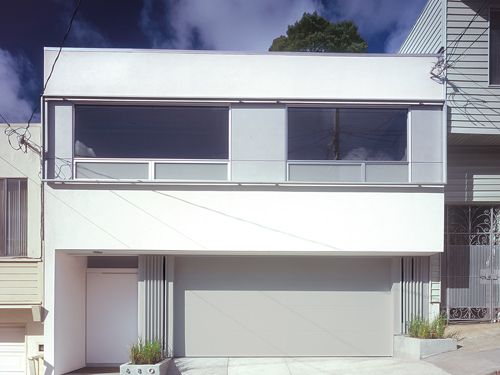
This composition is defined by clean geometric forms, flat or low-pitched roofs, and a restrained use of materials that handle intense sun and heat. Common choices include stucco, concrete, stone, weathered wood, and metal, paired with deep overhangs, shaded courtyards, and large openings that connect indoors to the landscape. The palette stays earthy and sun-washed, using sand, clay, taupe, off-white, charcoal, and muted bronze.
- modern
- desert
— References
References to explore
What makes a modern desert home look authentic?
It usually relies on simple massing, natural textures, and climate-conscious elements like shade, courtyards, and fewer decorative details. The relationship to the landscape matters as much as the materials.
Can I use this style in a humid or non-desert climate?
Yes, but some details may need adjusting for your local climate. You can keep the visual language while adapting materials, insulation, glazing, and shading strategies to suit the site.
Does this style only work with neutral colors?
Neutrals are the core of the style, but muted accent tones can work well. Soft rust, olive, dusty blue, or deep brown can be used sparingly without breaking the overall feel.
— The style
What defines it
Stucco, concrete, local stone, timber accents, and metal details are typical, often finished with matte or weathered surfaces.
Warm neutrals and mineral tones dominate: beige, sand, terracotta, taupe, ivory, and dark brown or charcoal accents.
It pairs modern minimalism with desert vernacular features such as shaded patios, courtyards, thick walls, and indoor-outdoor flow.
— Professionals
Who has already built it

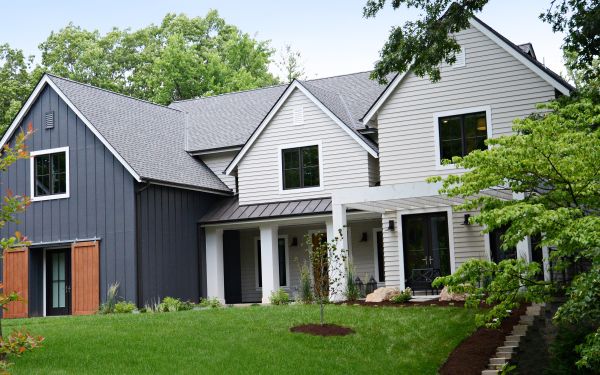

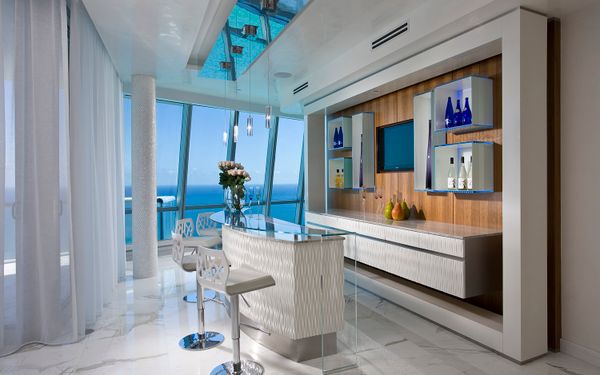

- jeffry kocharchitects · Rose Hill · 5 projectsView profile →
- Karavaan Homefurniture sellers · High Point · 4 projectsView profile →
- jacob galleslandscape designers · 1 projectsView profile →
- interior design by emilyinterior designers · 1 projectsView profile →
— ARTICLES
Related reading
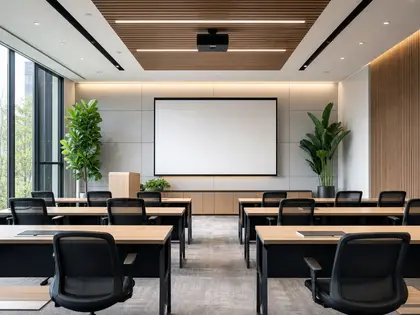
7 Mistakes to Avoid in a Training Room
A practical guide to the most common training room planning mistakes, with simple fixes that improve comfort, safety, and performance.
Read article →
Conference Hall Renovation Costs: A Practical Budget Guide for a Modern Upgrade
A practical U.S. budget guide for renovating a conference hall, including typical cost ranges, what affects pricing, where to spend or save, and hidden expenses to plan for.
Read article →
Pool Renovation Budget Guide: Real Costs, Smart Splurges, and Hidden Extras
A practical U.S. budget guide for renovating a pool, with realistic cost ranges, trade-offs, and the hidden expenses that can derail a project.
Read article →— Questions
Frequently asked questions
What makes a modern desert home look authentic?
It usually relies on simple massing, natural textures, and climate-conscious elements like shade, courtyards, and fewer decorative details. The relationship to the landscape matters as much as the materials.
Can I use this style in a humid or non-desert climate?
Yes, but some details may need adjusting for your local climate. You can keep the visual language while adapting materials, insulation, glazing, and shading strategies to suit the site.
Does this style only work with neutral colors?
Neutrals are the core of the style, but muted accent tones can work well. Soft rust, olive, dusty blue, or deep brown can be used sparingly without breaking the overall feel.