— Ideas & inspiration
Rustic warmth in a desert setting
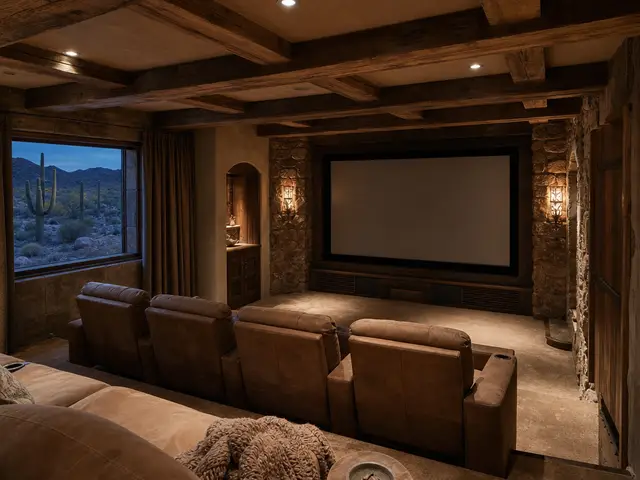
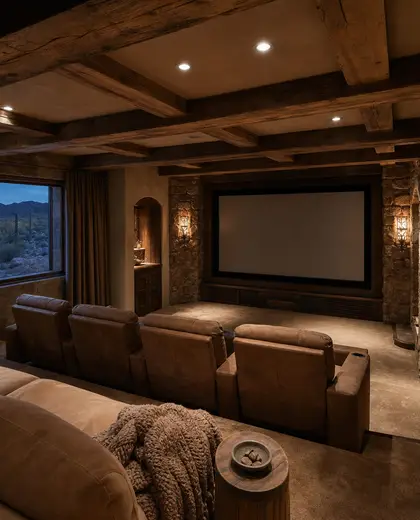
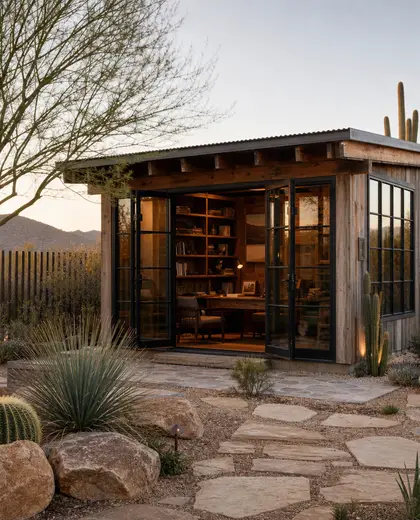
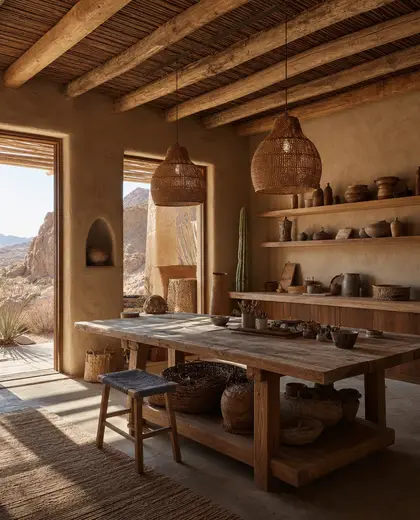
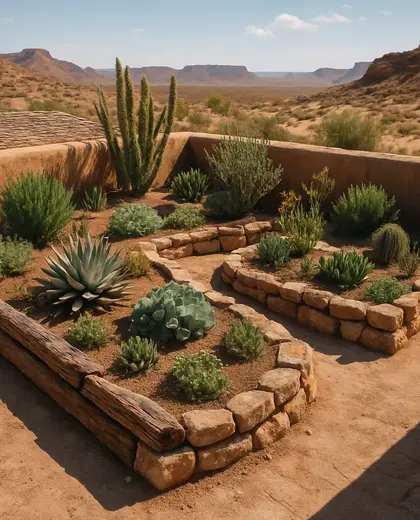
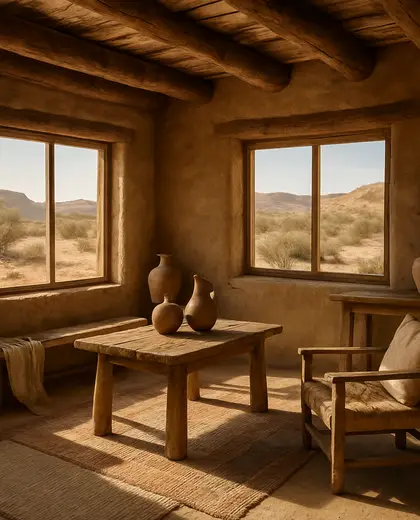
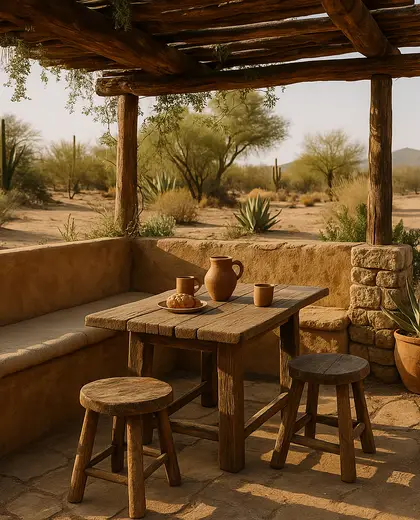
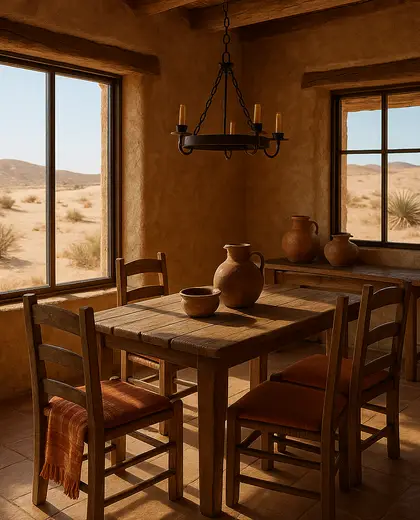
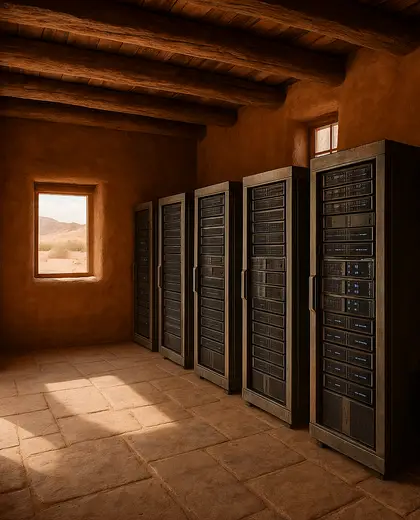
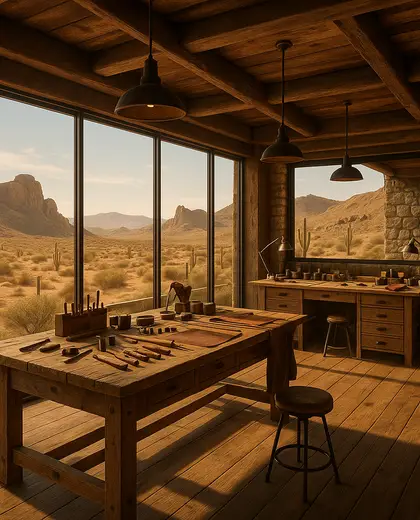
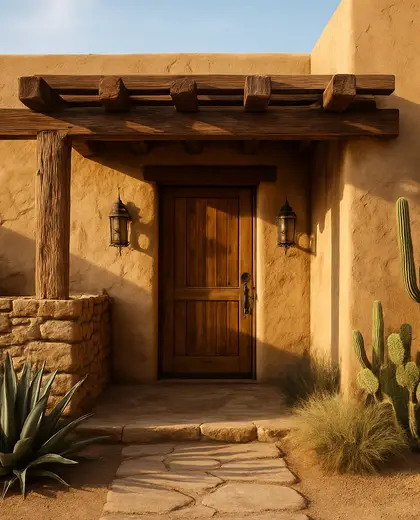
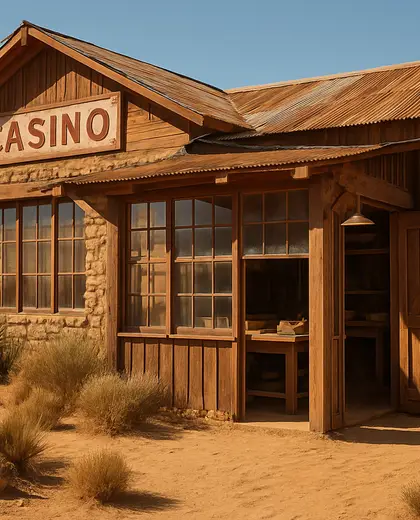
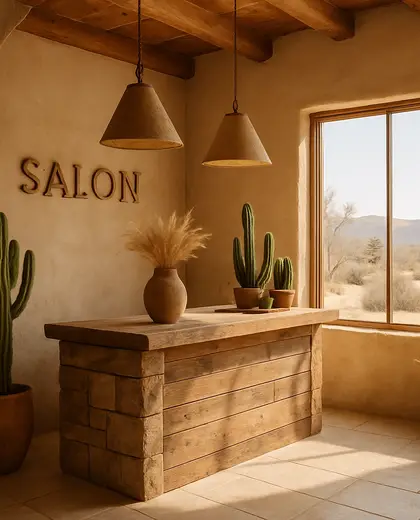
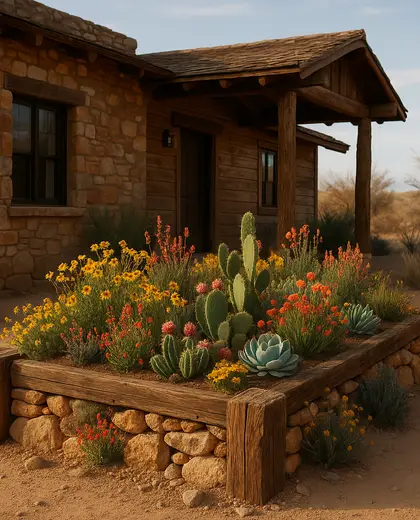
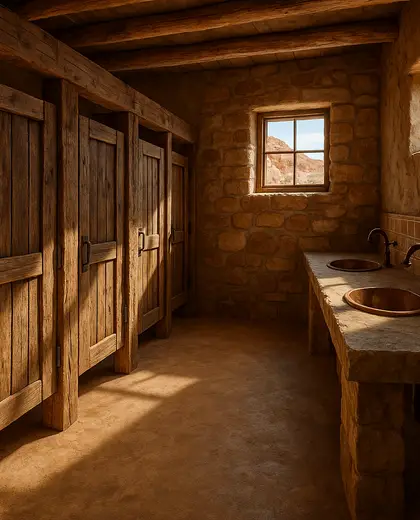
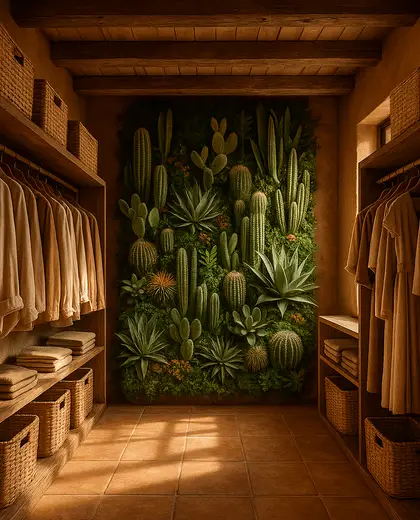
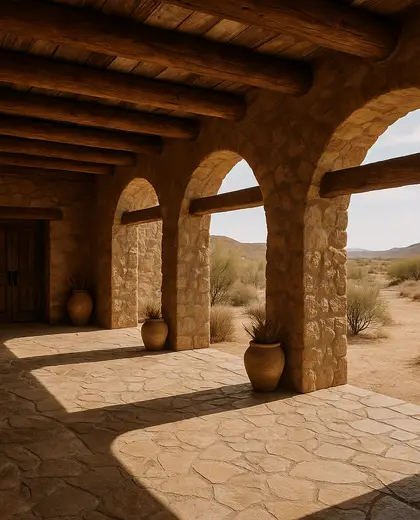
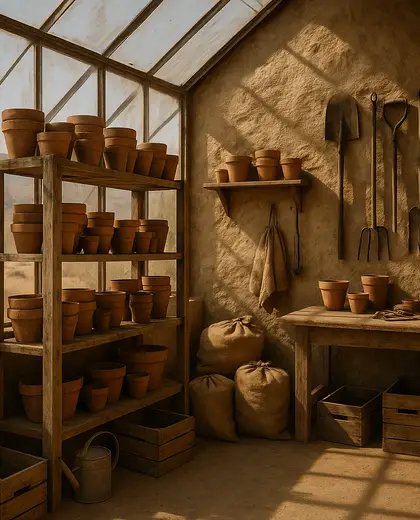
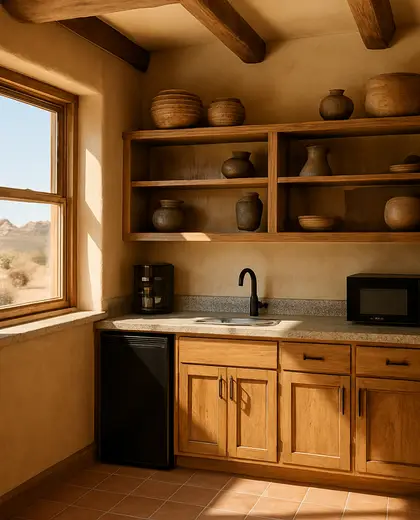
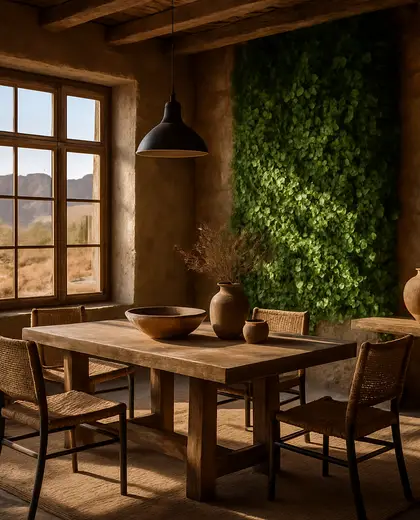
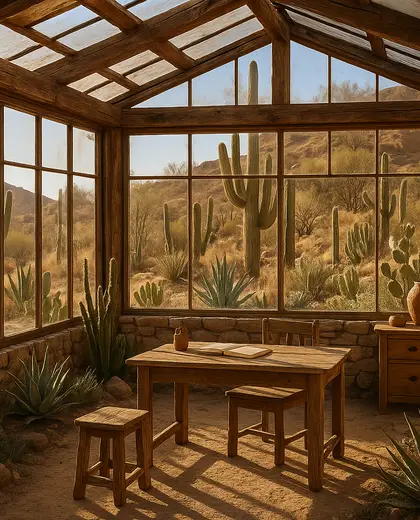
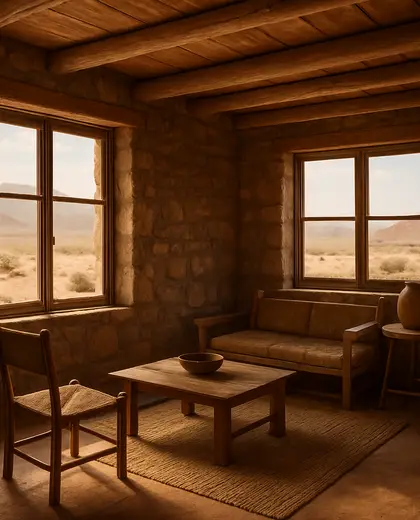
This composition pairs weathered, tactile materials with the dry, open character of the desert. Think stone, adobe, clay plaster, rough timber, and metal details in sunbaked earth tones, often shaped into thick walls, shaded courtyards, and low horizontal forms. The result feels grounded, shaded, and naturally adapted to heat and bright light.
- rustic
- desert
— References
References to explore
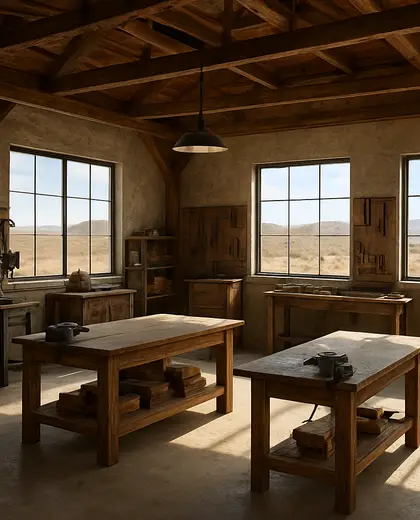
What makes a rustic desert interior feel authentic?
Authenticity usually comes from natural texture, restrained finishes, and materials that look local or weathered rather than polished. Shade, rough surfaces, and earth-toned color help tie the interior to the landscape.
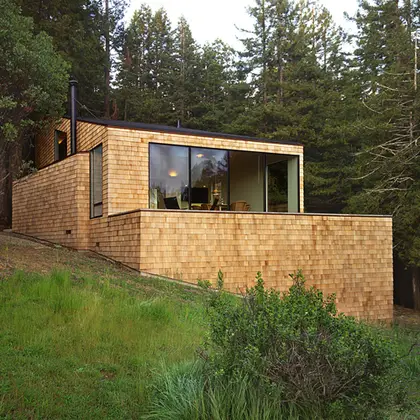
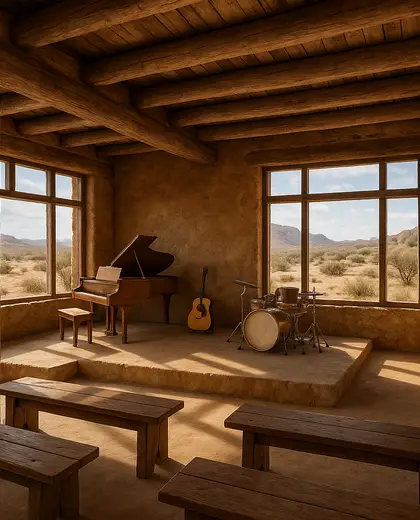
Does this style work in modern homes?
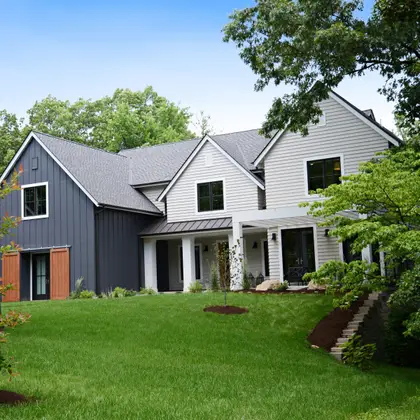
Yes. It often blends well with modern layouts when the structure stays simple and the material palette remains warm and tactile. Clean lines can balance the rugged surfaces.
How do I keep a rustic desert space from feeling too heavy?
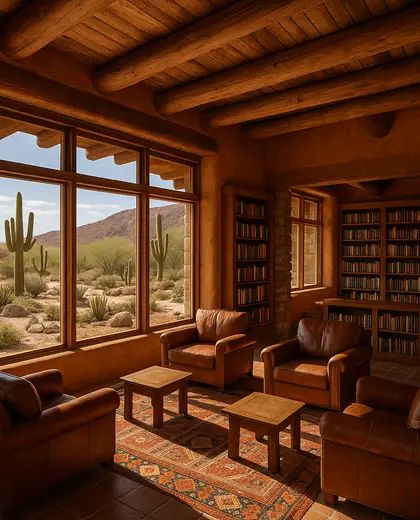
Use lighter plaster tones, open views, and a few well-placed natural textures instead of layering too many dark or rough elements. Courtyards, large openings, and breathable fabrics help keep it visually light.
— The style
What defines it
Adobe, rammed earth, stone, clay plaster, reclaimed wood, and dark metal accents are common.
Sandy beige, terracotta, clay red, warm brown, muted gray, and dusty off-white define the look.
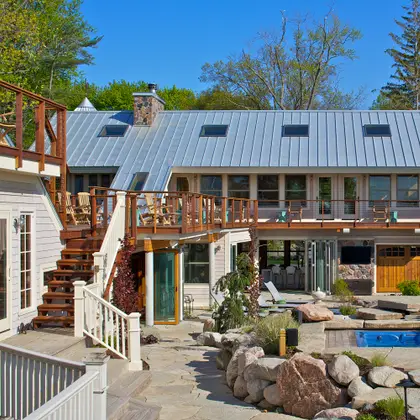
This style often pairs rustic texture with desert vernacular elements like courtyards, deep overhangs, shaded terraces, and simple massing.
— Professionals
Who has already built it



- jacob galleslandscape designers · 2 projectsView profile →
- michael matthewsarchitects · Los Angeles · 1 projectsView profile →
- interior design by emilyinterior designers · 1 projectsView profile →
- Karavaan Homefurniture sellers · High Point · 4 projectsView profile →
— Explore
Keep exploring
— Questions
Frequently asked questions
What makes a rustic desert interior feel authentic?
Authenticity usually comes from natural texture, restrained finishes, and materials that look local or weathered rather than polished. Shade, rough surfaces, and earth-toned color help tie the interior to the landscape.
Does this style work in modern homes?
Yes. It often blends well with modern layouts when the structure stays simple and the material palette remains warm and tactile. Clean lines can balance the rugged surfaces.
How do I keep a rustic desert space from feeling too heavy?
Use lighter plaster tones, open views, and a few well-placed natural textures instead of layering too many dark or rough elements. Courtyards, large openings, and breathable fabrics help keep it visually light.