— Ideas & inspiration
Contemporary desert architecture
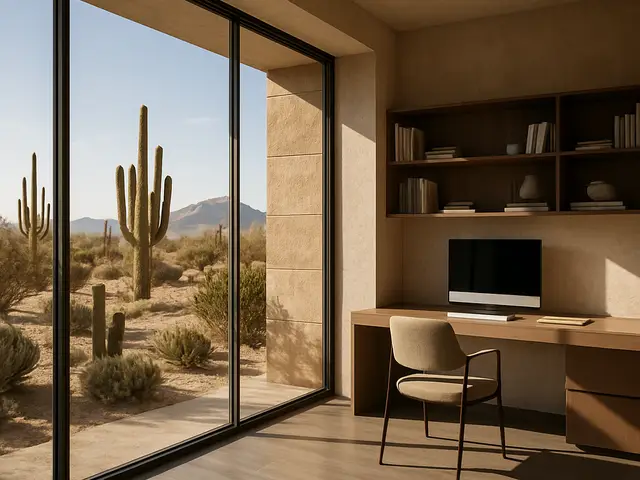
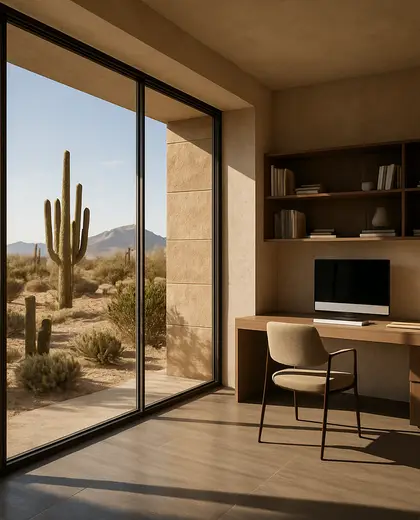
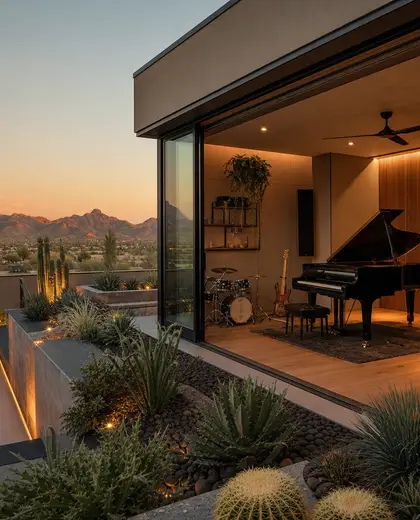
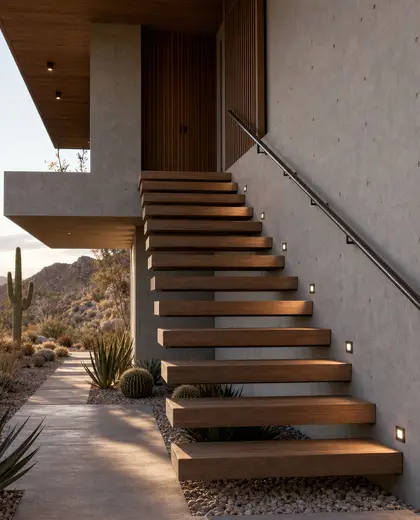
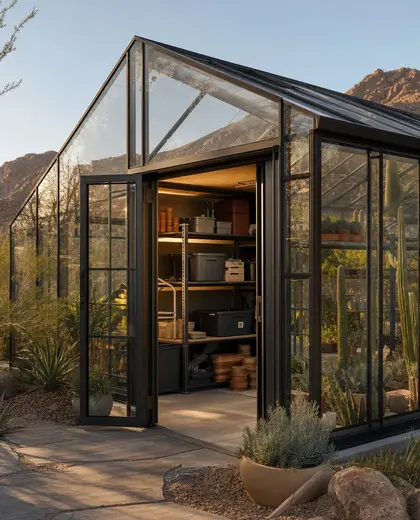
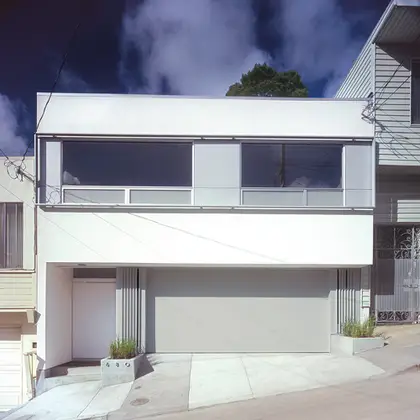
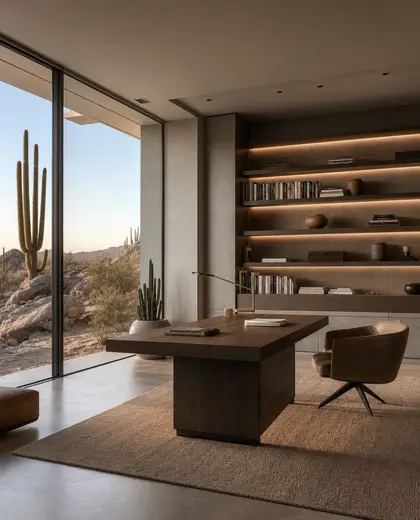
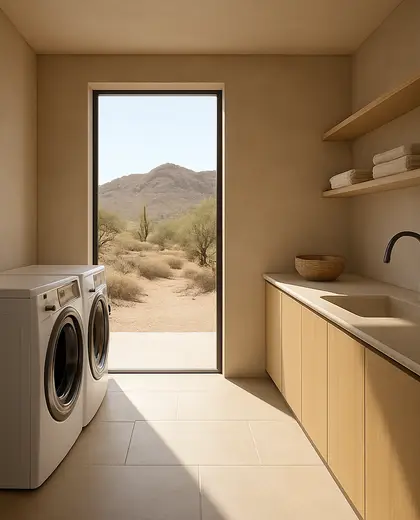
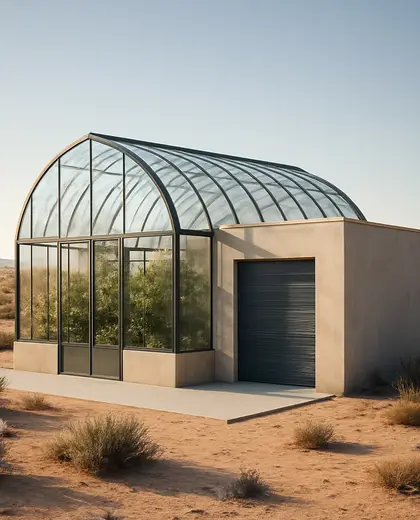
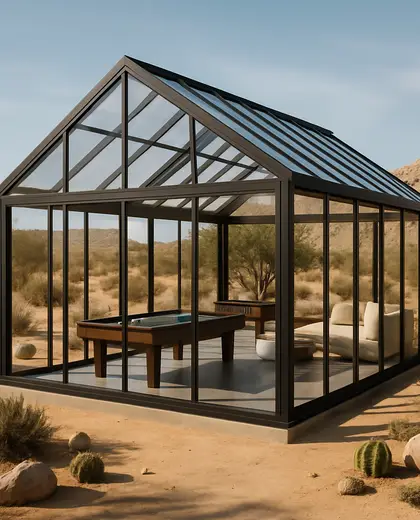
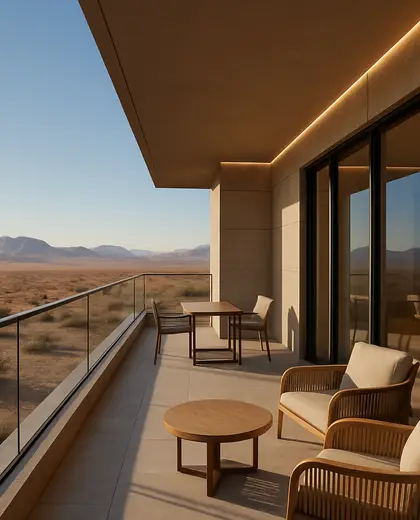
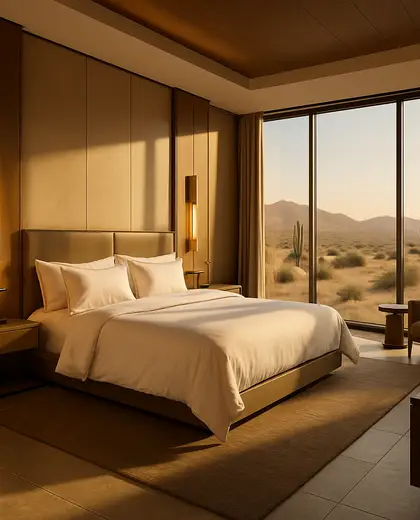
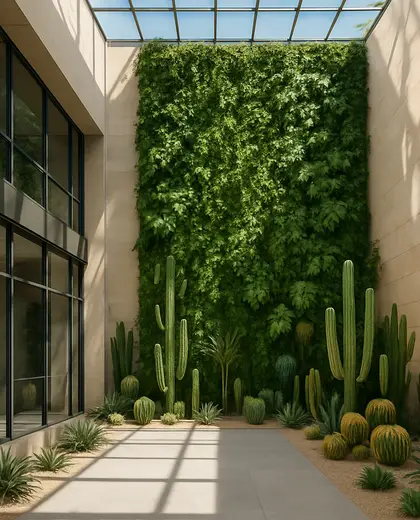
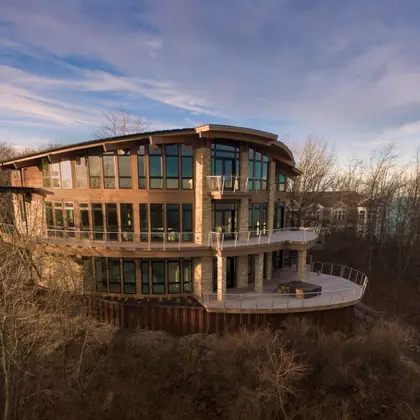
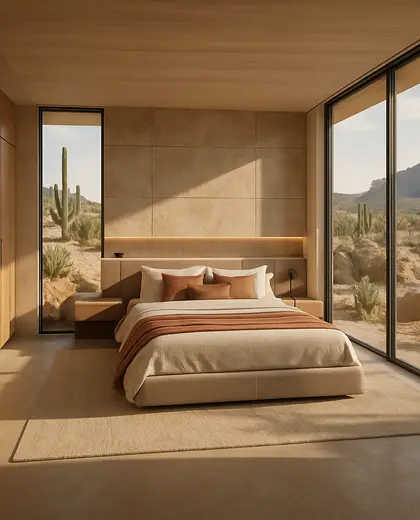
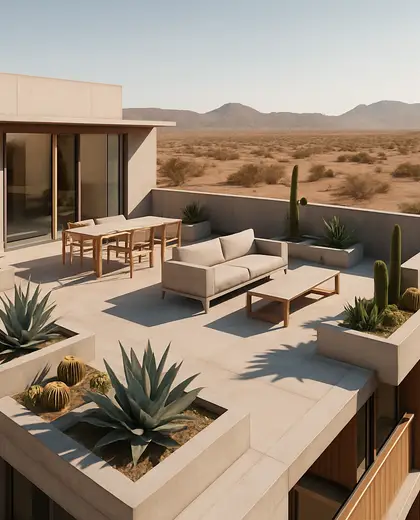
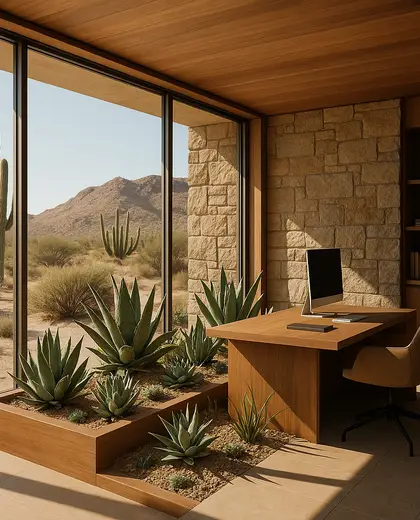
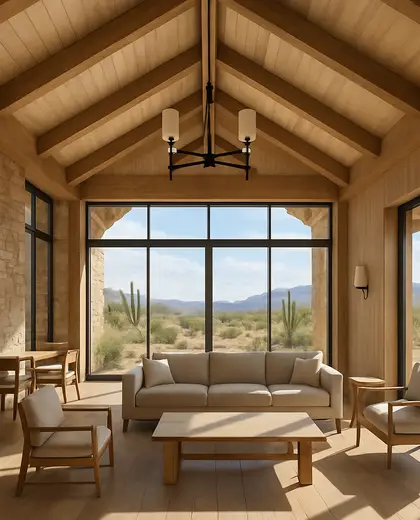
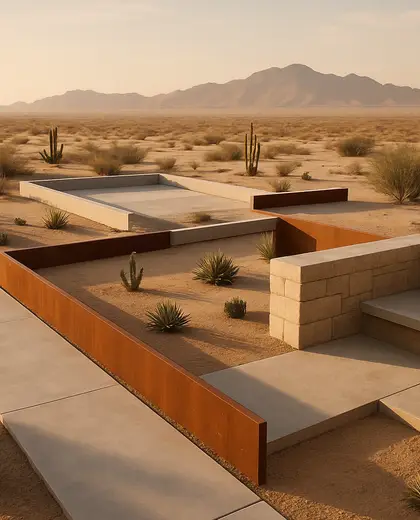
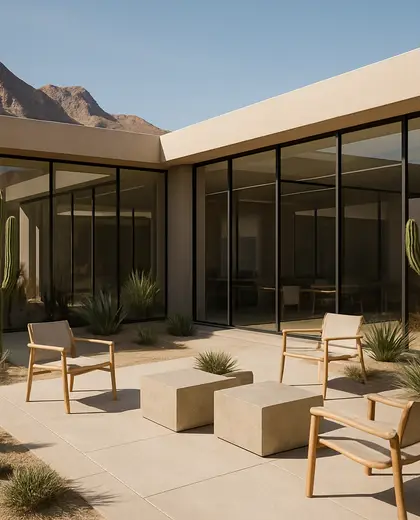
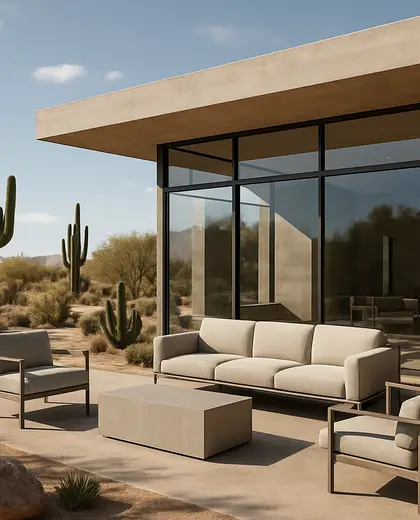
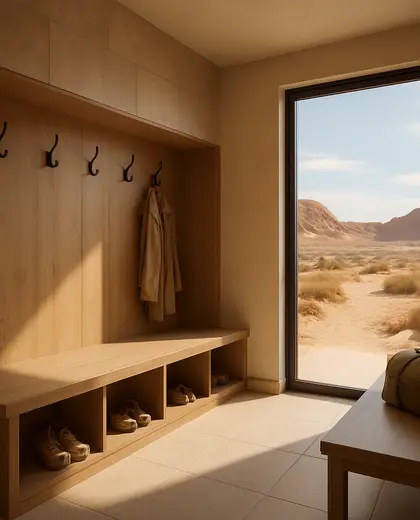
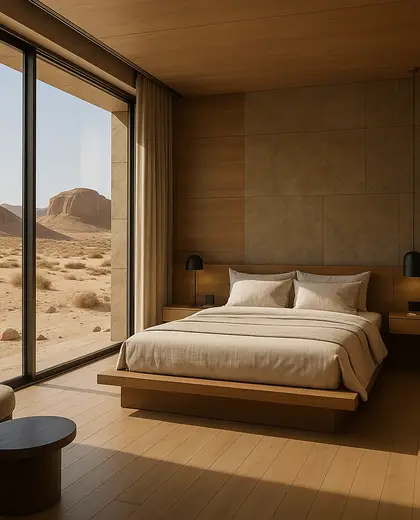
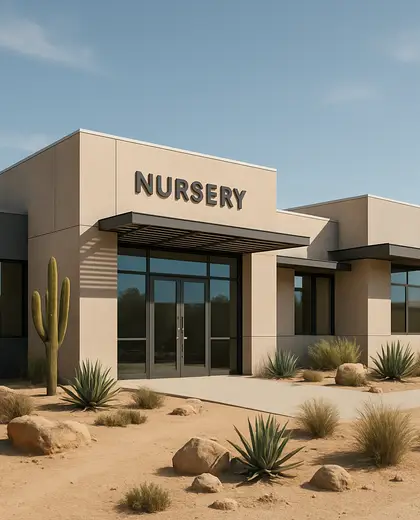
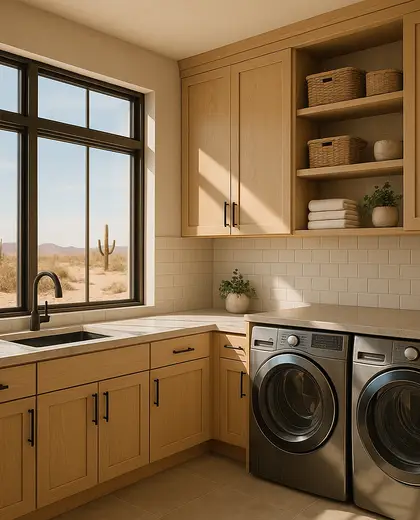
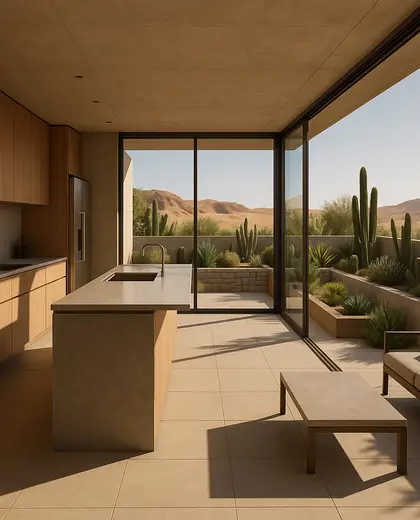
This composition pairs clean contemporary lines with the restrained texture of desert settings. It typically uses sun-hardened materials like concrete, stone, stucco, weathered wood, and metal, with deep overhangs, shaded openings, and strong indoor-outdoor transitions. The palette stays grounded in sand, clay, ivory, taupe, charcoal, and muted brown, often softened by sparse planting and natural light.
- contemporary
- desert
— References
References to explore
What makes a house feel contemporary and desert-inspired at the same time?
The combination usually comes from simple geometric forms, limited ornament, and materials that feel rooted in the landscape, such as stucco, stone, and concrete.
Does this style only work in hot, arid climates?
No, but it reads most naturally in dry or sunny settings. In other climates, the same look can be adapted with better insulation, drainage, and glazing control.

What should homeowners prioritize when designing this look?
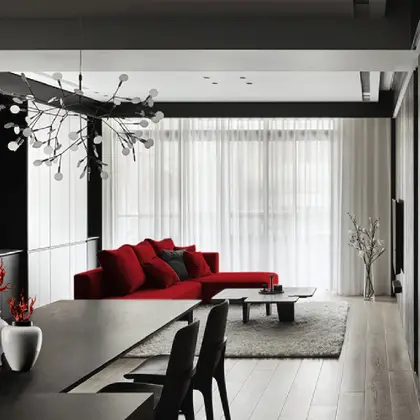
Focus on shade, proportion, and material restraint. The architecture should feel solid and quiet, with a palette and detailing that stay close to the surrounding terrain.
— The style
What defines it
Board-formed concrete, stucco, stone, steel, glass, and weathered timber are common, chosen for durability and a calm, low-gloss finish.
Warm neutrals dominate: sand, beige, clay, terracotta, off-white, taupe, and darker accents like bronze or charcoal.
It often combines minimalist massing, shaded courtyards, flat roofs, and large openings to connect interior spaces with arid landscapes.
— Professionals
Who has already built it

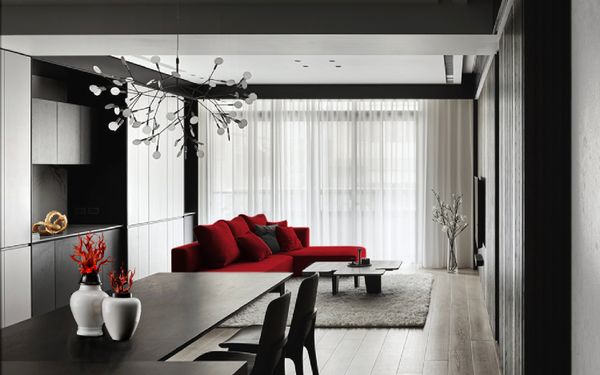

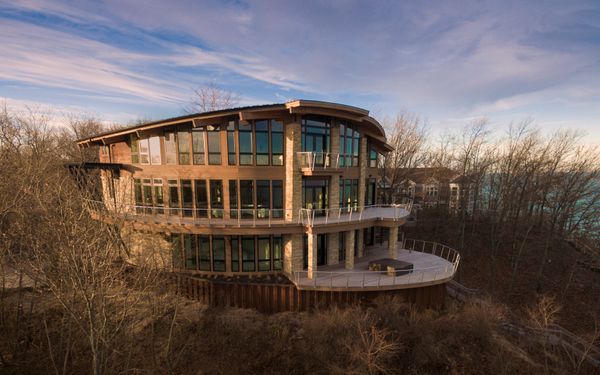

- fathoms designarchitects · Wheaton · 2 projectsView profile →
- Karavaan Homefurniture sellers · High Point · 4 projectsView profile →
- jacob galleslandscape designers · 2 projectsView profile →
- interior design by emilyinterior designers · 4 projectsView profile →
— Explore
Keep exploring
— Questions
Frequently asked questions
What makes a house feel contemporary and desert-inspired at the same time?
The combination usually comes from simple geometric forms, limited ornament, and materials that feel rooted in the landscape, such as stucco, stone, and concrete.
Does this style only work in hot, arid climates?
No, but it reads most naturally in dry or sunny settings. In other climates, the same look can be adapted with better insulation, drainage, and glazing control.
What should homeowners prioritize when designing this look?
Focus on shade, proportion, and material restraint. The architecture should feel solid and quiet, with a palette and detailing that stay close to the surrounding terrain.