— Ideas & inspiration
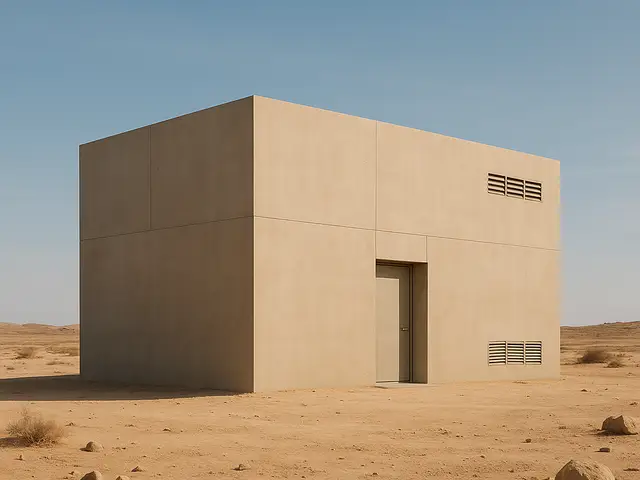
Minimalist forms in the desert light
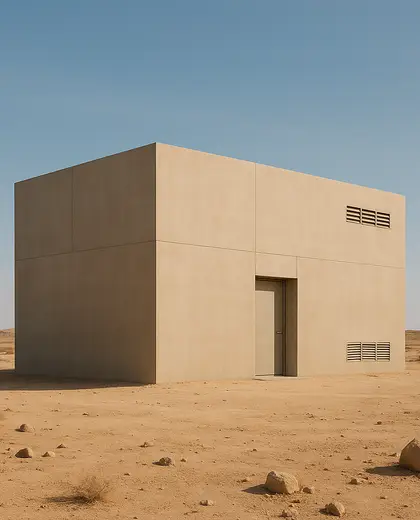
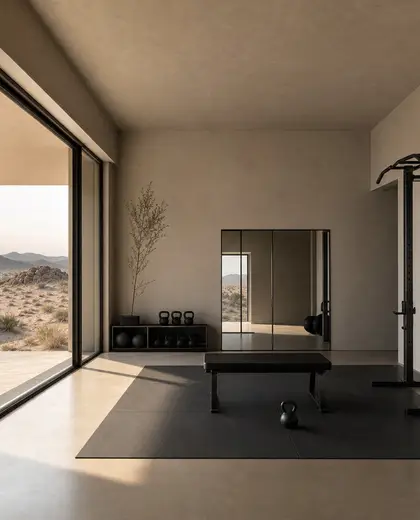
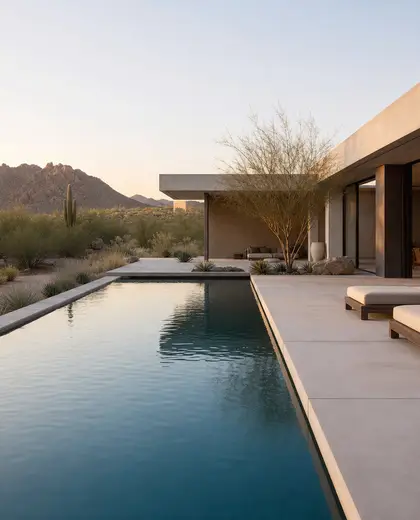
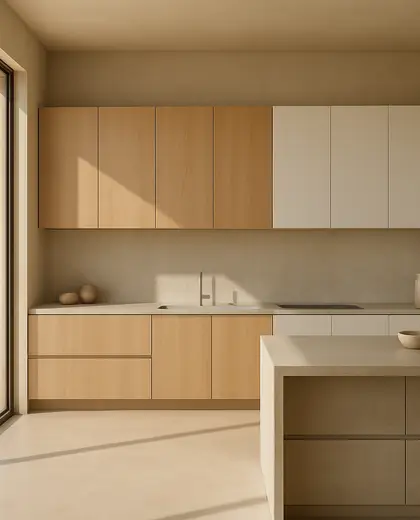
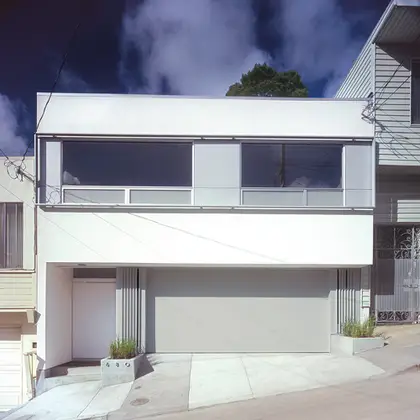
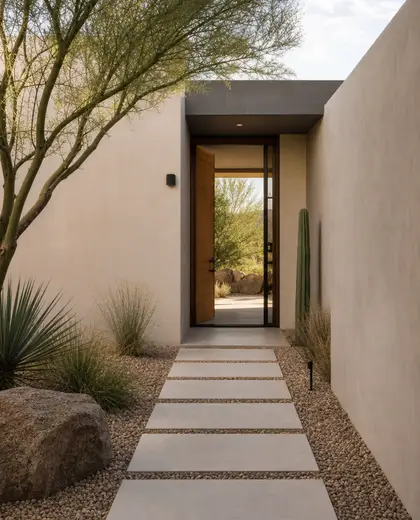
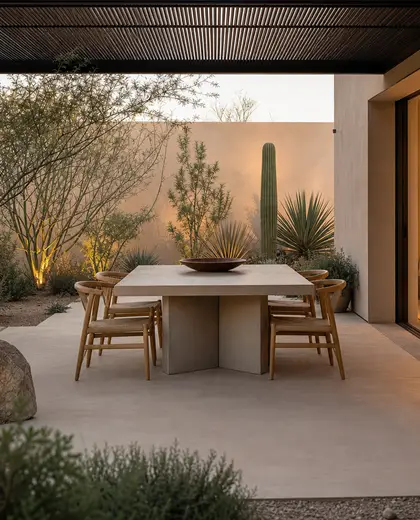
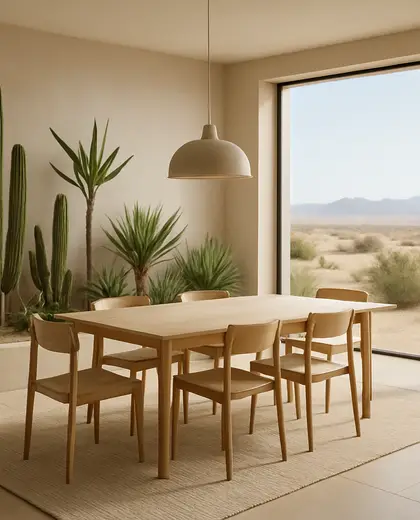
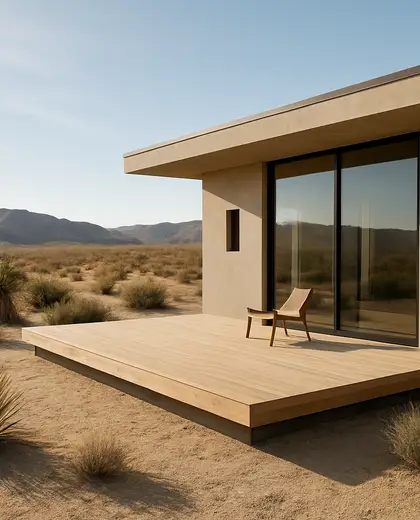
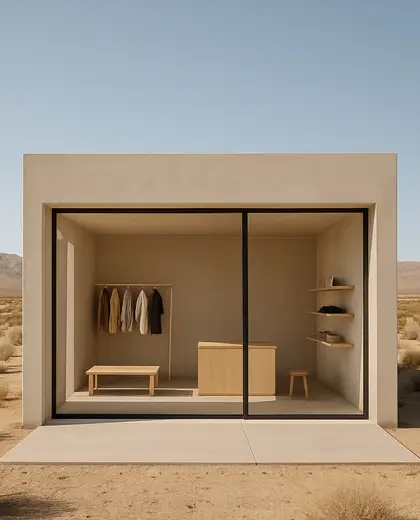
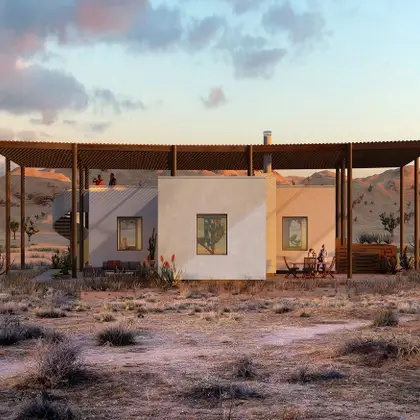
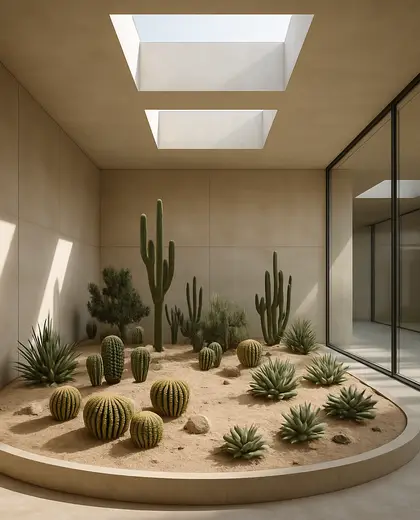
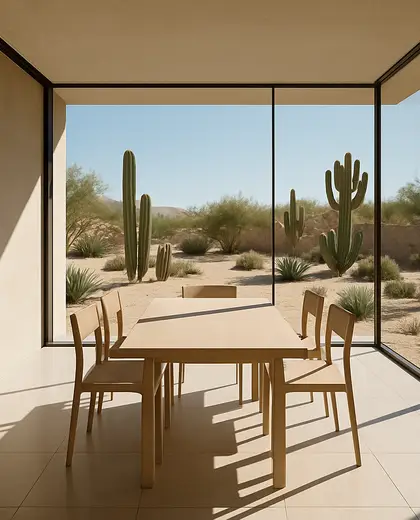
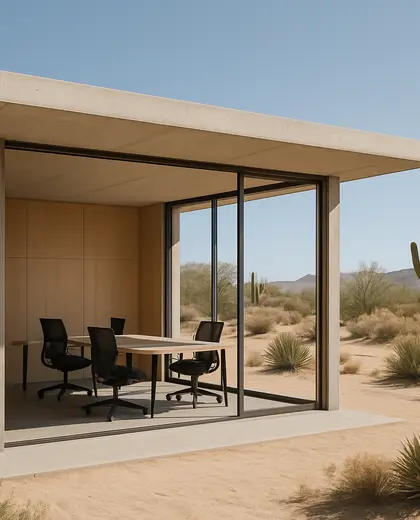
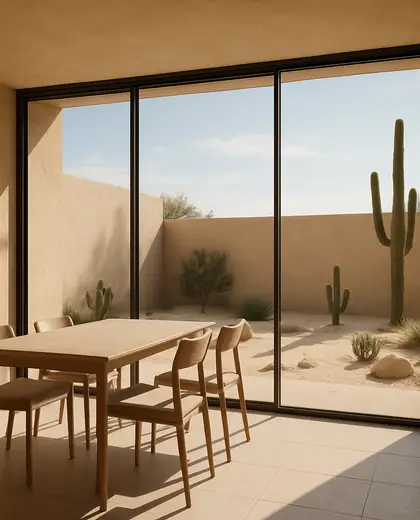
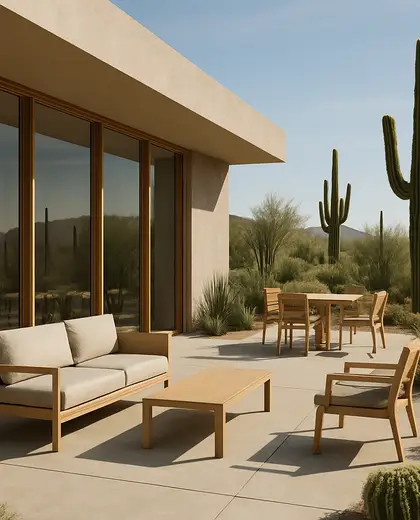
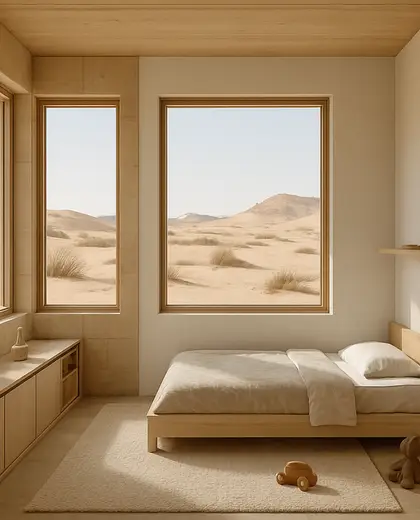
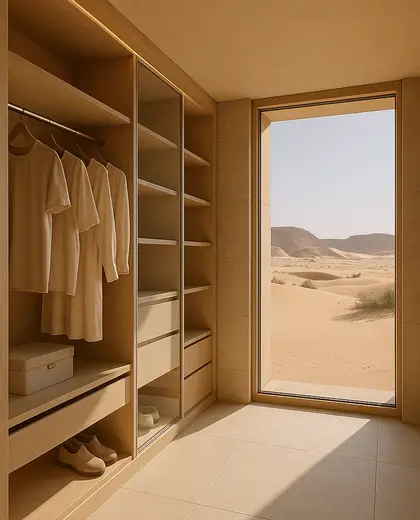
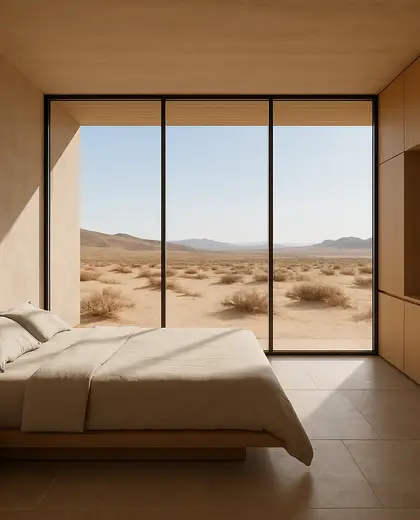
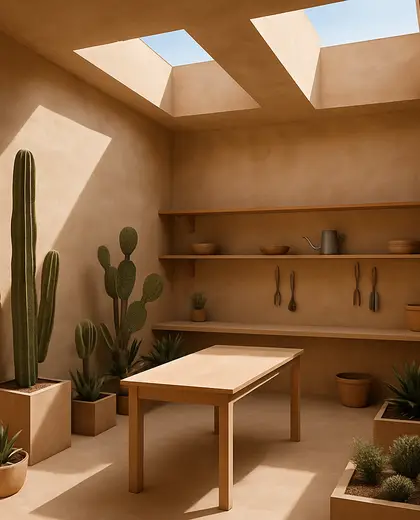
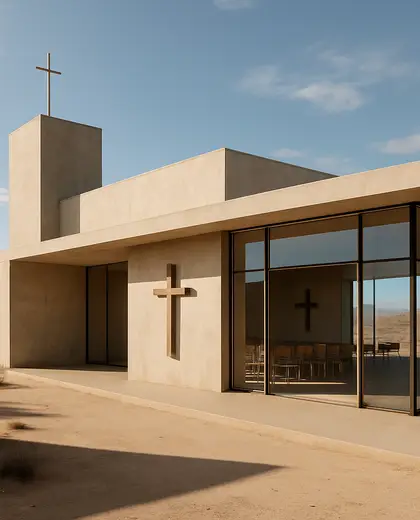
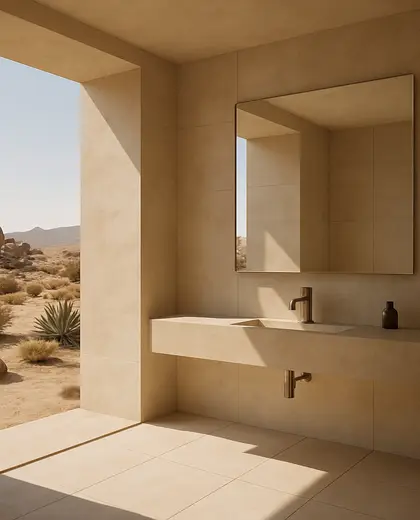
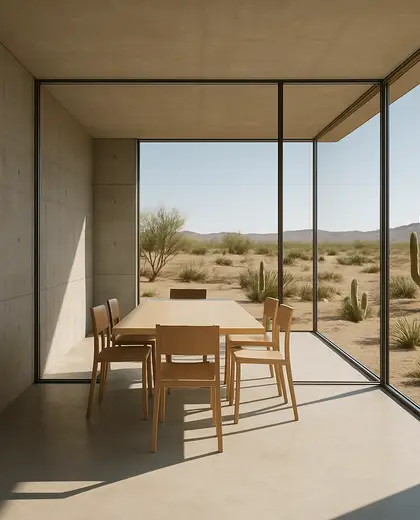
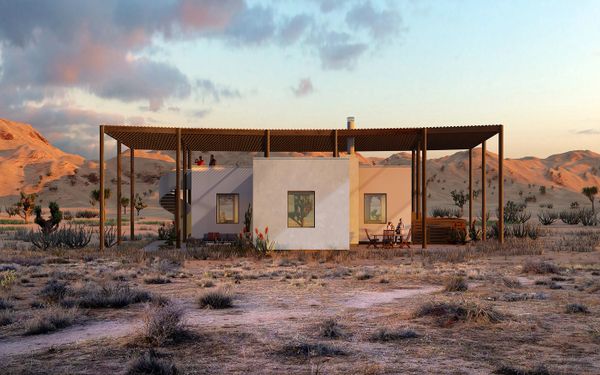
This composition is defined by pared-back volumes, clean lines, and a restrained material mix suited to arid climates. Expect sand-colored stucco, concrete, stone, and weathered wood, with deep openings, shaded recesses, and sparse detailing. The palette stays warm and muted, often using off-white, beige, taupe, and charcoal accents.
- minimalist
- desert
— References
References to explore
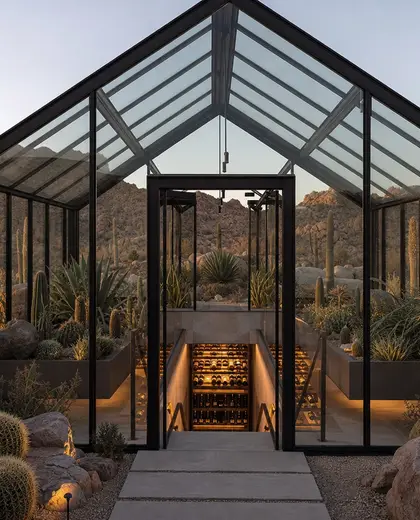
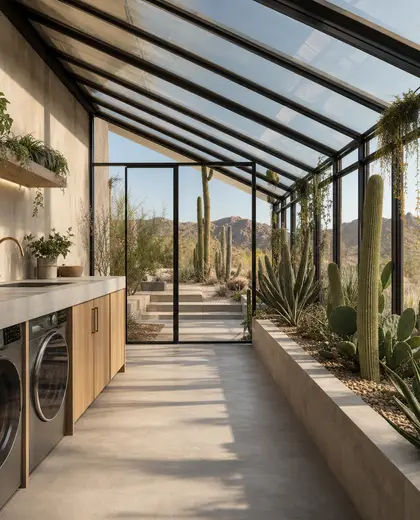
What makes a minimalist desert home different from a regular minimalist house?
It uses the same simplicity and clean geometry, but adapts to heat, glare, and dry conditions with thicker walls, shaded terraces, and materials that feel grounded in the landscape.
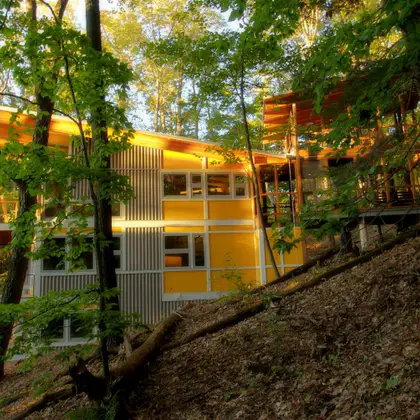
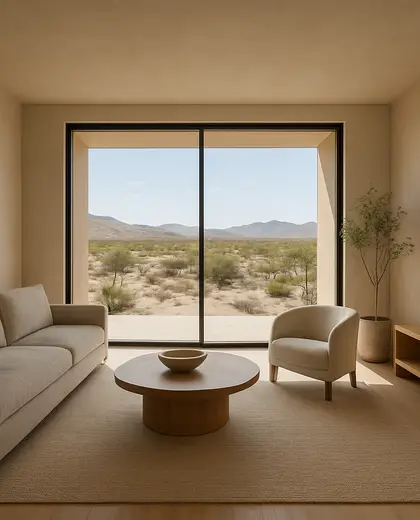
Can this style still feel warm and livable?
Yes. Warm plaster, timber, textured stone, and filtered daylight keep the interiors calm without feeling stark.
What should I avoid if I want this look?
Avoid busy detailing, glossy finishes, and overly cool color schemes. Heavy ornament and high-contrast palettes can weaken the quiet, sun-washed character of the style.
— The style
What defines it
Stucco, concrete, natural stone, wood, and metal are the most common choices.
Warm neutrals dominate: sand, bone, clay, beige, taupe, and muted black or bronze accents.
Works well with flat roofs, courtyards, shaded patios, native planting, and large openings to the landscape.
— Professionals
Who has already built it
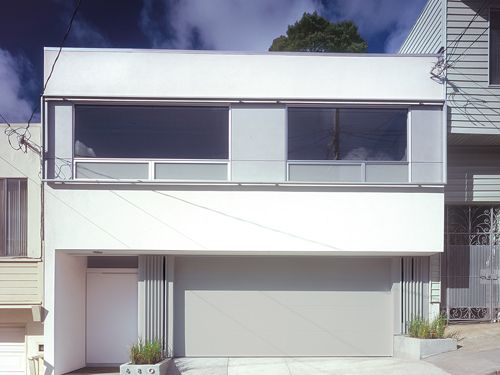

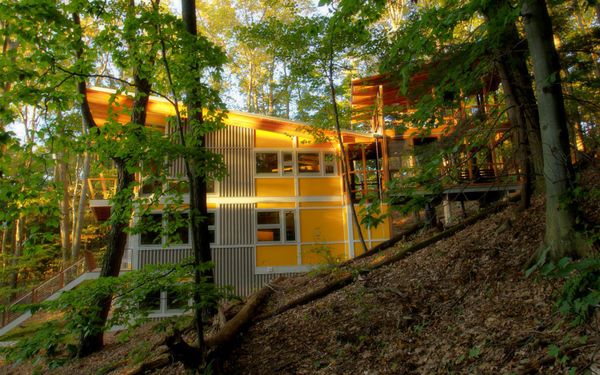


- interior design by emilyinterior designers · 2 projectsView profile →
- fathoms designarchitects · Wheaton · 3 projectsView profile →
- Karavaan Homefurniture sellers · High Point · 4 projectsView profile →
— Questions
Frequently asked questions
What makes a minimalist desert home different from a regular minimalist house?
It uses the same simplicity and clean geometry, but adapts to heat, glare, and dry conditions with thicker walls, shaded terraces, and materials that feel grounded in the landscape.
Can this style still feel warm and livable?
Yes. Warm plaster, timber, textured stone, and filtered daylight keep the interiors calm without feeling stark.
What should I avoid if I want this look?
Avoid busy detailing, glossy finishes, and overly cool color schemes. Heavy ornament and high-contrast palettes can weaken the quiet, sun-washed character of the style.