— Ideas & inspiration
Workshop composition
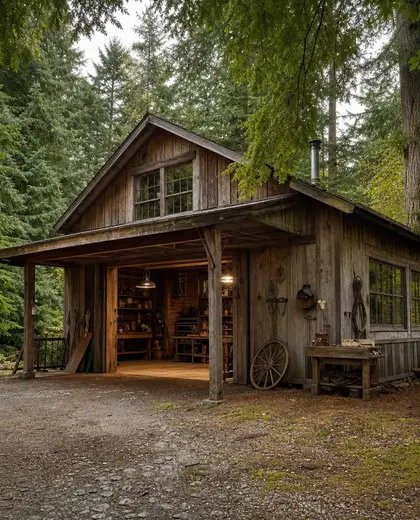
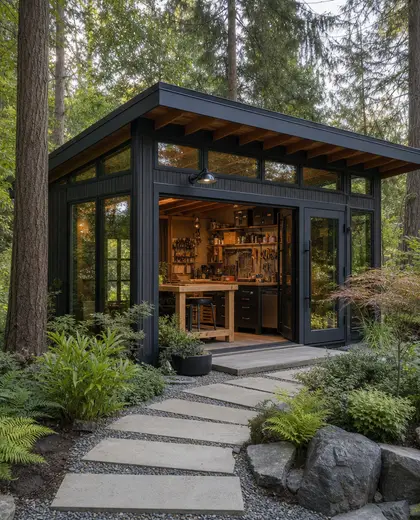
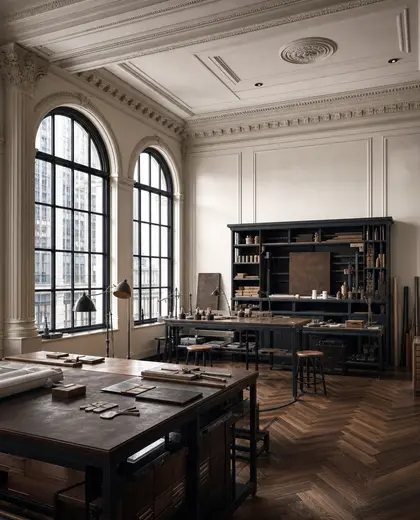
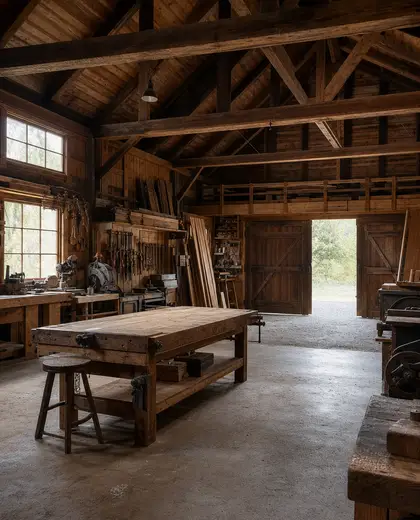
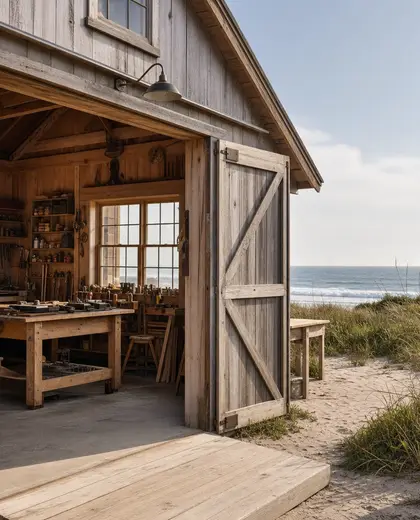
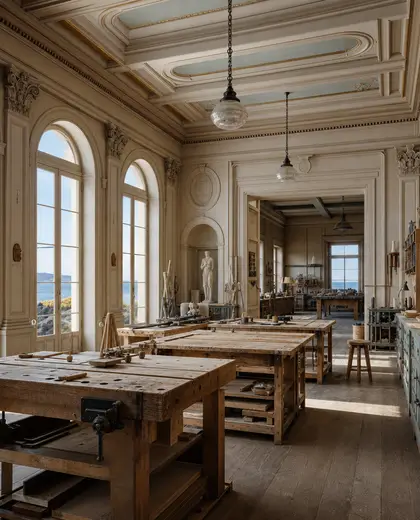
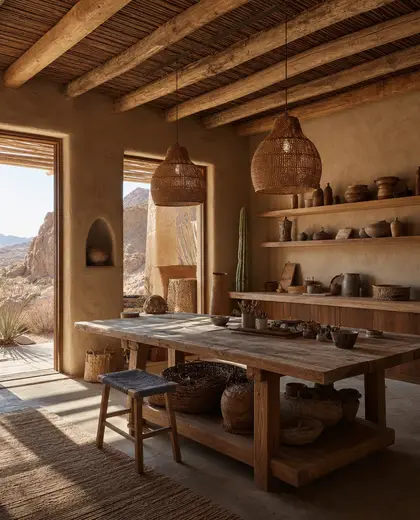
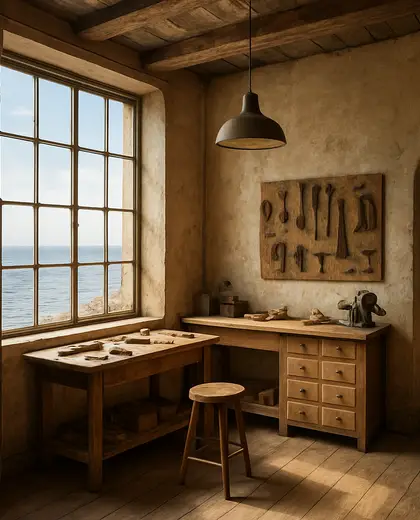
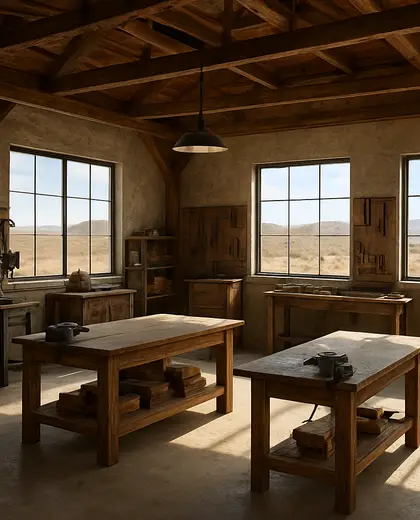
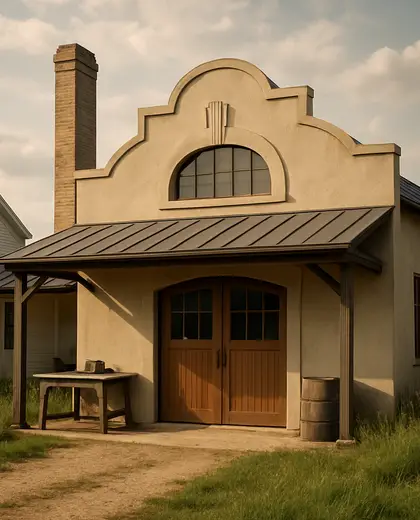
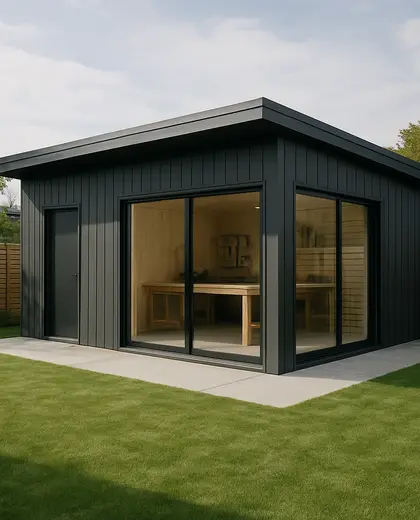
A workshop composition is defined by durable, utilitarian materials such as raw timber, steel, concrete, brick, and hard-wearing surfaces. The palette usually stays practical and muted: greys, browns, blackened metal, and unfinished wood tones. It often includes open shelving, large worktables, task lighting, and visible storage built for function first.
- workshop

— References
References to explore

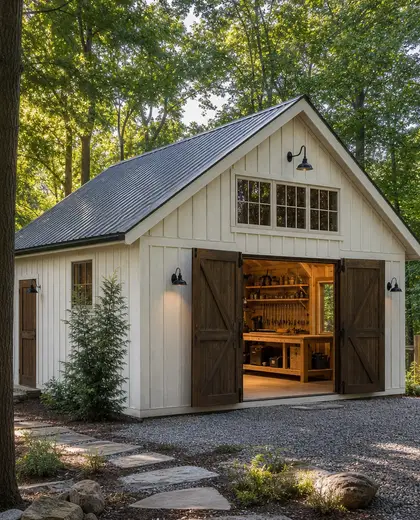
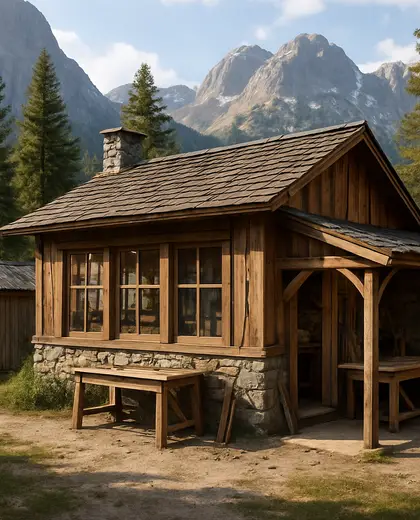

Is a workshop composition suitable for a home interior?
Yes, if you want a practical space with durable finishes and clear work zones. It works best in rooms that need storage, easy cleaning, and strong task lighting.
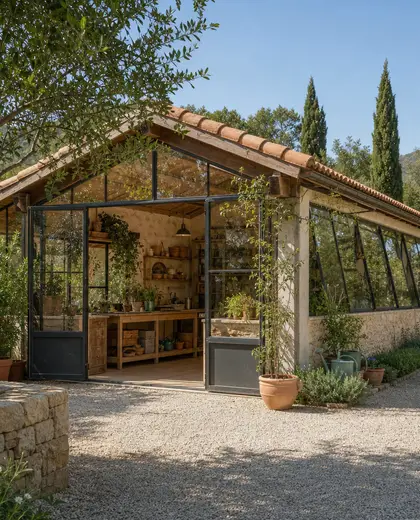
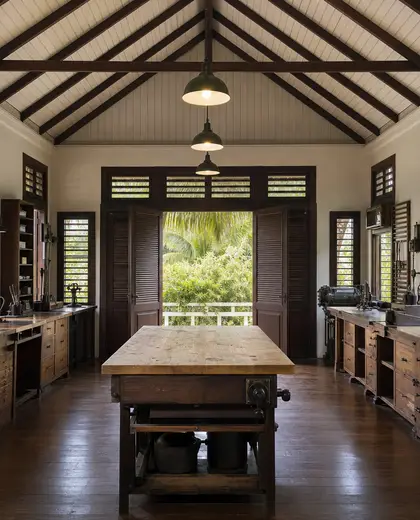

Does a workshop look have to feel rough or unfinished?
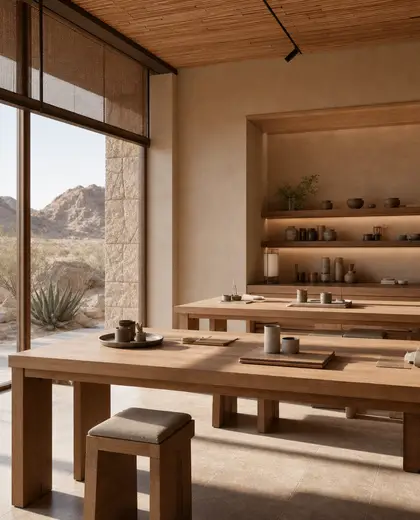
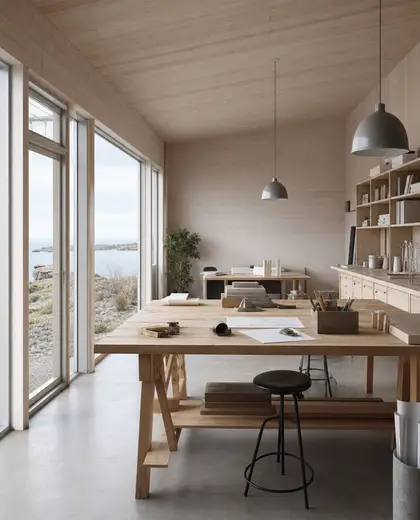
No. It can keep the functional structure while using cleaner joinery, smoother walls, and more refined lighting. The result is still utilitarian, but less raw.
What should I avoid in a workshop-style room?
Avoid delicate finishes that scratch easily, overly decorative details, and glossy surfaces that fight the material character. Too many colors can also weaken the straightforward, working-space feel.



— The style
What defines it
Plywood, solid wood, metal framing, concrete floors, brick, and washable painted walls.
Neutral and grounded: grey, black, brown, charcoal, and natural wood tones, with very little gloss.
Industrial, loft, rustic, and contemporary interiors; it also pairs well with open-plan utility spaces and home offices.
— Professionals
Who has already built it
- robert srotearchitects · 8 projectsView profile →
- pfuner designinterior designers · 11 projectsView profile →
- Karavaan Homefurniture sellers · High Point · 4 projectsView profile →
- jacob galleslandscape designers · 6 projectsView profile →
— Questions
Frequently asked questions
Is a workshop composition suitable for a home interior?
Yes, if you want a practical space with durable finishes and clear work zones. It works best in rooms that need storage, easy cleaning, and strong task lighting.
Does a workshop look have to feel rough or unfinished?
No. It can keep the functional structure while using cleaner joinery, smoother walls, and more refined lighting. The result is still utilitarian, but less raw.
What should I avoid in a workshop-style room?
Avoid delicate finishes that scratch easily, overly decorative details, and glossy surfaces that fight the material character. Too many colors can also weaken the straightforward, working-space feel.