— Ideas & inspiration
Public life beneath the trees
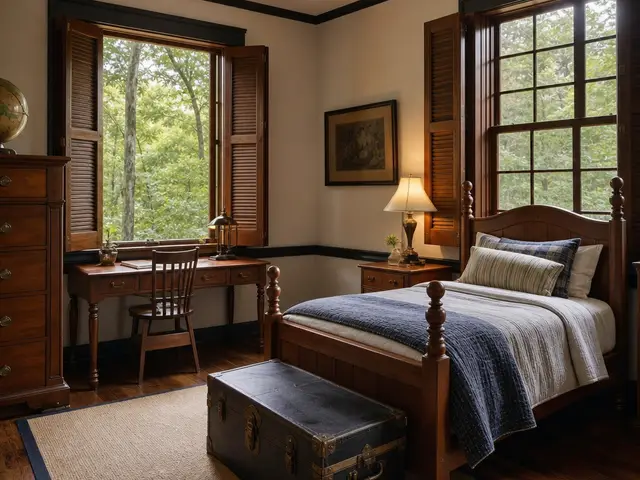
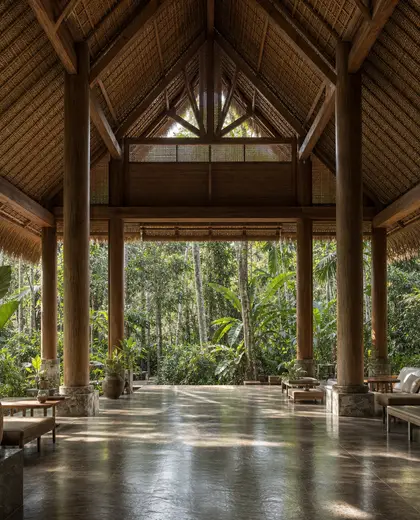
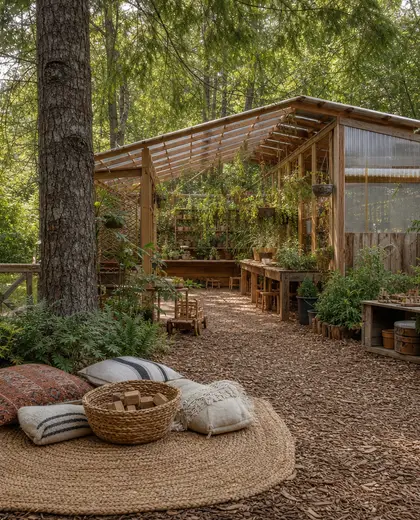
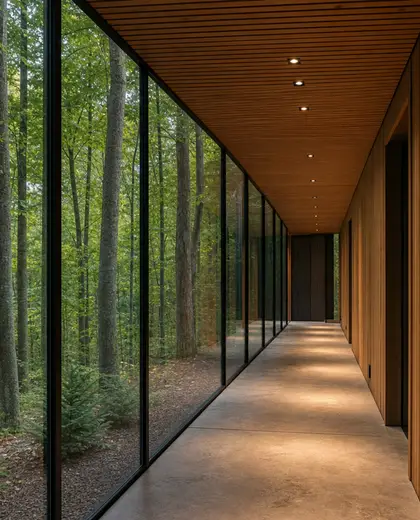
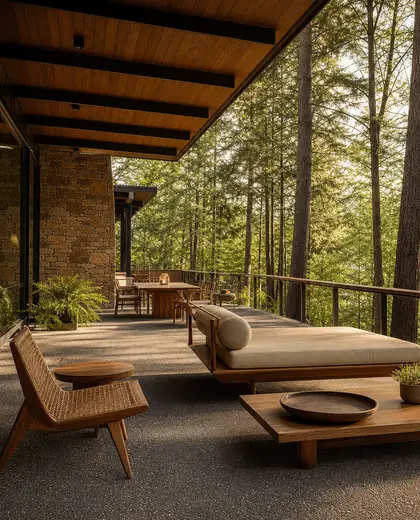
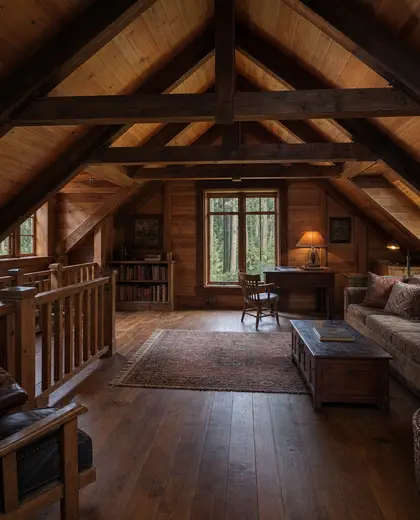
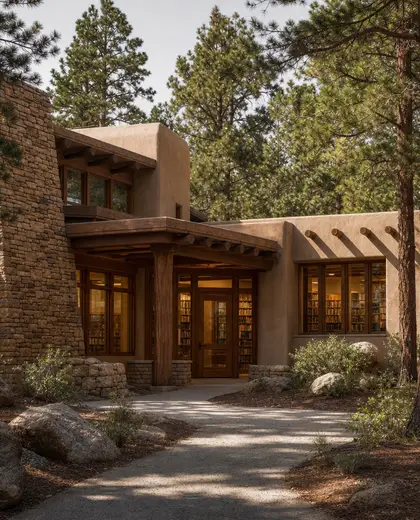
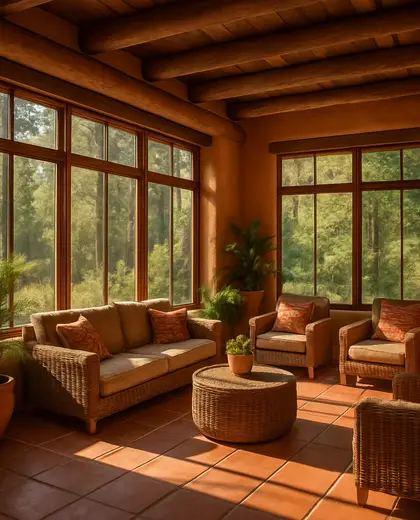
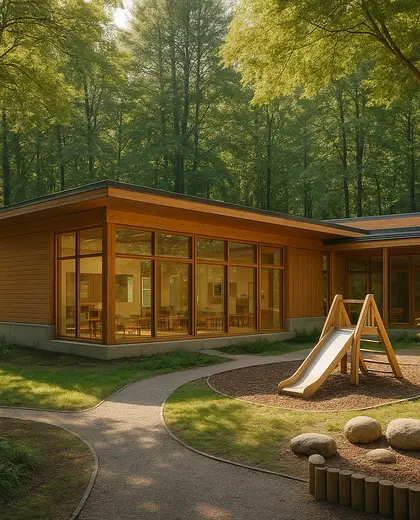
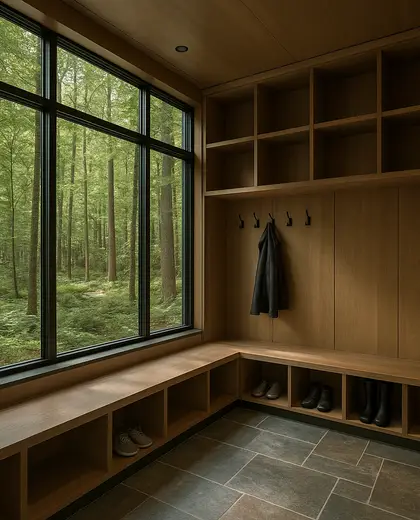
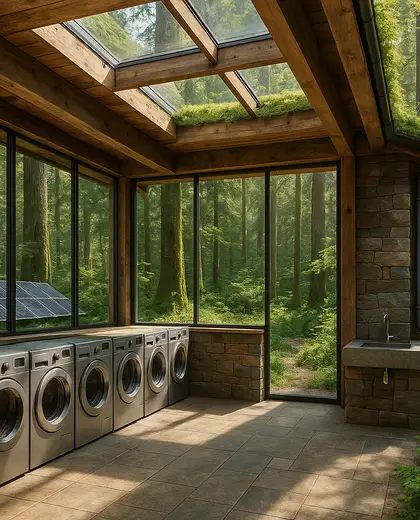
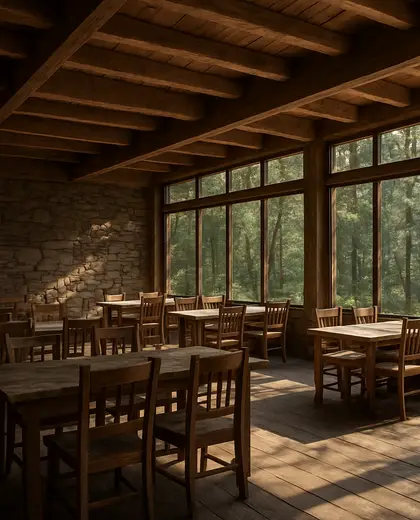
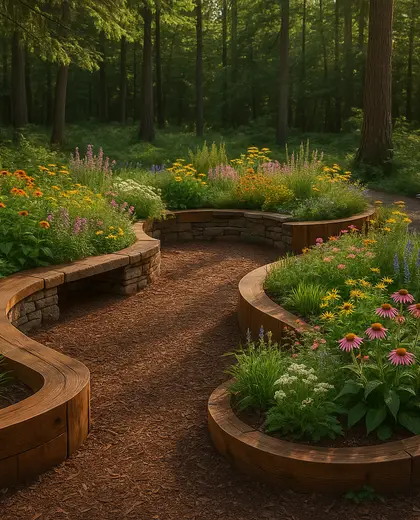
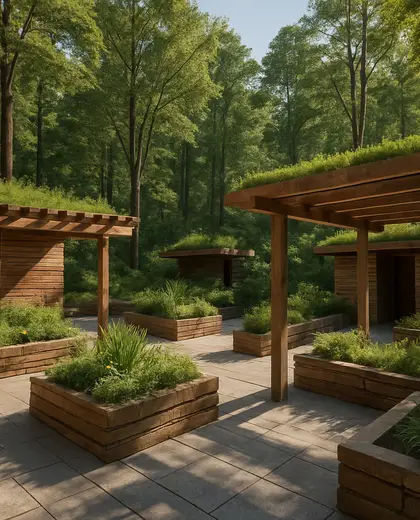
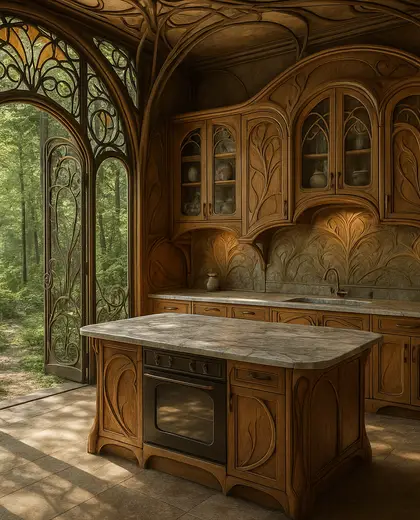
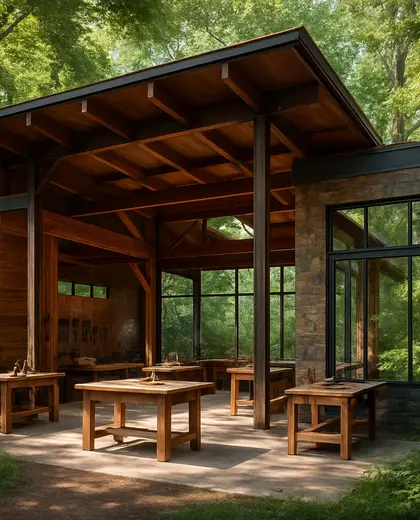
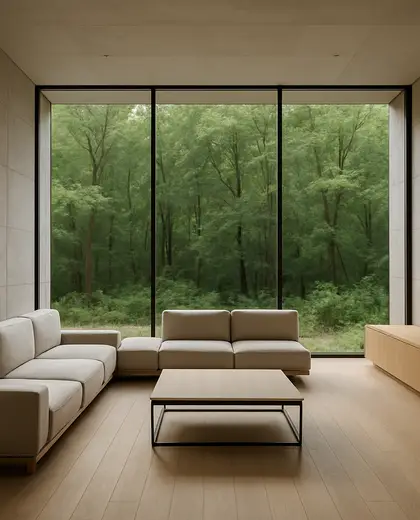
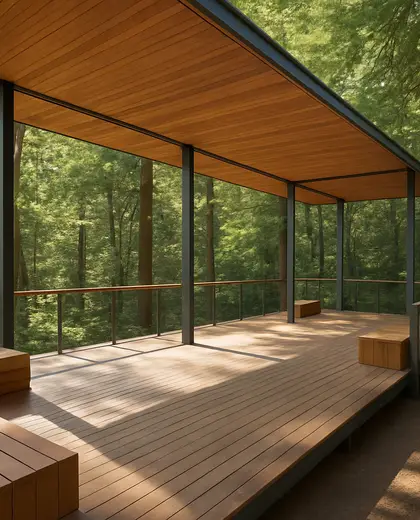
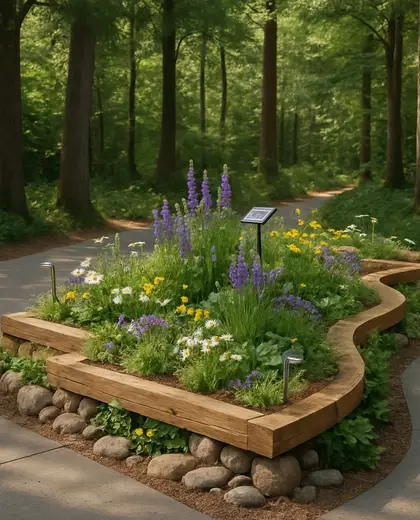
This composition pairs civic outdoor space with the textures and shade of a forest. It typically uses natural stone, timber, gravel, and planted ground layers, with open clearings, tree canopies, seating edges, and paths that move between structured and wild. The palette stays earthy and muted: greens, browns, grey stone, and weathered wood.
- public space
- forest
— References
References to explore
How is a public-space forest different from a regular park?
It usually feels denser and more immersive, with a stronger tree canopy and fewer open lawn areas. The design often emphasizes movement, shade, and small places to pause rather than wide recreational fields.
What materials work best for this look in a home setting?
Use durable, low-finish materials such as wood decking, stone paving, gravel, and rust-toned metal, alongside native planting. Finishes should feel understated so the vegetation remains the main feature.
Will this composition work in a small outdoor area?
Yes, if it is scaled carefully with a few trees or tall shrubs, layered planting, and simple paths or seating. The key is creating a wooded atmosphere without crowding the space.
— The style
What defines it
Natural stone, timber, gravel, corten or steel accents, and dense planting with layered groundcover and tree trunks.
Earth tones with deep greens, bark browns, mossy neutrals, and soft grey mineral surfaces.
Benches, paths, lighting, drainage, and low walls or platforms that support gathering without overpowering the landscape.
— Professionals
Who has already built it
- john allegrettiarchitects · 6 projectsView profile →
- pfuner designinterior designers · 11 projectsView profile →
- Karavaan Homefurniture sellers · High Point · 4 projectsView profile →
- jacob galleslandscape designers · 6 projectsView profile →
— Questions
Frequently asked questions
How is a public-space forest different from a regular park?
It usually feels denser and more immersive, with a stronger tree canopy and fewer open lawn areas. The design often emphasizes movement, shade, and small places to pause rather than wide recreational fields.
What materials work best for this look in a home setting?
Use durable, low-finish materials such as wood decking, stone paving, gravel, and rust-toned metal, alongside native planting. Finishes should feel understated so the vegetation remains the main feature.
Will this composition work in a small outdoor area?
Yes, if it is scaled carefully with a few trees or tall shrubs, layered planting, and simple paths or seating. The key is creating a wooded atmosphere without crowding the space.