— Ideas & inspiration
Forest composition
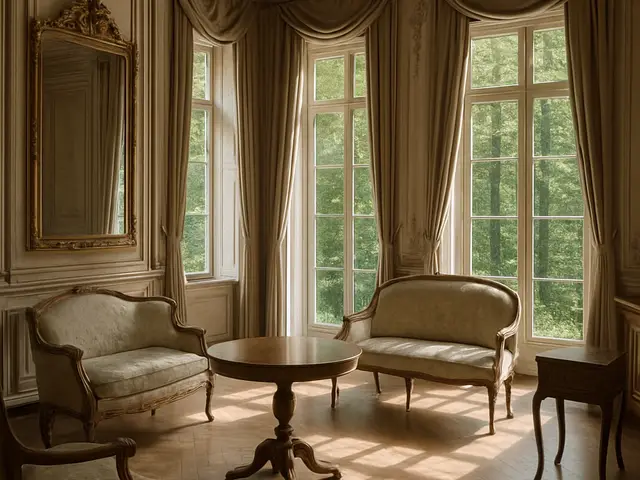
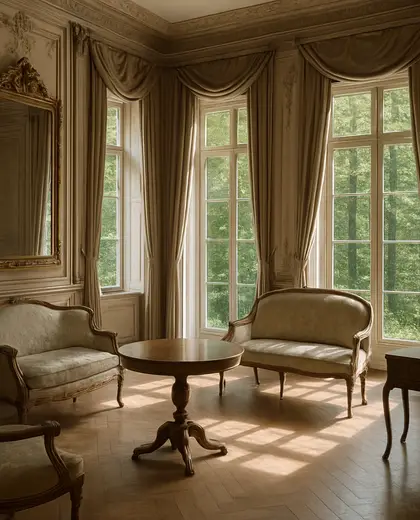
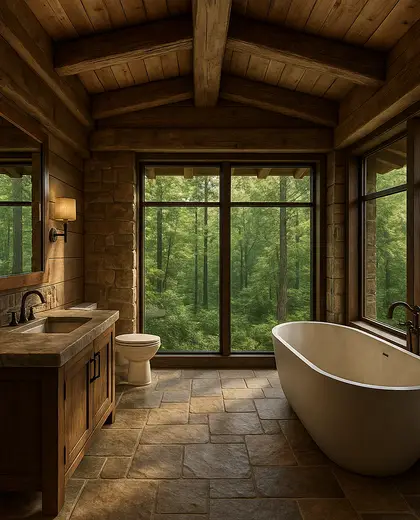
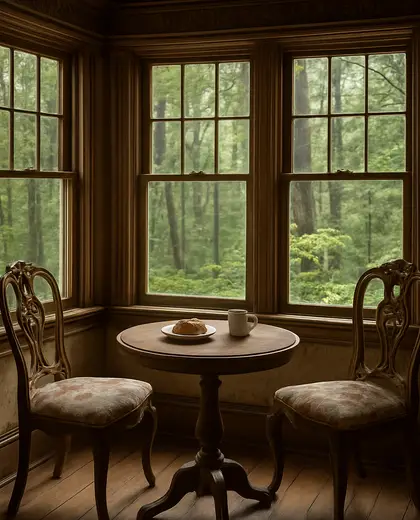
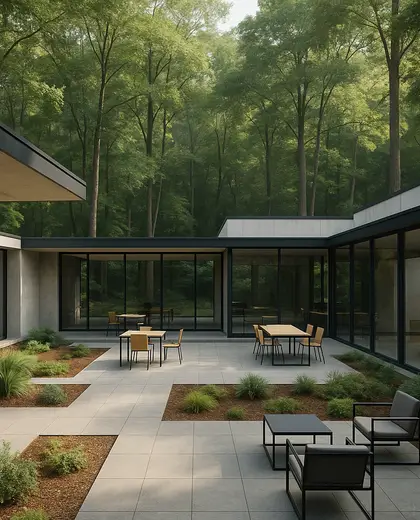
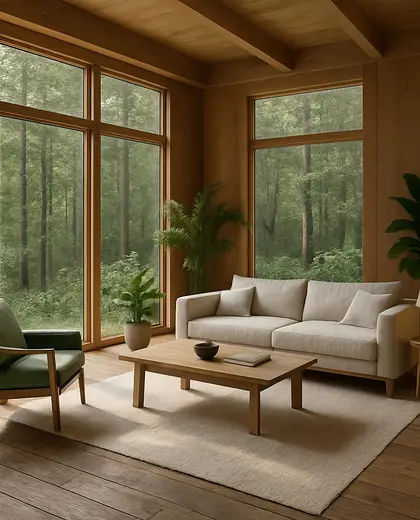
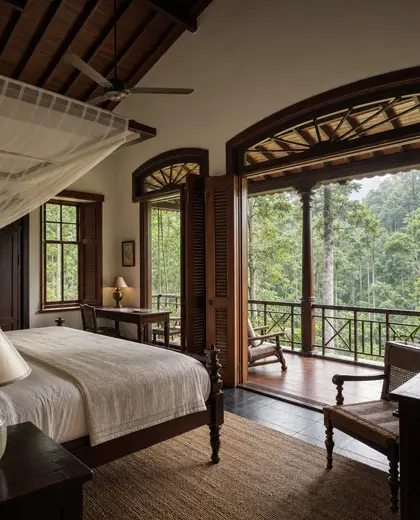
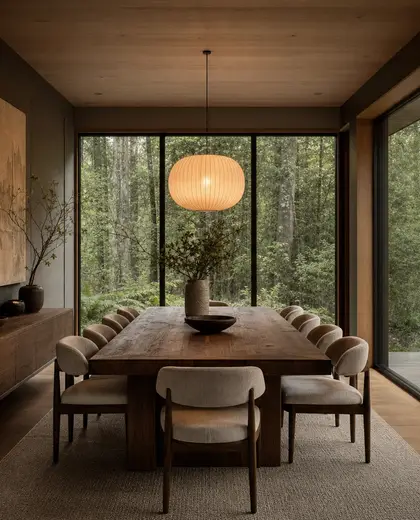
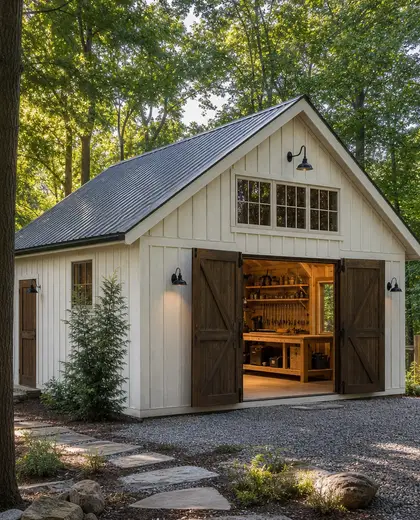
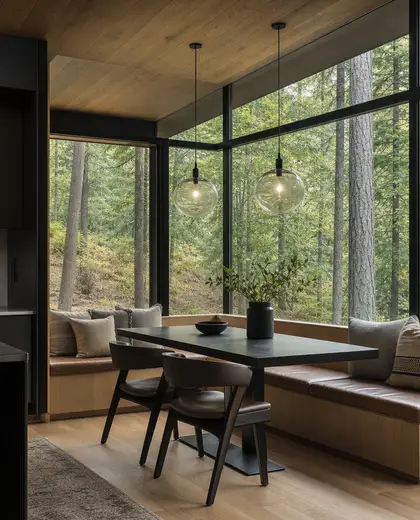
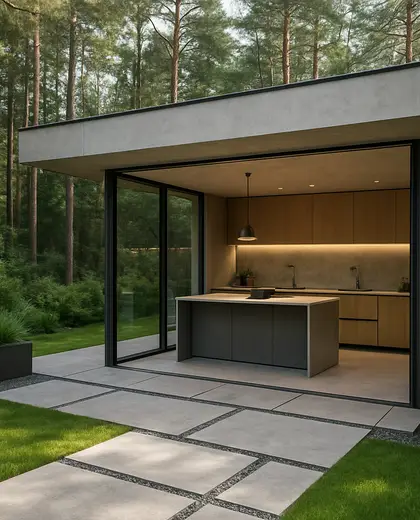
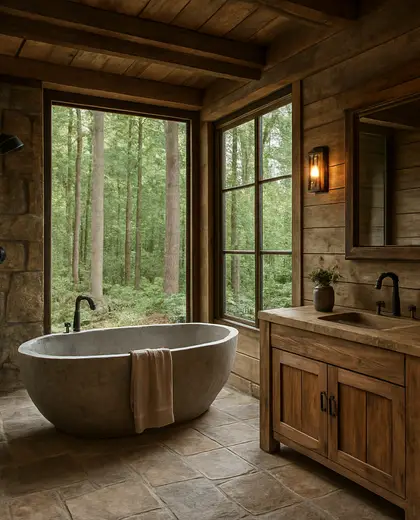
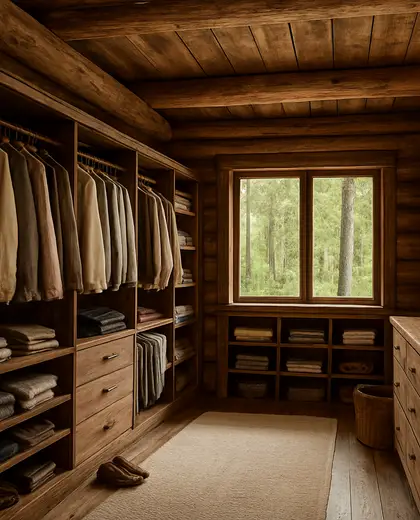
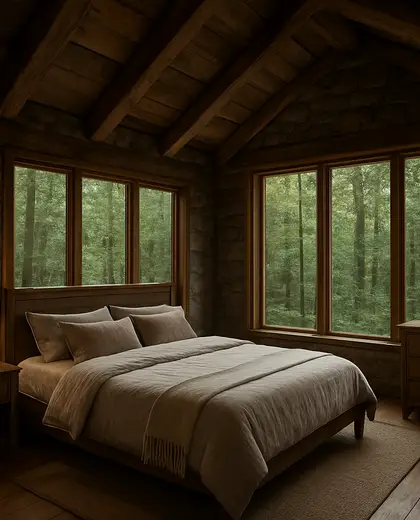
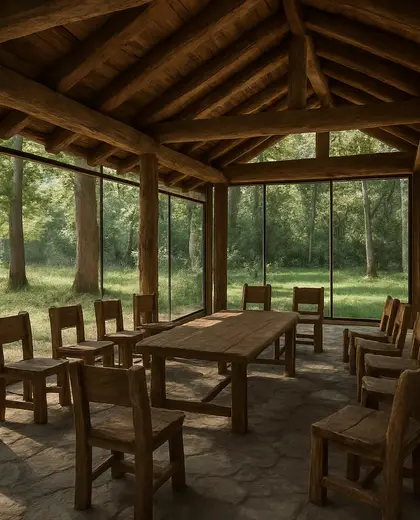
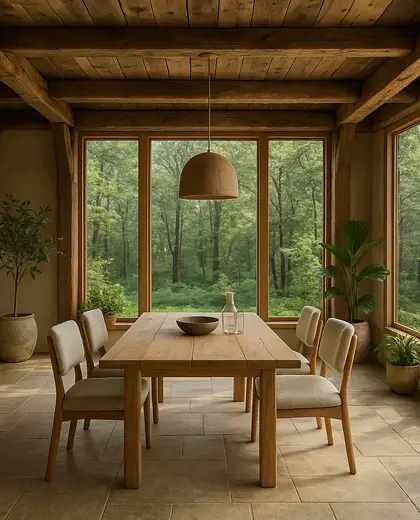
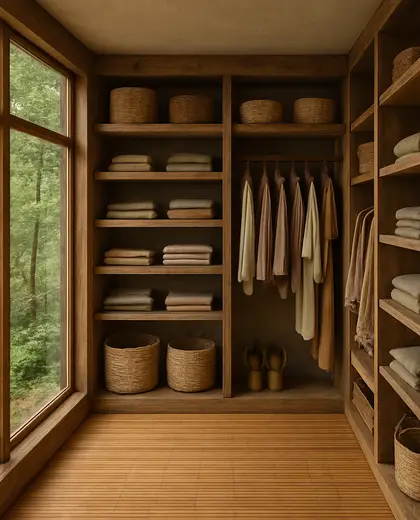
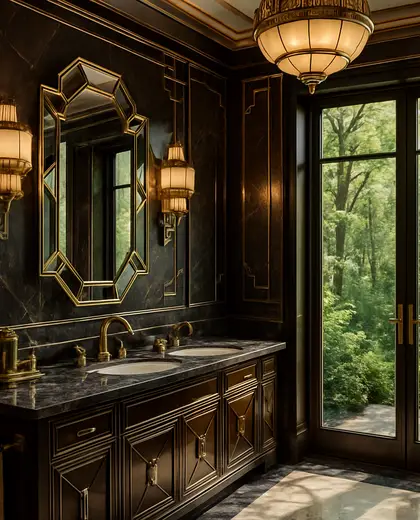
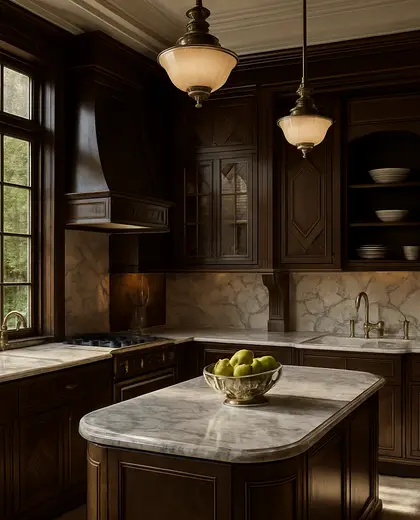
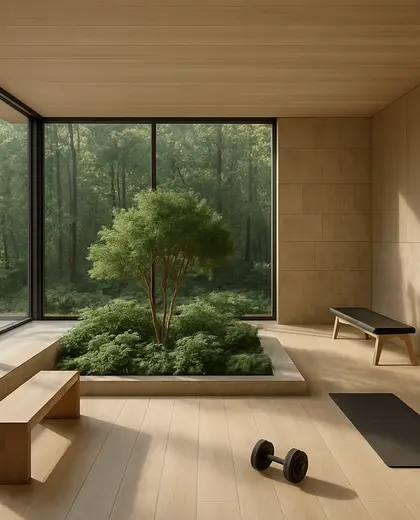
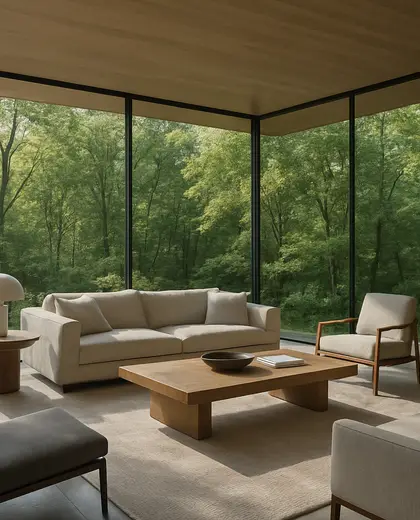
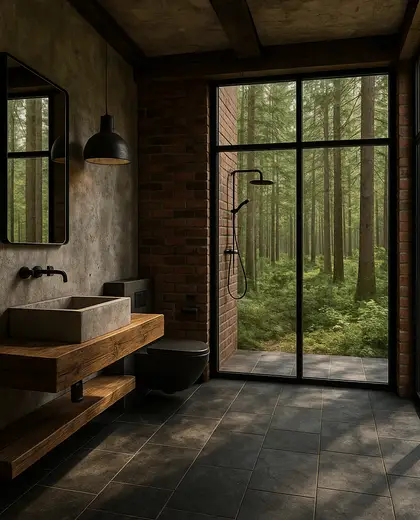
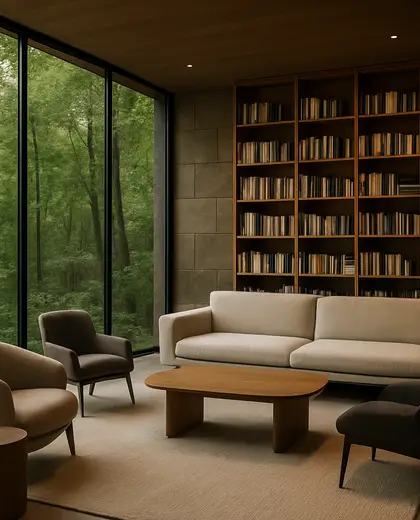
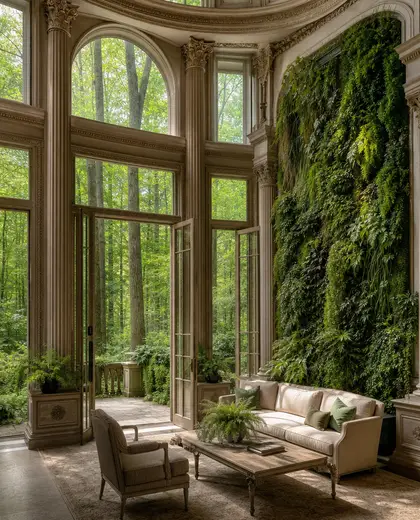
A forest composition uses layered natural materials, especially timber, stone, linen, wool, and matte finishes. The palette stays rooted in greens, browns, moss, bark, and muted neutrals, often with low-contrast tones and soft organic textures. It is defined by a calm, grounded atmosphere built from plant life, wood grain, and irregular, nature-led forms.
- forest
— References
References to explore
Does a forest composition mean everything has to be dark green?
No. Green is a key accent, but the look usually depends more on earthy neutrals, wood tones, and layered textures than on one dominant color.

Can this style work in a small home?
Yes, if the palette is kept restrained and the materials are light enough to avoid visual heaviness. Using wood, linen, and a few plant elements often works better than filling the space with dark finishes.
What should I avoid if I want this look to feel authentic?
Avoid overly glossy surfaces, bright saturated colors, and too many competing patterns. The composition works best when materials feel natural and the details stay simple.
— The style
What defines it
Wood, natural stone, clay plaster, linen, wool, rattan, and other tactile surface materials with little gloss.
Moss green, forest green, bark brown, beige, taupe, charcoal, and softened off-whites.
Works well with biophilic planting, large windows, blackened steel details, and simple furniture silhouettes.
— Professionals
Who has already built it
- roland a arriaga architecarchitects · 8 projectsView profile →
- pfuner designinterior designers · 11 projectsView profile →
- Karavaan Homefurniture sellers · High Point · 4 projectsView profile →
- jacob galleslandscape designers · 6 projectsView profile →
— Questions
Frequently asked questions
Does a forest composition mean everything has to be dark green?
No. Green is a key accent, but the look usually depends more on earthy neutrals, wood tones, and layered textures than on one dominant color.
Can this style work in a small home?
Yes, if the palette is kept restrained and the materials are light enough to avoid visual heaviness. Using wood, linen, and a few plant elements often works better than filling the space with dark finishes.
What should I avoid if I want this look to feel authentic?
Avoid overly glossy surfaces, bright saturated colors, and too many competing patterns. The composition works best when materials feel natural and the details stay simple.