— Ideas & inspiration
Formal Dining Room
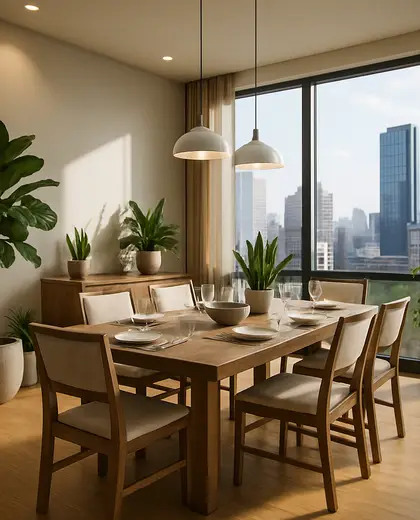
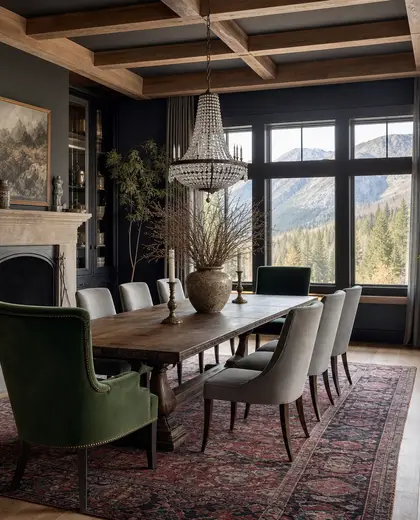
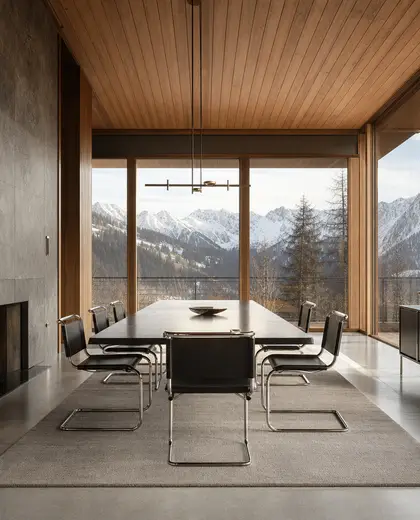
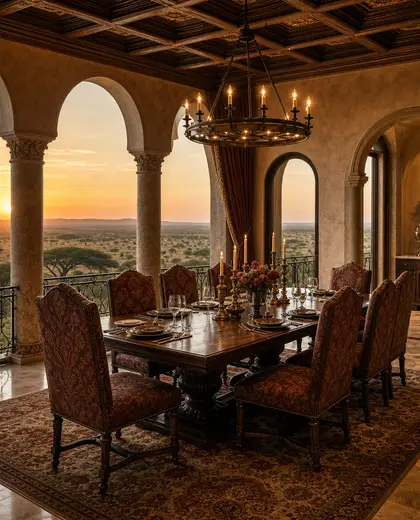
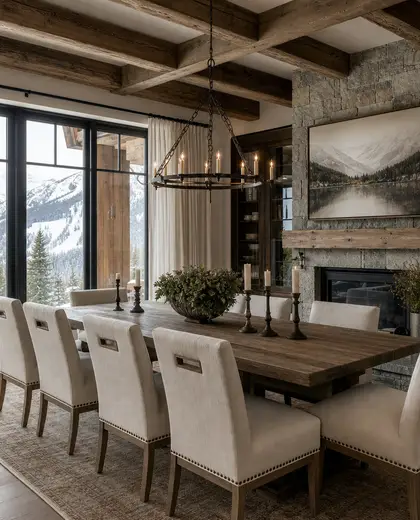
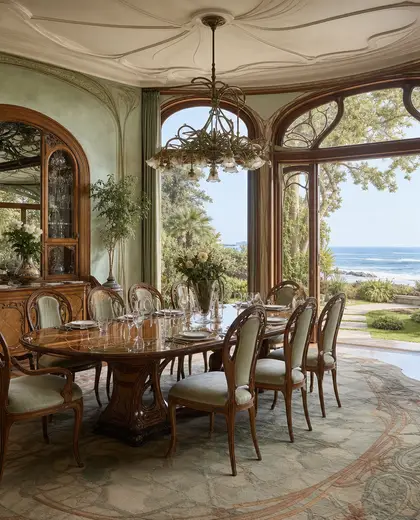
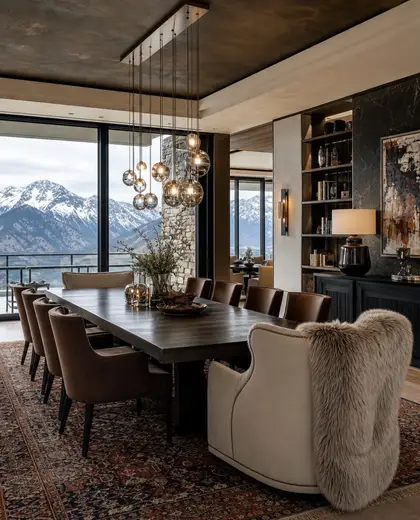
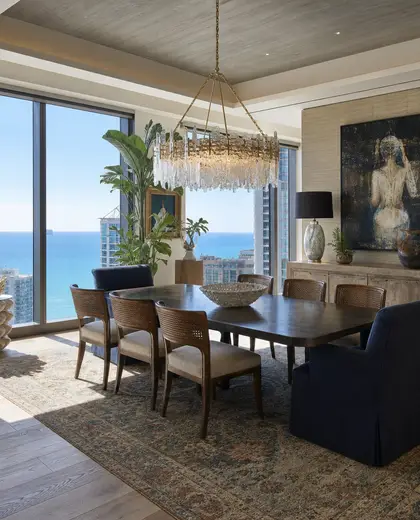
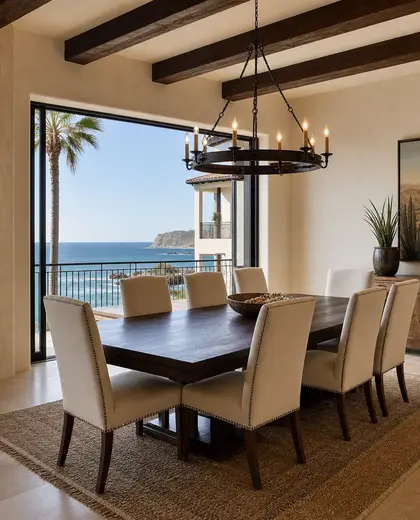
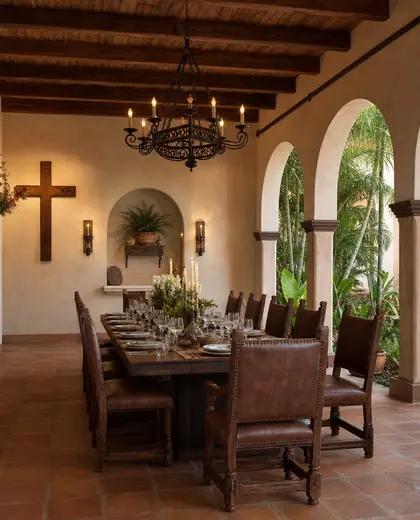
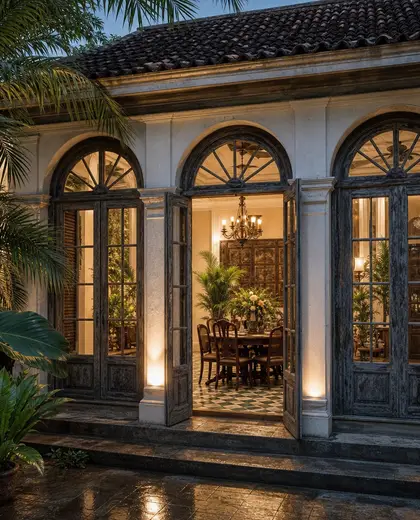
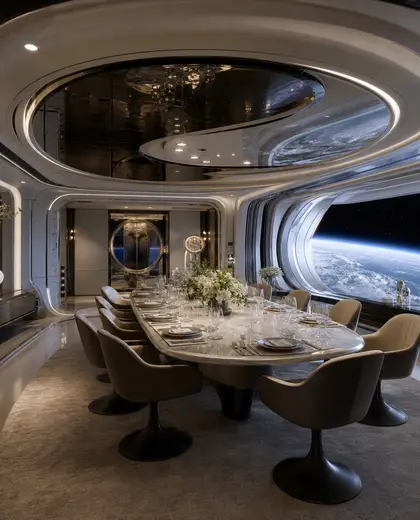
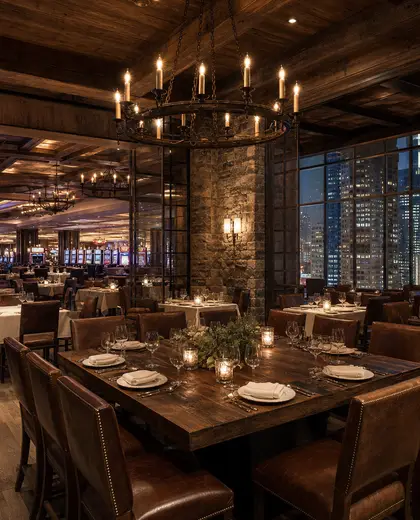
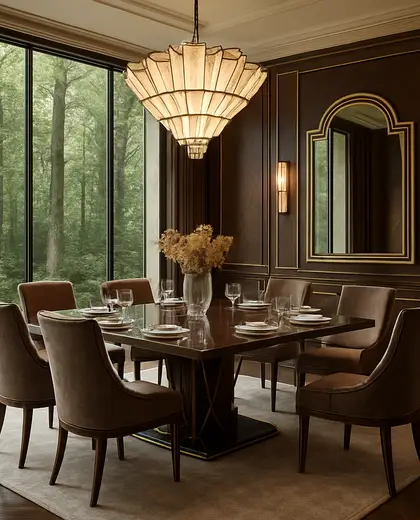
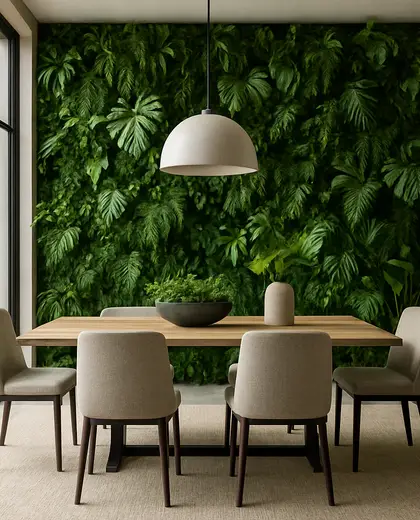
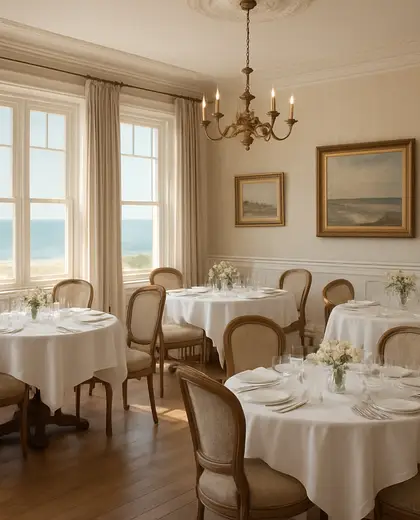
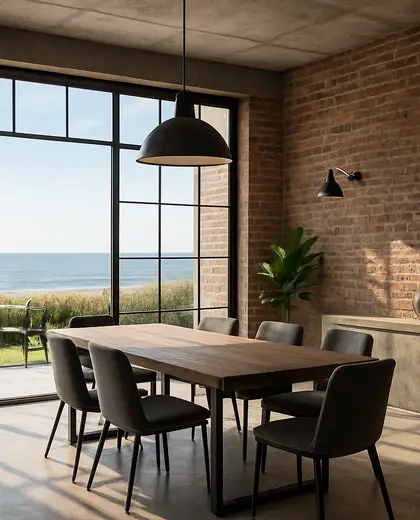
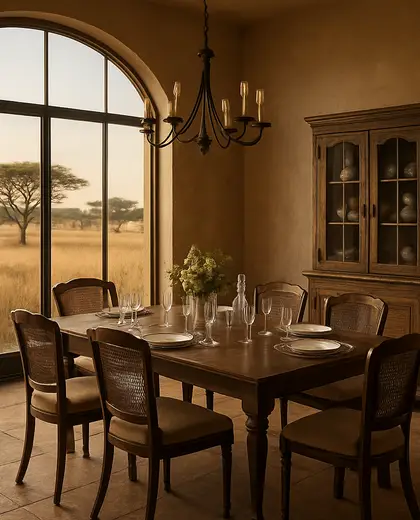
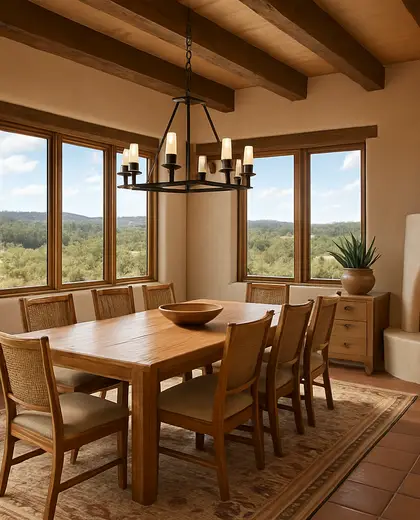
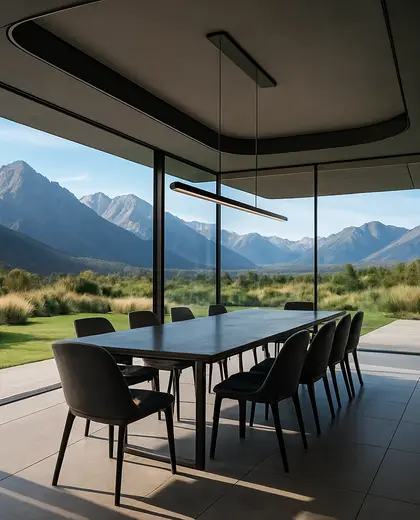
A formal dining room is defined by a clear, dedicated dining zone with a refined table, matching or coordinated chairs, and a layout centered on symmetry. Common materials include wood, stone, upholstered seating, glass, and metal details, usually finished in polished or well-kept surfaces. The palette is often neutral or deep and restrained, with warm whites, taupe, charcoal, walnut, brass, and occasional accent tones.
- formal dining room
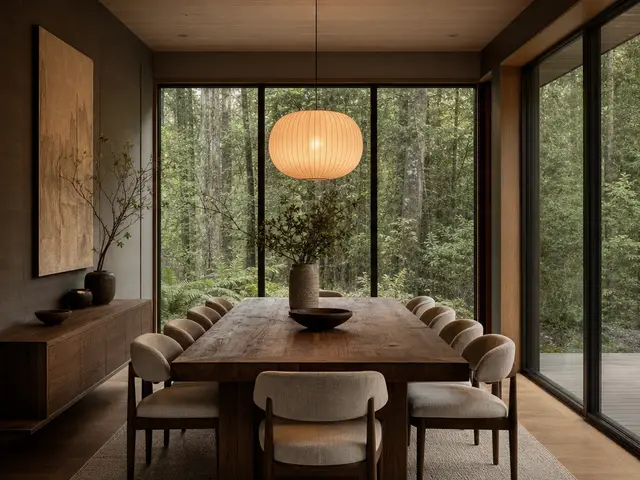
— References
References to explore
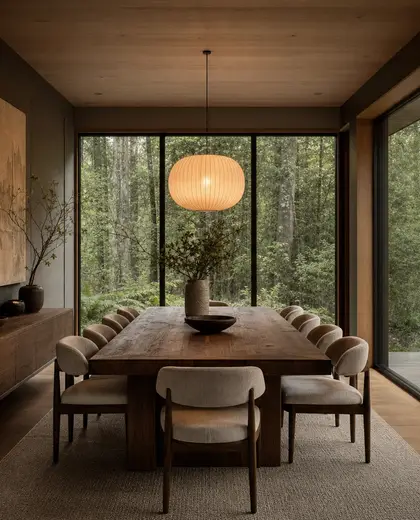
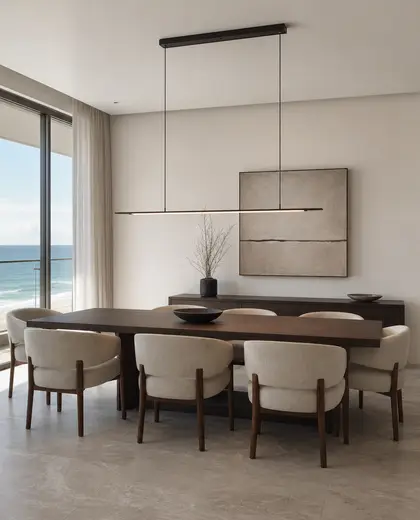
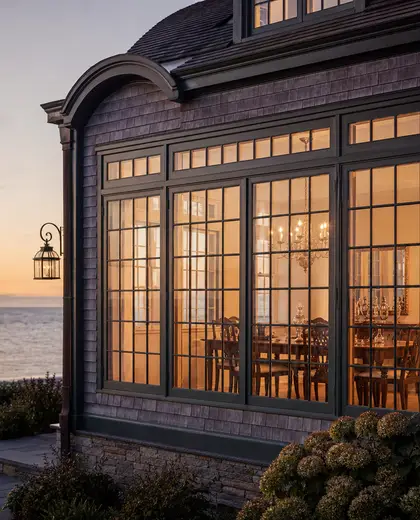

How is a formal dining room different from an everyday dining area?
A formal dining room is more intentionally styled and usually separated from the kitchen or casual family spaces. It emphasizes symmetry, a larger table setting, and more decorative finishes.
What furniture should a formal dining room include?
At minimum, a dining table, matching or coordinated chairs, and storage such as a sideboard or buffet. Many rooms also include a rug, mirror, and pendant or chandelier.
Can a formal dining room still feel comfortable?
Yes. Softer upholstered chairs, layered lighting, and a warm wood or textured rug can keep the room from feeling overly stiff while preserving a composed look.
— The style
What defines it
Solid wood, marble or stone tabletops, upholstered chairs, glass lighting, and metal accents are the most common choices.
Muted neutrals and rich dark tones work best: ivory, beige, greige, walnut, navy, charcoal, and brass.
It pairs well with wainscoting, chandeliers, area rugs, sideboards, mirrors, and living rooms or entry halls in traditional, transitional, or contemporary homes.
— Professionals
Who has already built it
- annilee b watermanarchitects · Wylie · 6 projectsView profile →
- interior design by emilyinterior designers · 8 projectsView profile →
- Karavaan Homefurniture sellers · High Point · 4 projectsView profile →
- jacob galleslandscape designers · 6 projectsView profile →
— Questions
Frequently asked questions
How is a formal dining room different from an everyday dining area?
A formal dining room is more intentionally styled and usually separated from the kitchen or casual family spaces. It emphasizes symmetry, a larger table setting, and more decorative finishes.
What furniture should a formal dining room include?
At minimum, a dining table, matching or coordinated chairs, and storage such as a sideboard or buffet. Many rooms also include a rug, mirror, and pendant or chandelier.
Can a formal dining room still feel comfortable?
Yes. Softer upholstered chairs, layered lighting, and a warm wood or textured rug can keep the room from feeling overly stiff while preserving a composed look.