— Ideas & inspiration
Indoor garden
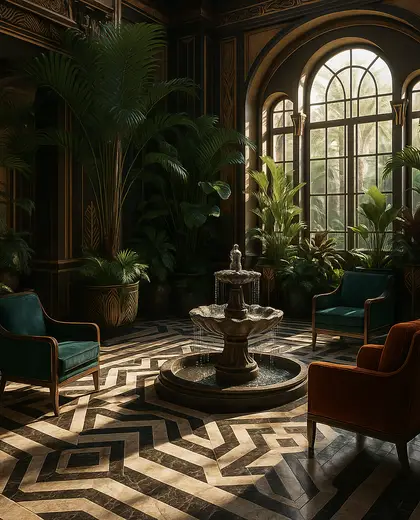
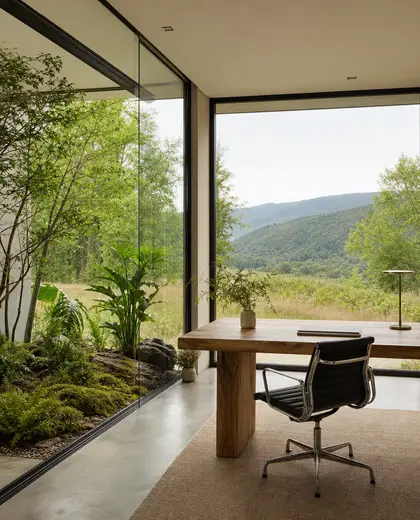
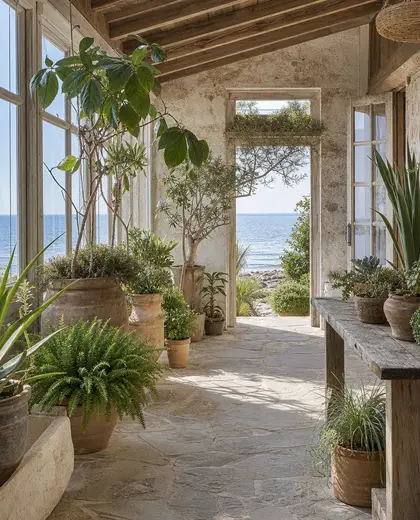
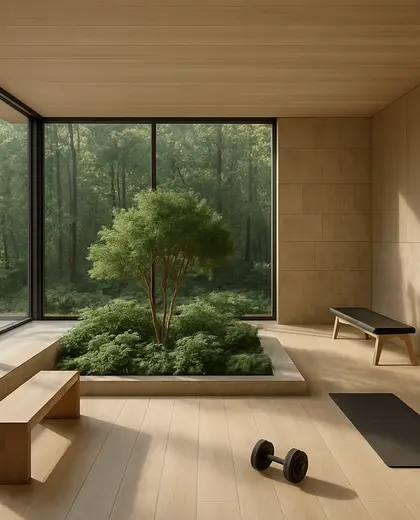
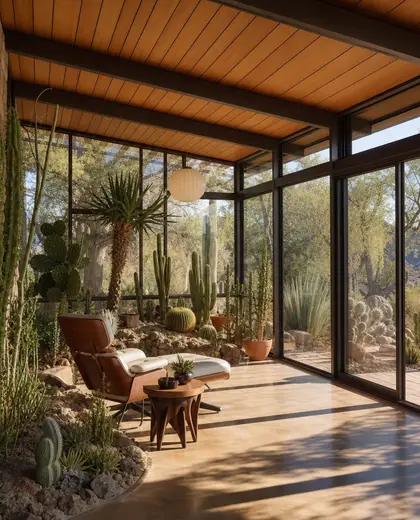
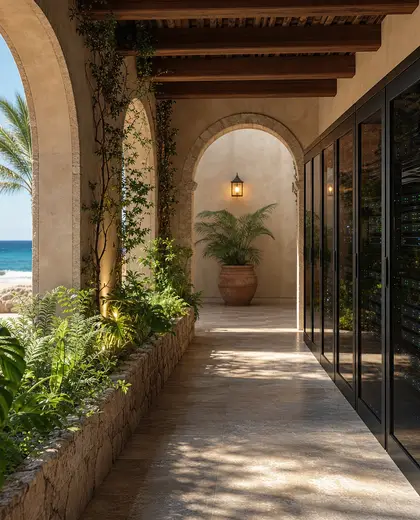
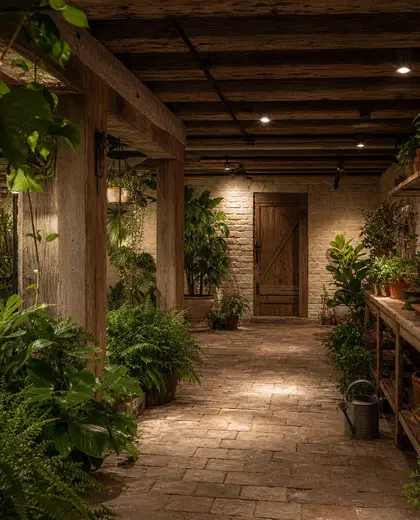
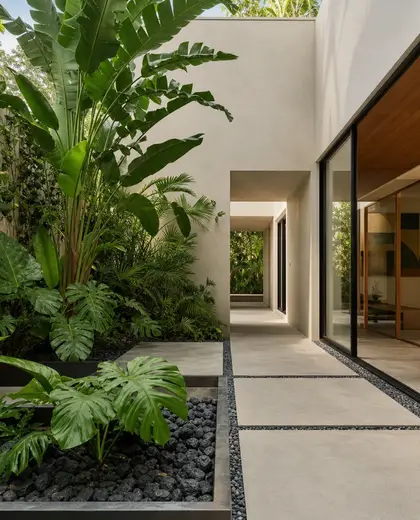
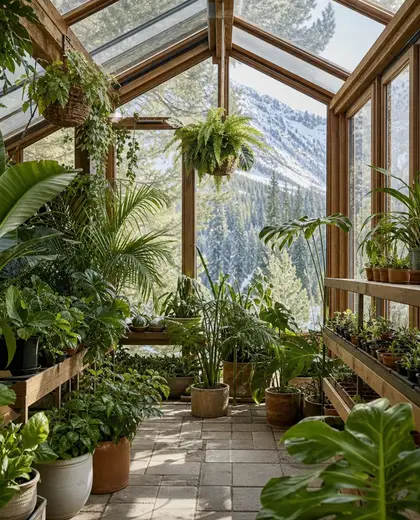
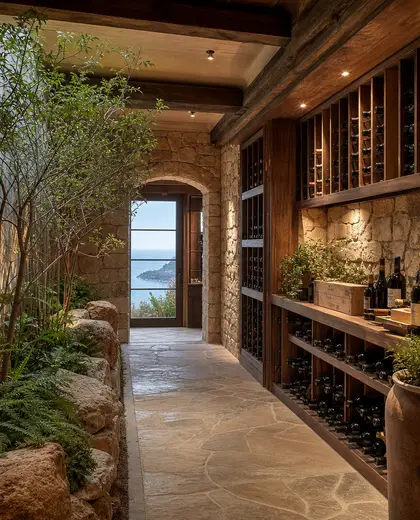
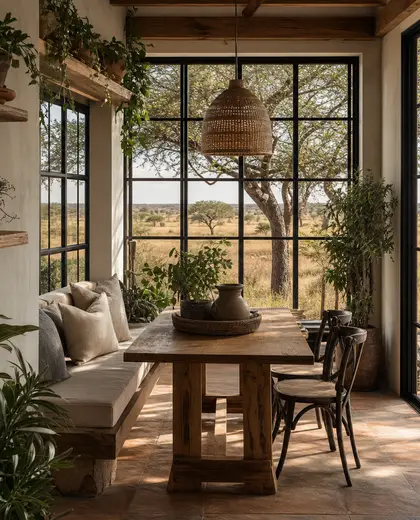
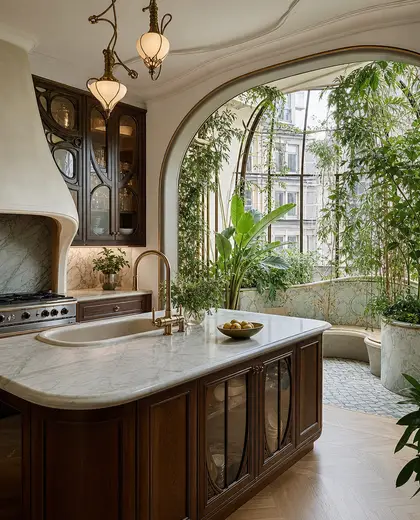
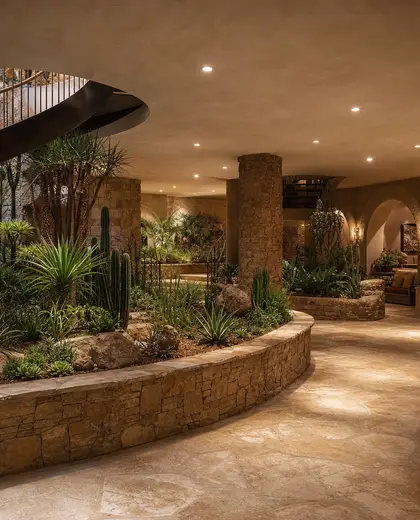
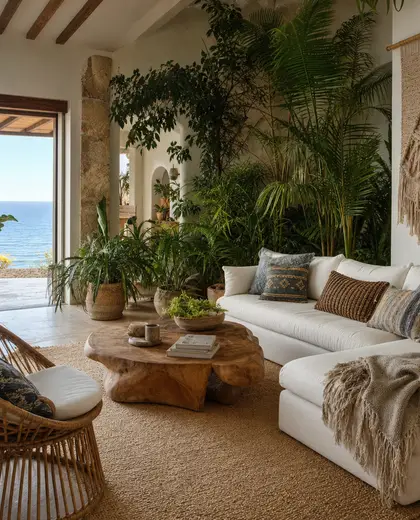
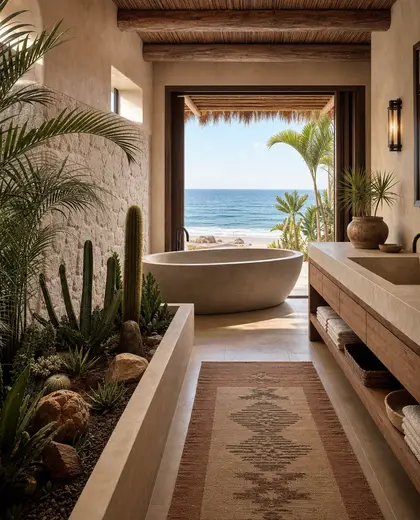
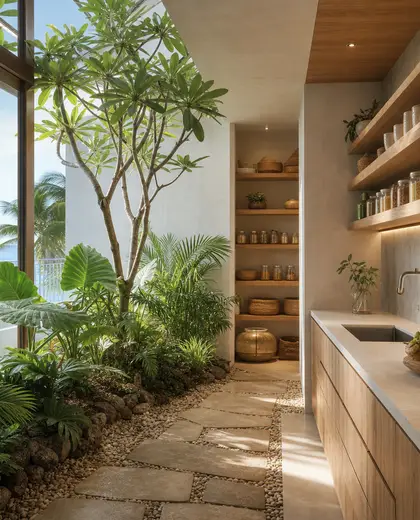
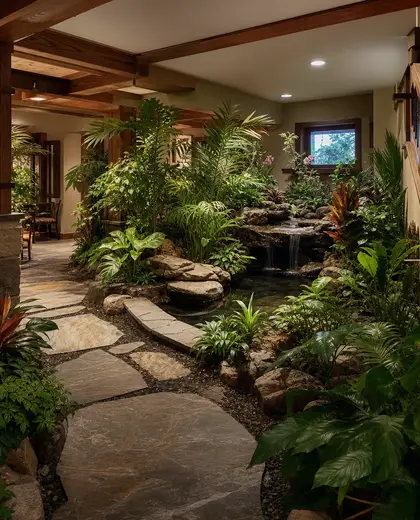
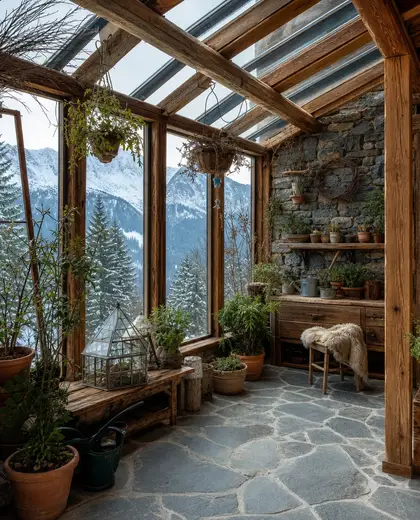
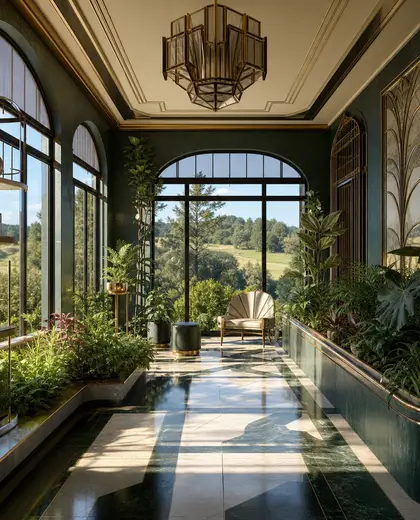
An indoor garden is defined by live planting integrated into the interior, often with natural light, moisture-tolerant finishes, and clear drainage or containment details. Common materials include stone, concrete, timber, ceramic, and metal, chosen for their durability around water and soil. The palette is usually green and earthy, with neutral backgrounds that let the planting remain the focal point.
- indoor garden

— References
References to explore

Do I need a lot of natural light for an indoor garden?
Most indoor gardens work best with strong daylight, but low-light planting and supplemental grow lighting can support darker interiors.
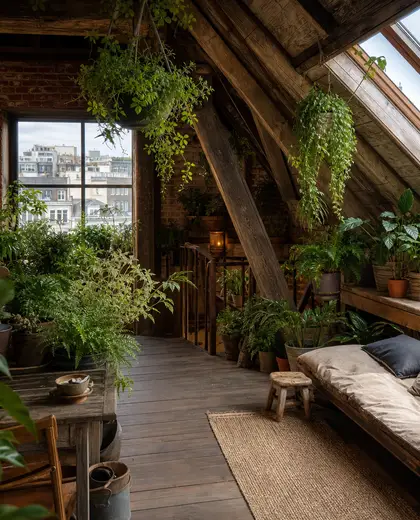
What finishes are practical around an indoor garden?
Use water-resistant, easy-to-clean finishes such as sealed stone, tile, concrete, treated timber, and rust-resistant metal.
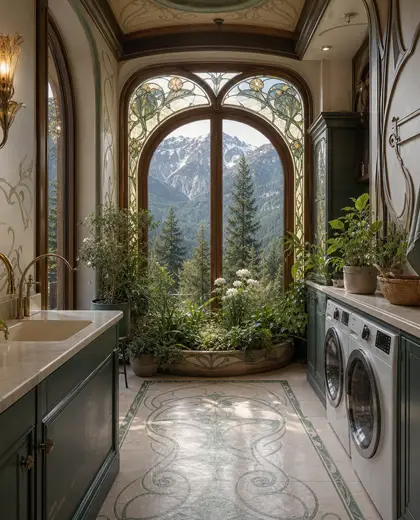

Can an indoor garden fit in a small home?
Yes. It can be as small as a planted lightwell, a recessed planter, or a compact garden wall, as long as drainage, light, and maintenance are planned carefully.

— The style
What defines it
Stone, concrete, timber, ceramic, and powder-coated metal are common because they handle humidity and occasional water exposure well.
Green foliage is paired with neutrals, warm wood tones, and mineral finishes such as off-white, grey, sand, and charcoal.
Skylights, courtyards, glass partitions, built-in benches, and natural ventilation help the planting feel integrated into the home.
— Professionals
Who has already built it
- dederick bakerarchitects · San Diego · 7 projectsView profile →
- Karavaan Homefurniture sellers · High Point · 4 projectsView profile →
- jacob galleslandscape designers · 6 projectsView profile →
- pfuner designinterior designers · 11 projectsView profile →
— Questions
Frequently asked questions
Do I need a lot of natural light for an indoor garden?
Most indoor gardens work best with strong daylight, but low-light planting and supplemental grow lighting can support darker interiors.
What finishes are practical around an indoor garden?
Use water-resistant, easy-to-clean finishes such as sealed stone, tile, concrete, treated timber, and rust-resistant metal.
Can an indoor garden fit in a small home?
Yes. It can be as small as a planted lightwell, a recessed planter, or a compact garden wall, as long as drainage, light, and maintenance are planned carefully.