— Ideas & inspiration
Mid-century modern
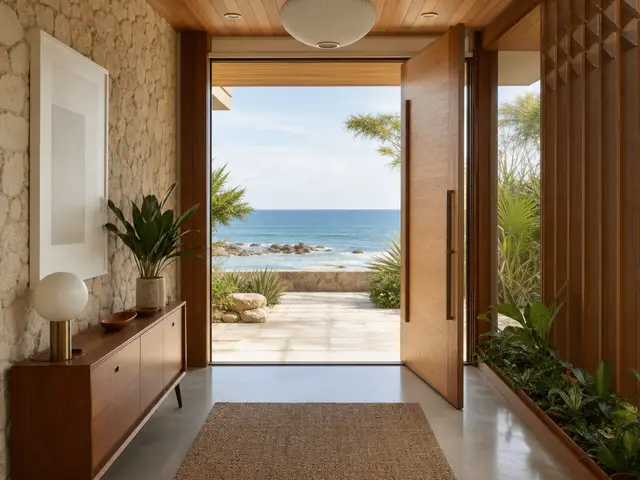
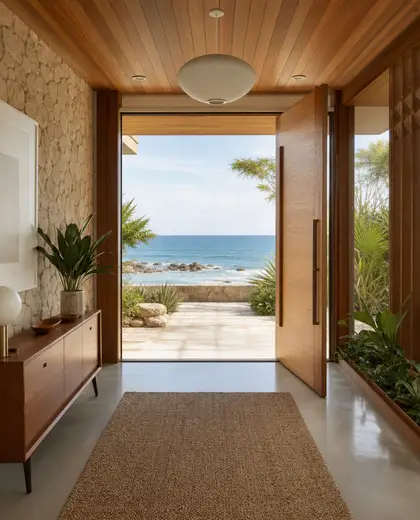
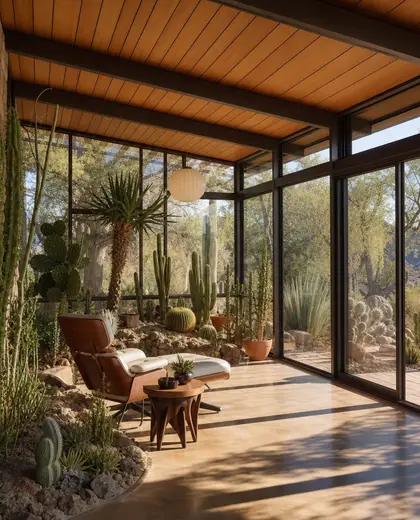
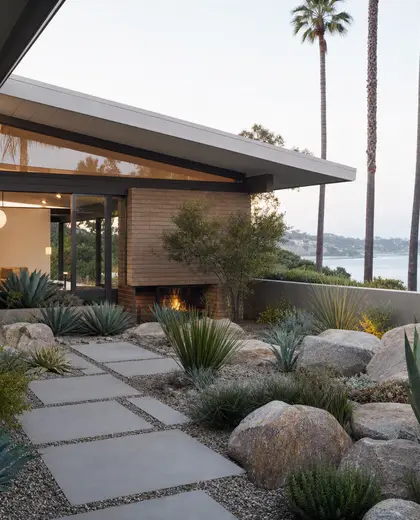
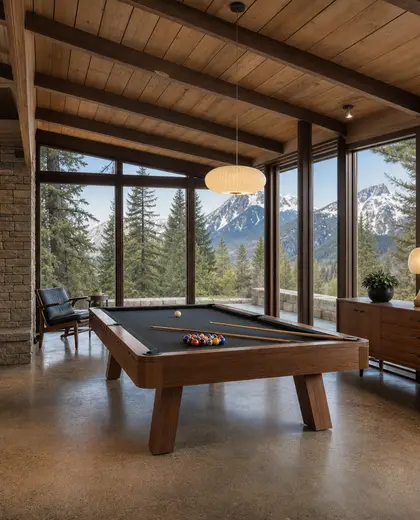
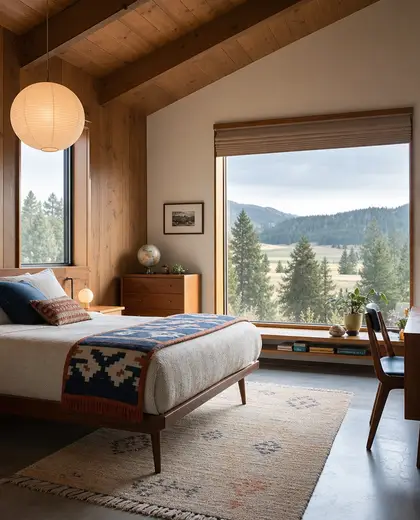
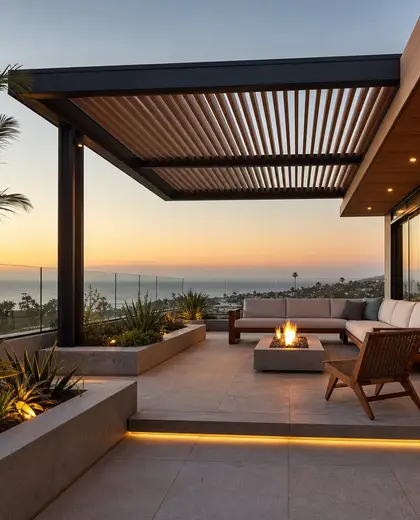
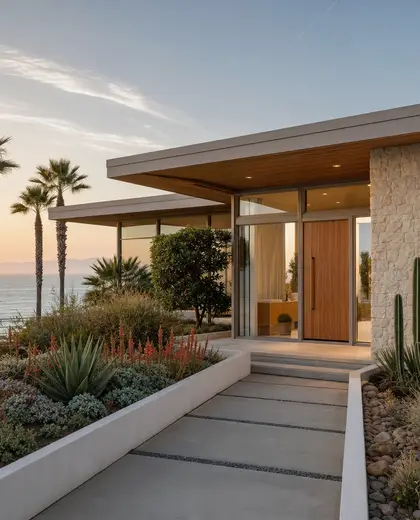
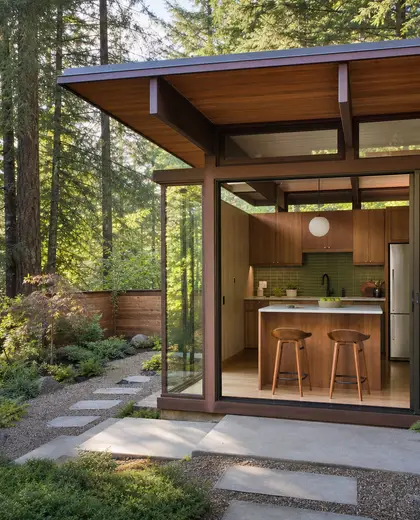
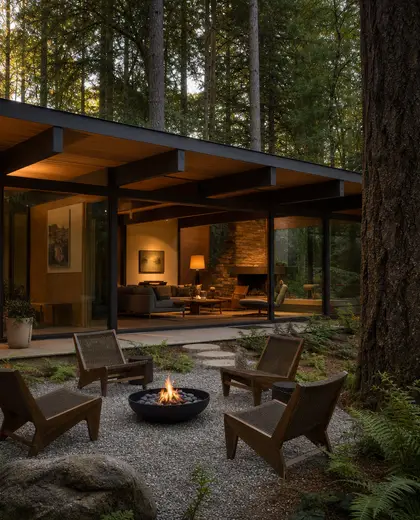
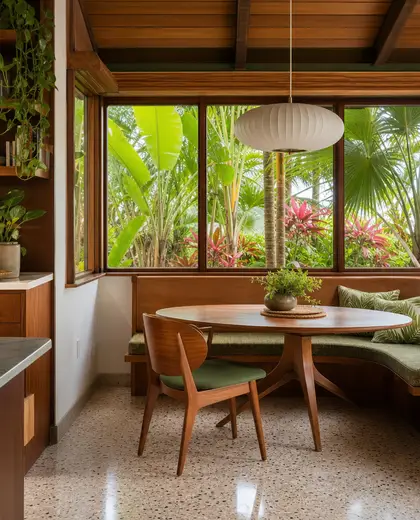
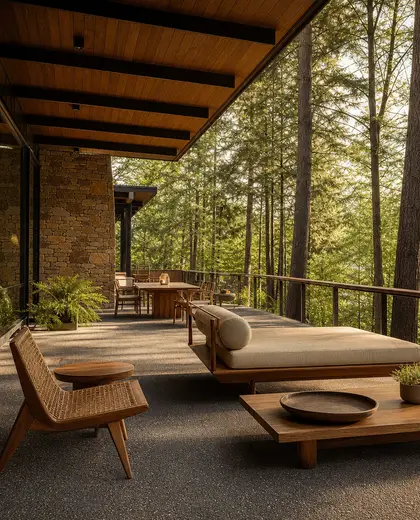
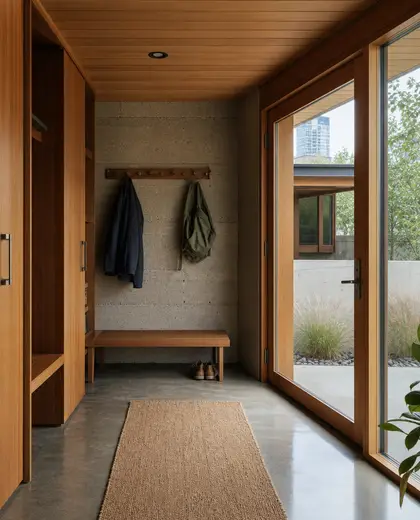
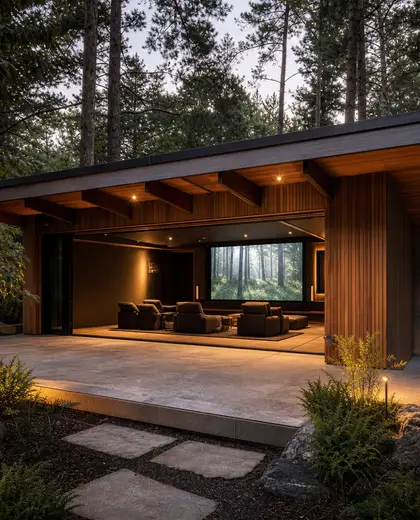
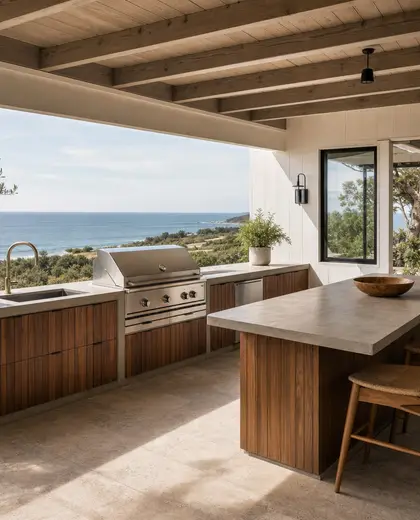
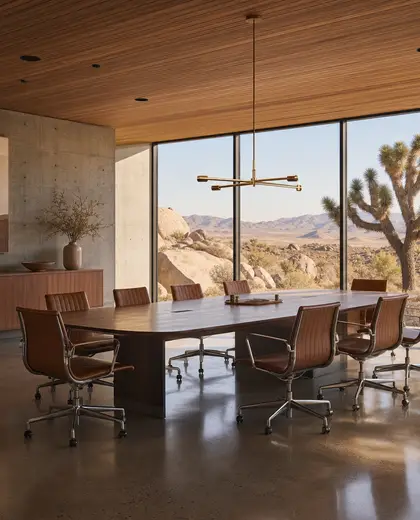
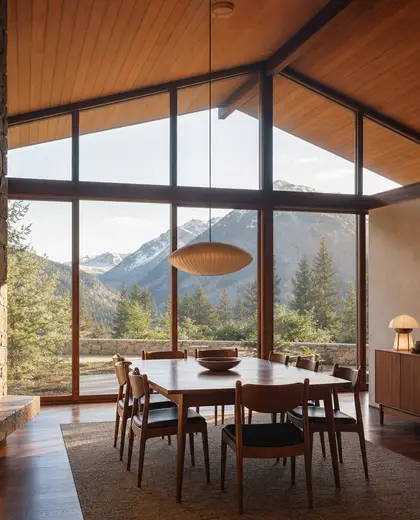
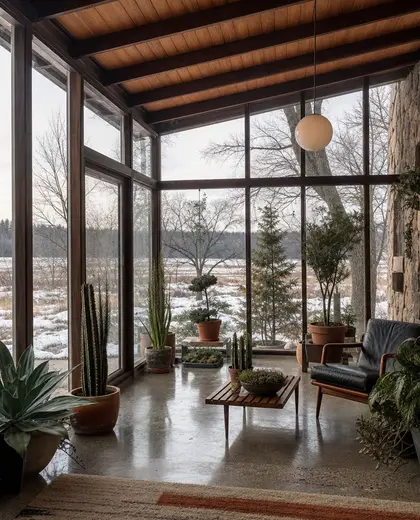
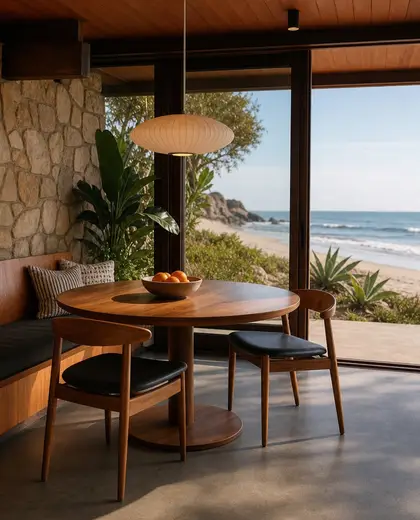
Mid-century modern is defined by clean lines, low-slung forms, and a strong connection to indoor-outdoor living. It commonly uses teak, walnut, plywood, glass, steel, and leather, with open plans, slim profiles, and tapered legs. The palette is usually warm and restrained: natural wood tones, white, black, olive, ochre, and muted orange.
- mid-century modern
— References
References to explore

What makes a home feel mid-century modern?
Look for low, horizontal furniture, tapered legs, open sightlines, and a mix of wood, metal, and glass. Built-in storage and large windows also help define the look.

Can mid-century modern feel cozy, not cold?
Yes. Use warmer wood finishes, textured upholstery, rugs, and layered lighting to soften the clean lines. Too much black or glossy surface can make it feel sharper than intended.

Does this style work in small homes?
It often does, because the furniture tends to be visually light and compact. Keep the layout open and avoid oversized pieces so the room stays airy.



— The style
What defines it
Teak, walnut, molded plywood, glass, steel, leather, and occasional stone or terrazzo.
Warm wood tones balanced with white, black, olive green, mustard, rust, and muted neutrals.
Works well with Scandinavian, minimalist, contemporary, and indoor-outdoor layouts.
— Professionals
Who has already built it
- fathoms designarchitects · Wheaton · 6 projectsView profile →
- Karavaan Homefurniture sellers · High Point · 4 projectsView profile →
- jacob galleslandscape designers · 6 projectsView profile →
- pfuner designinterior designers · 11 projectsView profile →
— Questions
Frequently asked questions
What makes a home feel mid-century modern?
Look for low, horizontal furniture, tapered legs, open sightlines, and a mix of wood, metal, and glass. Built-in storage and large windows also help define the look.
Can mid-century modern feel cozy, not cold?
Yes. Use warmer wood finishes, textured upholstery, rugs, and layered lighting to soften the clean lines. Too much black or glossy surface can make it feel sharper than intended.
Does this style work in small homes?
It often does, because the furniture tends to be visually light and compact. Keep the layout open and avoid oversized pieces so the room stays airy.