— Ideas & inspiration
Mud room
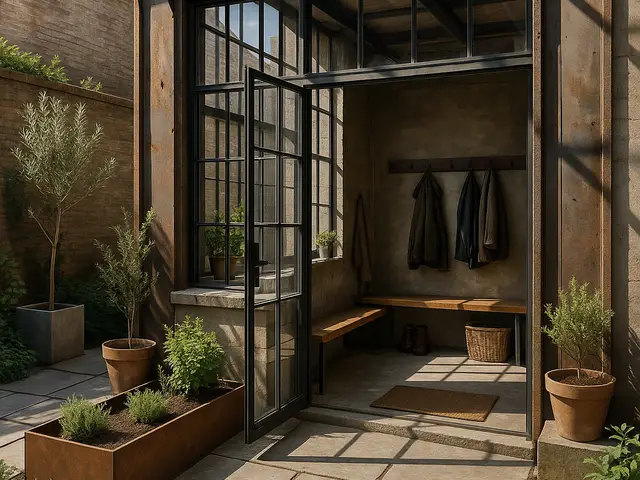
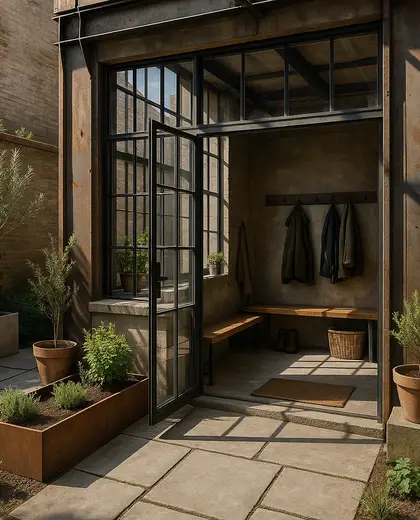
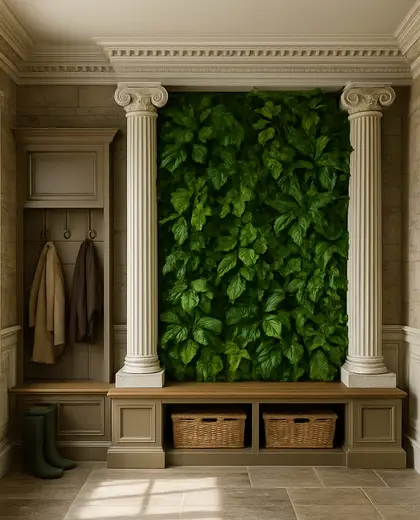
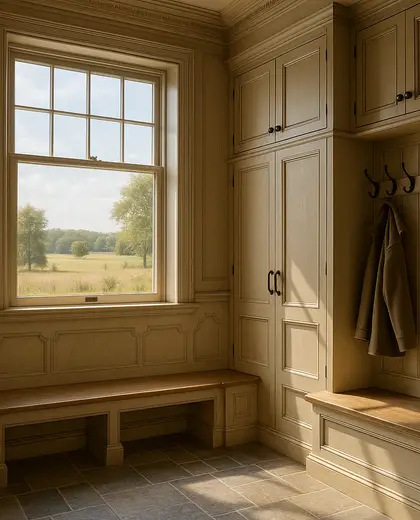
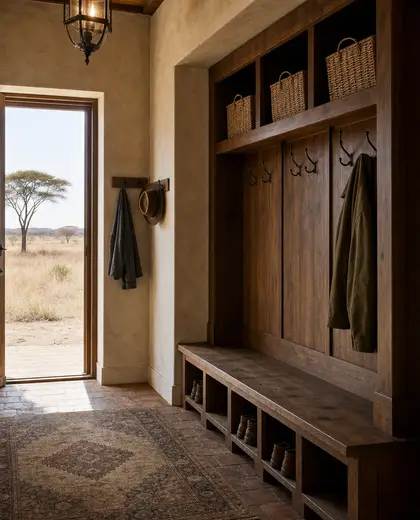
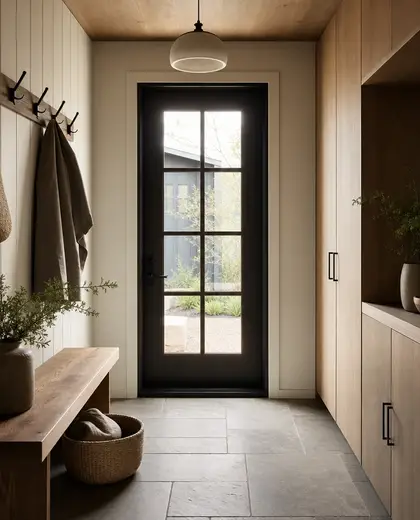
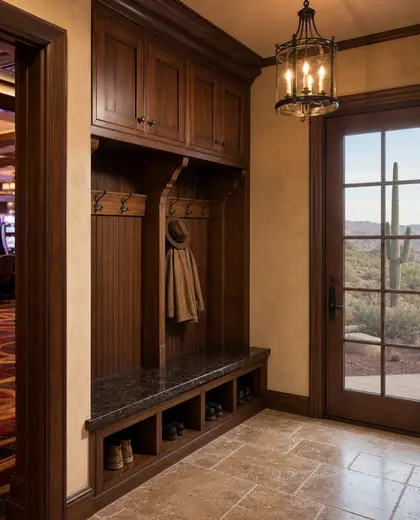
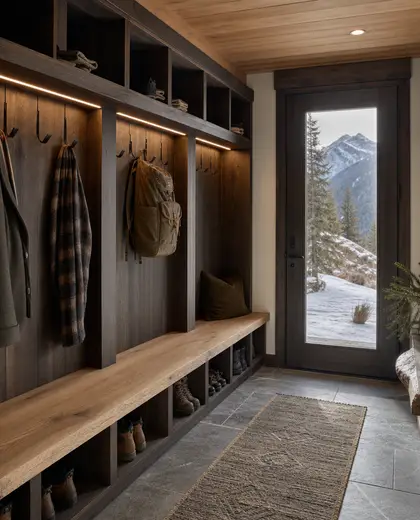
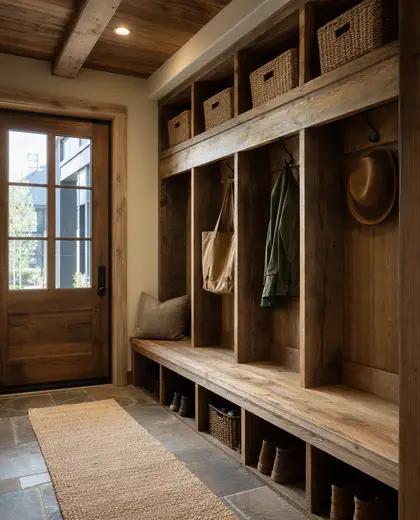
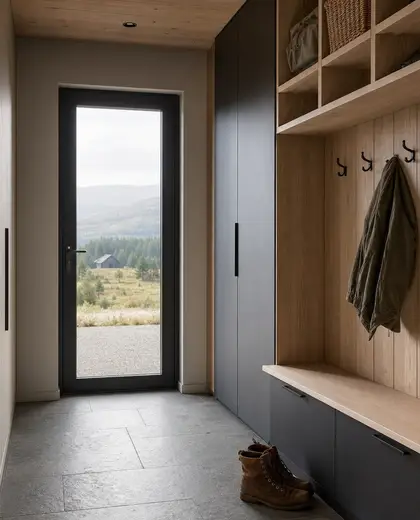
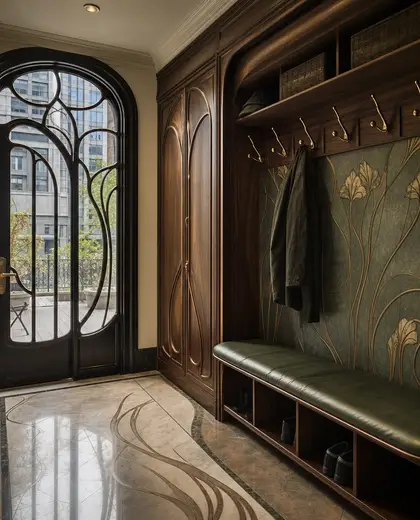
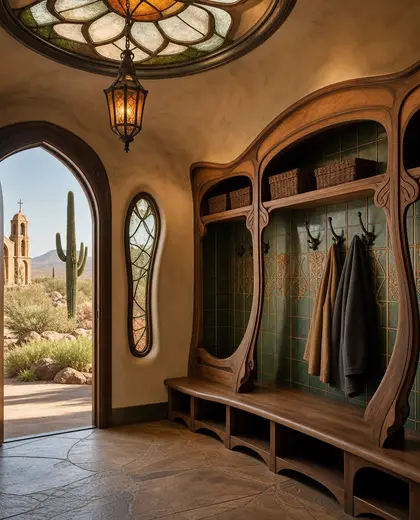
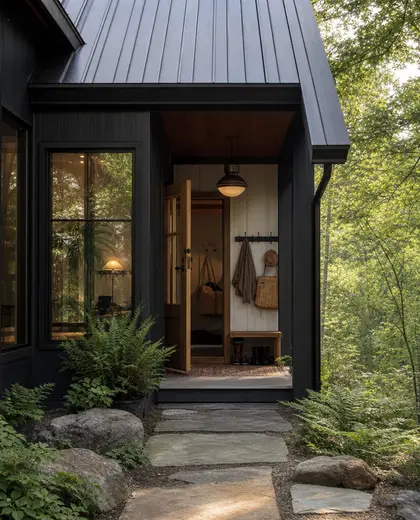
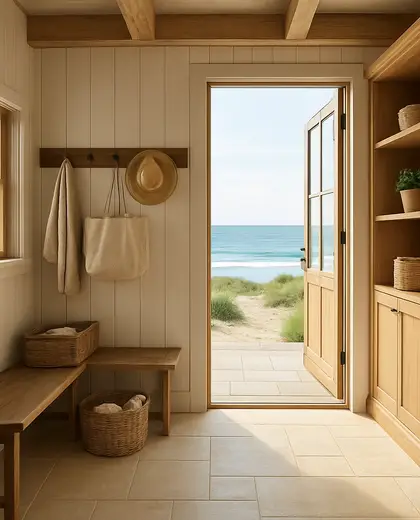
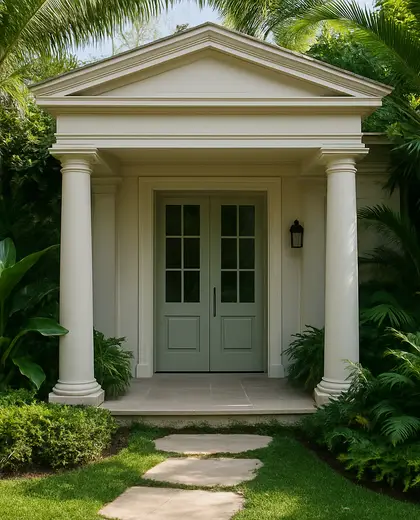
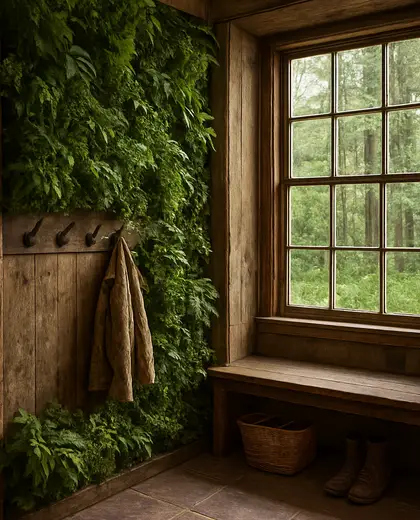
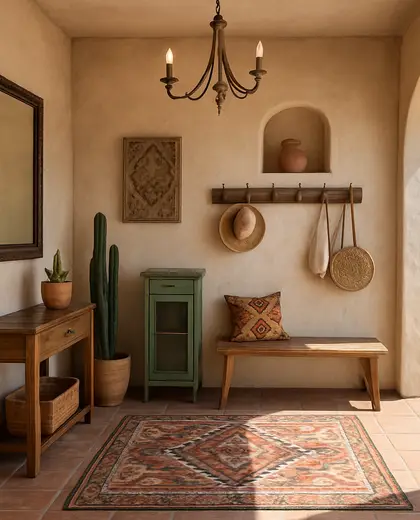
A mud room is a transitional entry space built for shedding coats, shoes, and wet gear before moving into the home. It typically uses durable finishes such as tile, stone, sealed wood, painted millwork, and easy-clean bench seating or cabinetry, with practical storage for hooks, cubbies, and boot trays. The palette is usually restrained and resilient, with warm neutrals, dark accent hardware, and materials that can handle moisture and dirt.
- mud room
— References
References to explore
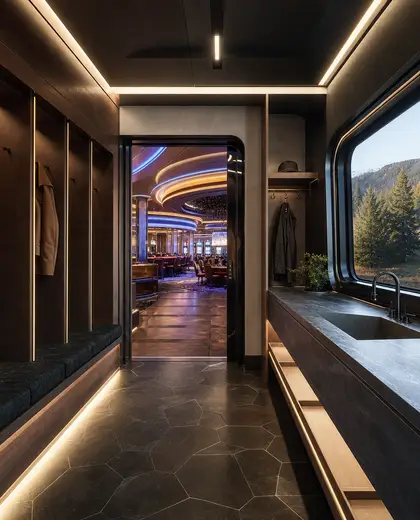
What is the main purpose of a mud room?
It acts as a buffer between outdoors and indoors, giving you a place to remove shoes, hang outerwear, and contain dirt, moisture, and clutter.
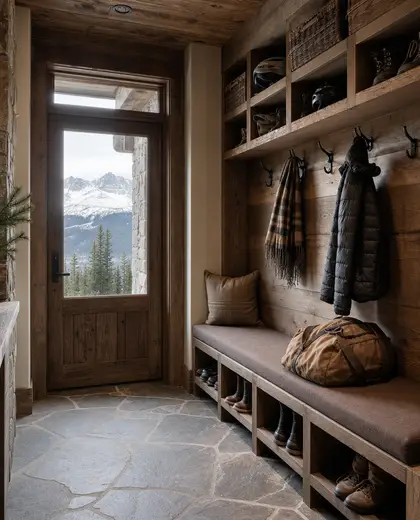
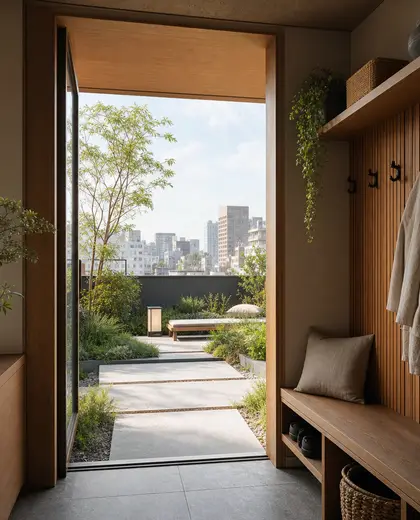
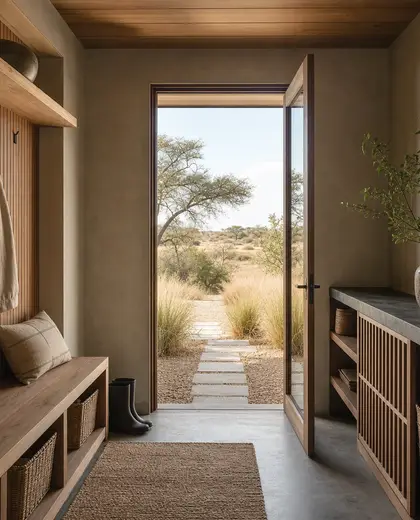
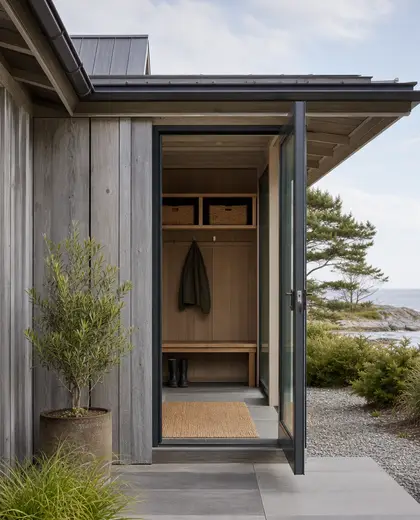
Does a mud room need to be large?
No. Even a narrow niche or a small alcove can work if it includes the right storage, a durable floor, and a place to sit or drop items.
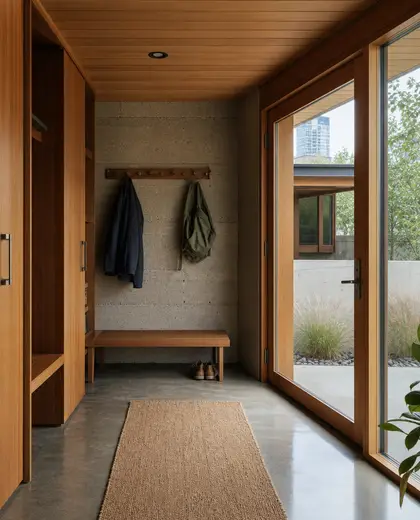
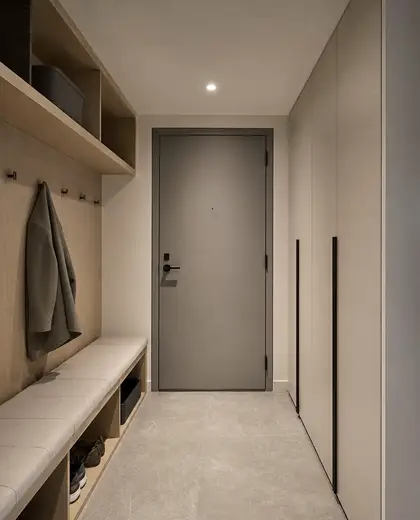
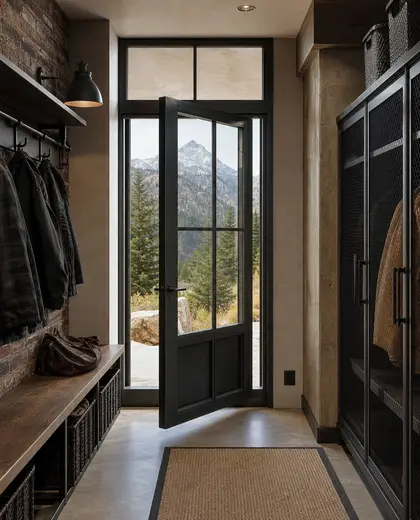
What finishes hold up best in a mud room?
Hard-wearing, easy-clean finishes are best, such as tile or sealed stone floors, moisture-resistant paint, and cabinetry or bench tops that can take daily use.
— The style
What defines it
Porcelain tile, stone, sealed wood, painted cabinetry, durable hooks, and washable surfaces are common choices.
Neutral and grounded tones work best: white, taupe, gray, olive, navy, or black, often paired with natural wood.
Entryways, laundry rooms, kitchens, pantries, and family circulation spaces where storage and clean-up matter.
— Professionals
Who has already built it
- jacob galleslandscape designers · 6 projectsView profile →
- roland a arriaga architecarchitects · 8 projectsView profile →
- pfuner designinterior designers · 11 projectsView profile →
- Karavaan Homefurniture sellers · High Point · 4 projectsView profile →
— Questions
Frequently asked questions
What is the main purpose of a mud room?
It acts as a buffer between outdoors and indoors, giving you a place to remove shoes, hang outerwear, and contain dirt, moisture, and clutter.
Does a mud room need to be large?
No. Even a narrow niche or a small alcove can work if it includes the right storage, a durable floor, and a place to sit or drop items.
What finishes hold up best in a mud room?
Hard-wearing, easy-clean finishes are best, such as tile or sealed stone floors, moisture-resistant paint, and cabinetry or bench tops that can take daily use.