— Ideas & inspiration
Nursery composition
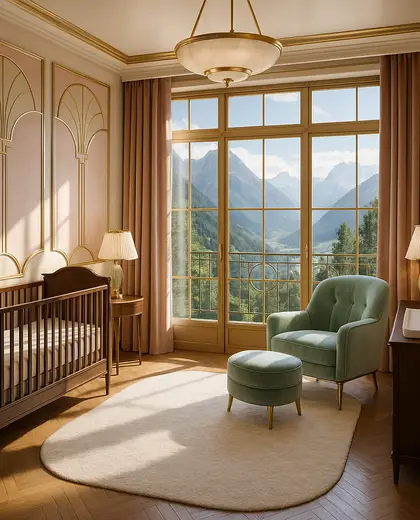
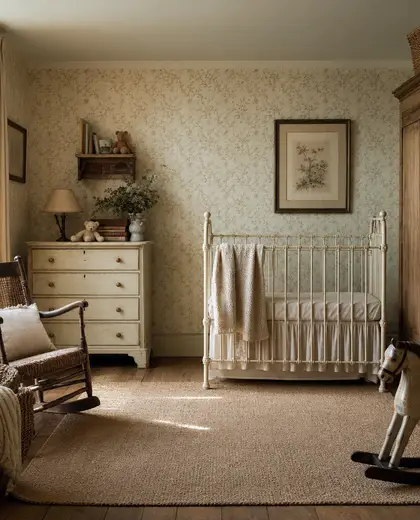
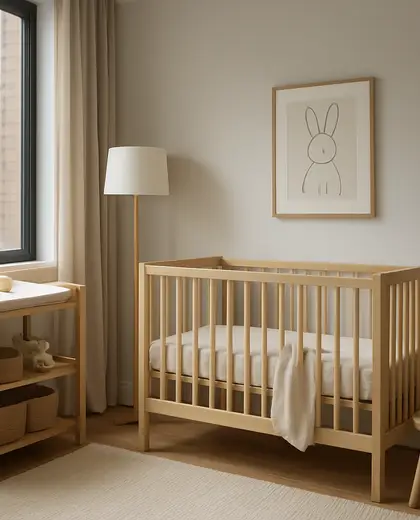
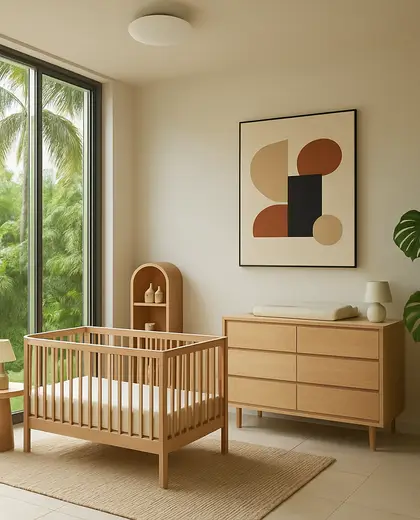
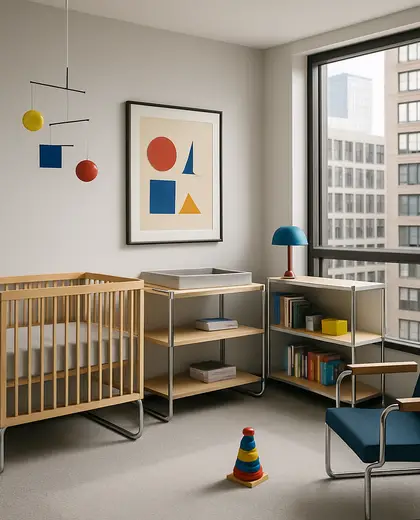
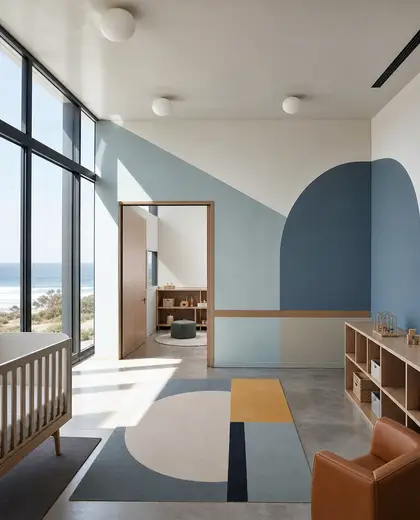
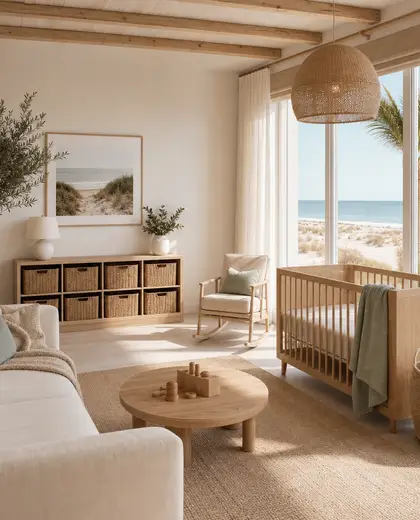
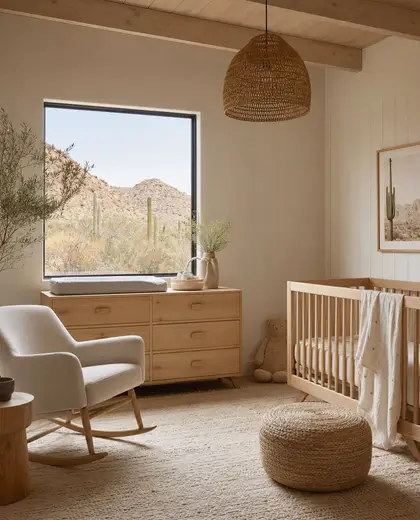
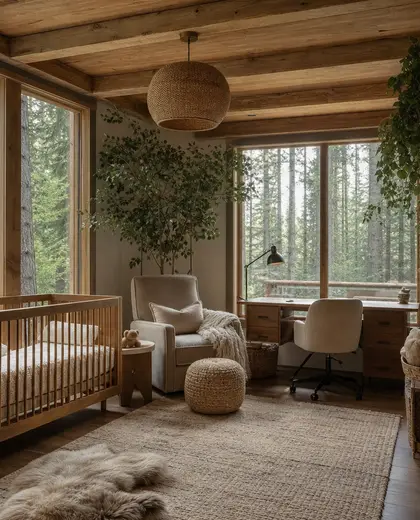
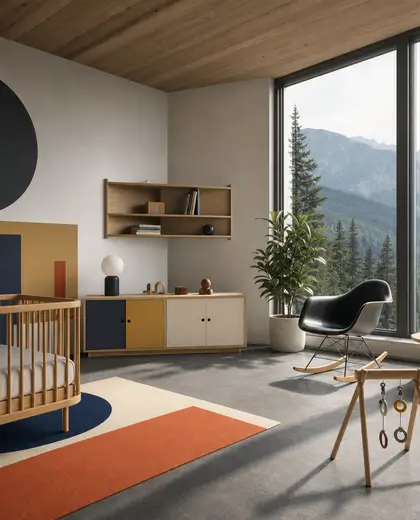
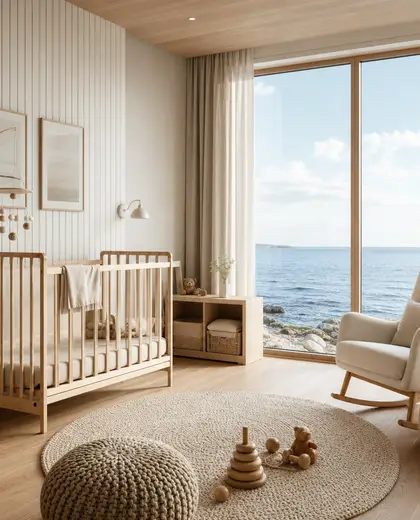
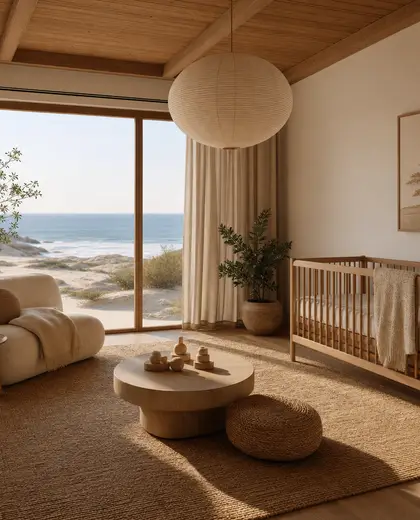
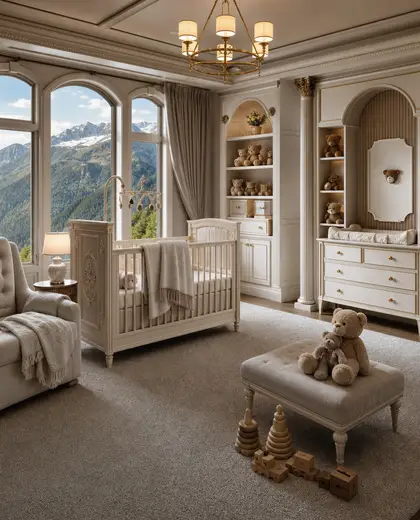
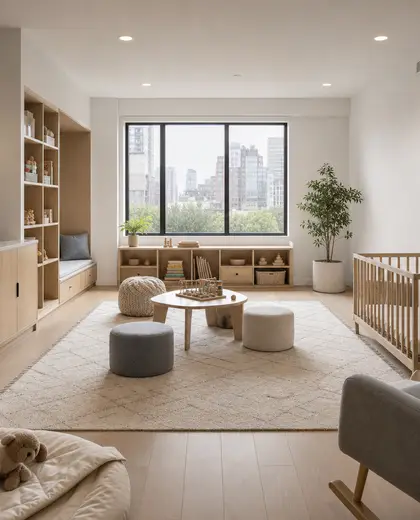
A nursery is usually defined by soft, durable finishes and furniture with rounded edges for safety and ease of use. Common materials include painted wood, natural textiles, washable fabrics, and matte surfaces that reduce glare. The palette is often calm and light, with warm neutrals, muted pastels, and gentle contrast from wood tones or soft accent colors.
- nursery

— References
References to explore

What makes a nursery different from a regular bedroom?
A nursery needs more storage, softer materials, safer furniture edges, and space for feeding, changing, and sleeping in one room.


Can a nursery use dark colors?
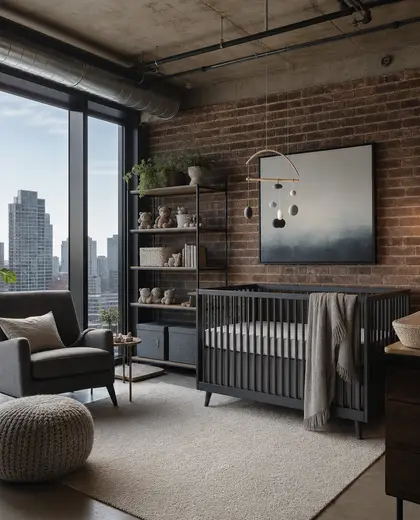
Yes, but usually as accents or on one wall. Most nurseries still rely on lighter base colors to keep the room calm and visually open.


Which materials work best in a nursery?
Choose surfaces that are easy to clean and textiles that feel comfortable: painted wood, natural fiber rugs, and washable fabrics are common choices.



— The style
What defines it
Painted wood, cotton, linen, wool blends, washable upholstery, and non-reflective finishes are common in nurseries.
Soft whites, beige, warm gray, blush, sage, pale blue, and other muted tones create a calm atmosphere.
Nursery compositions pair well with Scandinavian, contemporary, and minimalist interiors, especially when matched with simple storage and soft lighting.
— Professionals
Who has already built it
- annilee b watermanarchitects · Wylie · 6 projectsView profile →
- interior design by emilyinterior designers · 8 projectsView profile →
- Karavaan Homefurniture sellers · High Point · 4 projectsView profile →
- jacob galleslandscape designers · 6 projectsView profile →
— Questions
Frequently asked questions
What makes a nursery different from a regular bedroom?
A nursery needs more storage, softer materials, safer furniture edges, and space for feeding, changing, and sleeping in one room.
Can a nursery use dark colors?
Yes, but usually as accents or on one wall. Most nurseries still rely on lighter base colors to keep the room calm and visually open.
Which materials work best in a nursery?
Choose surfaces that are easy to clean and textiles that feel comfortable: painted wood, natural fiber rugs, and washable fabrics are common choices.