— Ideas & inspiration
Craftsman composition
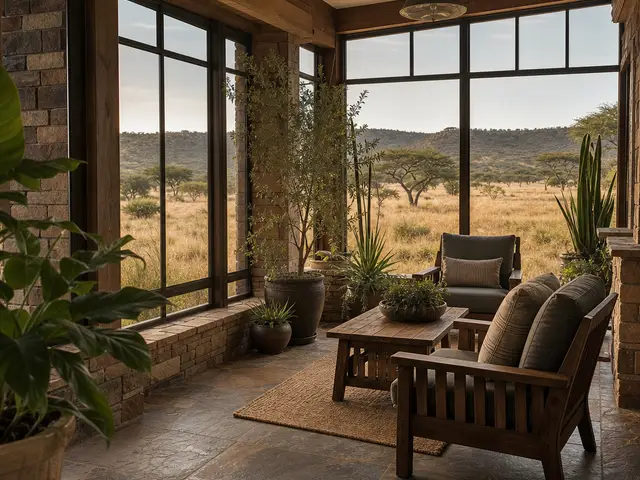
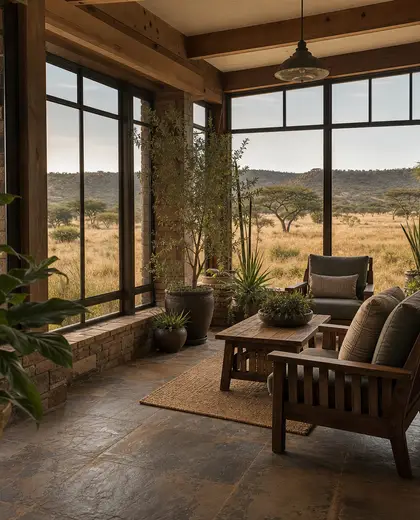
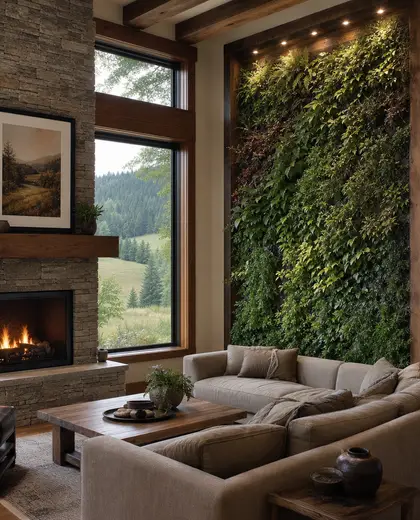
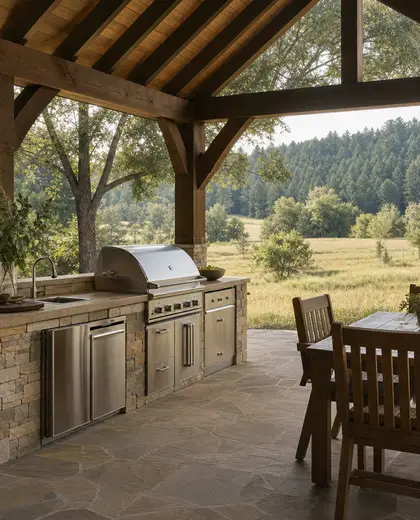
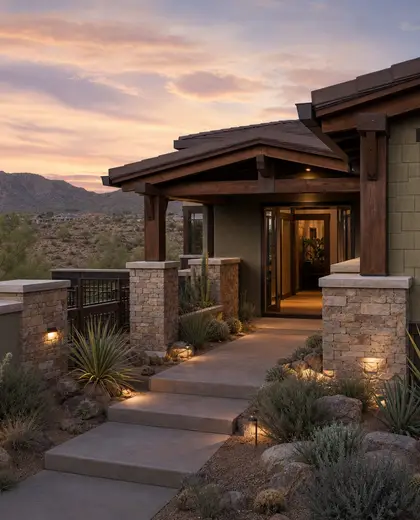
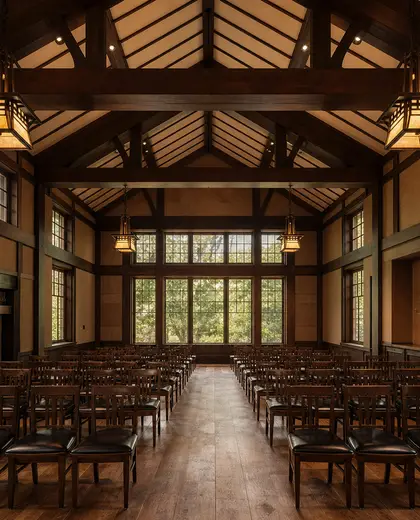
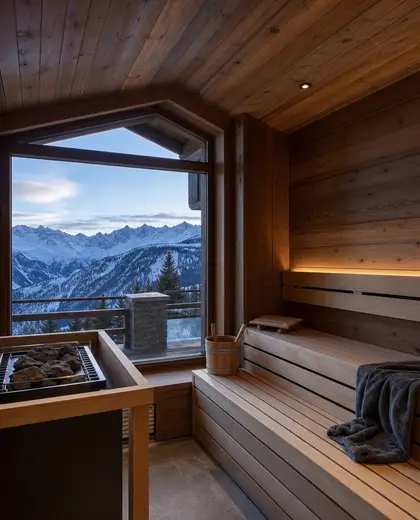
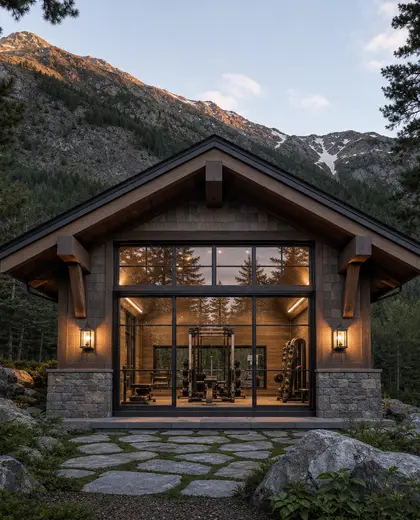
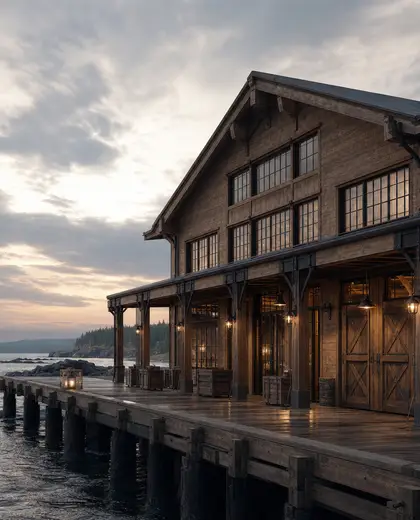
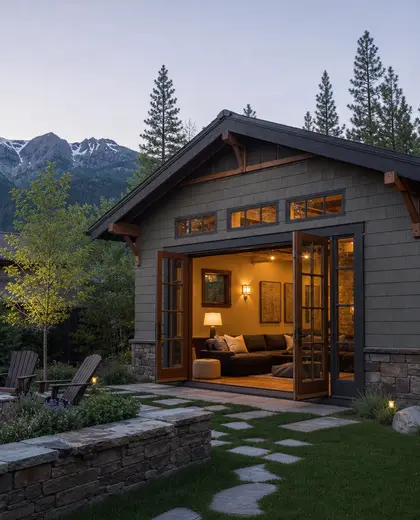
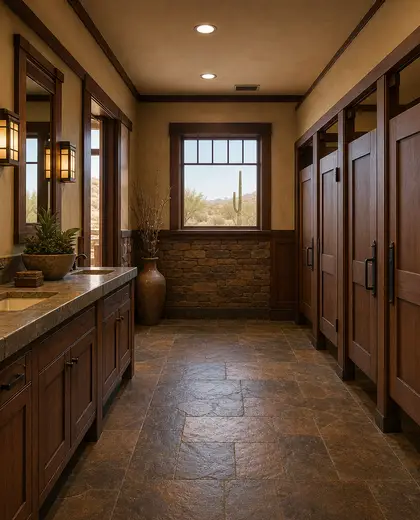
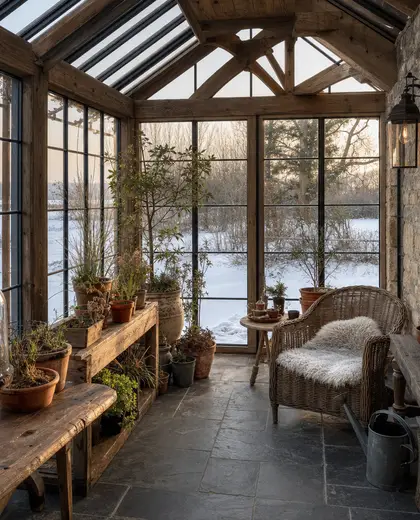
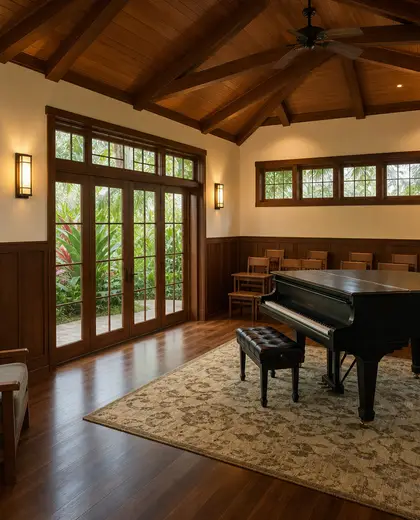
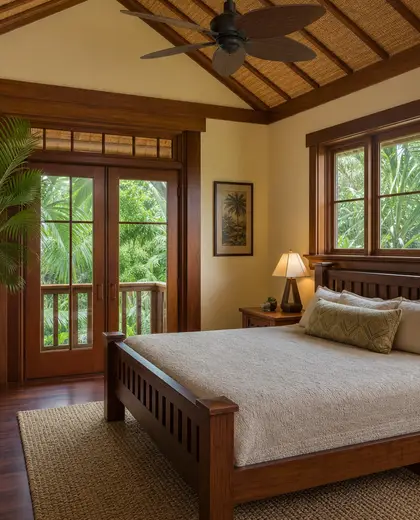
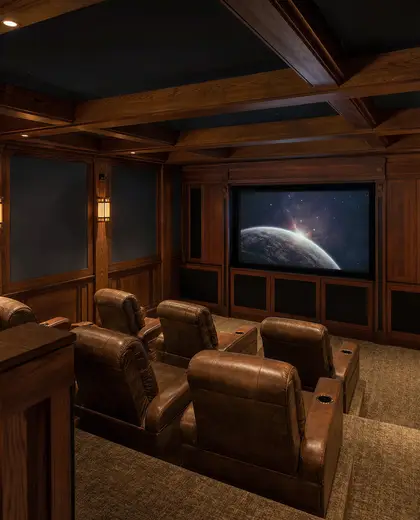
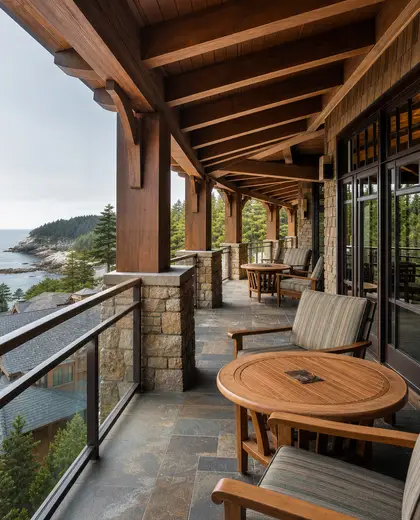
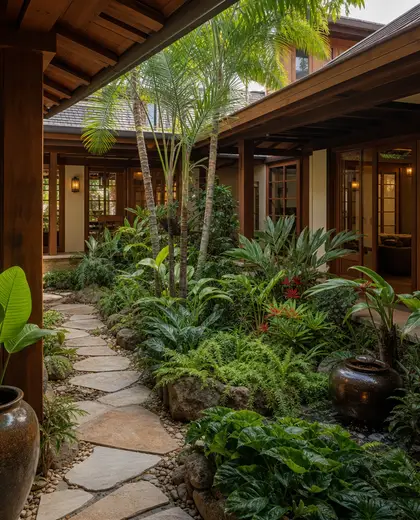
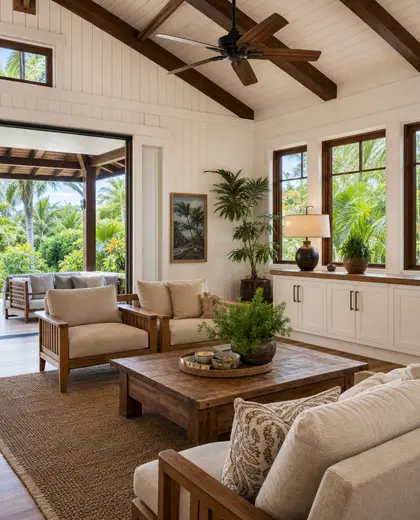
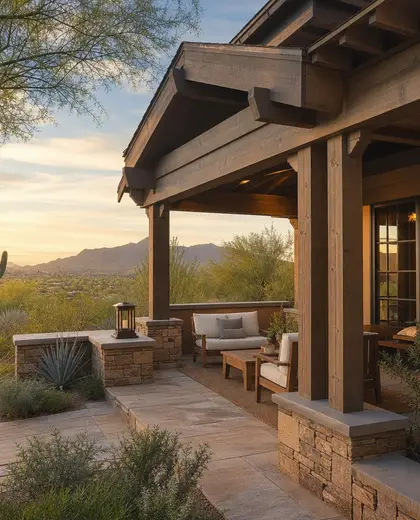
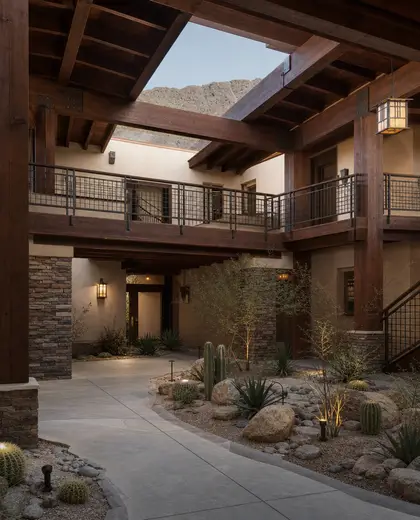
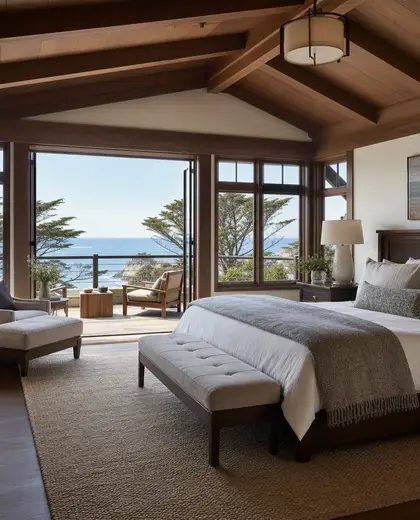
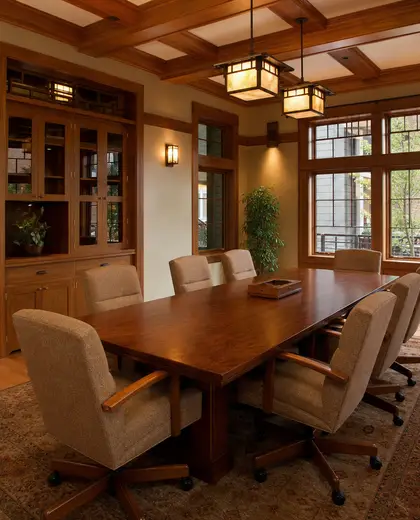
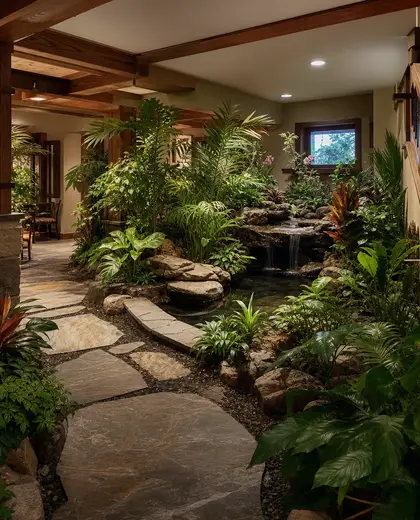
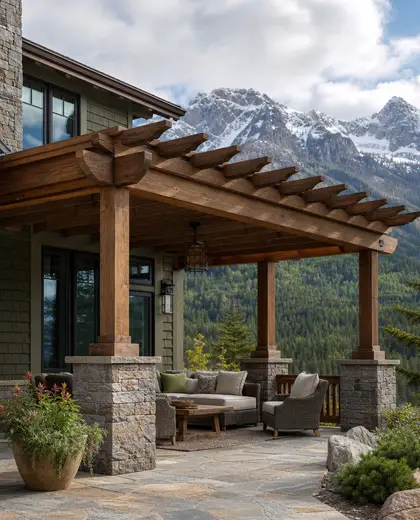
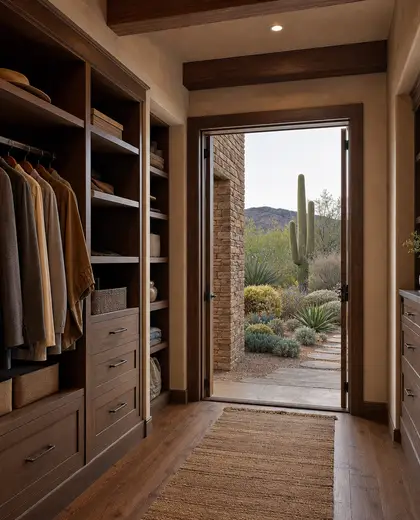
A Craftsman composition is defined by honest, visible materials: natural wood, stone, brick, and hand-finished details. The palette stays warm and grounded, with earthy browns, deep greens, muted reds, cream, and dark accents. It usually features built-in millwork, tapered columns, exposed joinery, and a compact, solid look that emphasizes craftsmanship over ornament.
- craftsman
— References
References to explore
Can I use Craftsman style in a newer home?
Yes. It adapts well when you introduce wood trim, built-in storage, a simple fireplace surround, and a restrained color palette.
Does Craftsman style have to feel dark?
No. It is often warm and grounded, but it can be lightened with cream walls, lighter oak tones, and better daylight while keeping the same material language.
What should I avoid if I want a true Craftsman look?
Avoid overly glossy finishes, highly ornate moldings, and very high-contrast or ultra-modern details that compete with the natural, hand-built character.
— The style
What defines it
Natural wood, stone, brick, plaster, and matte metals are typical, with an emphasis on real texture and visible grain.
Warm and earthy: brown, olive, sage, rust, cream, taupe, and charcoal, often used in low-contrast combinations.
Works well with bungalow, prairie, cottage, and traditional interiors, especially where built-ins, fireplaces, and trim are already present.
— Professionals
Who has already built it
- robert srotearchitects · 8 projectsView profile →
- pfuner designinterior designers · 11 projectsView profile →
- Karavaan Homefurniture sellers · High Point · 4 projectsView profile →
- jacob galleslandscape designers · 6 projectsView profile →
— Questions
Frequently asked questions
Can I use Craftsman style in a newer home?
Yes. It adapts well when you introduce wood trim, built-in storage, a simple fireplace surround, and a restrained color palette.
Does Craftsman style have to feel dark?
No. It is often warm and grounded, but it can be lightened with cream walls, lighter oak tones, and better daylight while keeping the same material language.
What should I avoid if I want a true Craftsman look?
Avoid overly glossy finishes, highly ornate moldings, and very high-contrast or ultra-modern details that compete with the natural, hand-built character.