— Ideas & inspiration
Dressing room
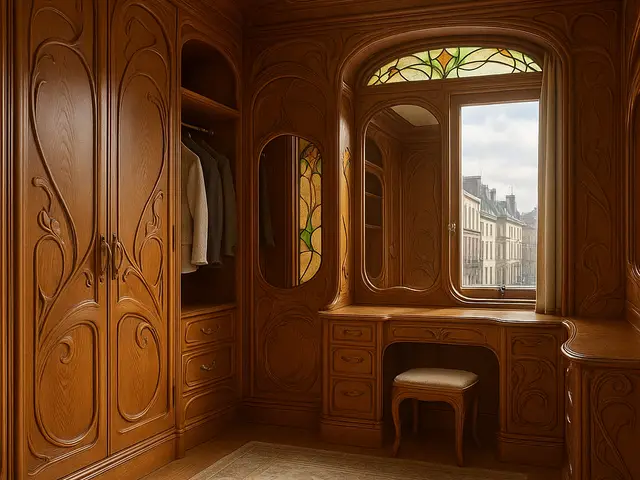
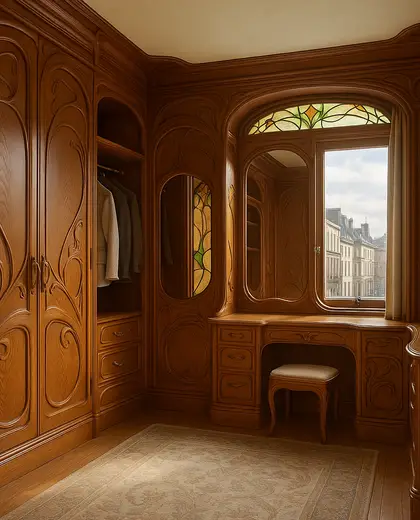
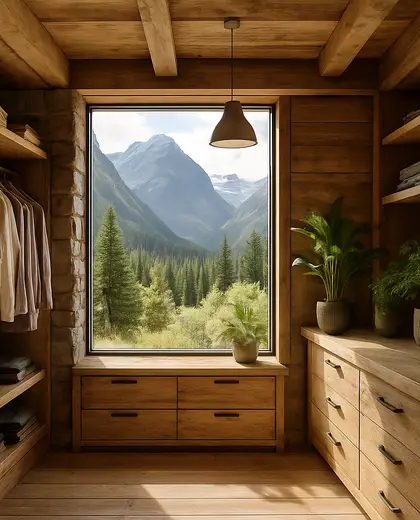
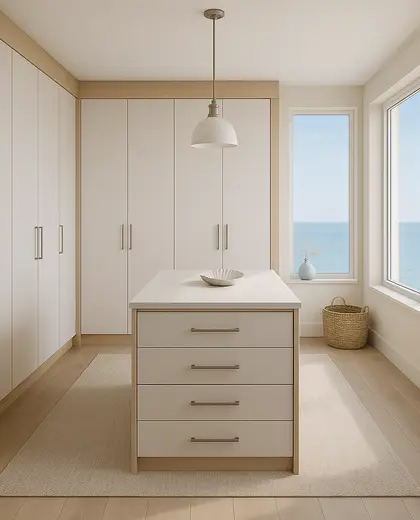
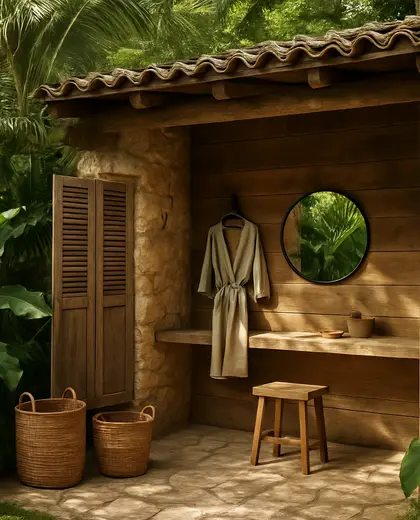
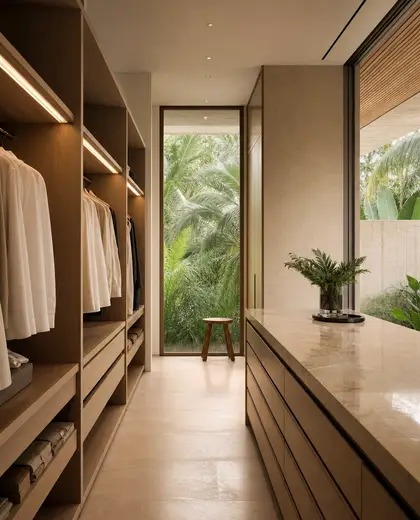
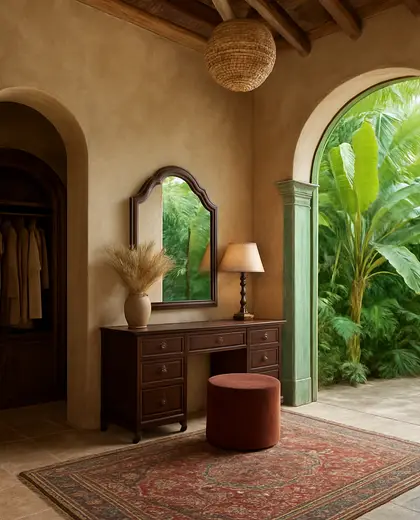
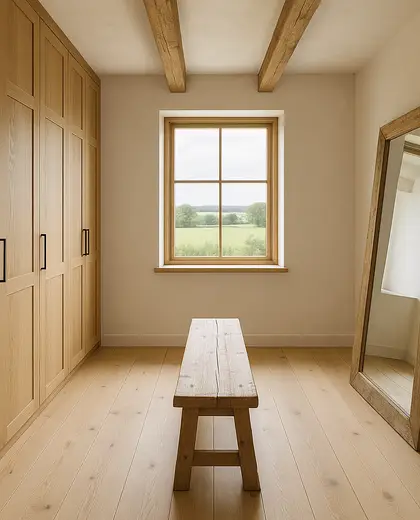
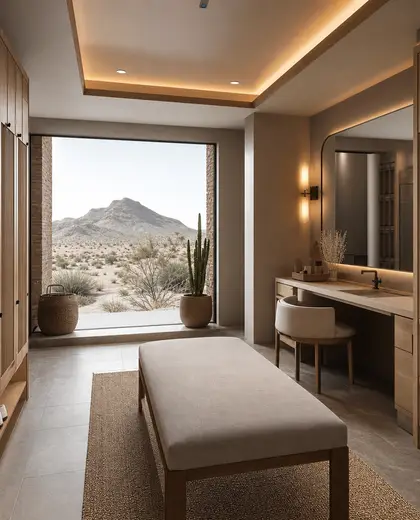
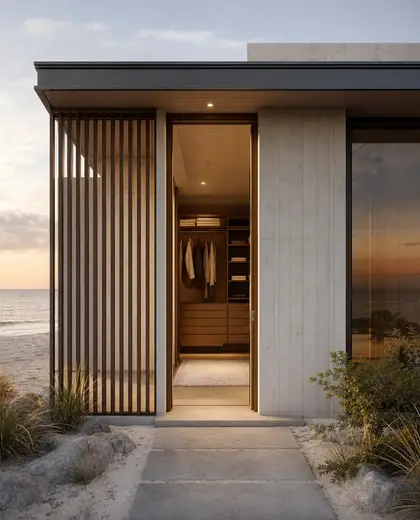
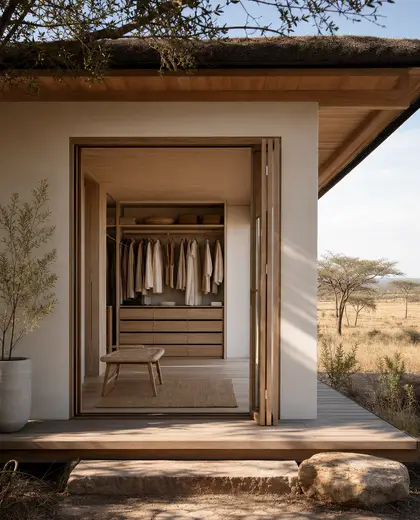
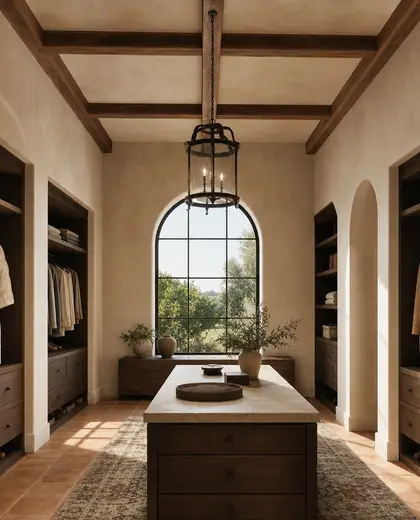
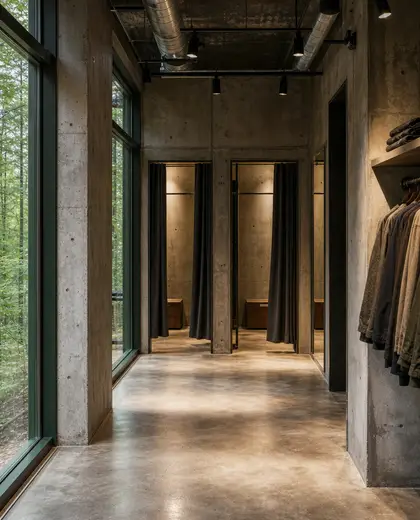
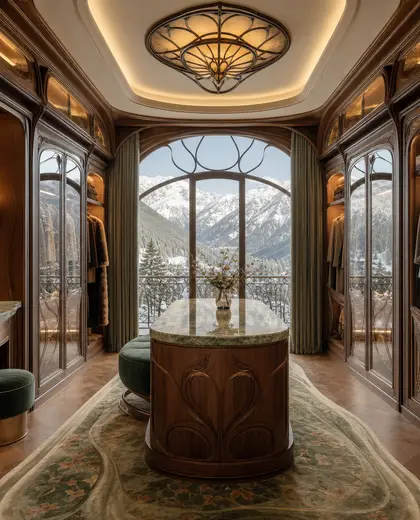
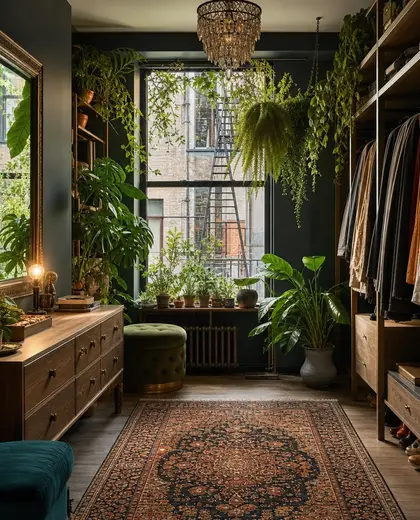
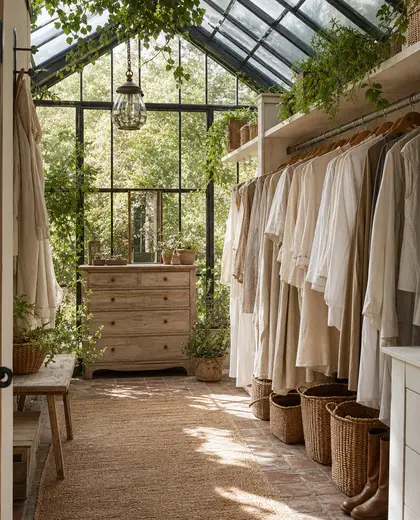
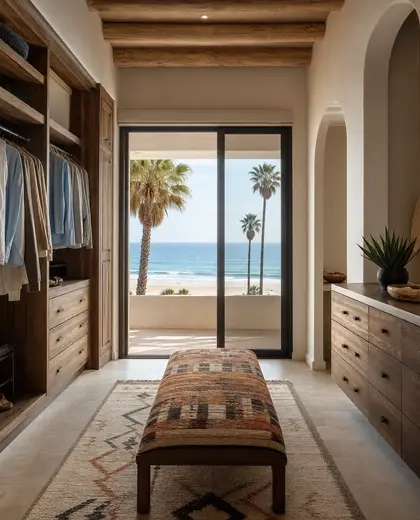
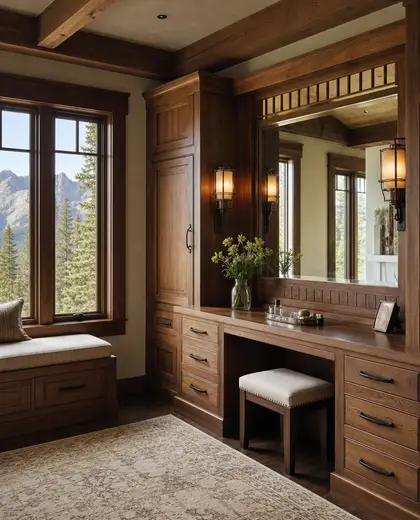
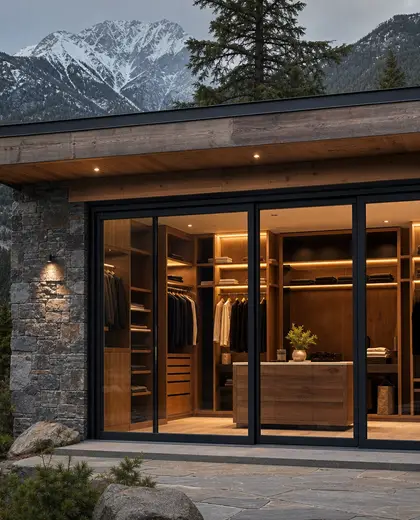
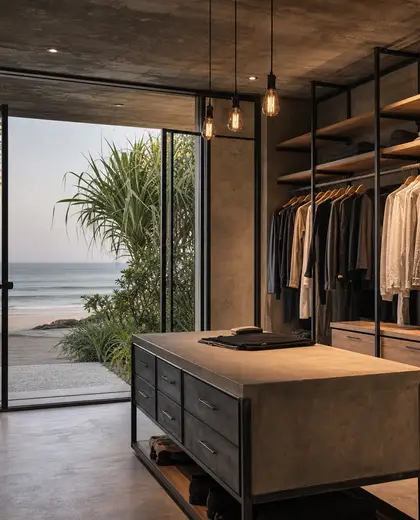
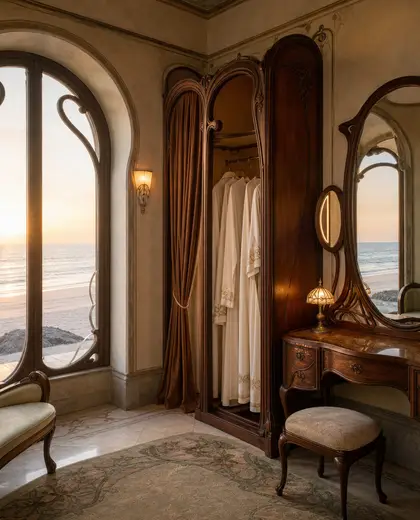
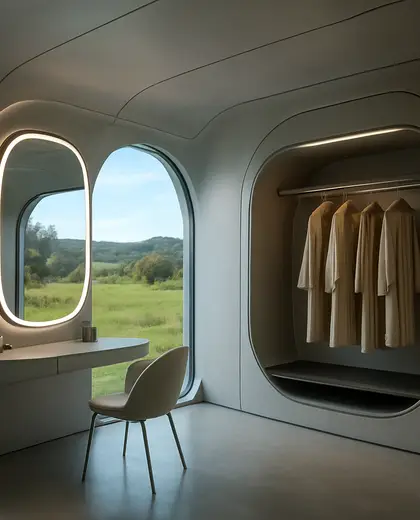
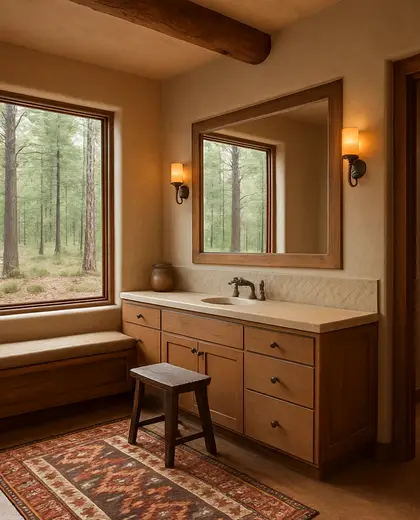
A dressing room is defined by built-in or freestanding storage, a central circulation path, and a restrained material palette that keeps clothing and accessories visible but orderly. Common finishes include timber veneer, lacquered cabinetry, glass, mirrors, stone or engineered stone, and metal rails or trims. The composition usually balances closed storage with open shelving, drawers, and full-height mirror surfaces.
- dressing room
— References
References to explore
How much space do I need for a dressing room?
It depends on whether it is a walk-in room or a compact closet wall, but you need enough depth for hanging storage, door clearance, and a comfortable passage or standing area.

Should a dressing room be open or closed?
Many projects use a mix of both: open shelves and rails for daily items, plus closed cabinetry for visual calm and dust control.
What lighting works best in a dressing room?
Even, layered lighting works best, including ambient ceiling light, task lighting near mirrors, and interior cabinet lighting where possible.

— The style
What defines it
Timber veneer, MDF or lacquered cabinets, glass doors, mirrors, leather pulls, metal hanging systems, and stone or engineered-stone tops are common.
Neutral and calm tones work best: whites, warm greys, beige, taupe, natural wood, and darker accents in bronze, black, or smoked glass.
It pairs well with bedroom suites, ensuite bathrooms, walk-in wardrobes, vanity zones, and soft lighting plans that reduce glare and improve visibility.
— Professionals
Who has already built it
- Karavaan Homefurniture sellers · High Point · 4 projectsView profile →
- todd verwers architectsarchitects · San Diego · 6 projectsView profile →
- jacob galleslandscape designers · 6 projectsView profile →
- pfuner designinterior designers · 11 projectsView profile →
— Questions
Frequently asked questions
How much space do I need for a dressing room?
It depends on whether it is a walk-in room or a compact closet wall, but you need enough depth for hanging storage, door clearance, and a comfortable passage or standing area.
Should a dressing room be open or closed?
Many projects use a mix of both: open shelves and rails for daily items, plus closed cabinetry for visual calm and dust control.
What lighting works best in a dressing room?
Even, layered lighting works best, including ambient ceiling light, task lighting near mirrors, and interior cabinet lighting where possible.