— Ideas & inspiration
Music room
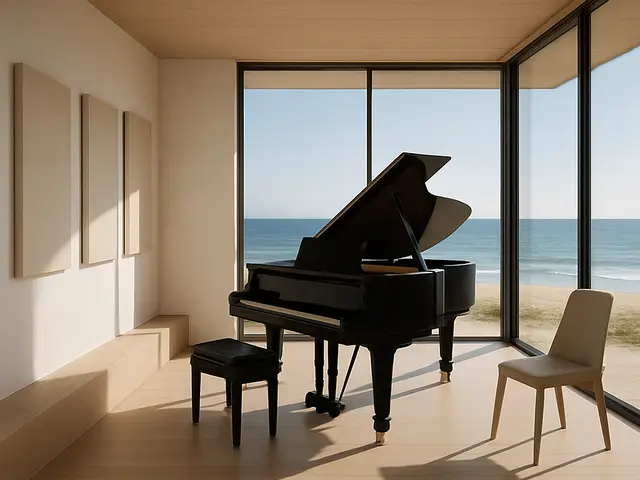
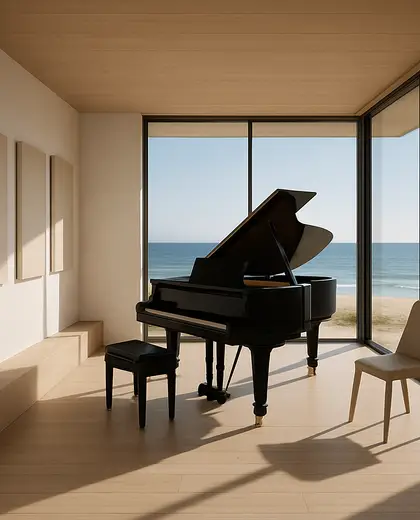
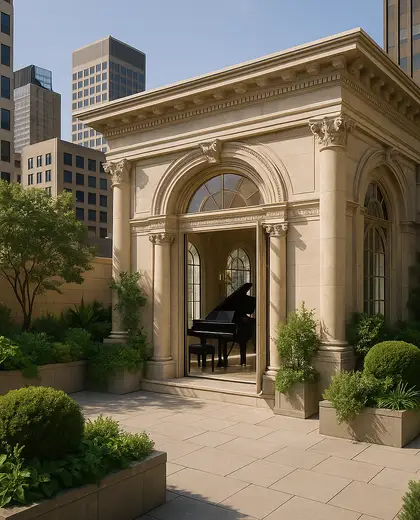
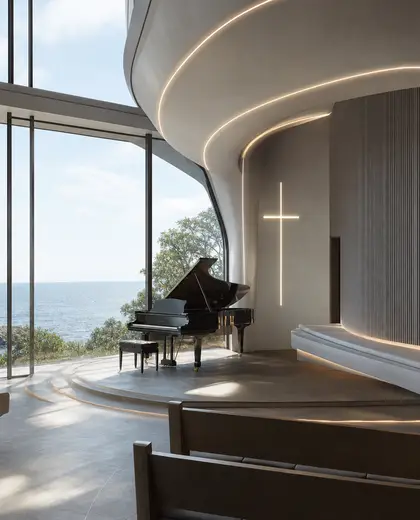
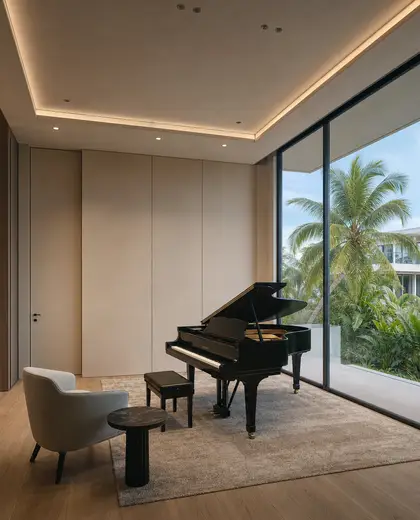
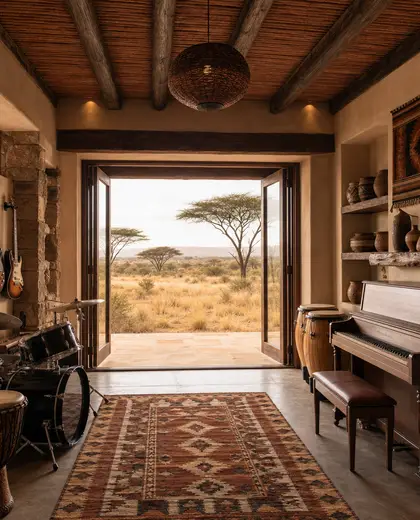
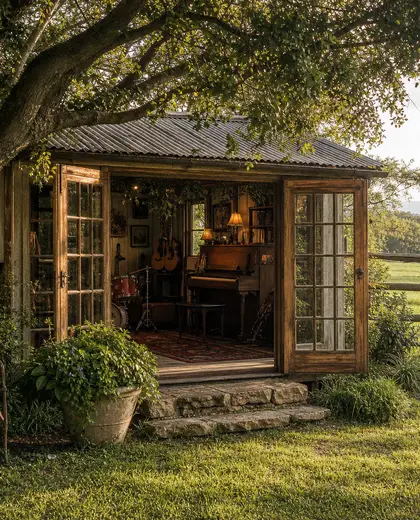
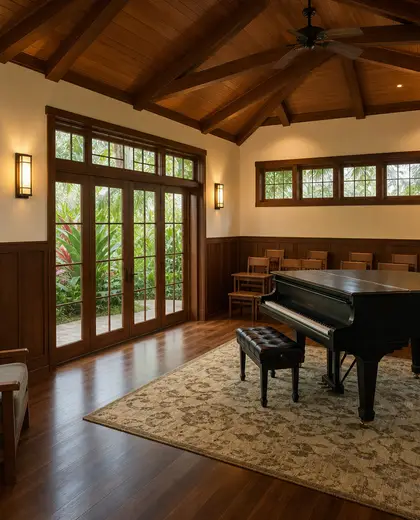
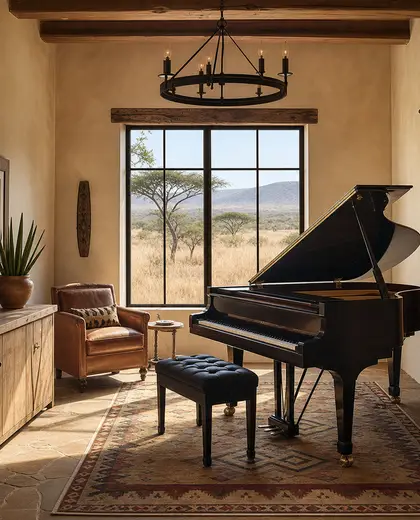
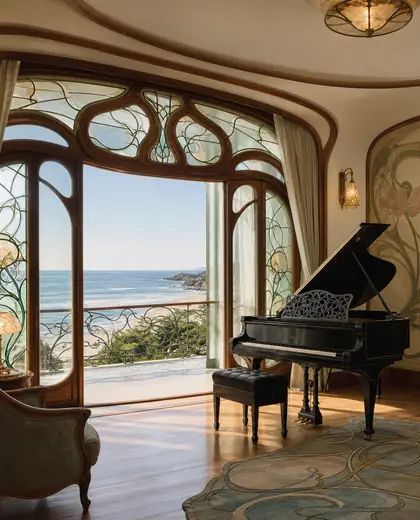
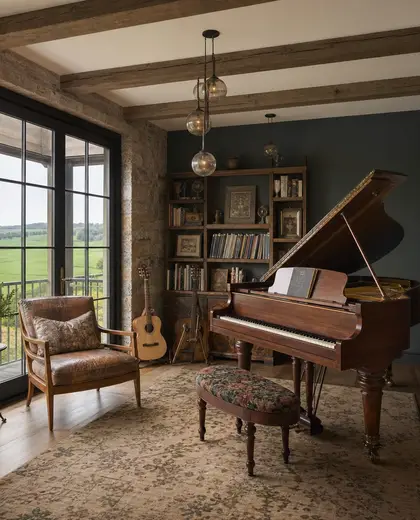
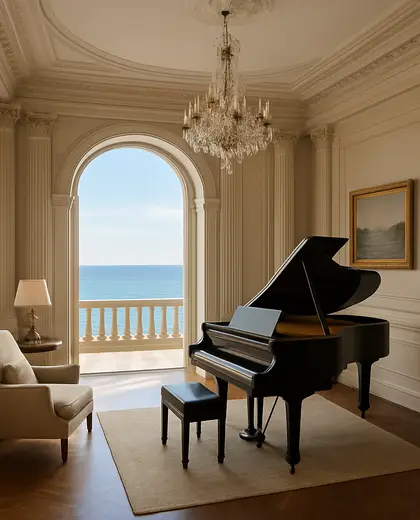
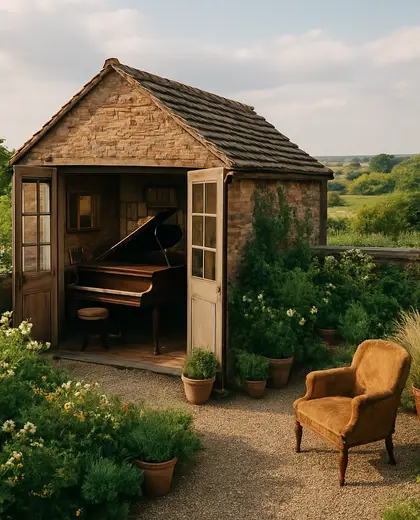
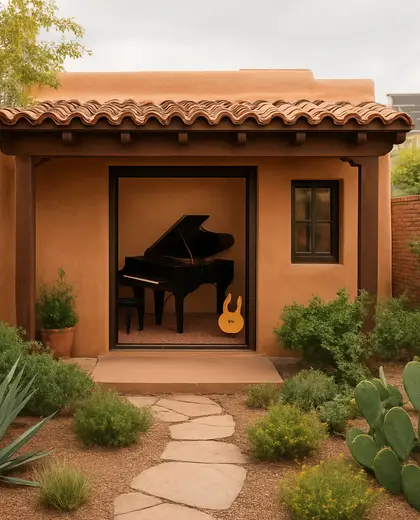
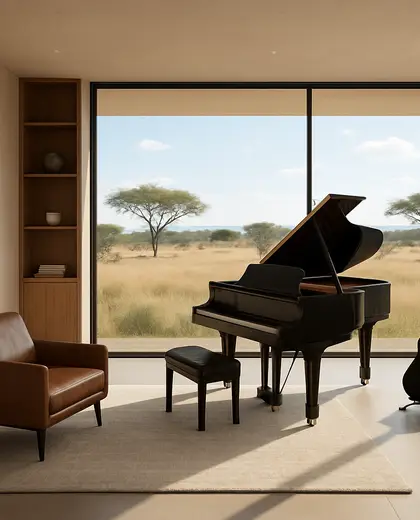
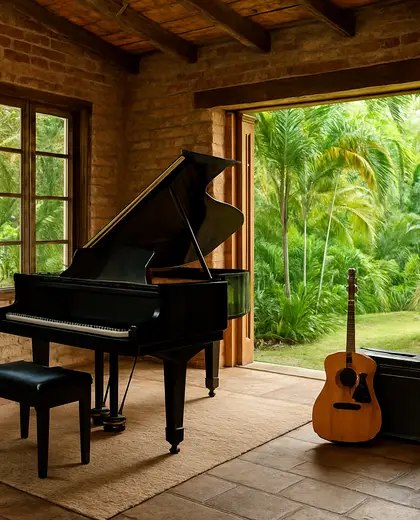
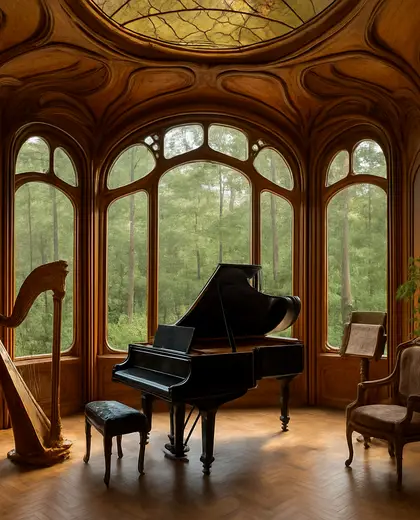
A music room is built for sound control and focused use, so it usually relies on dense materials, soft finishes, and limited visual clutter. Common elements include acoustic wall treatment, carpet or rug coverage, thick curtains, built-in storage for instruments, and seating arranged around the performance area. The palette often stays calm and layered, with wood, charcoal, cream, deep green, or muted blue.
- music room
— References
References to explore

Do I need special acoustic treatment in a music room?
Usually yes, if you want better sound quality and less noise transfer. The amount depends on whether the room is for practice, listening, recording, or casual use.

What flooring works best in a music room?
Carpet is often the quietest option, while wood or engineered wood can work well if you add rugs and acoustic treatment. Hard surfaces without soft layers tend to create more echo.

Can a music room also be a family room or office?
Yes, if the layout allows for storage, flexible seating, and enough acoustic softening. It is easier when instruments, cables, and accessories can be concealed or built in.





— The style
What defines it
Wood panels, acoustic felt, fabric upholstery, carpet, cork, and heavy drapery are common because they help soften sound and reduce echo.
Neutral or subdued tones work best: warm wood, off-white, gray, black, navy, forest green, and other low-glare finishes.
It often combines with a lounge, library, study, or media room, especially when the space needs to serve both listening and instrument storage.
— Professionals
Who has already built it
- john allegrettiarchitects · 6 projectsView profile →
- pfuner designinterior designers · 11 projectsView profile →
- Karavaan Homefurniture sellers · High Point · 4 projectsView profile →
- jacob galleslandscape designers · 6 projectsView profile →
— Questions
Frequently asked questions
Do I need special acoustic treatment in a music room?
Usually yes, if you want better sound quality and less noise transfer. The amount depends on whether the room is for practice, listening, recording, or casual use.
What flooring works best in a music room?
Carpet is often the quietest option, while wood or engineered wood can work well if you add rugs and acoustic treatment. Hard surfaces without soft layers tend to create more echo.
Can a music room also be a family room or office?
Yes, if the layout allows for storage, flexible seating, and enough acoustic softening. It is easier when instruments, cables, and accessories can be concealed or built in.