— Ideas & inspiration
Study composition
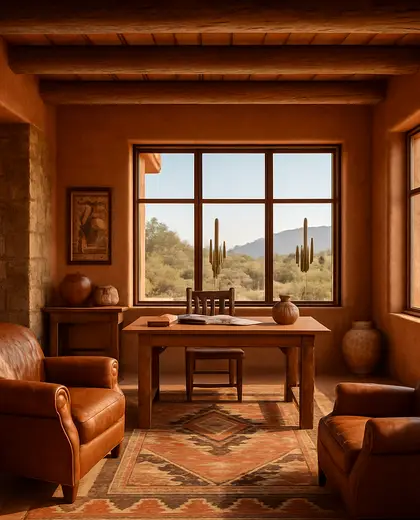
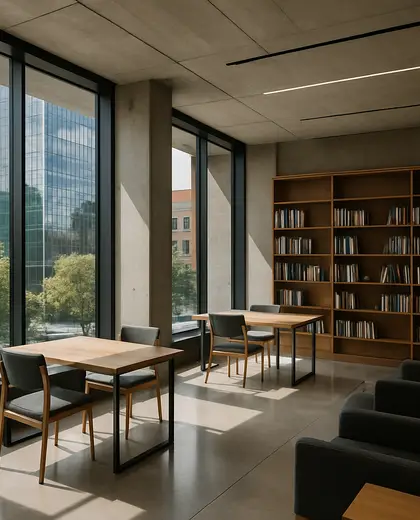
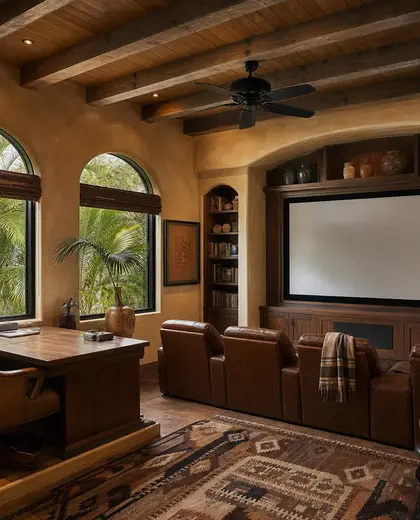
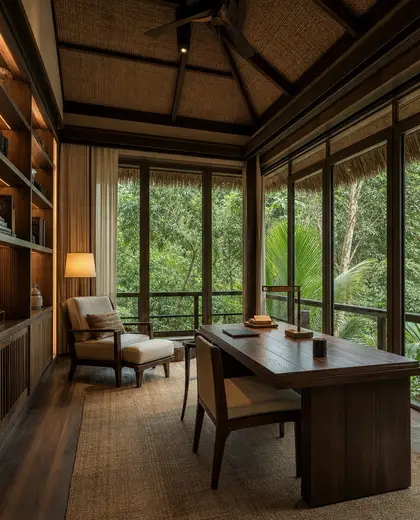
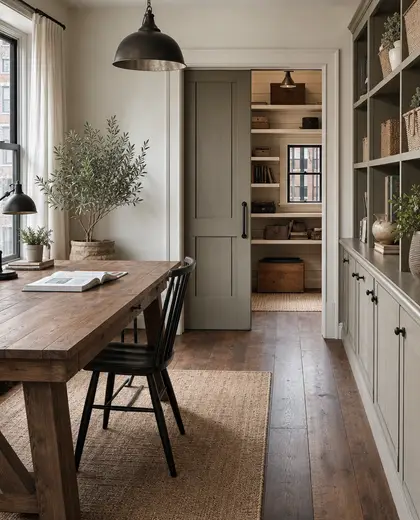
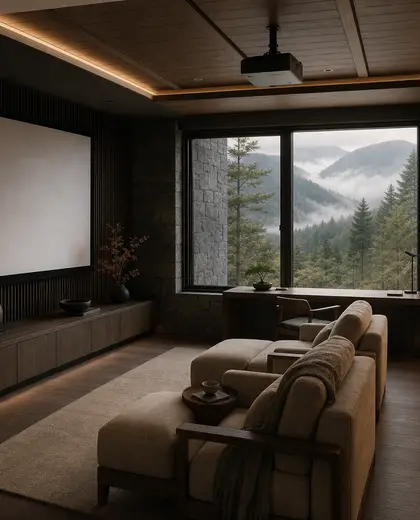
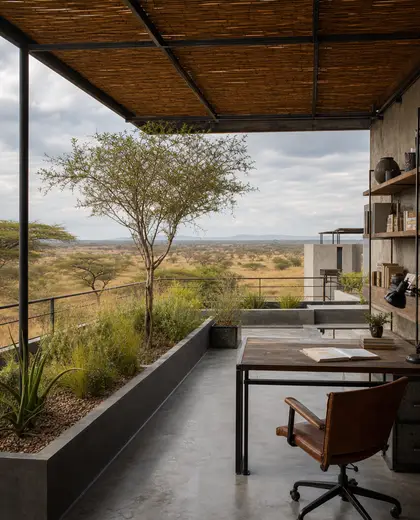
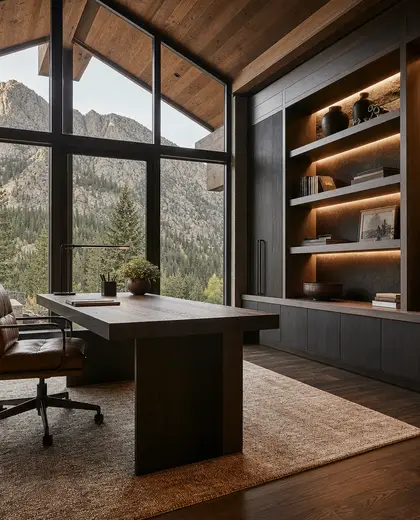
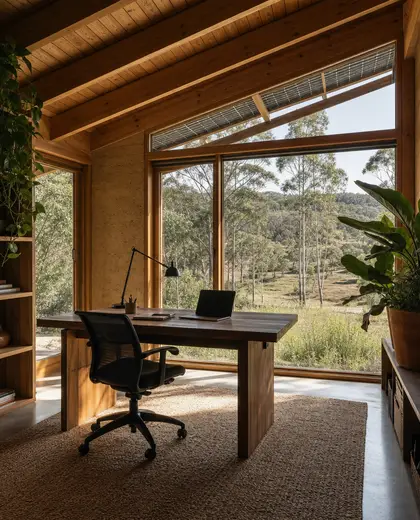
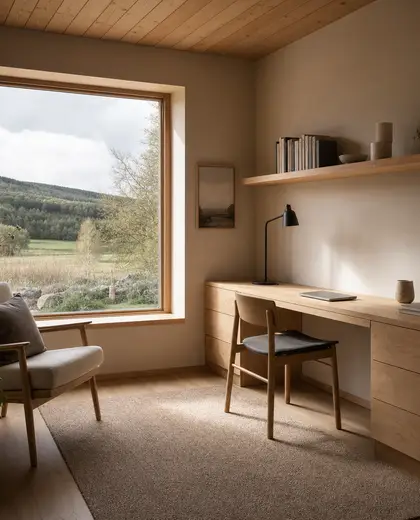
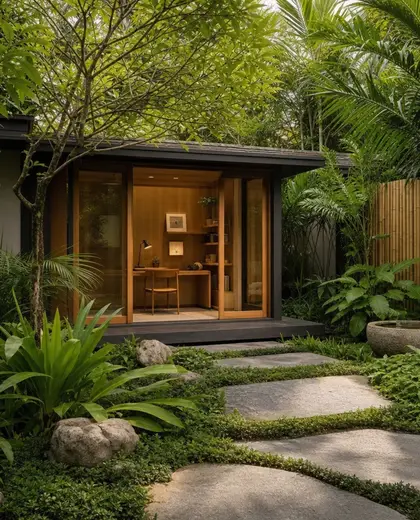
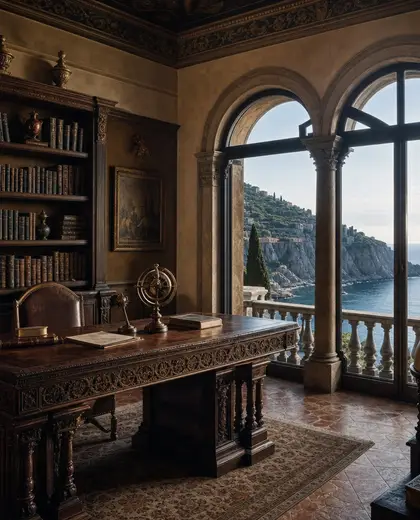
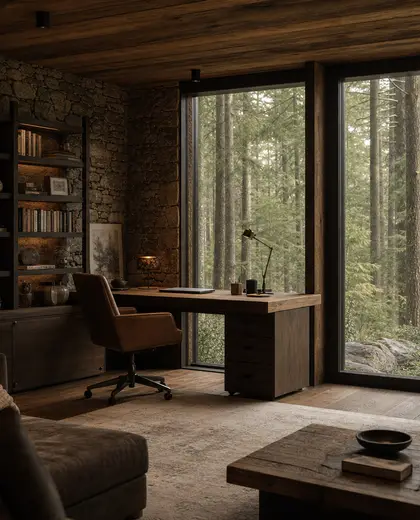
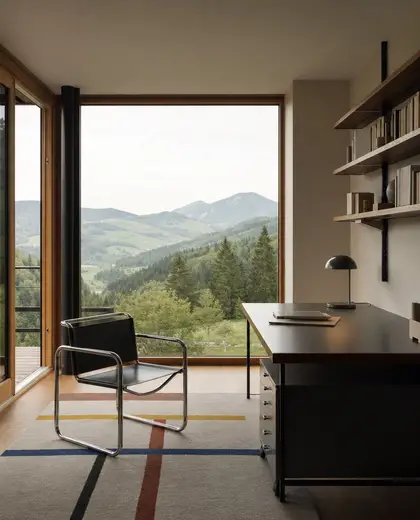
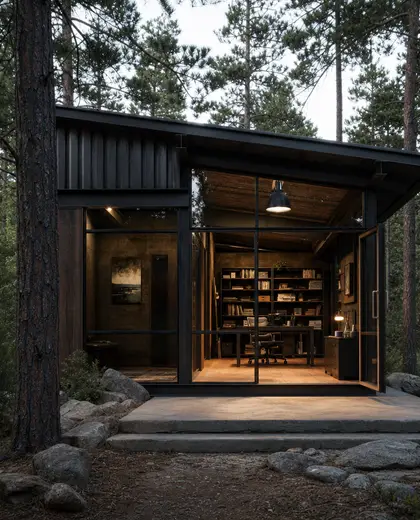
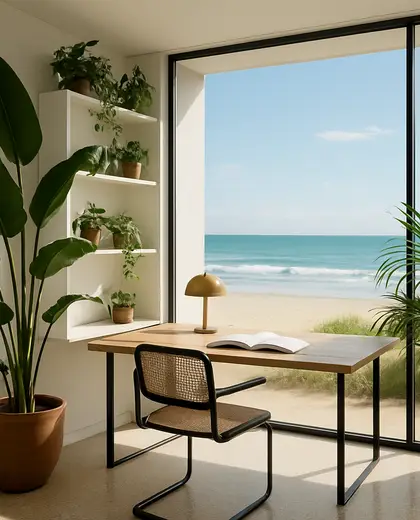
A study composition is defined by a calm, focused interior arranged for reading, working, and concentrated use. It often pairs built-in shelving or a desk with wood, stone, and matte painted surfaces, using a restrained palette of warm neutrals, deep greens, greys, or ink tones. The look is usually quiet and functional, with controlled lighting, simple joinery, and few decorative interruptions.
- study

— References
References to explore

What makes a study composition different from a living room or office?
It is planned around concentration and storage, with clearer desk placement, more integrated shelving, and less emphasis on lounging or display.



Can a study composition work in a small room?
Yes. A wall-mounted desk, floor-to-ceiling shelves, and closed storage can create a study feel even in a compact space.

What should I avoid if I want a study to feel calm?
Avoid too many materials, bright gloss finishes, and cluttered open shelving; the composition works best when the palette and joinery stay restrained.




— The style
What defines it
Wood, veneer, painted joinery, stone or engineered stone tops, metal details, and acoustic textiles are common.
Warm white, beige, tobacco, olive, charcoal, and muted blue are typical, with low-contrast finishes.
Often paired with library shelving, a reading chair, task lighting, concealed storage, and compact millwork.
— Professionals
Who has already built it


- Karavaan Homefurniture sellers · High Point · 4 projectsView profile →
— Questions
Frequently asked questions
What makes a study composition different from a living room or office?
It is planned around concentration and storage, with clearer desk placement, more integrated shelving, and less emphasis on lounging or display.
Can a study composition work in a small room?
Yes. A wall-mounted desk, floor-to-ceiling shelves, and closed storage can create a study feel even in a compact space.
What should I avoid if I want a study to feel calm?
Avoid too many materials, bright gloss finishes, and cluttered open shelving; the composition works best when the palette and joinery stay restrained.