— Ideas & inspiration
Wine cellar composition
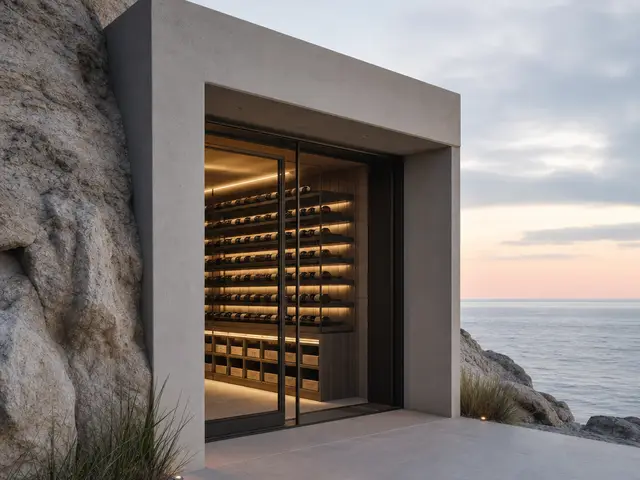
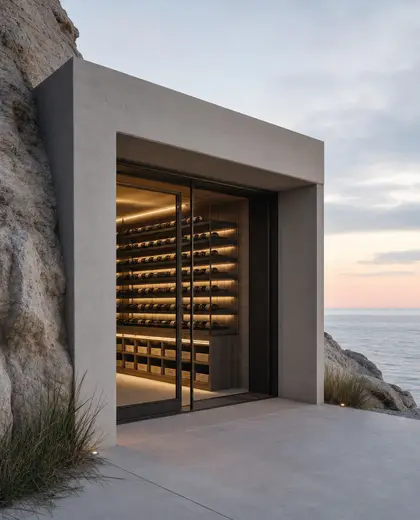
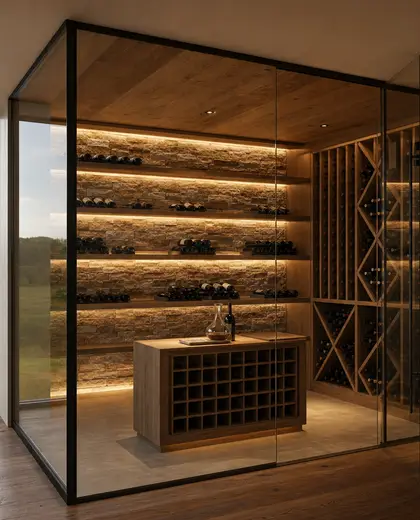
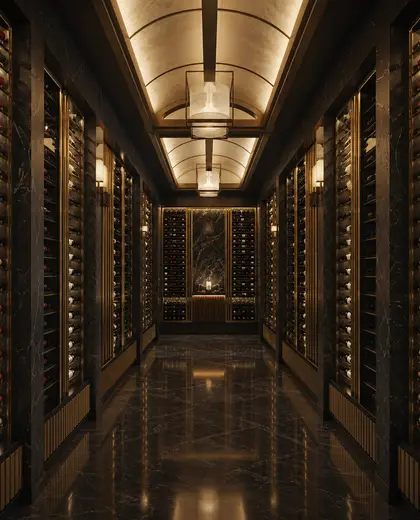
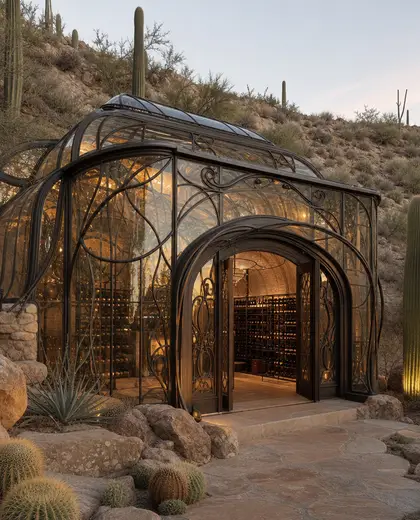
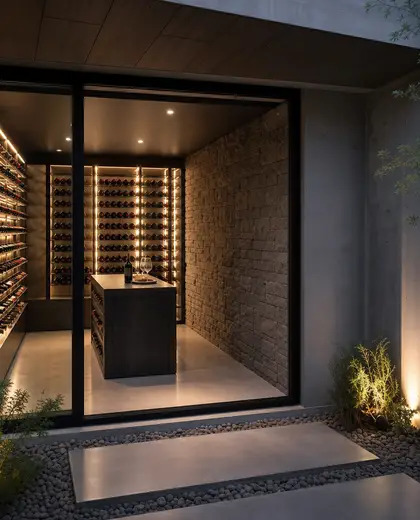
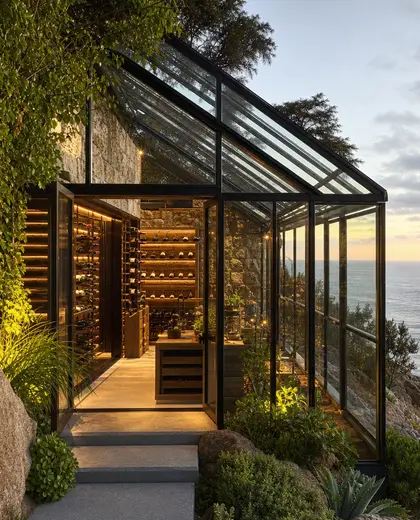
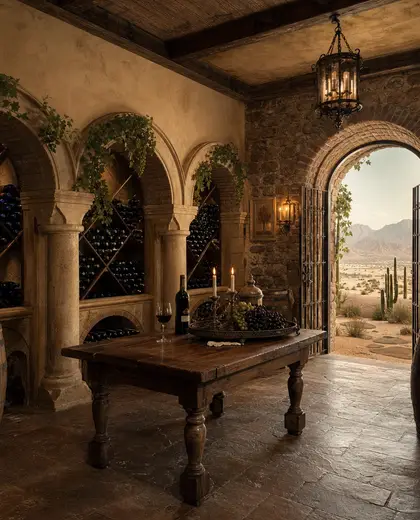
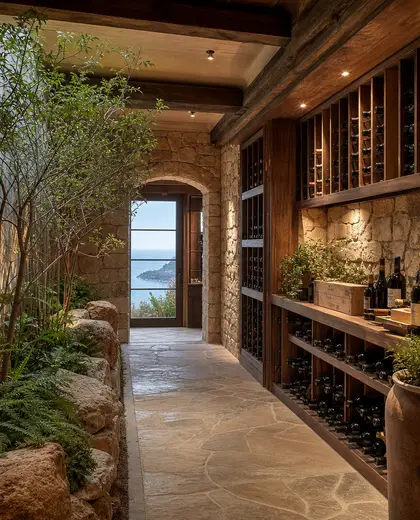
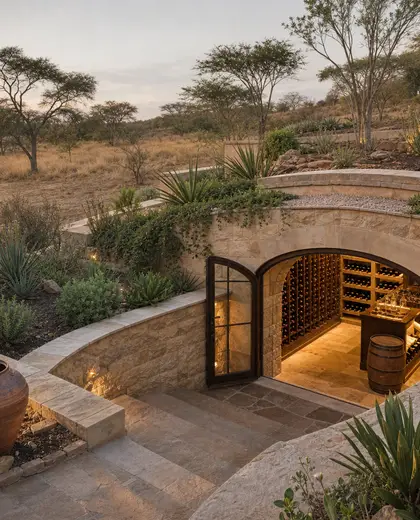
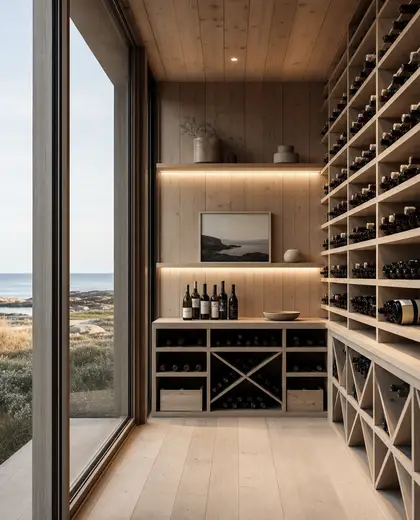
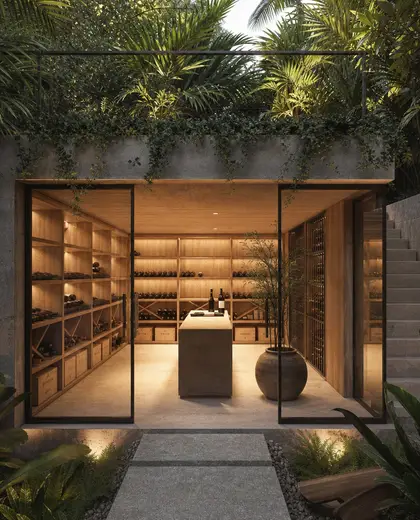
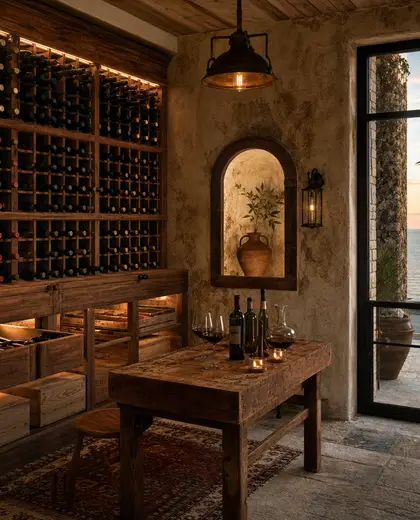
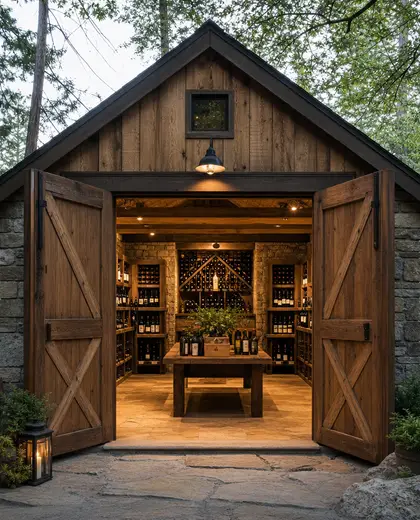
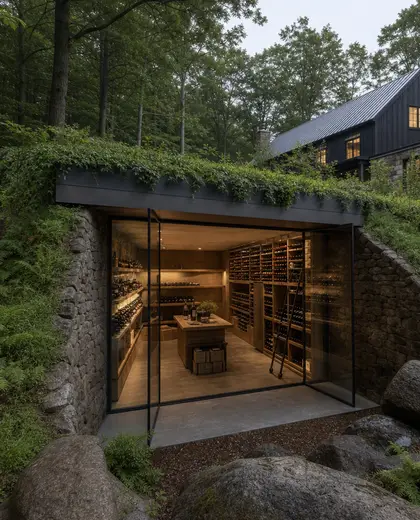
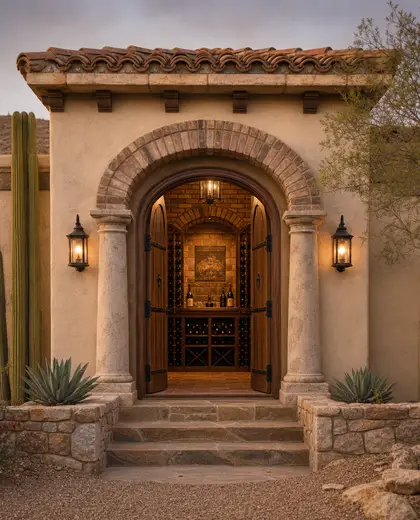
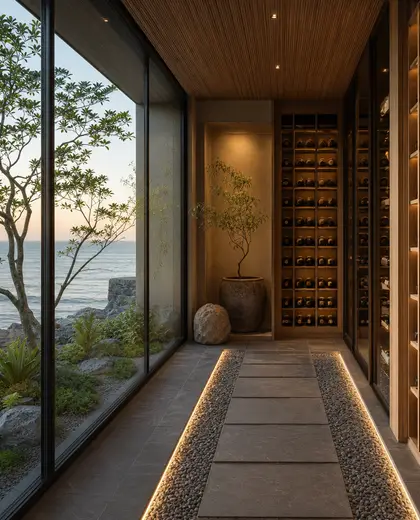
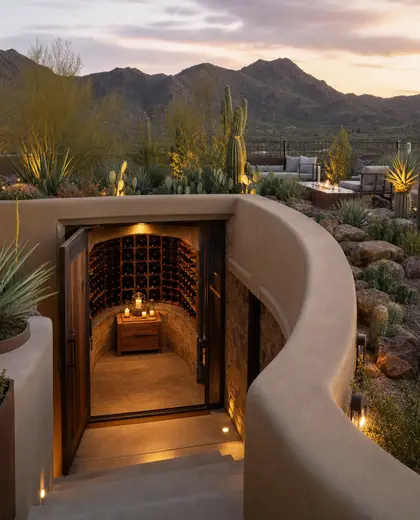
A wine cellar composition is defined by controlled storage conditions paired with built-in shelving or racks for bottles, often organized around wood, stone, metal, or sealed masonry finishes. The palette is usually restrained and cool, with dark timber, charcoal, beige stone, and low-glare lighting that keeps the room calm and functional. Typical defining elements include temperature control, humidity stability, display storage, and a tasting counter or compact table when space allows.
- wine cellar
— References
References to explore
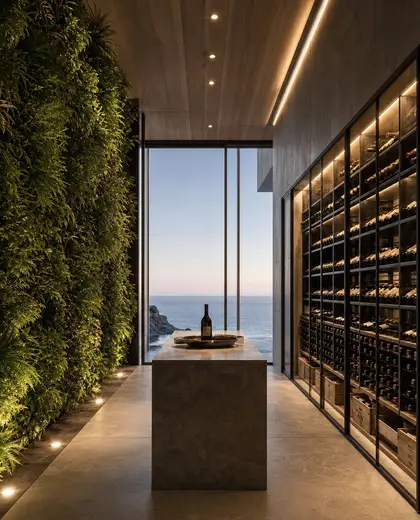
Do I need a fully enclosed room for a wine cellar?
Not always. A dedicated room is ideal, but a conditioned niche, under-stair space, or basement zone can work if temperature and humidity are properly controlled.
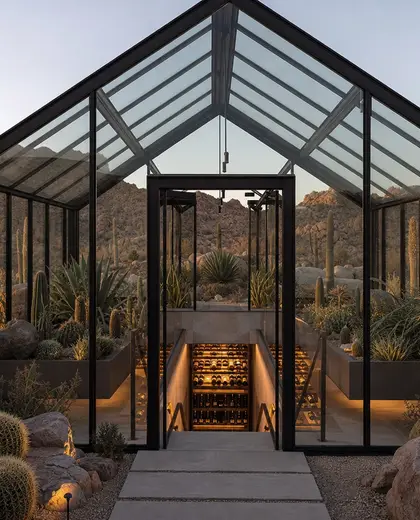
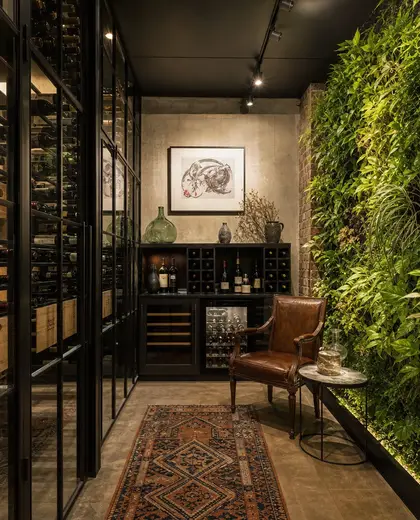
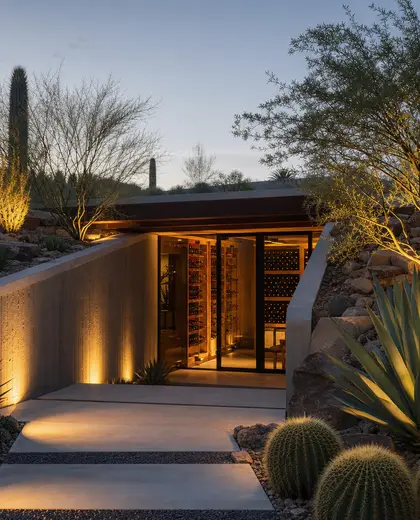
What is the most important design feature for storing wine?
Stable climate is the priority. Shelving, finishes, and lighting matter too, but temperature, humidity, and vibration control are the main performance requirements.
Can a wine cellar look modern instead of traditional?
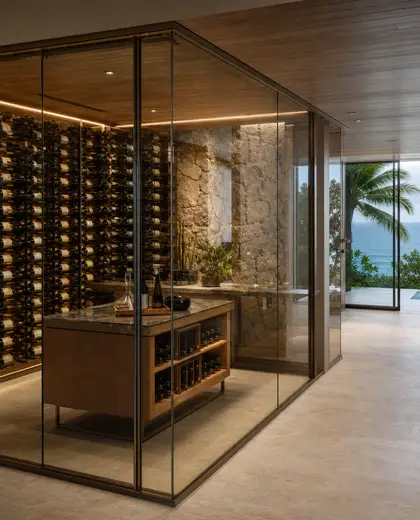
Yes. Modern wine cellars often use clean-lined metal racking, glass fronts, minimal joinery, and darker neutral finishes for a more architectural look.
— The style
What defines it
Common materials include oak or walnut shelving, stone or concrete floors, metal bottle racks, glass doors, and moisture-resistant wall finishes.
The palette tends to be deep and muted: warm wood tones, blackened steel, slate, taupe, and soft ambient lighting.
Wine cellars often connect with dining rooms, basements, home bars, kitchens, and tasting areas with seating and display storage.
— Professionals
Who has already built it
- Karavaan Homefurniture sellers · High Point · 4 projectsView profile →
- todd verwers architectsarchitects · San Diego · 6 projectsView profile →
- jacob galleslandscape designers · 6 projectsView profile →
- pfuner designinterior designers · 11 projectsView profile →
— Questions
Frequently asked questions
Do I need a fully enclosed room for a wine cellar?
Not always. A dedicated room is ideal, but a conditioned niche, under-stair space, or basement zone can work if temperature and humidity are properly controlled.
What is the most important design feature for storing wine?
Stable climate is the priority. Shelving, finishes, and lighting matter too, but temperature, humidity, and vibration control are the main performance requirements.
Can a wine cellar look modern instead of traditional?
Yes. Modern wine cellars often use clean-lined metal racking, glass fronts, minimal joinery, and darker neutral finishes for a more architectural look.