SketchPOLin the studio
Polygon in the tile editor
Polygon draws a regular polygon of 3 to 64 sides inside a pattern's tile, about a center or on one of its sides. About a center, the pointer gives a corner, or the middle of a side when the polygon is drawn around a circle.
What it is
Polygon draws a regular polygon: every side the same length, every angle the same. It starts as a square, inscribed. You can draw it about a center, the pointer giving a corner (inscribed) or the middle of a side (circumscribed), or on one side, from that side's two ends. The polygon is one closed joint, and it must stand whole inside the tile.
It is the same Polygon as in the other editors of the studio, acting here on the joints of the tile.
When to use it
- To draw a hexagon for a honeycomb, an octagon for an octagon and dot floor, or a triangle.
- When you know the size of the circle the polygon fits in or around.
- When you know the length of one side, with the edge way.
The steps
Take the tool. Type
P,O,Lone after the other, or click Polygon on the bar. It shares its button with Circle, Circle by 2 points and Circle by 3 points. It starts with 4 sides, inscribed, each time you take it.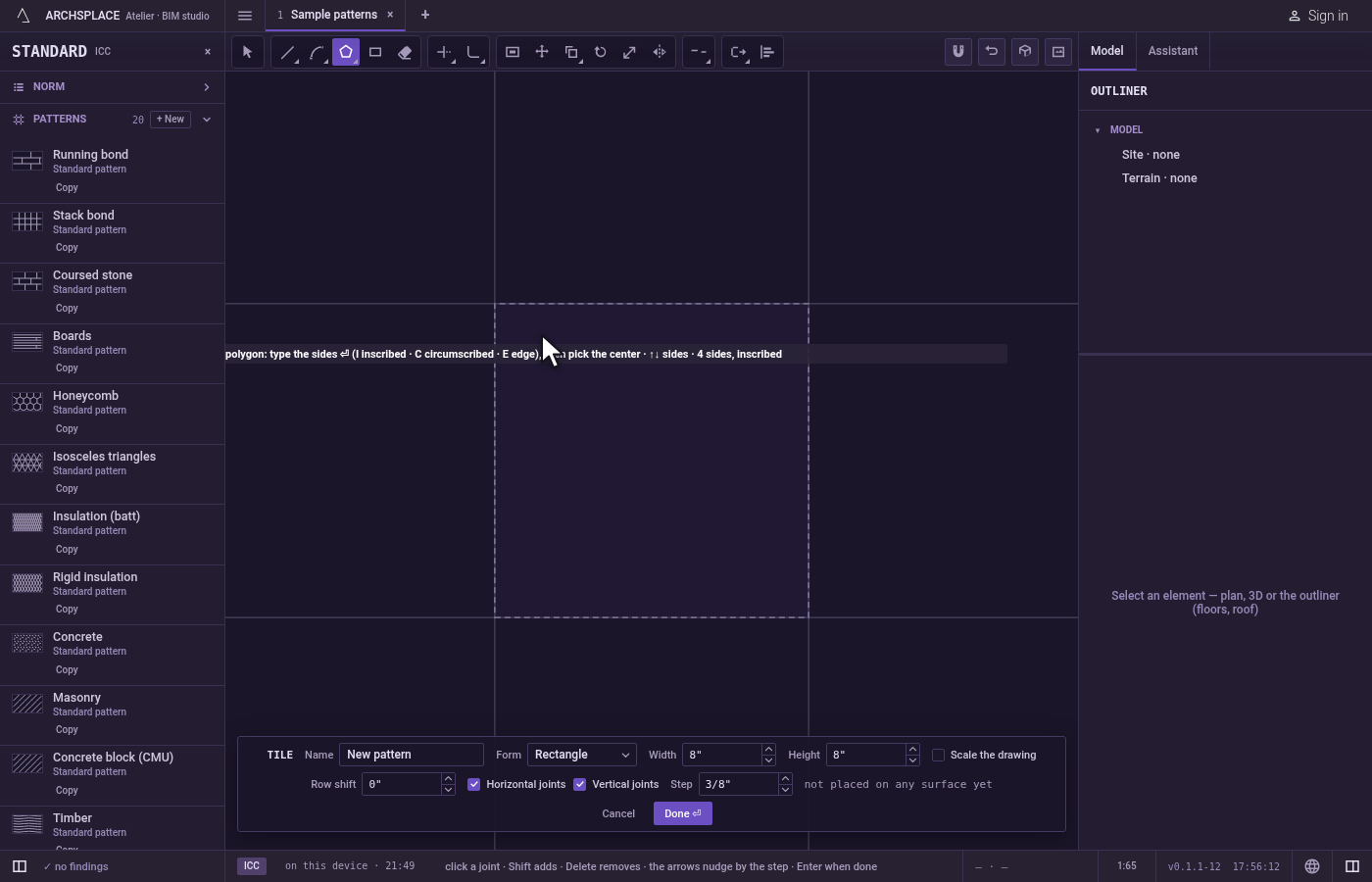
Set the sides and the way. Before the first click, type the number of sides and press
Enter. PressIfor inscribed (the pointer gives a corner),Cfor circumscribed (the pointer gives the middle of a side), orEto draw it on one side. The arrow keys up and down add or take away a side at any time, and the shape follows. The hint shows the sides and the way, for example 6 sides, inscribed.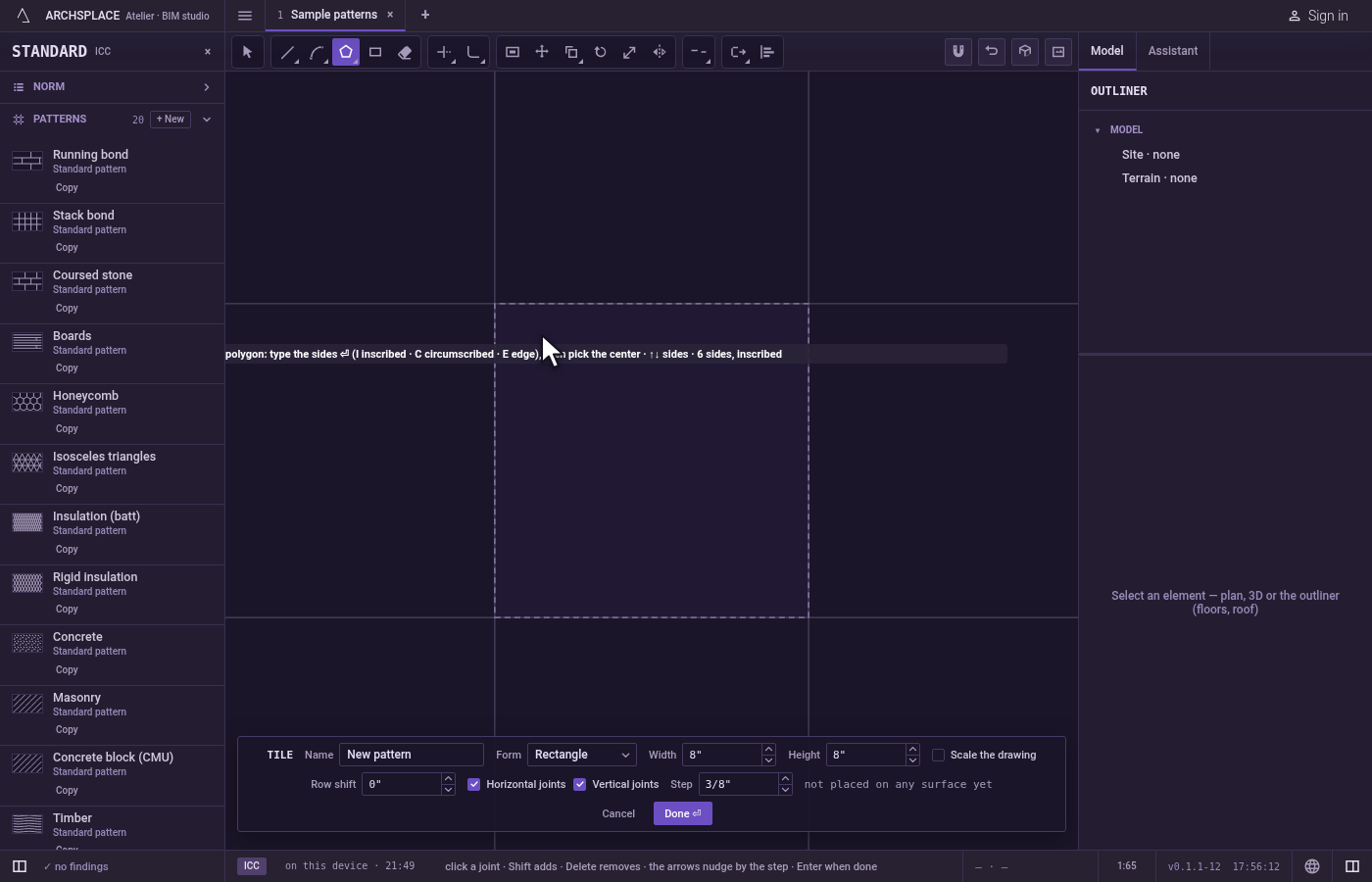
About a center: click the center, then the size. Click the center. Then click a corner (inscribed) or the middle of a side (circumscribed), or type that distance from the center and press
Enter: the polygon turns toward the pointer.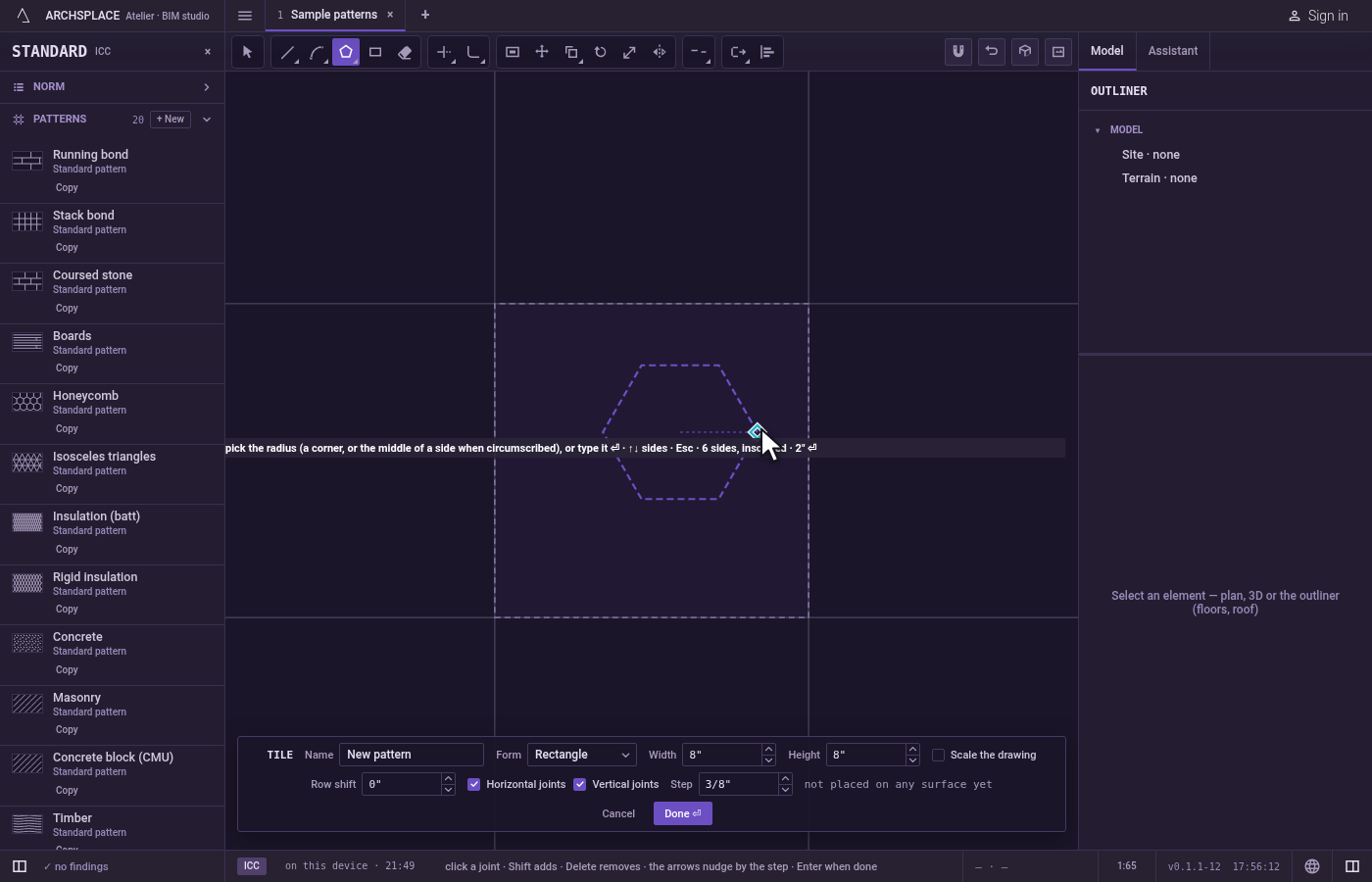
On a side: click its two ends. With
E, click one end of a side, then the other. The polygon stands on the left of that side, going from the first end to the second.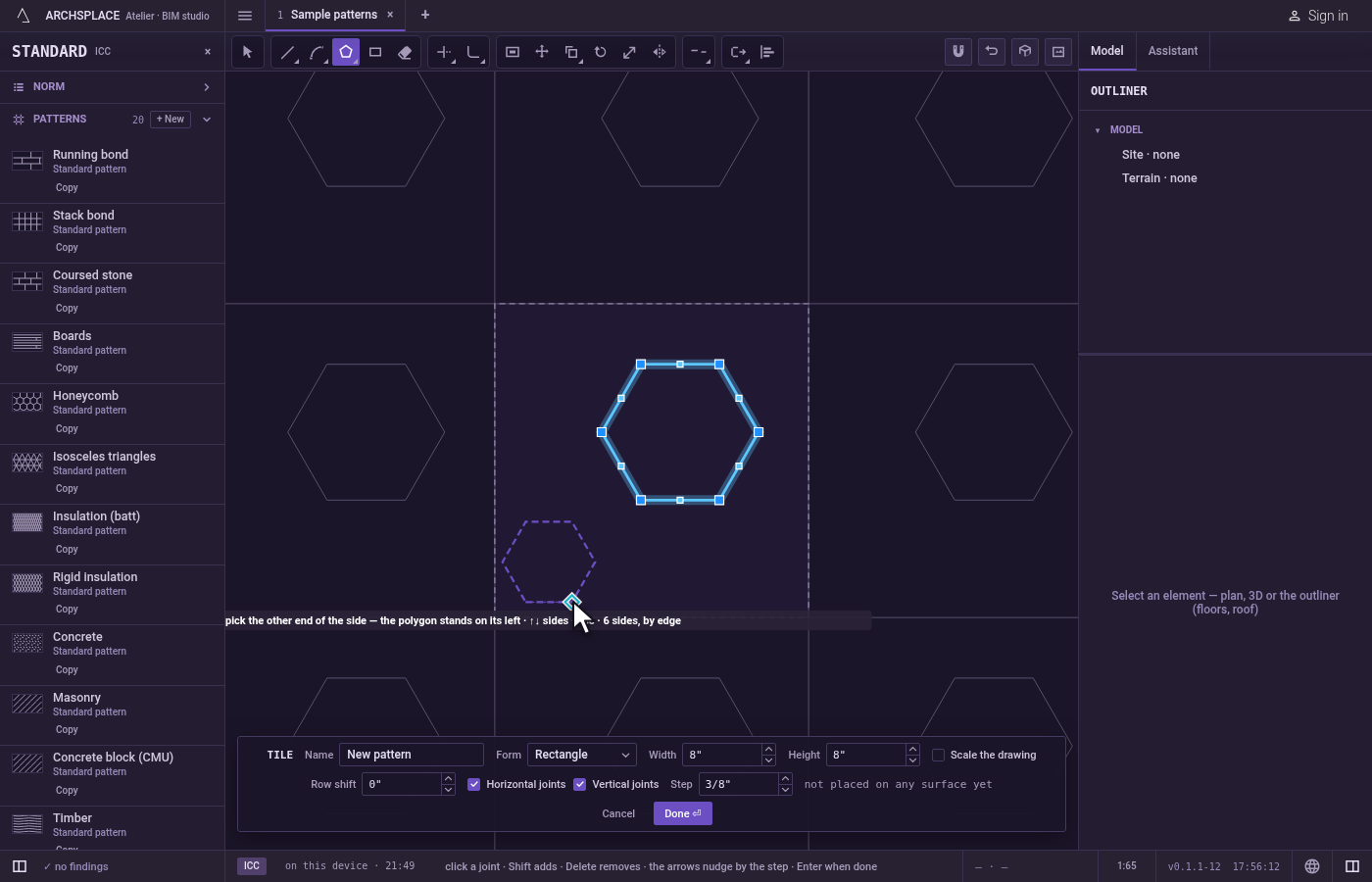
Draw the next one or finish. The polygon stands, selected, and the tool waits for the next one.
Escapedrops the point you placed, then leaves Polygon for Select.Ctrl+Zundoes the last polygon. Press Done on the bar at the foot to hand the tile back.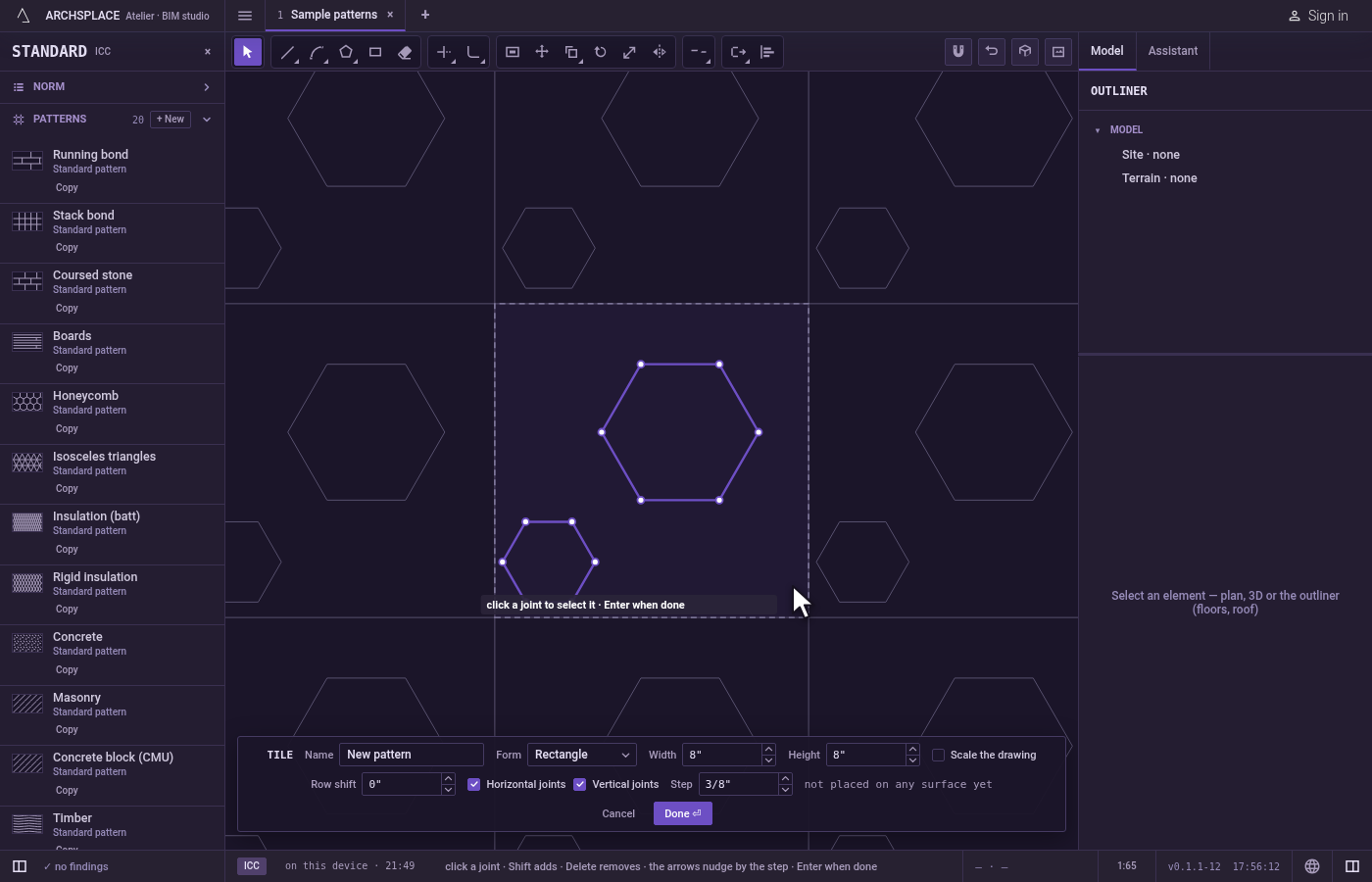
What it refuses
- Too few or too many sides. A polygon has 3 to 64 sides, and any other number is refused in those words.
- A polygon that leaves the tile. If any part of it would stand outside the tile, nothing is drawn, and the editor says a shape must stay inside the module.
- A size of nothing. A second click on the center, or two ends of a side that are one point, make no shape, and the hint says that point makes no shape.
- The editor's other keys before the first click. While Polygon waits for its first point,
I,CandEbelong to it, so they do not open Circle or Erase. Click those tools on the bar, or pressVfirst.
What it writes to the contract
Nothing while you work: the change stays in the tile editor, where Ctrl+Z steps back through it. When you press Done, the whole tile is written to the project's patterns in one step you can undo, every joint as its points in metres from the tile's lower-left corner. A polygon is stored as one closed joint, its corners in order. A standard pattern is never changed: Done saves the project's own version of it under the same name, and every surface that lays it follows. Save as new writes a new pattern instead. Cancel writes nothing.
Related
Common questions
How do I draw a hexagon?
Take Polygon, type 6 and press Enter, click the center, then click a corner or type the distance from the center to a corner and press Enter.
What is the difference between inscribed and circumscribed?
Inscribed, the pointer gives a corner, so the polygon fits inside the circle you point. Circumscribed (C), the pointer gives the middle of a side, so the polygon wraps around that circle.
How do I draw a polygon from the length of one side?
Press E before the first click, then click the two ends of one side. The polygon stands on the left of the side, going from the first end to the second.