SketchSCin the studio
Scale
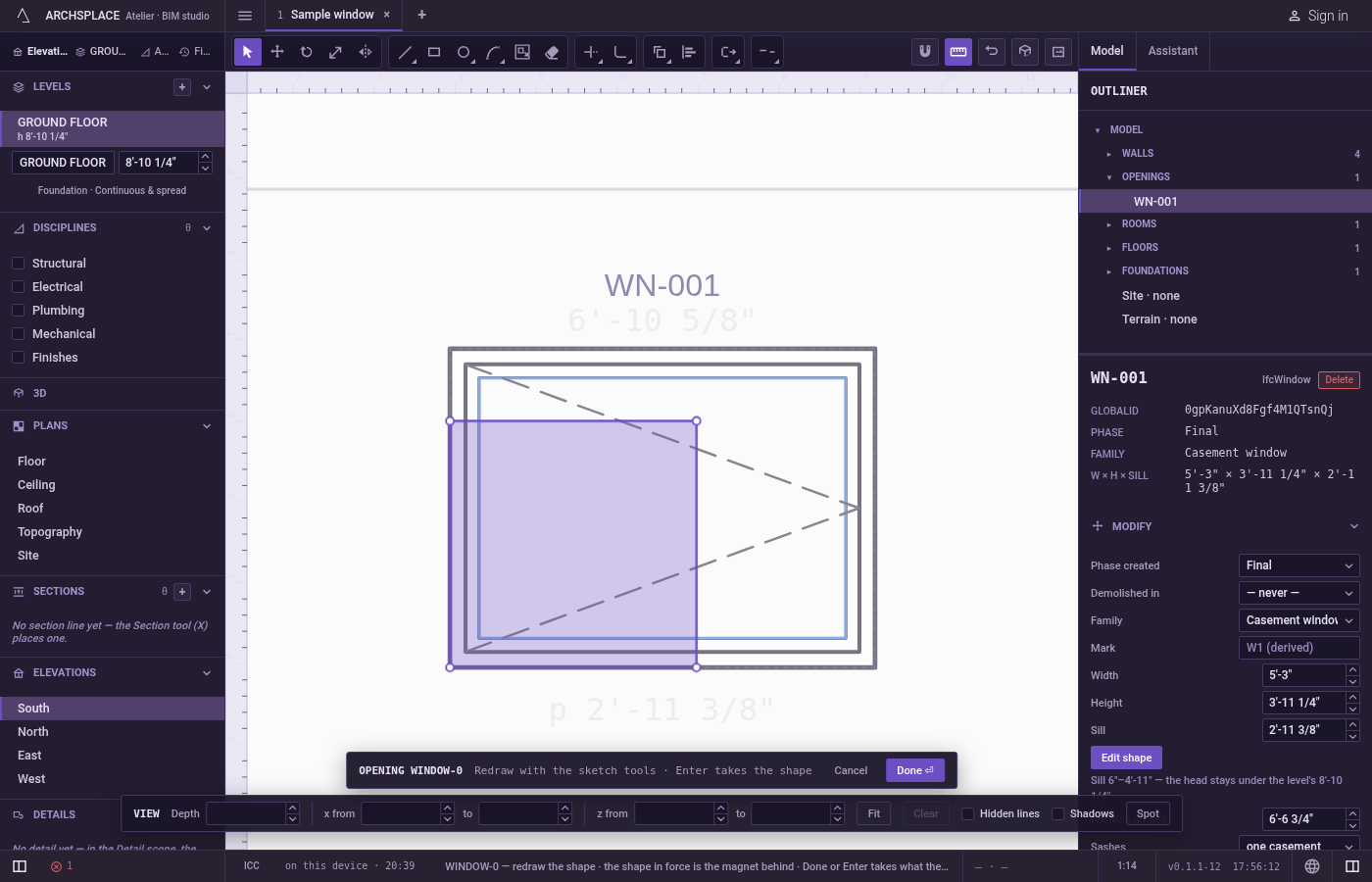
Scale grows or shrinks the lines and corners you hold in the sketch editor about a center, by the ratio between a reference distance and a new one you point at, or by a factor you type. With nothing in hand it scales the whole drawing, the same in every direction.
What it is
Scale makes what you hold in the sketch editor bigger or smaller about a center point, the same amount in every direction. The amount is a ratio: the distance from the center to a reference point you click counts as one, and the distance to the point you click next is the new size. You can type the factor instead. With nothing in hand, the whole drawing scales. Curves keep their shape, only larger or smaller.
Holding Ctrl (⌘ on a Mac) on the last click keeps the original and adds the scaled copy.
When to use it
- Fitting a shape to a size you can point at, such as making an arch reach the edge of the wall opening behind it.
- Scaling a whole outline by a known factor.
- Making a larger or smaller second outline, with
Ctrlheld.
The steps
Choose what to scale. In the sketch editor (see Select for the ways in), take the lines and corners you want with Select, or take nothing to scale the whole drawing.
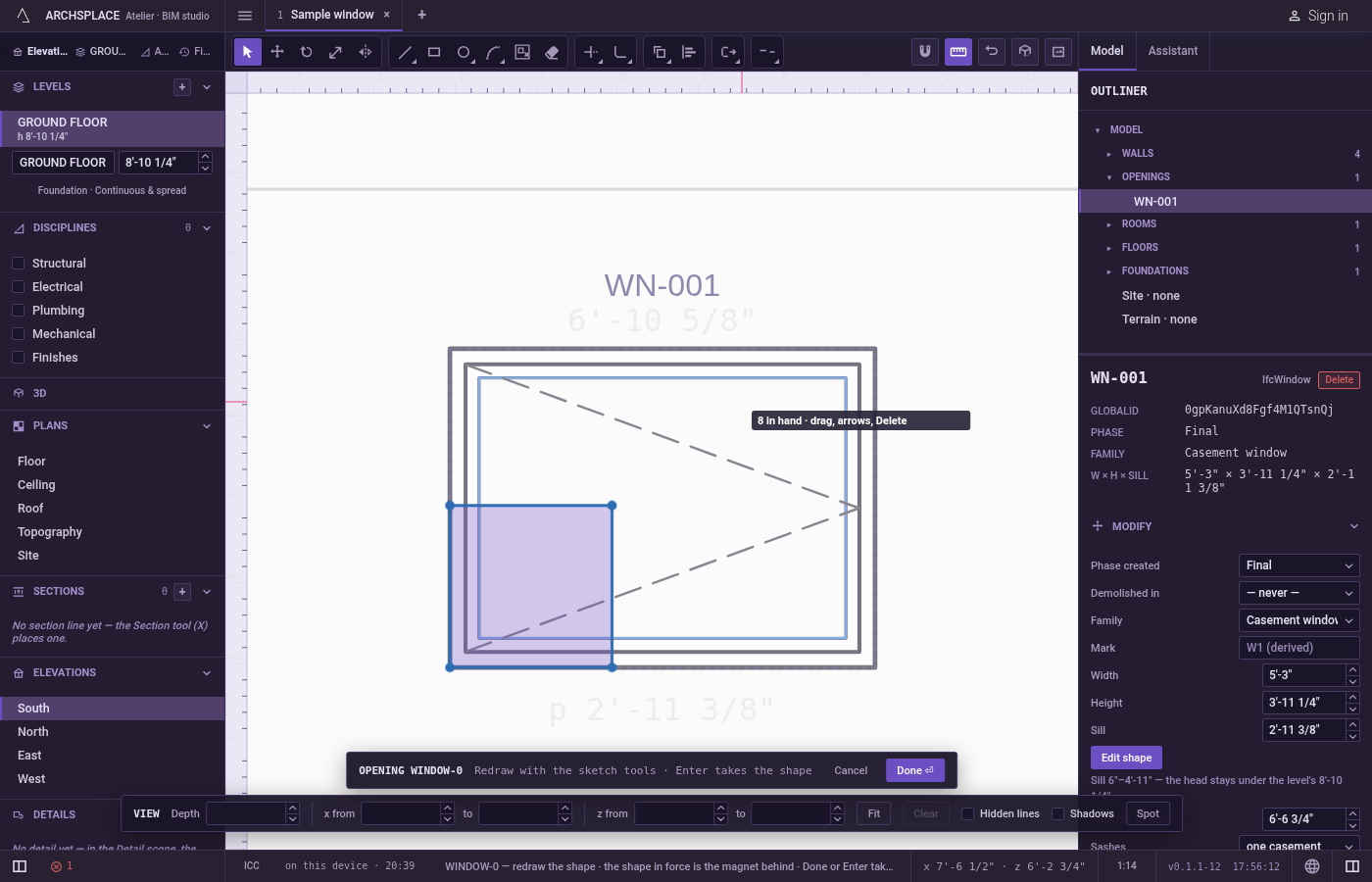
Arm Scale. Type
SthenCquickly (Salone opens Stretch, and theCswitches to Scale), or click Scale on the editor's toolbar. The hint at the cursor says to click the center, a reference, then the size, or to type a factor.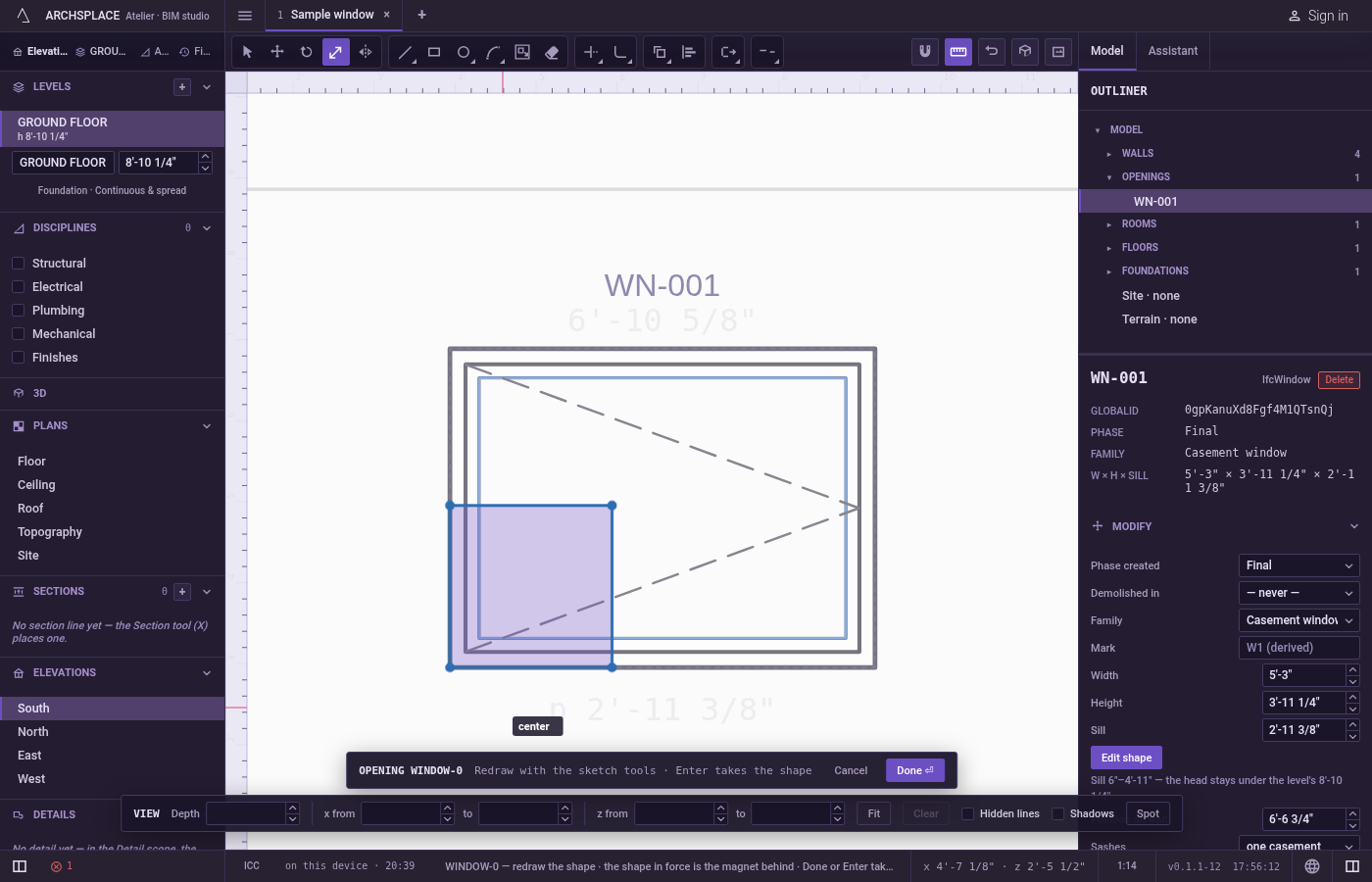
Click the center. It snaps to corners, middles, crossings, the dimmed shape in force and the lines of the view. This point stays where it is.
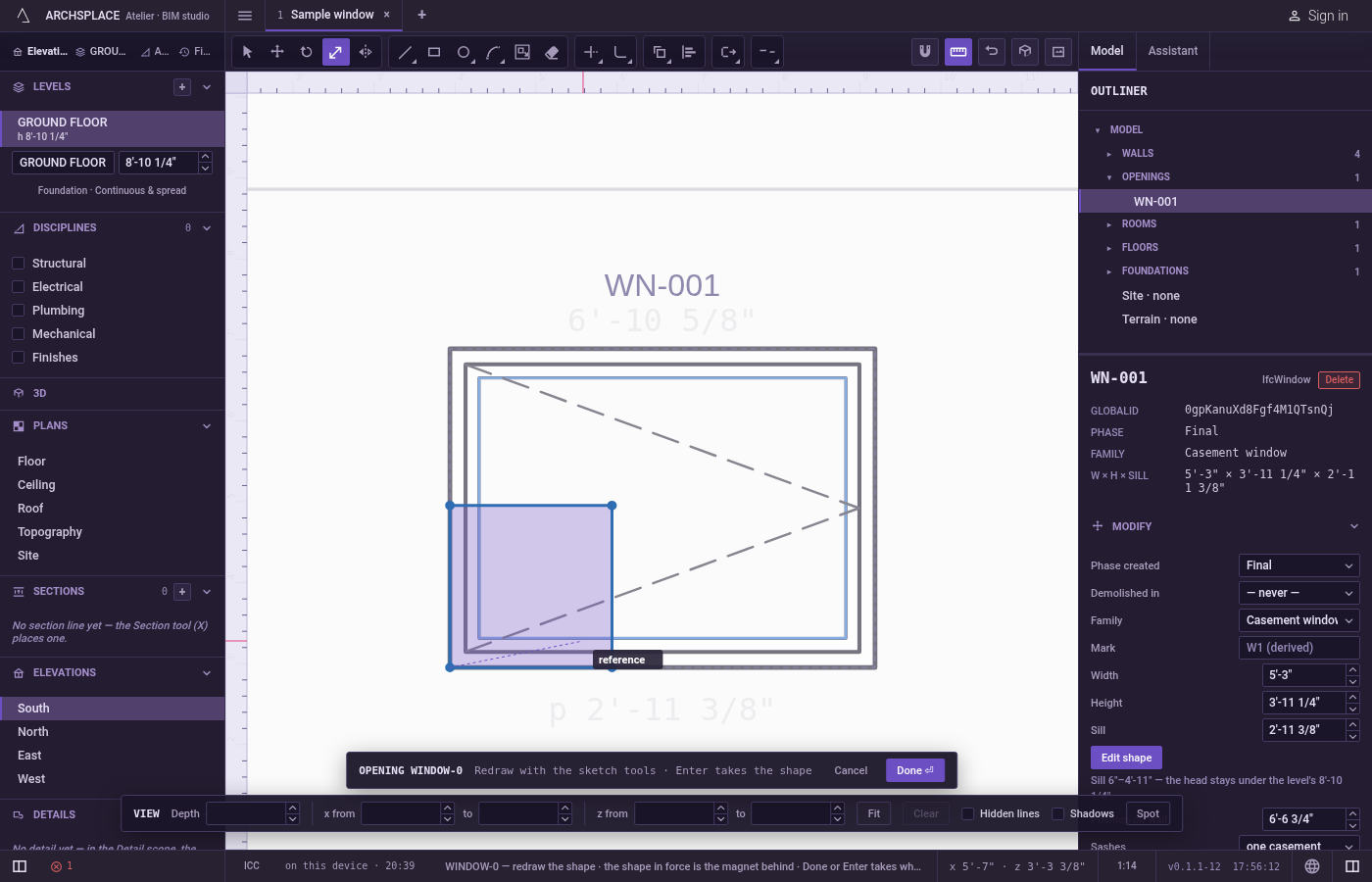
Click the reference. Its distance from the center is the size you start from: a factor of one.
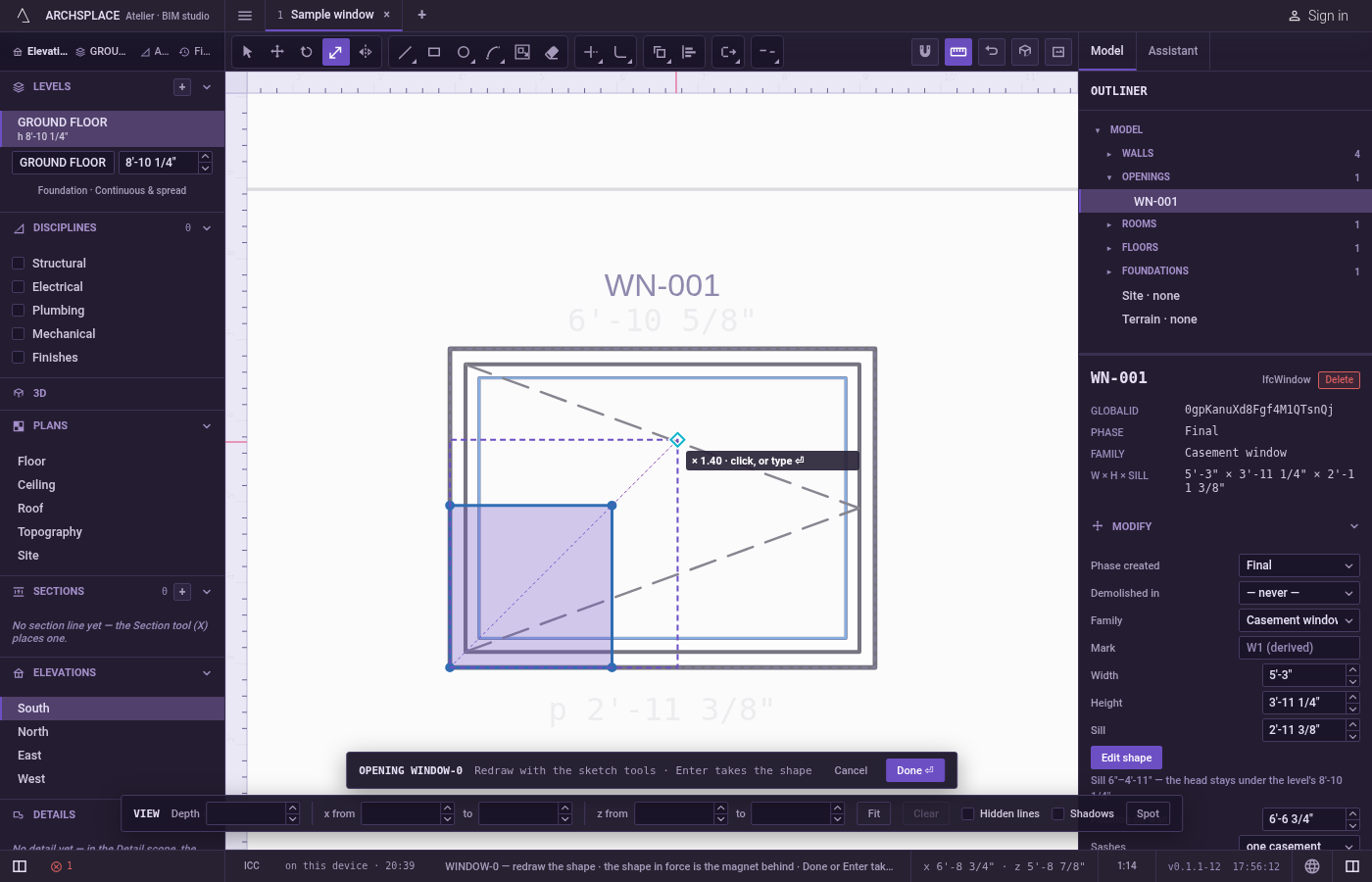
Click the new size, or type a factor. A preview follows the pointer and the hint shows the factor, such as × 1.25. Click to scale, with
Ctrlheld to keep the original. Or type the factor and pressEnter:2doubles,0.5halves.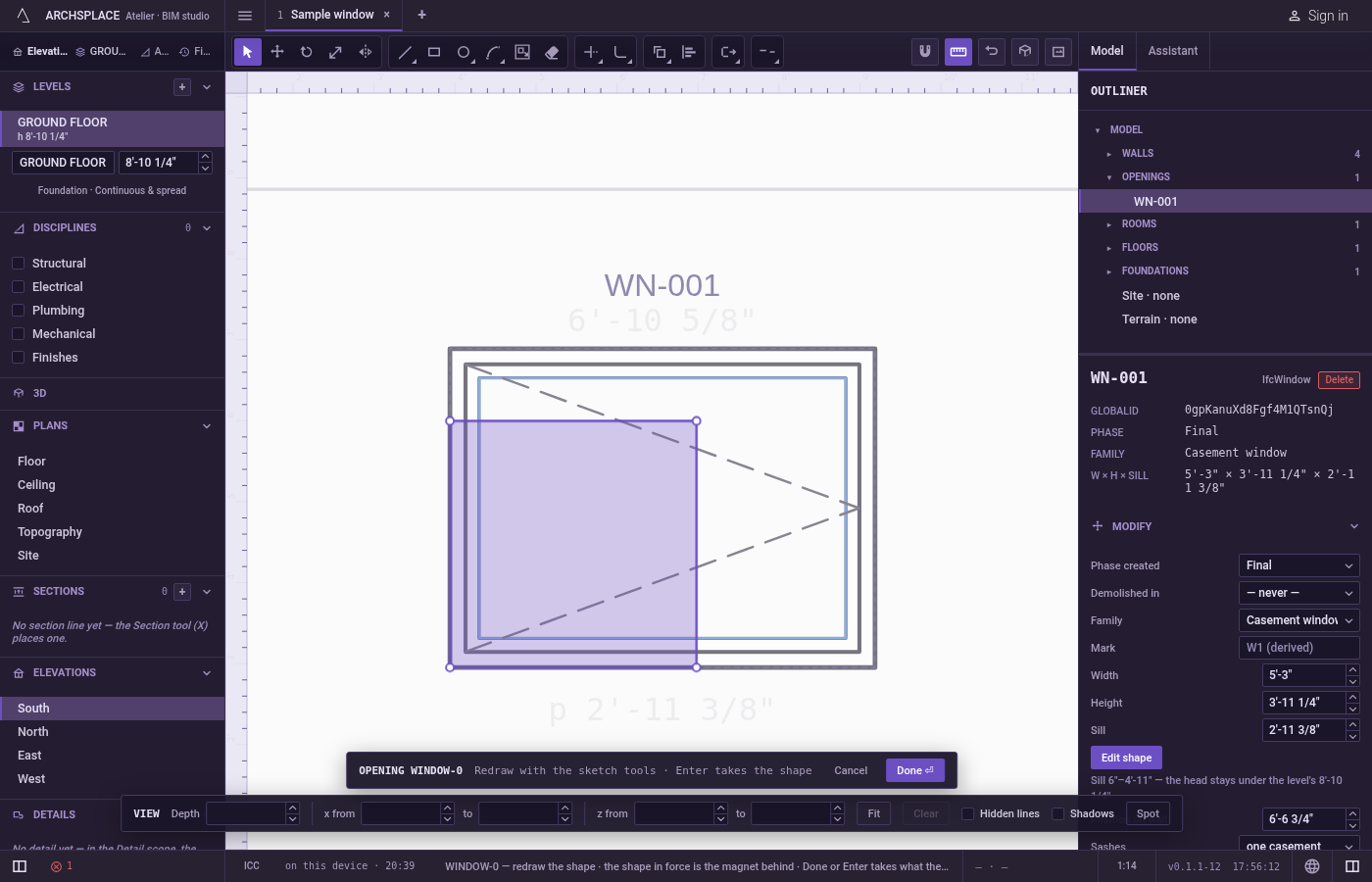
Carry on. Once scaled, the editor goes back to Select and lets go of what was held.
What it refuses
- A reference on the center. A click on the center for the reference does nothing; there would be no size to start from.
- A factor typed before the reference. Digits count once the center is set, but the factor is only taken after the reference. Typed earlier,
Enterdrops them. - A factor of zero or less. A typed
0or a negative number is dropped and nothing changes. - Scaling in one direction. Scale is always the same in both directions. Use Stretch to move one side only.
- A copy from a typed factor. A typed factor always scales the original.
- The shape in force. The dimmed shape behind your drawing never changes size.
- A bend on a curve with one end moved. A curve keeps its bend only when both its ends move. With only one end in hand, that side comes out straight.
Escape drops the points given, then lets go of what is held; with nothing left it closes the editor and drops the drawing.
What it writes to the contract
Nothing until you press Done. Scaling changes only the drawing inside the editor, where Ctrl+Z steps back through it. The contract changes when you press Done, or Enter with nothing in progress, as one step you can undo: what the lines enclose becomes the window's or door's profile, points [u, v] in meters across the wall and up from the floor, or the pattern area's outline in the room's floorAreas or ceilingAreas, points [x, y] in plan meters.
Each point taken moves away from or toward the center by the factor and is rounded to the millimeter. A curve's bulge does not change, because a scaled arc is the same arc, larger or smaller.
Common questions
How do I make my sketch exactly half as big?
Press S then C quickly, click the center, click a reference point, then type 0.5 and press Enter. The factor can only be typed once the reference is set.
How do I scale a shape so one side reaches a given point?
Click the center at one end of that side, click the other end as the reference, then click the point it should reach. The factor is the new distance from the center divided by the reference distance.
Can I stretch a shape in one direction only?
Not with Scale: it always scales the same in every direction. Use Stretch to move the corners on one side only.