SketchROin the studio
Rotate in the tile editor
Rotate turns the joints you choose inside a pattern's tile about a center you pick, by an angle you point or type in degrees. A reference angle lets you turn them from a direction they already have to a new one, and C keeps the originals.
What it is
Rotate turns joints about a center inside the tile. You choose the joints and the center, then point: the angle the pointer makes with the horizontal, measured from the center, is the turn. A ghost of the turned joints follows the pointer, and the hint shows the angle. A circle stays a circle and an arc stays an arc.
It is the same Rotate as in the other editors of the studio, acting here on the joints of the tile.
When to use it
- To turn a joint or a shape to a set angle, such as the 45 degrees of a herringbone.
- To line a joint up with another by its present direction, with the reference angle.
- To lay a turned copy beside the original.
The steps
Choose the joints. Select them before taking the tool, and Rotate uses them at once. Otherwise Rotate asks select objects: click joints to add them, or drag a box (to the right it takes what lies wholly inside, to the left what it touches),
Shifttakes a joint out,Fdraws a fence that takes every joint it crosses, andEnterends the choice.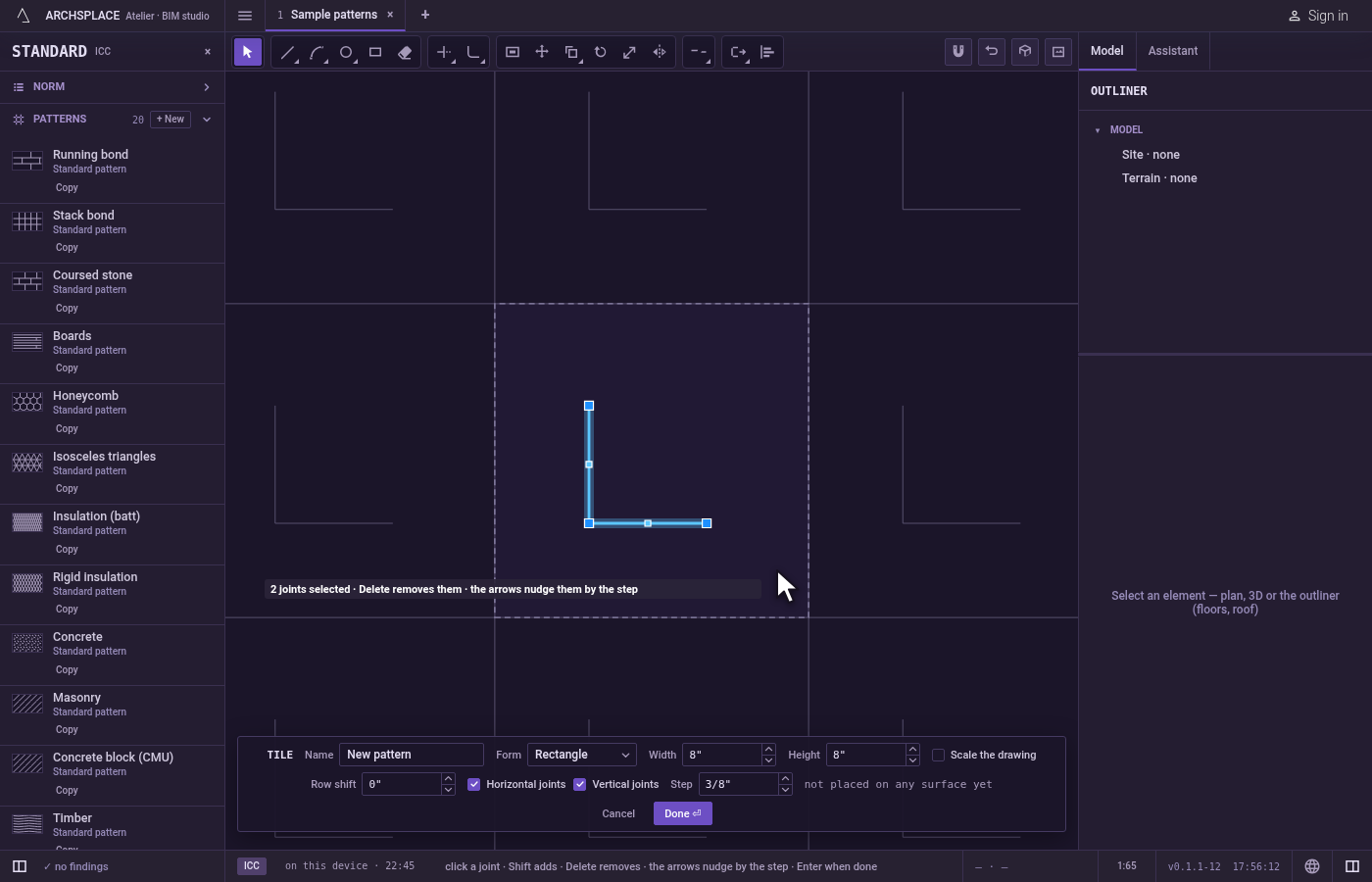
Take the tool. Type
RthenOone after the other, or click Rotate on the bar. TheRopens Rectangle for a moment, and theOcompletes Rotate.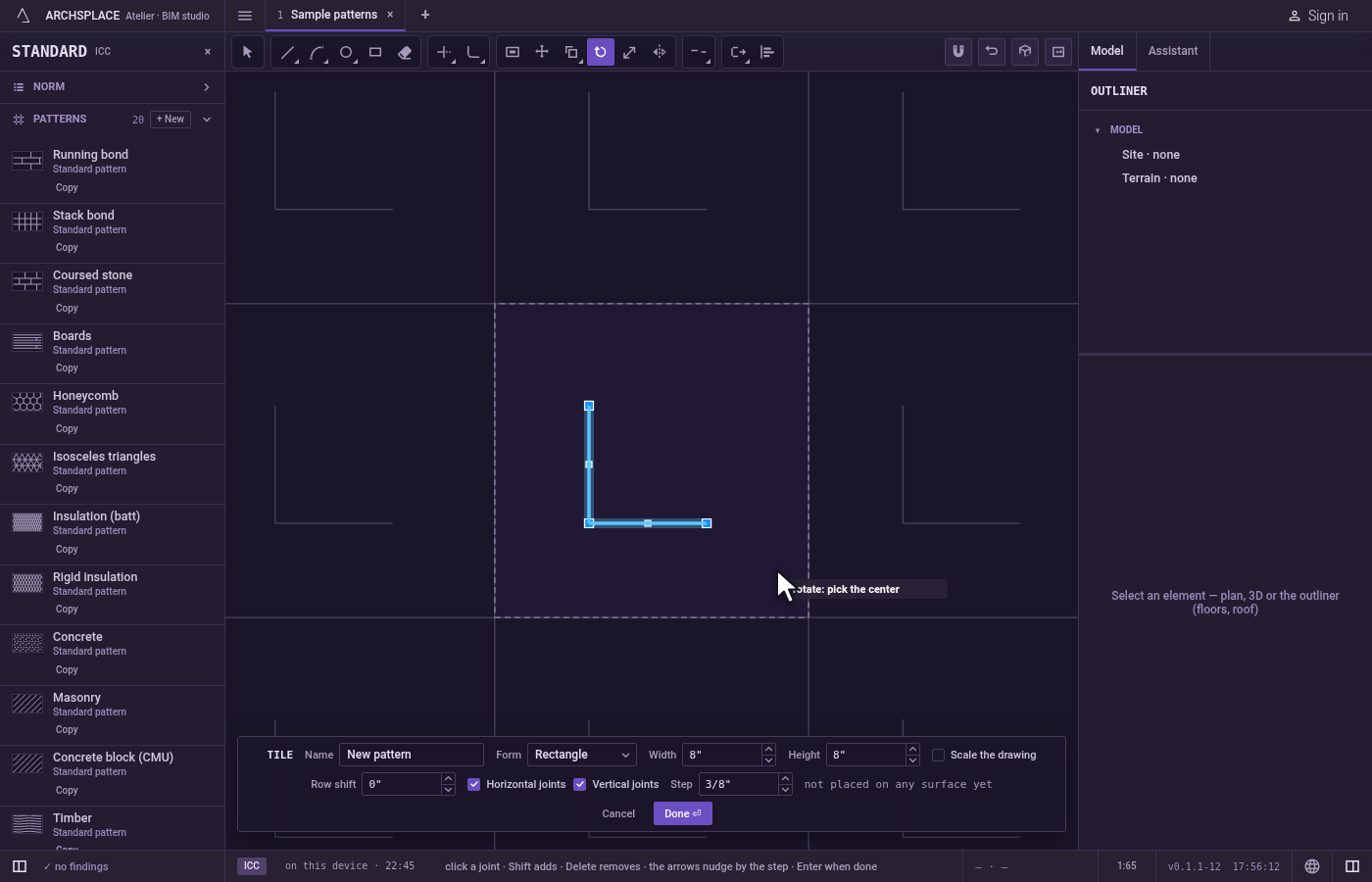
Pick the center. Click the point to turn about.
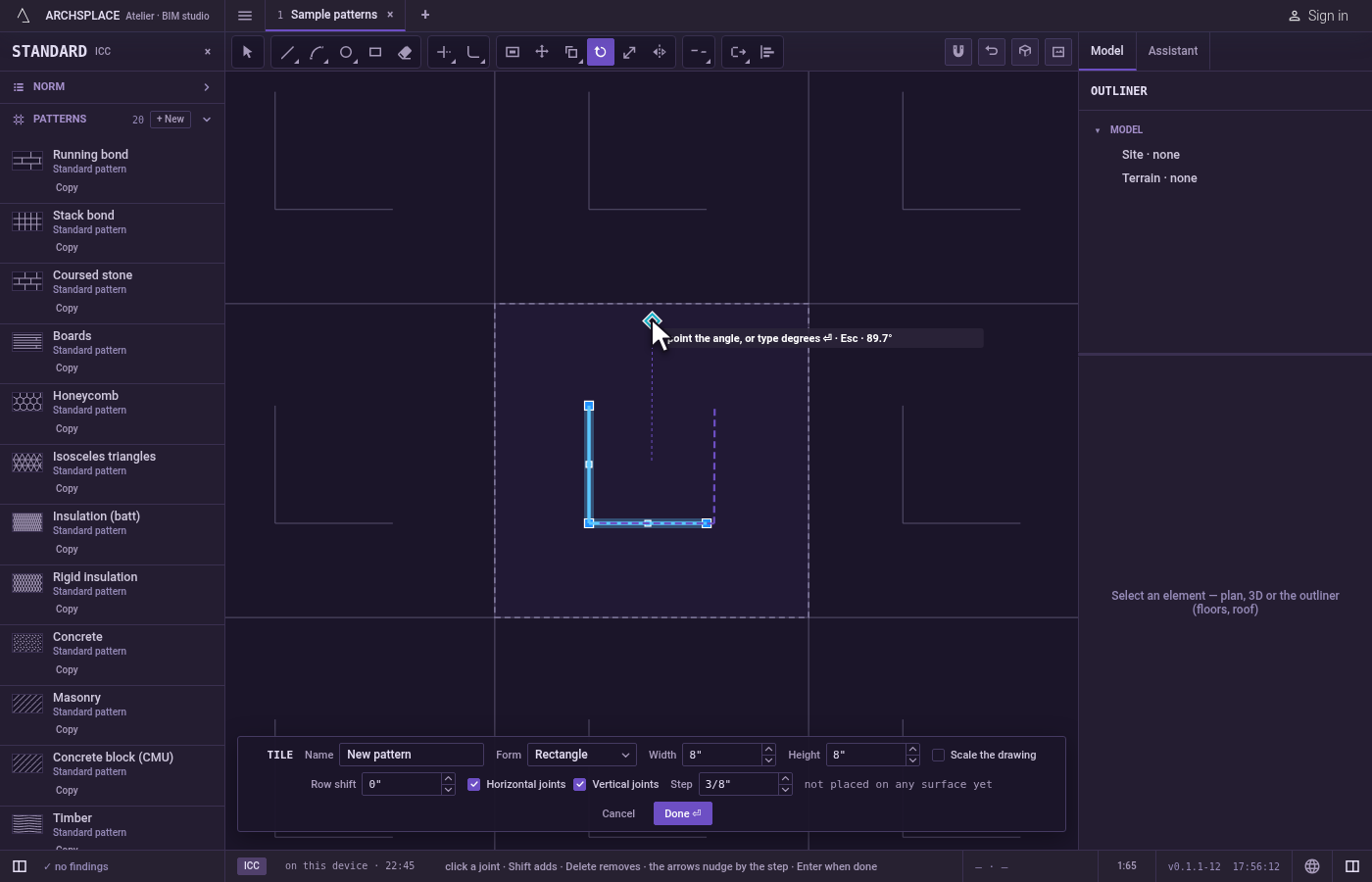
Give the angle. Point the direction: the angle from the horizontal is the turn, shown in the hint. Click to rotate. To be exact, type the angle in degrees and press
Enter: a positive angle turns counterclockwise, a negative one clockwise.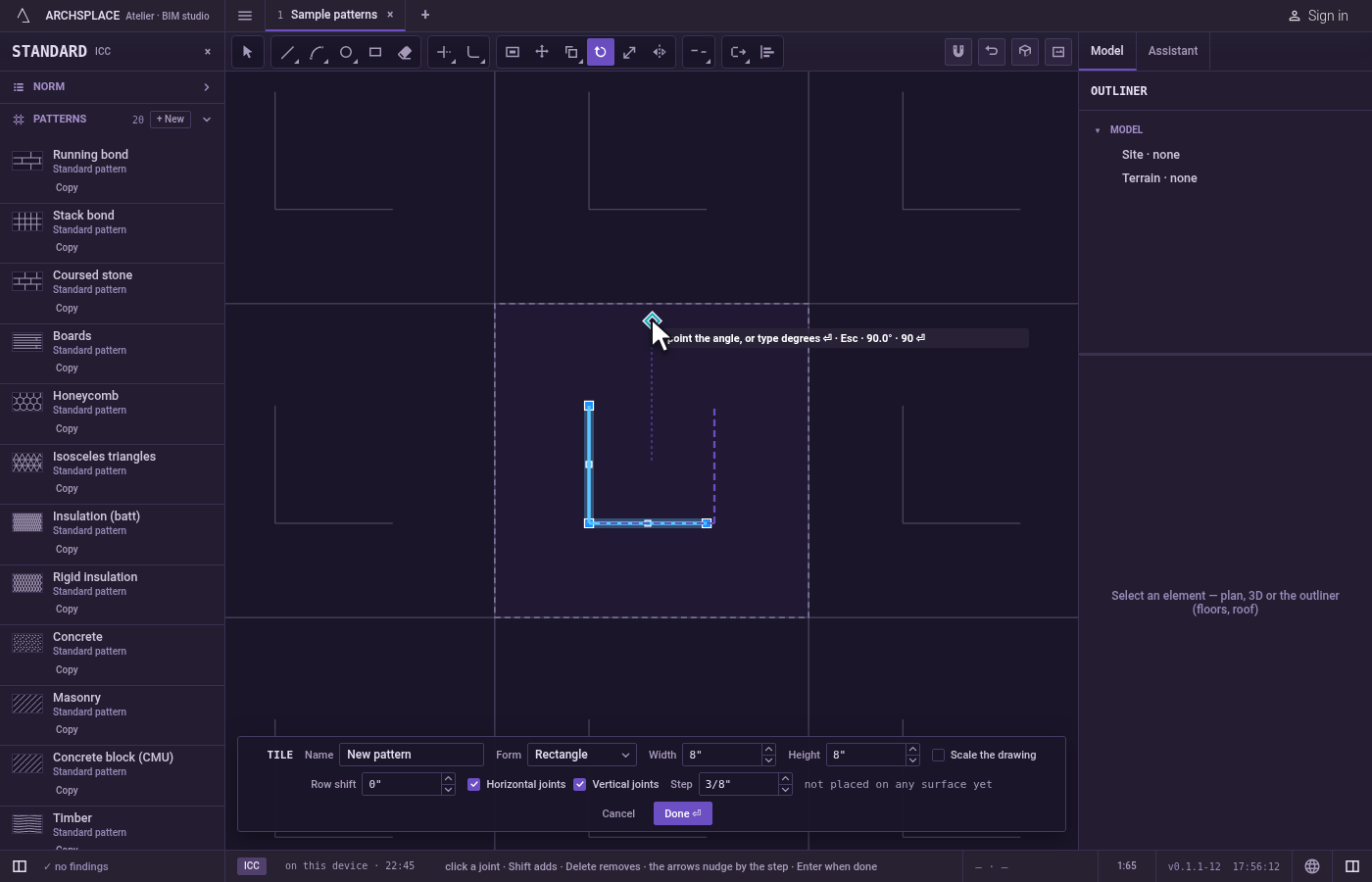
Turn from a reference, if you want. After the center, press
R, then point the joints' present direction or type its angle and pressEnter. Then point the new direction, or type the new angle: the joints turn by the difference.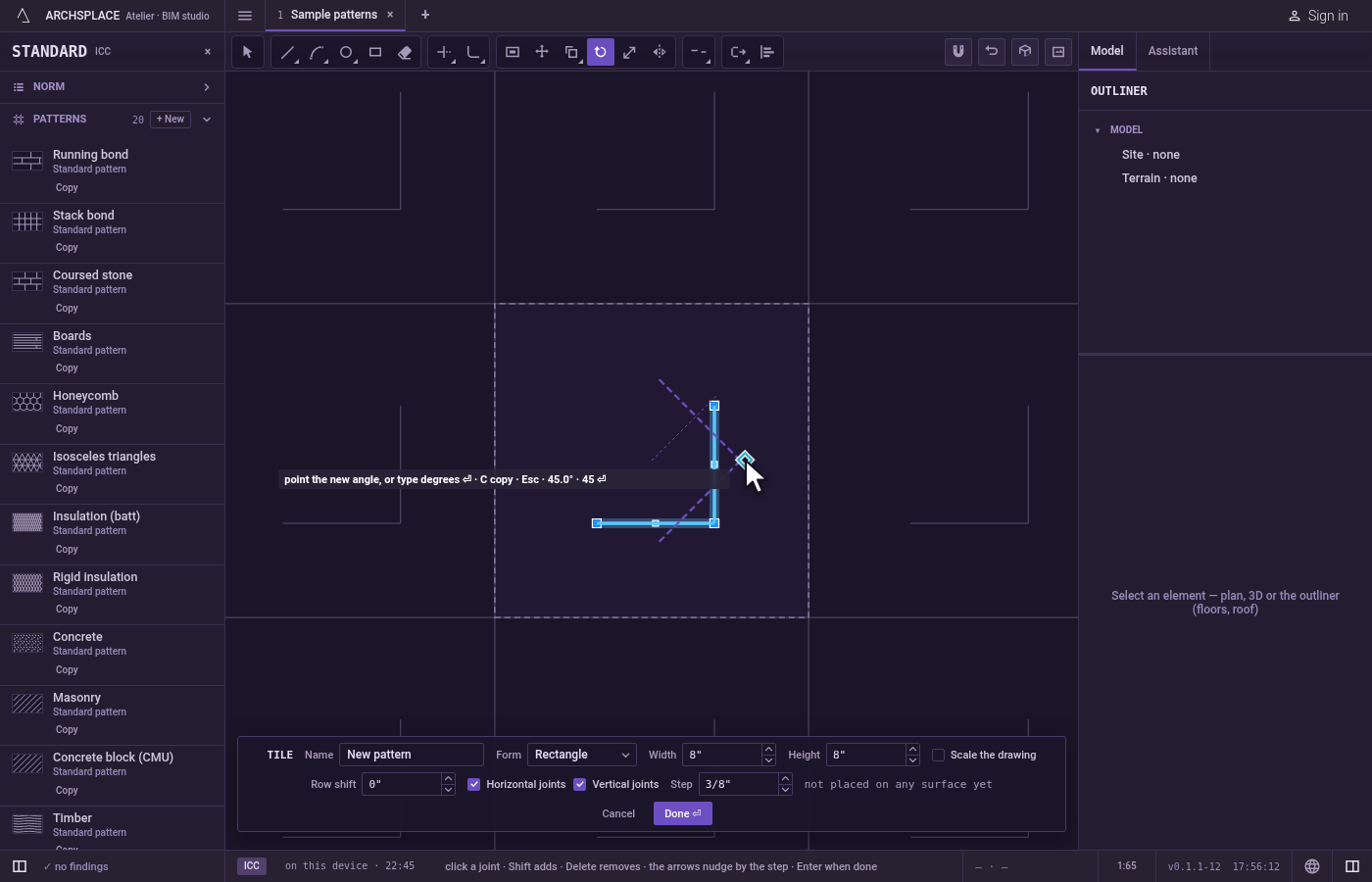
Copy, if you want. After the center, press
Cto switch on copy: the turned joints are laid as a copy and the originals stay. With copy on, Rotate keeps the same center for the next copy.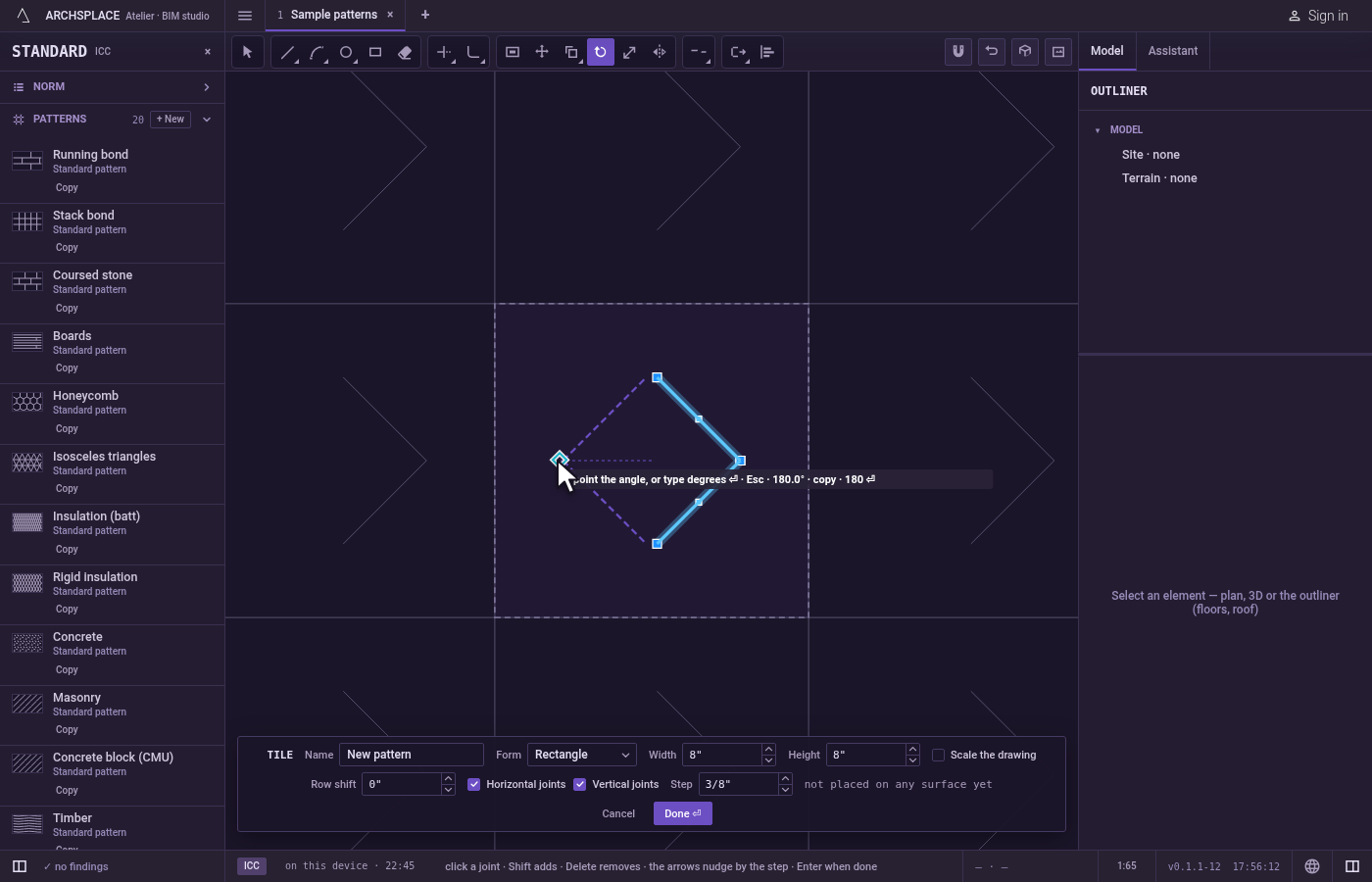
Rotate again or finish. After a rotation, the same joints stay selected and Rotate asks for a center again.
Escapesteps back (the reference, then the center), then leaves Rotate for Select.Ctrl+Zundoes the last rotation. Press Done on the bar at the foot to hand the tile back.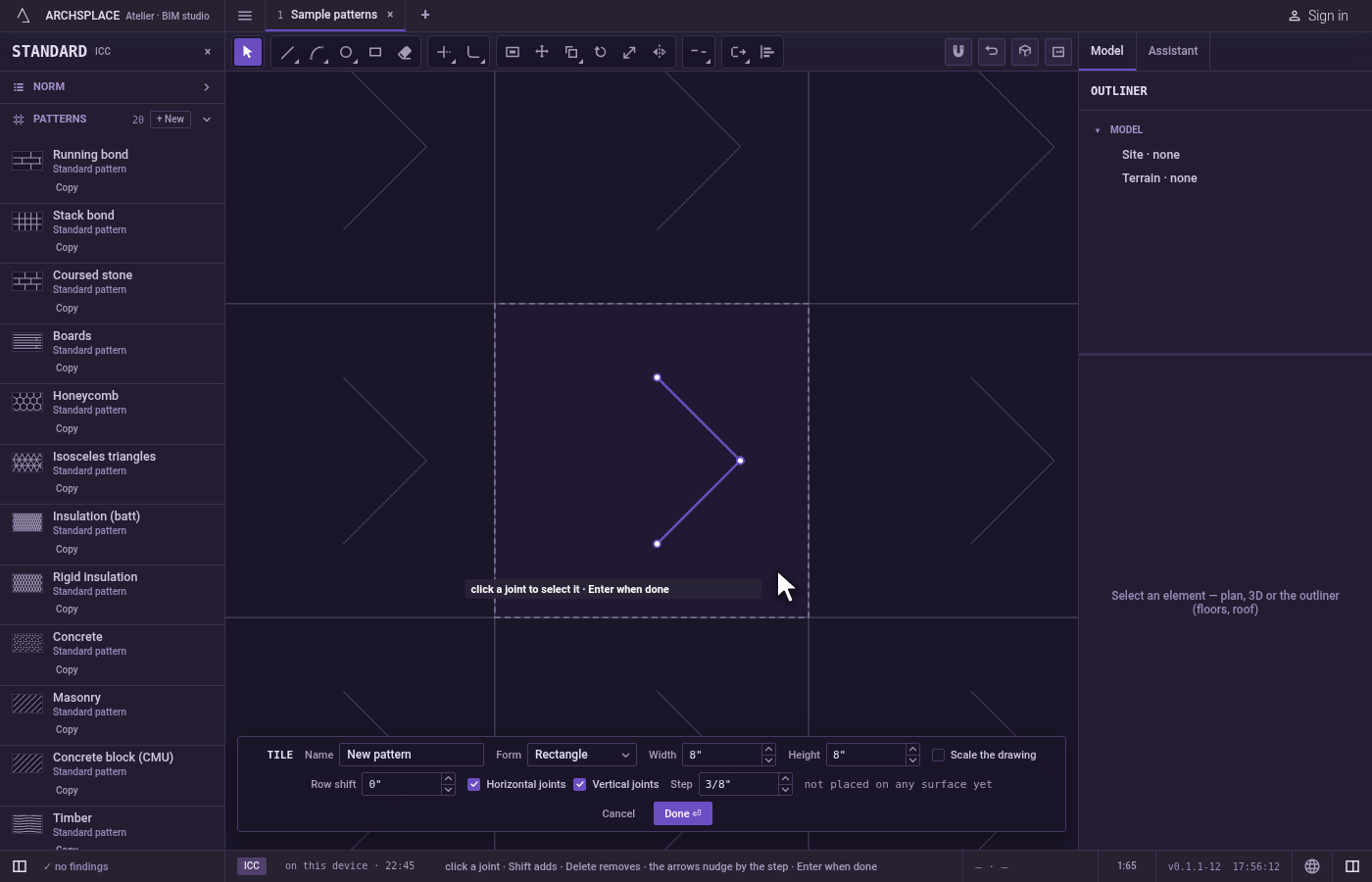
What it refuses
- A shape that would leave the tile. A curved or closed joint that would stand outside the tile once turned is not rotated, and the editor says a shape must stay inside the module.
- A straight joint across the edge. It is not refused: once turned, it is cut at the tile's edge and only the part inside is kept.
- A reference on the center. A reference point on the center itself gives no direction and is not taken.
What it writes to the contract
Nothing while you work: the change stays in the tile editor, where Ctrl+Z steps back through it. When you press Done, the whole tile is written to the project's patterns in one step you can undo, every joint as its points in metres from the tile's lower-left corner, the turned joints at their new angle. A standard pattern is never changed: Done saves the project's own version of it under the same name, and every surface that lays it follows. Save as new writes a new pattern instead. Cancel writes nothing.
Related
Common questions
Which way does a typed angle turn?
A positive angle turns counterclockwise and a negative one clockwise, measured in degrees.
How do I turn a joint so it lines up with another one?
After the center, press R and point along the joint's present direction (or type that angle), then point the direction it should take. The joints turn by the difference.
How do I keep the original while rotating?
After the center, press C to switch on copy. The rotated copy is laid and the original stays.